

For the first time in India, the price of jet fuel crossed Rs 2 lakh for domestic flights and $ 1,000 for international flights. india news
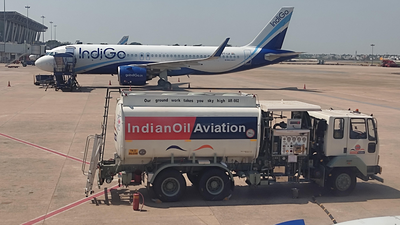
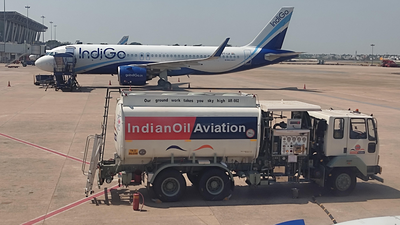
New Delhi: Air travelers should be prepared for a big increase in airfares. Jet fuel prices have more than doubled in April following the Iran war, dealing a fatal blow to Indian aviation companies. The oil PSU on Wednesday morning announced aviation turbine fuel (ATF) pricing for April, which saw an increase of about 115% for domestic flights and about 107% for international flights. The rupee is touching new lows on a daily basis, increasing the burden on airlines as most of the costs there are denominated in dollars.Domestic ATF Pricing: A kilo liter (kl or 1,000 litre) of ATF for domestic flights will now cost Rs 2,07,341.22 at IGIA in Delhi, India’s busiest aviation hub – a 114.5% increase from Rs 96,638.14 last month. This is the first time that the price of this refined kerosene to ensure that aircraft can defy gravity has crossed the Rs 2 lakh mark in Delhi, Kolkata and Chennai. Prices at CSMIA in Mumbai, India’s second busiest hub, will rise 115% to Rs 194,968.67 in April from Rs 90,451.87 last month.ATF pricing for international flights: ATF pricing for these flights by Indian carriers has crossed the $1,000 mark for the first time in India. One kilo liter of ATF for international flights will now cost $1,690.81 in Delhi, which is 107% higher than last month’s $816.91. The prices and hikes in Mumbai are almost the same. At $1,727.3, the highest price will be seen in Kolkata – up 102% from last month’s $855.25. With the rupee at a record low, prices will be further affected.In April and May 2024, the price of ATF for international flights was more than $900. But at that time the dollar-rupee exchange rate was at the level of 83-84. It is now at a record low of more than 95.What this means for the cost structure of airlines: Even before the anticipated increase in India, which is a result of the Iran war and on the same lines as what has happened in most other countries, the ATF for domestic flights in India was among the most expensive globally. Jet fuel accounted for 40%–45% of the airlines’ total operating costs. This percentage will now change massively and make operations unviable for weaker players.What will the airlines do: Airlines will increase fares to reflect increased operating costs. This will affect demand and lead to reduction in flights. Airlines are taking a close look at each route to determine whether operations make economic sense. indigo, air india Group, Akasa were among the airlines that imposed or increased fuel surcharges last month which now range from Rs 150 to $200. Now it can be amended. The fare cap of Rs 18,000 for domestic flights was removed on March 21, 2026. Since airlines have not received any fiscal relief on ATF excise duty (from the Centre) or VAT (from some places like Delhi and Mumbai), they had explicitly asked the government to cap the airfares if their costs can also be fixed similarly.Air India CEO Campbell Wilson said in a mail to employees last month that “the financial impact of the (Iran war) crisis is still not fully felt, although the spot price of jet fuel has more than doubled, most of the impact will hit us only from next month onwards.” He warned that rising operating costs could force more airlines to reduce flights “depending on how fuel costs, airfares and customer demand evolve.” The rupee is touching new low on a daily basis, pushing up dollar-denominated costs for Indian airlines, including fuel, for international flights. The route from the top to the west has become very long.While airlines have implemented or increased fuel surcharges, Wilson said, “Not every customer is willing to pay higher airfares, so there is a limit to how high we can price before demand declines. Additionally, given economic uncertainties, it is not certain that customers or companies will be as willing to travel as they were before the conflict, and may choose to stay put for some time.Wilson had said, “There will be some new demand, as we are seeing – and deploying additional flights to some cities in Europe and North America, but already in some parts of the world airlines are reducing some flights due to higher fuel prices. We may also have to make adjustments depending on how fuel costs, airfares and customer demand evolve.”