
Census 2027 provides historic opportunity to record data on disability: Athawale | india news
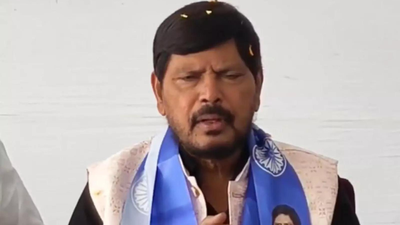
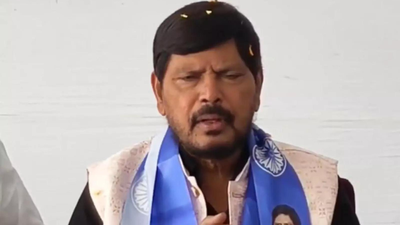
New Delhi: Union minister Ramdas Athawale on Tuesday said the upcoming Census 2027 presents a “historic opportunity” to collect accurate data on all 21 recognized categories of disability and enable targeted policymaking for persons with disabilities. Speaking at the launch of the handbook titled ‘Beyond the Visible: A Handbook on Disability Inclusion for Parliamentarians’, Athawale said the exercise would be the first census to be conducted after the enactment of the Rights of Persons with Disabilities Act, 2016. He emphasized that better enumeration and disaggregated data will help the government to design effective interventions and ensure better inclusion of persons with disabilities. Athawale, Minister of State for Social Justice and Empowerment, said, “The Rights of Persons with Disabilities (RPWD) Act, 2016 was a landmark reform, which recognized 21 disabilities, moved from a welfare-based to a rights-based approach and aligned India with the UNCRPD. For the first time, the law explicitly recognized political barriers as a major barrier for persons with disabilities.” The Minister also mentioned key government initiatives such as Sugamya Bharat Abhiyan, Unique Disability ID (UDID) portal, skill development programs under PM-DAKSH and health care efforts under Ayushman Bharat, which aim at mainstreaming persons with disabilities. Athawale said the launch of the handbook prepared by the National Center for Promotion of Employment for Disabled People (NCPEDP) and Bajaj Finserv and Tuesday’s roundtable discussion will mainstream the discussion on disability rights and inclusive policymaking in Parliament and outside. NCPEDP Executive Director Arman Ali said the handbook aims to help lawmakers translate legal provisions into actionable policy and overcome barriers faced by persons with disabilities. He said, “This book will help translate the RPWD Act into real legislative action and make inclusion a lived reality in Indian democracy.” Citing the findings of a recent NCPEDP survey, Ali stressed the need for more inclusive health care policies, saying that more than 80 per cent of persons with disabilities do not have health insurance due to high premiums, exclusion from disability-related treatments and denial of coverage. “Under PM Narendra Modi’s vision of inclusive healthcare, schemes like Ayushman Bharat should explicitly include persons with disabilities and provide comprehensive, lifelong support including assistive devices, rehabilitation and disability-specific care. “The government is committed to removing these barriers so that no disabled person has to face huge out-of-pocket expenses,” Ali said. The event also saw a panel discussion on inclusive health coverage and political participation, which was attended by MPs and political leaders including ET Mohammad Bashir, parliamentary member of the Central Advisory Board on Disability, Lok Sabha MP Eatala Rajender, Rajya Sabha MP Fauzia Khan, BJP spokesperson Guru Prakash Paswan, BJP youth wing vice president Neha Joshi and NCP (SP) spokesperson Aneesh Gawande.