India’s future lies in manufacturing, deep technology and skill building: Himanshu Shah

India's future lies in manufacturing, deep technology and skill building: Himanshu Shah

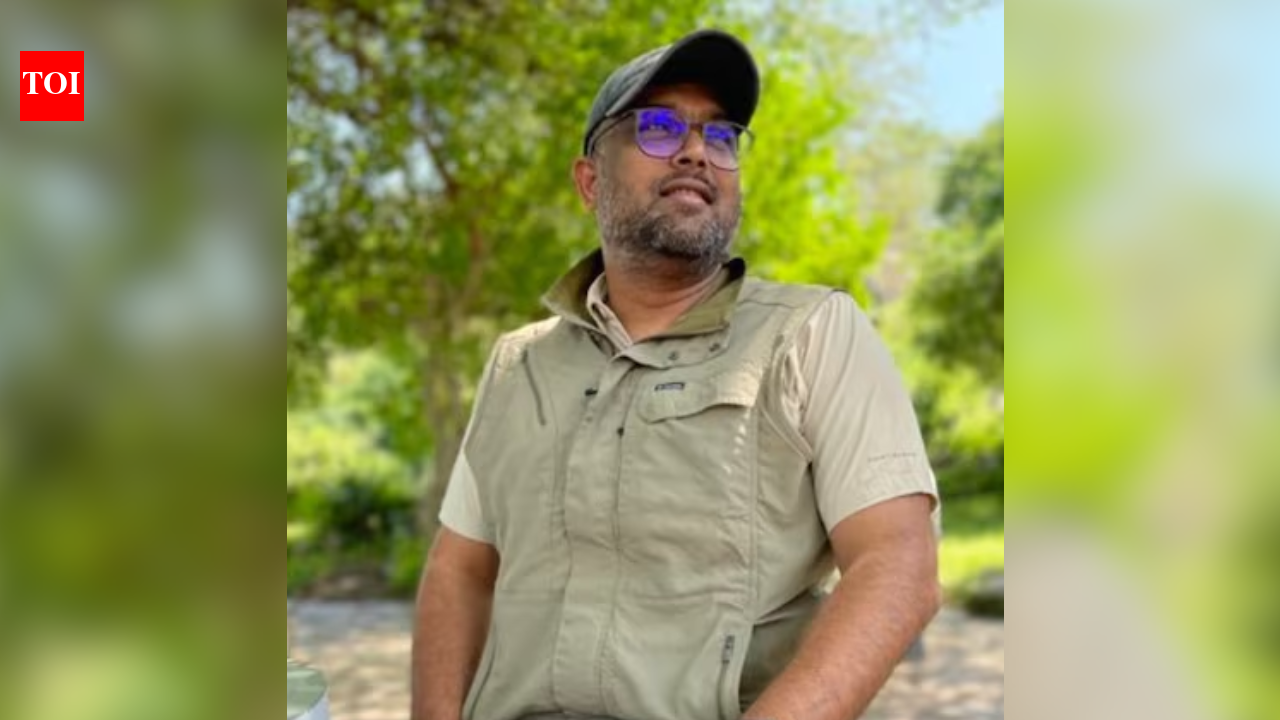
When it comes to India’s economic future, few people are as optimistic and forthright as Himanshu Shah. For the North Carolina investor, the nation’s greatest opportunity lies not in rhetoric, but in execution. Speaking at a panel during the Indiaspora Forum 2026 on the outskirts of Bengaluru on Monday, the founder of Raleigh-based Shah Capital argued that India’s real promise can be seen in the industrial and skills infrastructure taking shape below the surface, even if the broader picture remains uneven. Pointing to the government’s growing support for large-scale manufacturing clusters and new industrial zones, Shah said the deeper story is one of capacity building. “India is full of ideas. Its implementation will play a big role here,” Shah said. “Your skills are also improving amazingly. Because still, a lot of manufacturing is not done in India.” He linked that manufacturing gap to India’s continued heavy reliance on Chinese imports, even as its entrepreneurial energy and young workforce continue to grow. Despite China’s per capita income being 5 times higher, India still runs a significant trade deficit with China of over $100 billion, which is indicative of the skills and production advantages China has developed over time, he said. Shah also emphasized that India is progressing. “There’s an amazing improvement happening on that front,” he said, even if “it doesn’t look great on the surface, but underneath, I’m very excited.” Moderated by MR Rangaswamy, founder of Indiaspora, the panel also included Ravneet Mann, partner at Stride Ventures and Sridar Iyengar, founder of 360Plus. Speaking about capital allocation and public policy, Shah argued that the Indian government should think more aggressively about promoting industries of the future through targeted public-private partnerships. “First of all, let’s talk about the fund which was set up by the Government of India in 2016. It was a $1 billion fund and resulted in over 200,000 start-ups in India. Recently, another billion-dollar-plus fund was set up for AI and deep tech.” Shah said, ”Frankly speaking, the Indian government should set up 10 to 20 funds out of this. Marine technology, space, drones, machine tools, materials science, the list goes on.” For Shah, such investments are not just about financial returns. They are also a way of creating structured cooperation between the state, private capital and the Indian diaspora.“And by bringing public and private partnerships on top of that, expatriates can really contribute, including myself,” he said. He also highlighted what he described as an “industrial renaissance” at the state level, with some Indian states using land incentives and sector-specific support to attract manufacturing projects. He said that Bihar, Uttar Pradesh, Odisha and Gujarat are among those states which are starting to use such models. To illustrate the scale of the opportunity, Shah pointed to titanium dioxide, a material used in products such as paints and coatings. He cited the example of a potentially large company to show how India can replace imports with domestic production if the economics and policy support are aligned. Shah said that “the demand for titanium dioxide in India is 400,000 metric tonnes. And… the country produces only 70,000-80,000 tonnes.” [tons]. And by the way, it imports the rest from China, if you look at the cost of building it, today assuming that you have free land in some of these states that I have mentioned, the project becomes very economical and interesting. He suggested that this example offers a small glimpse of what might be possible if India truly became more supportive of entrepreneurs and manufacturers. “So, this is just a glimpse of what is possible in India, if the government starts actually working for entrepreneurs instead of being a hindrance,” he said. But Shah’s optimism came with a familiar caveat. He acknowledged that India’s bureaucracy remained a major constraint on enterprise, and he did not soften that criticism. “It’s still there,” he said. “It’s very disappointing. Even today in India you need ~27 forms to open a bank account in 2026. It doesn’t make sense. So, there are a lot of things this country needs to work on. But I see signs of that.” In the concluding part of the discussion, Shah scoped out the broader role of the Indian diaspora beyond investment and manufacturing. Asked what he wants the diaspora to do by connecting with India, he pointed to remittances, philanthropy and early-stage investments, but returned most strongly to one theme: skills. He suggested that India should actively utilize the expertise of older, often retired engineers and professionals in the diaspora to help upgrade the country’s industrial base.“I think one area, and philanthropy, really, on top of that, is job skills. And I really want to get back to that,” Shah said. “If there’s a public and private partnership, maybe like the 2047 initiative, you can really bring those people in and give, you know, whether it’s in engineering, in science, in manufacturing.” He said many Indians who moved abroad pursued tech careers and now had the experience India needed if it wanted to make more sophisticated products at home.“A lot of these people who moved out of India were engineers. And a lot of them are retired in their 50s, 60s and 70s and are looking for something to do,” he said. “Because this country needs that skill to make good quality products.” For Shah, the future of India’s growth story will depend not just on government policy or investor appetite, but also on whether the country can combine capital, skills and execution. He suggested that events that bring together diaspora leaders, investors and policy makers could help do this. “And I think an event like this will play a big role in getting something done on that front,” he said, referring to the IndiaSpora Forum 2026.(By arrangement with The American Bazaar, www.americanbazaaronline.com)

Source link

Double engine of law and order in UP. Lucknow News

The thrust of the double engine of law and order in UP
A significant change has been seen in law and order in Uttar Pradesh under the Yogi Adityanath government.

The law and order story of Uttar Pradesh in the last nine years has emerged as one of the most defining pillars of governance under the Yogi Adityanath government. According to officials, what was once considered a state battling crime networks and weak enforcement has undergone a visible and structured transformation.“At the core of this transformation lies an aggressive and sustained crackdown on mafias, organized syndicates and street-level criminality, an approach that has not only targeted individuals but has destroyed entire ecosystems of crime. This sustained effort has helped transform policing from a reactive force to a central instrument of governance and public messaging.” Former DGP Prashant Kumar says:From the rollout of anti-Romeo squads to the expansion of mission power, and from AI-powered crime tracking systems to fast-track prosecution strategies, the state has attempted sweeping changes in its policing architecture. According to officials, there is an emphasis on predictability, deterrence and visibility – ensuring that law enforcement instills fear in criminals and is trusted by citizens.

Watch

Uttar Pradesh Chief Minister Yogi Adityanath sparked debate and said, ‘Political Islam’ has weakened Sanatan Aastha.

Senior officials at the DGP headquarters said that since 2017, no major communal riot or caste-based conflict has been witnessed in the state, a claim the government says is a key indicator of better law and order.Action on criminal networks and mafia:Official figures show that 277 criminals were killed in police encounters, while more than 11,445 were injured. At least 33,652 rewarded criminals were arrested.Over 85,118 criminals were booked under the Gangster Act and 977 under the National Security Act (NSA). Illegal movable and immovable assets worth more than Rs 14,580 crore were seized under the Gangster Act between March 2017 and December 2025. A focused operation against 68 identified mafia networks resulted in action against 1,459 people, with 638 arrests under provisions of the NSA and Gangster Act. Assets worth more than Rs 4,413 crore linked to these networks were seized.Conviction and sentencing results:Through focused legal follow-up, the government claims to have ensured life imprisonment to 35 mafias and 94 of their associates, while two have been awarded death sentence. Under ‘Operation Conviction’ (July 2023-December 2025), 1.25 lakh accused were convicted while 79 were given death sentence. At least 10,414 received life imprisonment.Decline in crime rate: Compared to 2016, the government has recorded a significant decline in major crime categories like dacoity (90% decline), dacoity (85% decline), murder (47% decline), rioting (70% decline) and rape (53% decline), a senior official at the DGP headquarters said.Emergency Response and Smart Policing: UP-112 emergency response system has been extensively upgraded and more than 3.1 crore calls were attended. Response time reduced from 1 hour 5 minutes (2016) to 6 minutes 41 seconds (2025). A cyber helpline integrated into UP-112 has processed more than 7.5 lakh complaints since its launch in May 2021. Police intervened in 1,769 cases of social media posts related to suicide between 2023 and 2025.Expansion of police infrastructure: The state expanded policing infrastructure with 134 new police stations and 86 outposts. At least 73 cyber crime police stations and six narcotics police stations were also set up.Women Safety and Mission Shakti: Under the Mission Shakti initiative, dedicated Mission Shakti centers were set up in each police station. More than 40,000 personnel were trained and women beat officers were deployed.Former UP DGP Vikram Singh said, “The nine years of the Yogi government mark a decisive and pioneering success in crime control and maintaining law and order. The state has acted vigorously against the mafia, dreaded criminals and organized crime, effectively breaking their backbone.”

Source link

Dhurandhar 2: ‘Dhurandhar The Revenge’: How a doctor from Ludhiana made a cameo after treating Arjun Rampal on the sets because of Ranveer Singh

'Dhurandhar The Revenge': How Ranveer Singh led a Ludhiana doctor to make a cameo after treating Arjun Rampal on the sets
Dr. Sunny Ashok, a doctor from Ludhiana, made an unexpected debut in Bollywood with Ranveer Singh’s ‘Dhurandhar: The Revenge’. Dr. Ashok was initially called to treat Arjun Rampal’s injury on the set, but his natural behavior impressed the crew. Ranveer Singh personally invited her to act in a brief but memorable scene during the climax of the film, which depicted a heart-touching real-life encounter in the midst of blockbuster success.

Whereas Ranveer SinghAs spy thriller ‘Dhurandhar: The Revenge’ is breaking global box office records, a poignant real-life story emerges from its Punjab schedule. Dr. Sunny Ashok, a government medical officer from Ludhiana, unexpectedly makes his Bollywood debut in the high-stakes climax of the film after a chance encounter with the superstar. Originally called to the set for treatment Arjun Rampal For a head injury sustained during a difficult railway chase sequence, Dr. Ashok’s professionalism impressed the crew so much that Ranveer Singh personally invited him to appear in front of the camera.Dhurandhar 2 Movie Review

Doctor remembered Arjun Rampal’s injury on the set

Dr. Sunny Ashok, who works at a government health facility in Kalakh village, was called to the sets of ‘Dhurandhar 2’ on July 8, 2025, after Arjun Rampal suffered a head injury during a shoot. The film was being shot at various locations in Punjab including Ludhiana and Shahnewal airports. The actor, who played ISI agent Major Iqbal in the film, was injured while filming a high-intensity chase scene on a railway track.Speaking to The Tribune, Dr Ashok said, “There was panic as it looked like Arjun would need scans and hospitalisation. However, the injury was not serious. I checked his reaction. Everyone was happy that he was fine.”

A sudden meeting with Ranveer Singh changed everything

A few days later, on July 11, the doctor was once again called to the sets during a shooting at Shahnewal Airport. This time this meeting with Ranveer Singh became memorable. Recalling that moment, Dr Ashok shared, “I asked Ranveer for a photo, upon which he placed his hand on my shoulder and said, ‘Bro, why just a photo? We will take you to the film,’ I thought he was joking.”Director Aditya Dhar immediately approved the idea and informed Dr. Ashok about a scene on the spot. This sequence was part of the climax of ‘Dhurandhar 2’, where Ranveer Singh’s character needs medical care. “This is my scene in the movie, although it’s a split second,” the doctor revealed.Dr. Ashok further told that this scene was completed in a single take. He said, “Dhar congratulated me for behaving naturally and said that I never looked at the camera and behaved exactly like a doctor does when he sees an injured Indian hero coming off the plane.” He also praised the team and said, “All the film crew—and especially Ranveer and Arjun Rampal—were very hands-on and friendly.”

More about ‘Dhurandhar: The Revenge’

The film, directed by Aditya Dhar, has crossed the Rs 800 crore mark globally in the first five days of its release. The film has grossed over Rs 519 crore in India. It will soon join the Rs 1000 crore club. It stars Ranveer Singh, Sanjay Dutt, Sara Arjun, R Madhavan, Arjun Rampal and Rakesh Bedi. The star cast also includes Mustafa Ahmed, Danish Pandor, Gaurav Gera, Mohit Malik and Danish Iqbal. It was released in theaters on 19 March 2026.

Source link

Splitsvilla

Splitsvilla

The reality show Splitsvilla The latest episode caught the attention of many people Yogesh Rawat It was confirmed that he would be moving ahead in the show not with his current connection Akanksha Choudhary but with ex-girlfriend Ruru Thakur. He also confessed his feelings for her. Later, she received backlash online for keeping Akanksha in the dark. Sorab Bedi has now extended his support for close friend Yogesh.Sorab shared a video of Yogesh from his recent live on his Instagram handle. After sharing this he told how he will always be there for him. A big surprise for fans was the fact that Sorab and Akanksha share a very close relationship.Fans expressed their anger and disappointment on Sorab in the comments section, saying that they never expected this from him. After this Sorab deleted the Instagram story. As far as Yogesh is concerned, he confirmed that he is still in a relationship with Ruru Thakur.When the show started, it was divided into two parts: love villa and money villa. The contestants of Pyaar Villa included Akanksha Choudhary, Anjali Shamuk, Anisha Shinde, Deeksha Pawar, Sadaf Shankar, Soundarya Shetty, Simran Khan, Chakshdeep Singh, Yogesh Rawat, Sorab Bedi, Anuj Sharma, Tene de Villiers, Ayush Sharma, Harshit Gururani and Himanshu Arora. Meanwhile, the Paisa Villa contestants included Keona Walke, Khushi Rawal, Zalak Gohil, Preet Singh, Anushka Ghosh, Asmita Adhikari, Kaira Anu, Niharika Tiwari, Kushal Tanwar (Gullu), Aarav Chugh, Vishu Bajaj, Ayush Jamwal, Gauresh Gujral, Ron Cariappa, Deeptanshu Saini and Mohit Magotra. However, now both the villas have been merged into one.See more: Splitsvilla The latter says, ‘She is ruining our image’

Source link

‘Save Soil: 100 days that shook the world’: Sadhguru’s daughter Radhe Jaggi launches new book. india news

'Save Soil: 100 Days That Shook the World': Sadhguru's daughter Radhe Jaggi launches new book

Sadhguru’s daughter, Radhe Jaggi has launched a new book called ‘Save Soil: 100 Days That Impacted the World’Documenting the global soil save movement.Radhe is a Bharatanatyam dancer and had captured the initiative launched by Sadhguru to raise awareness about soil conservation.The 464-page volume provides a detailed account of Sadhguru’s 100-day, 30,000-kilometre motorcycle journey across 27 countries, featuring behind-the-scenes stories and photos from the expedition.It includes first-hand accounts from volunteers and organizers involved in the movement, providing information about the scale, challenges, and energy behind the global effort.Radhe Jaggi, who actively participated in the yatra, also performed with Project Sanskriti, Sadhguru’s initiative for the preservation of Indian classical arts, at several stops en route. These displays were designed to attract audiences and reinforce the message of soil conservation.Speaking about the book, Jaggi said, “The journey included countless moments that most people never see. Volunteers from across the continent contributed with extraordinary commitment, often behind the scenes, to bring the message of soil conservation to millions of people. This book captures the voices and experiences that show the human energy that powered the movement.”He further added, “Being a part of the journey also meant witnessing Sadhguru’s immense dedication. Traveling to 27 countries in 100 days was physically demanding, yet wherever we went, we received remarkable support from people who understood the importance of protecting our soil.”Structured in six chapters, the book describes the culmination of the movement from its beginnings to its campaigns across Europe and the Middle East and its reception in India. It features the stories of Zoran, a volunteer from North Macedonia whose experiences shed light on the global challenges facing agricultural soils. Other accounts describe people waiting late into the night across countries to meet Sadhguru, indicating widespread public engagement with the cause.

Source link

Iran war impact: Philippines declares energy emergency with only 40 days of fuel left

Iran war impact: Philippines declares energy emergency with only 40 days of fuel left
An employee in the Philippines uses black tape to adjust the prices on his sign at a gasoline station as oil prices continue to rise. (AP Photo)

The Philippines has declared a national energy emergency, warning of an “immediate threat” to fuel supplies as the escalating Middle East conflict threatens to disrupt global oil flows.President Ferdinand Marcos Jr. said in an executive order issued late Tuesday that immediate action was needed to protect energy stability, economic activity and essential services.According to a Bloomberg report, the move is the country’s first nationwide emergency declaration since the COVID-19 crisis in 2020.Heavily dependent on imports, the Philippines obtains almost all of its oil from the Middle East. Officials said the country had about 45 days’ supply as of March 20, raising concerns over possible shortages if the disruptions continued.Marcos warned that aviation could be one of the hardest-hit sectors, saying there was a “distinct possibility” that flights could be grounded due to jet fuel shortages.Flag carrier Philippine Airlines said it had reserved fuel only until June, with uncertainty remaining beyond that. Industry officials have not ruled out rationing if the crisis deepens.The emergency declaration empowers the government to take sweeping measures to manage the situation. A special committee will monitor the supply of fuel and other essential commodities, while officials have been directed to enforce conservation, prevent hoarding and expedite fuel procurement.Transport authorities can implement subsidies, expand rail operations and suspend some charges to reduce the burden on passengers. Welfare agencies have also been tasked with monitoring price increases and expediting aid, while preparations are underway for the possible withdrawal of foreign workers from the region.Unlike some Southeast Asian peers, the Philippines does not offer extensive fuel subsidies, leaving consumers more exposed to rising global prices.The disruption is linked to tensions around the Strait of Hormuz – a vital artery for global energy supplies – where instability has unsettled markets and driven fuel costs sharply higher.The state of emergency will remain in force for one year unless lifted earlier.

Source link

Harish Rana’s family donated his corneas, heart valves. delhi news

Harish Rana's family donates his corneas, heart valves
The last rites of Harish Rana, the first person to receive legal passive euthanasia in India, were performed in the national capital after his death at the All India Institute of Medical Sciences.

New Delhi: The last rites of Harish Rana, the first person to receive legal passive euthanasia in India, were performed in the national capital after his death at the All India Institute of Medical Sciences.According to news agency ANI, the family donated his corneas and heart valves.Rana, 31, remained under special medical care for a long time and died on Tuesday, marking a significant moment in India’s legal and medical landscape.In an official statement, AIIMS confirmed that Rana died at 4.10 pm at the institute.“Harish Rana passed away on March 24, 2026 at 4.10 pm at AIIMS, New Delhi. He was under the care of a dedicated team of doctors and was admitted to the Palliative Oncology Unit (IRCH) under the leadership of Dr. (Prof.) Seema Mishra, HOD, Onco-Anesthesia. AIIMS expresses its heartfelt condolences to his family and loved ones during this difficult time, the press release said.Earlier this month, in a landmark decision, supreme court of india Ghaziabad resident Rana, who was in a persistent vegetative state for more than a decade, was allowed to undergo passive euthanasia.A bench of Justices JB Pardiwala and KV Vishwanathan allowed withdrawal of Clinically Assisted Nutrition and Hydration (CANH). Rana was in an unwell state after accidentally falling from a building in 2013.Passive euthanasia refers to the withdrawal or withholding of life-sustaining treatment so that a patient who has no reasonable chance of recovery can be allowed to die naturally.Expressing deep sorrow while delivering the judgement, the court said that all stakeholders, including the patient’s family and the medical board that assessed his condition, were in agreement that no meaningful purpose would be served by continuing aggressive medical assistance.The bench also highlighted the absence of a comprehensive law on end-of-life care and urged the Central government to consider legislation in line with the principles laid down in the case Common Cause vs Union of India (2018).The court said, “The long absence of a comprehensive law on end-of-life care has forced this court to repeatedly step in to fill this void.”It said a dedicated legislation in this area would bring greater clarity and certainty on such emotionally complex issues.

Watch

Historic decision: Supreme Court allows passive euthanasia to Harish Rana after being in coma for 13 years

Source link

IPL 2026 captains’ meeting: When, where and complete agenda cricket news

IPL 2026 captains' meeting: when, where and complete agenda
Captains of 10 IPL teams (Photo Credit: IPL)

captain of all IPL The teams are set to meet officials of the Board of Control for Cricket in India (bcci) on March 25 to discuss a number of key issues including the Impact Player Rules and Code of Conduct. However, the primary focus is expected to be on clarifications regarding the two-bouncer rule, bat checking, ball replacement, use of saliva and the retire-out provision. The IPL 2026 captains meeting will be held at the BCCI headquarters in Mumbai.According to a BCCI release to franchises on Tuesday, Cricbuzz, Javagal Srinath and Nitin Menon – BCCI’s match referee and head of the umpire panel will address the captains respectively. The meeting is scheduled for Wednesday (March 25) from 4:30 pm to 6 pm.

What will be the agenda?

The BCCI recently shared the playing conditions for the season with the franchises, highlighting key changes to Rule 4.4 (Change of ball in the second innings); 5.8.3 (BAT Testing); 18.5.1 and 18.5.2 (intentionally run low); 19.5.2 (fielder grounded out of bounds); 28.7.6 (Restrictions on placement of fielders); and Appendix D-3.9 (combining umpire’s review with player’s review).A look at the new season’s playing conditions near this website shows no obvious changes, but the rules for ball substitution are explained in detail – something that was absent from last year’s playing conditions. Rule 4.4 in the latest playing conditions reads:ball replacement rules in ipl matchesIf, during play, the ball is lost, cannot be recovered, or is deemed unfit for use due to normal wear and tear, the umpire will replace it with another ball that has the same level of wear and tear. Once the replacement has been made, the umpire will inform both the batsman and the fielding captain.Rules for changing the ball in the second inningsIn evening matches, the team bowling second is allowed to request a change of ball after the completion of the 10th over. The request must be made only by the bowling captain and must be made at the end of an over (not during the over). This rule applies only once in the second innings, regardless of dew conditions, with the replacement ball having the same wear and tear as the previous ball.Additionally, the umpire reserves the right to change the ball at any time during the match at his discretion.

Explanation of main scenarios

Scenario 1: If the umpires change the ball before the 10th over due to it being wet, damaged, lost or out of shape, the fielding captain retains the right to request a change of ball after the 10th over. In this case, the umpires are required to approve the request.Scenario 2: If the captain requests a change of ball after the 10th over (e.g. in the 11th over) due to wet conditions and the umpires change it: Any request to change the ball later in the innings will be subject to the umpires’ discretion, not mandatory.Scenario 3: If the captain requests a ball change due to damage or shape issues during the 11th over and the umpires agree: The team can also make a mandatory request of their own after the 10th over (for example, later due to dew), and the umpires must accept it.There are also other things like team sheets, toss, broadcast media commitments and awards, about which there is no detail. The session will begin with the introduction of IPL COO Hemang Aming.

Source link

‘Bridgerton Season 5’: Hannah Dodd and Masali Baduza Open Up About Their Most Exciting Scenes

'Bridgerton Season 5': Hannah Dodd and Masali Baduza Open Up About Their Most Exciting Scenes

‘Bridgerton’ is about to step into one of Julia Quinn’s most heart-touching storylines as season 5 focuses on widow Francesca Bridgerton and John’s cousin Michaela Sterling. Played by Hannah Dodd and Masali Baduza, the pair deliver a refreshing, emotionally charged second-chance romance that feels both sweeping and intimate. From stormy horseback rides to rain-soaked nights in a highland cottage, their story promises to be one of the series’ most tender and sensual tales yet.

A whirlwind journey that changes everything

One of the scenes Dodd and Baduza are most excited to film is the dramatic horseback riding sequence in When He Was Wicked. In the book, a heartbroken Francesca heads to the Scottish Highlands after a night of intimacy with Mikaela and gets caught in heavy rain. Michaela finds him under a tree, refuses to let him wander alone in the dark, and lifts him onto her horse, pressing them together in a moment that feels both protective and electric.“I would love to see Michaela on a horse,” Baduza said, smiling. According to a recent interview with Swoon, she said, “I would love to see him gallop”. For Dodd, it’s exactly the kind of charged, slightly awkward moment that brings their chemistry from the page to the screen

Firelight, rain, and forced proximity

Emerging from the rain-soaked forest, Francesca and Michela are forced to seek refuge in a small hut, a scene both actresses are eager to bring to life. “It’s like, a cabin in the woods by a fire…” Baduza explained, describing the cozy, intimate setting, where wet clothes are peeled away, and emotional walls begin to fall away.Dodd called it pure “forced closeness”, explaining that the roaring fire and shared warmth made it impossible for Francesca and Michaela to avoid talking about their feelings. “There’s no place to hide,” she said in the same interview. “You’re stuck in a small room, the rain is pouring down, and suddenly you have to say what you really want to say.”

Francesca Bridgerton is in the spotlight

What makes this moment even more special is that Francesca takes control of their physical relationship. After Michela promises not to get intimate again until Francesca is ready, tensions rise until a kiss rekindles the spark between them. Francesca then teases and stretches things, letting desire guide her rather than fear conquering her.“This is a version of Michaela that’s messier, more emotional and closer to the surface,” said Baduza, “but she learns to be honest about love instead of running from it.” For Dodd, it’s the kind of scene that reminds viewers that vulnerability and desire can live in the same room, and Francesca ultimately asserting her desires is the heart of her story.Now with Season 5 in production, the Highland cottage, filled with rain, fire and longing, may become one of the show’s most unforgettable duets of intimacy and honesty. “You get to see Michaela soft, messy and powerful all at once,” Baduza said. “And Francesca finally gets a chance to choose herself, not just what everyone expects of her.”

Source link

Tamil Nadu elections: AIADMK promises fridges, 3 LPG cylinders for 2.2 crore families. chennai news

Tamil Nadu elections: AIADMK promises fridges, 3 LPG cylinders for 2.2 crore families

CHENNAI: AIADMK general secretary Edappadi K Palaniswami promised that if the party wins the assembly elections and forms the government, it will distribute free refrigerators to all rice ration card holders and increase reservation for government school students clearing NEET to pursue medical education from 7.5% to 10%.Releasing the AIADMK’s election manifesto on Tuesday, which lists 297 assurances under 31 heads, EPS called it a ‘roadmap to governance’. “The manifesto is an action plan for the next five years that realizes the needs and pain of every person in Tamil Nadu and fulfills their aspirations,” he told reporters in the presence of senior leaders at the party headquarters. The manifesto gave the slogan “Pathukappana Tamilagam, Paarpotram Valarchi” (Safe Tamil Nadu, Laudable Development).The manifesto also included other EPS announcements made during election campaigns over the past few months, such as doubling the monthly cash distribution for women from Rs 1,000 to Rs 2,000 and a one-time relief of Rs 10,000 to cushion the impact of rising prices. It promises free bus travel for men, the benefit of which has been extended to women by the DMK government. EPS described the party’s manifesto as “the hero of the election”.The announcement of free refrigerators assumes significance as it is targeted at around 2.22 crore rice ration card holders across the state. On the promise of increasing the 7.5% reservation to 10%, the EPS said it would benefit many government school students aiming to study medicine.Notably, some of the assurances made by the EPS during the 2021 assembly elections, including free washing machines, were missing this time. AIADMK has promised Rs 3,500 MSP for paddy.The promise of providing free LPG cylinders has been reduced from six a year to three in 2021. The manifesto said that IVF treatment in the healthcare sector will be brought under the Mukhyamantri Swasthya Bima Yojana. Additionally, households installing solar panels will get a subsidy of up to ₹30,000 for a 1 kW unit.It outlined infrastructure plans including setting up an international cricket stadium in Coimbatore, expediting metro rail projects in Madurai and Coimbatore and fast-tracking the proposed metro link between Kelambakkam and Chennai International Airport. It also stressed the setting up of a special anti-drug task force to curb ganja and other banned substances in the state. The AIADMK promised that crop loans taken through cooperative societies would be waived off, the MSP for paddy would be fixed at ₹3,500 per quintal, and steps would be taken to ensure a remunerative price of ₹4,500 per tonne for sugarcane. EPS promised to pay compensation of ₹25 lakh to fishermen who died during fishing operations.

Source link