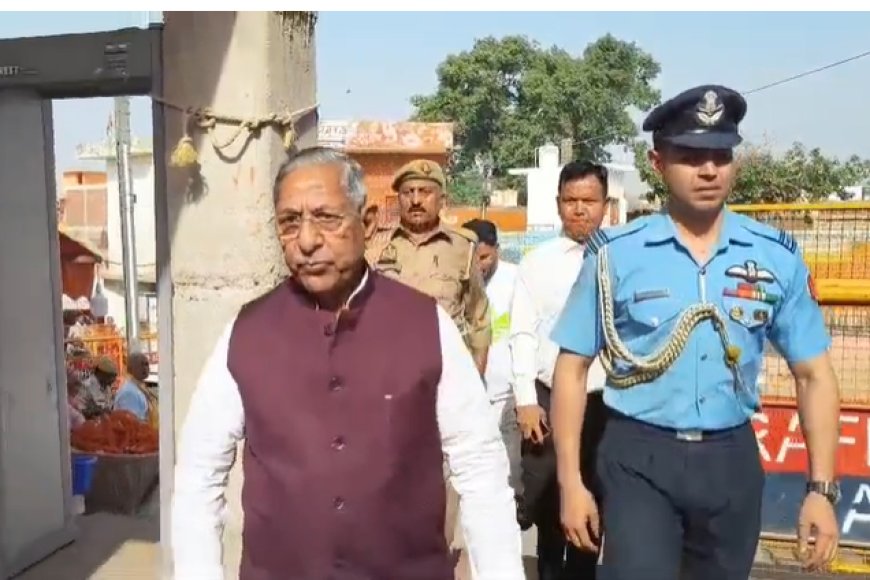
अयोध्या दौरे पर भावुक हुए राज्यपाल नंदकिशोर यादव, कहा- ‘मैं अपने मेहमान भगवान राम के घर आया हूं’

नागालैंड के राज्यपाल नंद किशोर यादव सोमवार को अयोध्या पहुंचे, जहां उन्होंने धार्मिक स्थलों पर जाकर पूजा-अर्चना की. अपने दौरे के दौरान उन्होंने सबसे पहले हनुमानगढ़ी में दर्शन किए और फिर राम जन्मभूमि पहुंचकर भगवान रामलला के दर्शन किए. इस दौरान उन्होंने विधि-विधान से पूजा-अर्चना की और देश-प्रदेश की खुशहाली के लिए प्रार्थना की. उनका यह दौरा धार्मिक और भावनात्मक रूप से खास था.

”मैं अपने मेहमान के घर आया हूं”- राज्यपाल भावुक हो गये
दर्शन-पूजन के बाद मीडिया से बात करते हुए नंद किशोर यादव भावुक दिखे. उन्होंने कहा, “भगवान राम हमारे अतिथि हैं और मैं अपने अतिथि के घर आया हूं।” उनके बयान ने लोगों का ध्यान खींचा और उनके गहरे धार्मिक जुड़ाव को दर्शाता है. उन्होंने अयोध्या को आस्था का केंद्र बताते हुए यहां आकर खुद को भाग्यशाली बताया.

राम मंदिर को गौरव और आस्था का प्रतीक बताया
राज्यपाल ने राम मंदिर को देश की आस्था और गौरव का प्रतीक बताया. उन्होंने कहा कि भगवान श्री राम एक धार्मिक व्यक्तित्व ही नहीं बल्कि एक आदर्श पुरुष हैं जिनसे हर व्यक्ति को जीवन जीने की प्रेरणा मिलती है। उन्होंने 500 साल के लंबे संघर्ष के बाद बने भव्य मंदिर पर गर्व जताया और इसे ऐतिहासिक उपलब्धि बताया.

भारतीय संस्कृति की झलक और बढ़ता उत्साह
नंदकिशोर यादव ने कहा कि भगवान राम के रूप में माता सीता, लक्ष्मण और हनुमान का समावेश भारतीय संस्कृति की झलक दिखाता है. उन्होंने यह भी कहा कि मंदिर निर्माण के बाद युवाओं में धार्मिक उत्साह बढ़ा है और अयोध्या में एक नई सांस्कृतिक चेतना देखने को मिल रही है.

अयोध्या में तस्वीर बदलने पर संतोष
अपने दौरे के अंत में राज्यपाल ने अयोध्या में हो रहे विकास और बदलती तस्वीर पर संतोष जताया. उन्होंने कहा कि यह शहर अब न केवल धार्मिक बल्कि सांस्कृतिक और आध्यात्मिक केंद्र के रूप में भी तेजी से उभर रहा है, जिसका असर पूरे देश में देखा जा सकता है।

(प्रतिवेदन: (अनूप जयसवाल, अयोध्या)

Source link

नैनीताल में बड़ी घटना: अवसादग्रस्त वकील ने अपनी कार में खुद को मारी गोली, मौके पर मिला सुसाइड नोट

सोमवार को नैनीताल शहर के क्लटर पार्किंग क्षेत्र में उस समय सनसनी फैल गई जब एक कार के अंदर अधिवक्ता पूरन सिंह भाकुनी का शव संदिग्ध हालत में मिला। शुरुआती जानकारी के मुताबिक वकील ने खुद को गोली मारकर आत्महत्या की है.


बताया जा रहा है कि कार पार्किंग में खड़ी थी और जब लोगों ने गोली की आवाज सुनी तो उन्होंने कार पर हमला कर दिया. तब तक उसके सिर में गोली मार दी गयी थी. पार्किंग संचालक ने वकीलों और पुलिस को सूचना दी। सूचना मिलने पर पुलिस मौके पर पहुंची और कार के अंदर देखा तो अंदर अधिवक्ता का शव मिला।

Source link

Revolutionary Optical Tornado technology is set to transform quantum communications.

New "optical tornado" Technology could transform quantum communications: study
Scientists have created tiny “optical tornadoes” using a surprisingly simple setup based on liquid crystals – swirling rays of light that spin like miniature tornadoes. Instead of relying on complex nanotechnology, the team used self-organized structures called taurons to trap and manipulate light, causing it to spiral and rotate in complex ways.

WARSAW: Scientists have created tiny “optical tornadoes” using a surprisingly simple setup based on liquid crystals – swirling rays of light that spin like miniature tornadoes. Instead of relying on complex nanotechnology, the team used self-organized structures called taurons to trap and manipulate light, causing it to spiral and rotate in complex ways.Even more impressively, they achieved this effect in the most stable, lowest-energy state of light, making it much easier to generate laser-like beams with these unusual properties.Can light spin like a tornado? Researchers have now shown that this can happen. Scientists from the Faculty of Physics of the University of Warsaw, the University of Military Technology and the Institut Pascal CNRS of the University Clermont Auvergne have created an “optical tornado” spinning inside an extremely small structure.The advance points to a new way to fabricate miniature light sources with complex shapes, which could support simpler and more scalable photonic devices for optical communications and quantum technologies.“Our solution connects many areas of physics, from quantum mechanics through materials engineering to optics and solid-state physics,” explains the leader of the research group, Professor Jacek Szczytko of the Faculty of Physics at the University of Warsaw.“The inspiration came from systems known from nuclear physics, where electrons can occupy different energy states. In photonics, a similar role is played by optical traps, which confine light rather than electrons,” Szczytko said. What is an optical vortex?“You can think of it as an optical vortex,” says the study’s first author, Dr. Marcin Muszynski of the Physics Faculty of the University of Warsaw and the Physics Department of the City College of New York.“The light wave rotates around its axis, and its phase changes in a spiral manner. In addition, the polarization – the direction of oscillation of the electric field – also begins to rotate,” Marcin said.These structured light states are attractive for applications such as quantum communications and controlling microscopic objects. However, their production usually requires complex nanostructures or large experimental systems. Liquid crystals provide a simple wayThe team chose a different strategy. “Instead of building complex systems, we used a liquid crystal, a material that has properties intermediate between a liquid and a solid. Although it can flow like a liquid, its molecules arrange themselves in an ordered way, maintaining a fixed orientation and relative position, like crystals,” explains Joanna Medrzycka, a nanotechnology student at the Faculty of Physics of the University of Warsaw, who together with Dr. Eva Otten of the Military University of Technology prepared liquid crystal samples.Special defects called torsions can form within this material. “They can be imagined as tightly twisted spirals, similar to DNA, along which liquid crystal molecules are arranged. If such a spiral is closed by connecting its ends in a donut-like ring, we obtain a toron,” explains Medrzycka. “These structures act as microscopic traps for light. An important step was to create a magnetic field equivalent to that for photons. Although light does not respond to magnetic fields like electrons do, similar behavior can be achieved for light by other means.” A “synthetic magnetic field” for light.“Spatially variable birefringence, i.e. the difference in propagation of different polarizations of light, acts like a synthetic magnetic field,” explains Dr. Piotr Kapuscinski of the Faculty of Physics at the University of Warsaw. “We call it ‘synthetic’ because its mathematical description resembles the behavior of a magnetic field, even though physically it is not there. As a result, the light begins to ‘bend’, much like electrons rotating in cyclotron orbits.To strengthen the effect, the toron was placed inside an optical microcavity, a structure made of mirrors that repeatedly reflect light and confine it for long periods of time. “It makes the field very strong,” says Dr. Muzynski. “Additionally, we can control the size of the trap and thus the properties of the light using an external electrical voltage.” Stable light vortex in the ground state. The most surprising result came next.“In typical systems, the orbital angular momentum carrying light appears in the excited state,” said Prof. of the Université Clermont Auvergne and CNRS. Guillaume Malpuech explains, who Prof. Together with Dmitry Solnyshkov and post-doc Daniil Bobilev developed a theoretical model of the phenomenon. “For the first time, we managed to achieve this effect in ground conditions, i.e., Lowest energy state. This is important because the ground state is the most stable and easiest to store energy.“This makes lasing much easier to achieve,” Professor Szczytko insists. “Light naturally ‘chooses’ this condition because it is associated with the least damage.”To confirm this, the researchers introduced a laser dye into the system. “We achieved light that not only rotates but also behaves like laser light: it is coherent and has a well-defined energy and emission direction,” says Dr. Marcin Muzynski.Towards simple photonic and quantum technologies“It is interesting that our approach draws inspiration from very advanced theories involving so-called vector charges,” says Professor Dmitry Solnyshkov.“This discovery opens a new path to creating miniature light sources with complex structures. “It shows that instead of relying on complex nanotechnology, we can use self-organized materials,” concludes Professor Victor Pasek of the University of Military Technology. “In the future, this could enable simpler and more scalable photonic devices, for example for optical communications or quantum technologies.

Source link

Virginia Hidden Barracks: Lost for 200 Years Virginia dig reveals hidden barracks of America’s first soldiers | world News

Lost for 200 years: Virginia dig reveals hidden barracks of America's first soldiers

Long-lost Revolutionary War barracks have finally been discovered by archaeologists in Colonial Williamsburg, Virginia, providing an up-close, personal view of day-to-day life for Continental Army soldiers in that time period. The barracks were built in August 1776 on the orders of the Commonwealth of Virginia to accommodate 2,000 soldiers and 100 horses, as reported in Fox News. Although historical maps suggested their location, the remains of the barracks remained obscure for nearly 200 years until well-preserved foundations were revealed during routine excavations. This is an important discovery as the barracks were only used from 1777 to 1781; They represent an uninterrupted, localized snapshot of military life during this critical time period in the American Revolutionary War.

Construction project in Virginia discovers lost remains of America’s first soldiers

A team led by the Colonial Williamsburg Foundation has excavated the remains of Revolutionary War barracks, revealing evidence of the soldiers’ living conditions and daily routines. Artefacts recovered from the site include chimney bases, military buckles, musket balls and coins etc. Because of the single purpose of these structures, the barracks offer a more accurate and detailed view of where soldiers live and train than other sites with multiple uses. Archaeologists have also recognized that the high level of preservation was made possible by a singular, devastating fire.

How the fires of a revolutionary war preserved history

According to Dr. Jack Garry, executive director of archeology for the Colonial Williamsburg Foundation, the site’s preservation is paradoxically in the face of destruction. In 1781, British forces led by General Cornwallis set fire to the barracks while advancing towards the decisive Battle of Yorktown, causing a ‘disastrous event’ that sealed the site in a way that prevented subsequent disturbance and agricultural development and thus allowed archaeologists to map soil patterns and recover artefacts such as lead tablets with tooth marks, which were said to be lead by soldiers due to its sweetness. There is a hint of chewing.

What everyday artifacts tell us about the revolution

Discoveries associated with this site provide important details about how people were affected by war in the past and what impact it has on their lives today. Scholars have documented that many historical records focus largely on significant military actions (grand battles) or the significant political decisions that led to them (political maneuvers); However, archaeological evidence recovered from this site gives information not only relating to the logistics of military service (such as housing and supply chains), but also personal aspects of service. As noted by Fox News, artifacts recovered from the site include everyday objects (ceramic and glass buttons) in addition to weapons and other specialized military equipment, and help preserve and document early American military history. The Foundation will use these findings to educate the general public beyond detailing the history of the soldiers during the War of Independence.

Source link

Shahjahanpur tomb vandalized: ‘Iron lattice broken, stones pelted’: Tomb vandalized in Shahjahanpur, UP, FIR filed after burning bedsheet. india news

'Iron mesh broken, stones pelted': FIR filed after vandalism of tomb in Shahjahanpur, UP, burning of bedsheet

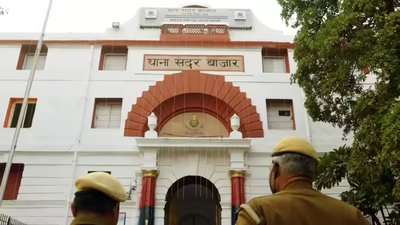
New Delhi: Police have registered an FIR against an unidentified person after a shrine was allegedly vandalized and a sacred cloth or ‘chadar’ was burnt in Chinaur area of ​​Uttar Pradesh’s Shahjahanpur district, officials said on Monday.The incident, which occurred under Sadar Bazar police station limits, sparked tension in the area, prompting officials to step up efforts to trace those responsible.Superintendent of Police Saurabh Dixit told news agency PTI that during inspection, burnt pieces of clothes were found at the spot. “It appears that someone removed the sheet covered over the mazar and set it on fire. Besides, the iron mesh around the mazar was found damaged,” he said.He said a complaint was lodged on Sunday, following which the police registered a case against an unidentified person and started investigation. “Police teams have been directed to identify and arrest the accused as soon as possible,” he said.Dargah caretaker Mohammed Ahmed, also known as Chand Mian, said the site is frequented by people from different communities. He said, “Hindus visit this shrine more than Muslims. Police visited the spot after the incident. We demand the immediate arrest of the person who broke the iron mesh around the shrine, burnt the bedsheet and pelted stones at the structure.”Police have registered a case under section 298 of the Indian Justice Code (BNS), which deals with causing harm or desecration of a place of worship with intent to insult the religion of any class.Officials said CCTV footage of the surrounding areas is being scanned to identify the accused and establish the sequence of events.

voting

Do you think the local community is doing enough to protect shared religious places?

Source link

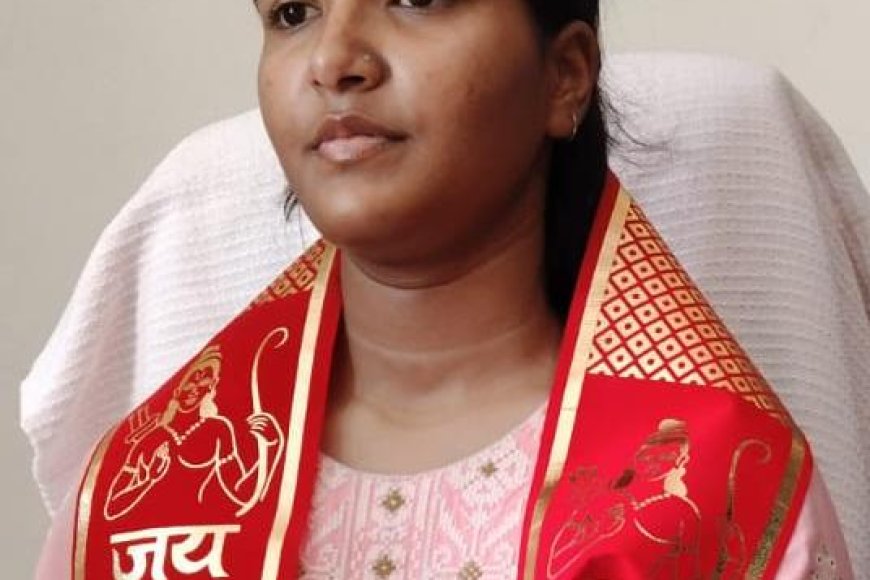
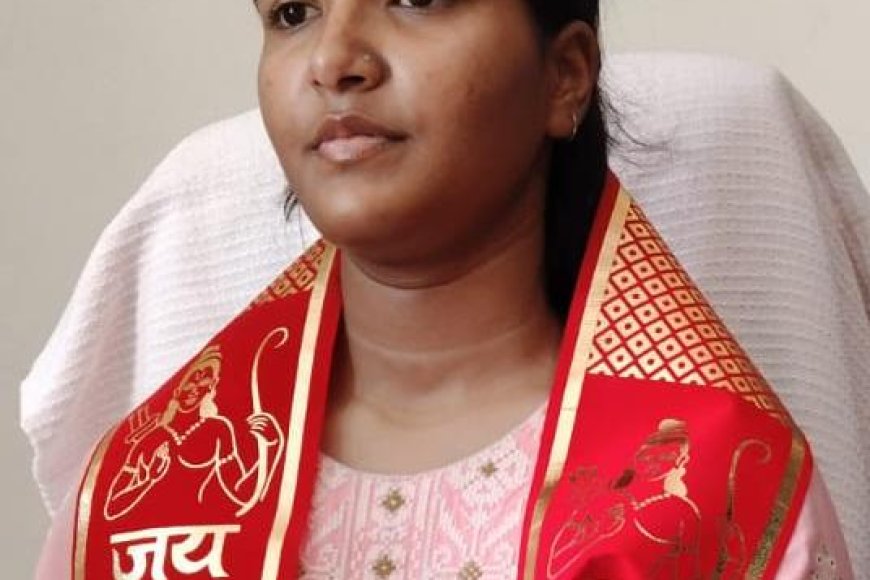
अयोध्या की बेटी आराध्या बनी यूपी टॉपर, जज बनकर समाज सेवा का बड़ा सपना

उत्तर प्रदेश के अयोध्या जिले की एक होनहार छात्रा ने अपनी मेहनत से बड़ी सफलता हासिल की है. यूपी बोर्ड हाईस्कूल परीक्षा में आराध्या जयसवाल ने पूरे प्रदेश में नौवां स्थान हासिल कर इतिहास रच दिया है. उनकी सफलता से न सिर्फ परिवार बल्कि पूरे जिले में खुशी की लहर है. आराध्या अधिवक्ता संघ के मंत्री शैलेन्द्र जयसवाल की बेटी हैं और उन्होंने अपनी उपलब्धियों से अयोध्या का नाम रोशन किया है। अपने भविष्य के लक्ष्य के बारे में बात करते हुए उन्होंने कहा कि वह जज बनकर समाज की सेवा करना चाहती हैं.

सपनों की उड़ान और लक्ष्य
आराध्या जयसवाल ने मीडिया को बताया कि उनका मुख्य लक्ष्य उच्च न्यायिक सेवाओं में शामिल होकर जज बनना है. उन्होंने कहा कि वह एलएलबी की पढ़ाई के लिए क्लैट परीक्षा पास करना चाहती हैं और भविष्य में न्याय के क्षेत्र में काम करना चाहती हैं. आराध्या अपने पिता शैलेन्द्र जयसवाल से प्रेरित हैं और उनके नक्शेकदम पर चलना चाहती हैं।

पढ़ाई में अव्वल और कड़ी मेहनत का नतीजा
आराध्या शुरू से ही पढ़ाई में अव्वल रही हैं। उसने हाईस्कूल परीक्षा में उत्कृष्ट अंक प्राप्त किये हैं। उन्हें गणित में 100 फीसदी अंक मिले, जबकि विज्ञान में उन्हें 98 फीसदी अंक मिले. उन्होंने अपनी सफलता का श्रेय अपने माता-पिता, गुरुजनों, बड़ी बहन और कोचिंग शिक्षकों के साथ-साथ सेल्फ स्टडी को दिया है। आराध्या ने विद्यार्थियों को संदेश दिया कि लक्ष्य निर्धारित कर कड़ी मेहनत करें तो सफलता अवश्य मिलती है।

परिवार और जिम्मेदारी के साथ पढ़ाई
आराध्या सिर्फ पढ़ाई में ही नहीं बल्कि घर के कामों में भी अव्वल रहती हैं। वह अपना घर का काम अच्छे से करने के बाद अपनी पढ़ाई पूरी करती है। उनके परिवार में बड़ी बहन अनुष्का हैं, जो बीकॉम के बाद सीएस कर रही हैं और छोटा भाई अभिषेक, जो आठवीं कक्षा में पढ़ता है।

सम्मान और बधाइयों का सिलसिला
आराध्या की सफलता पर कई गणमान्य लोगों ने बधाई दी। अधिवक्ता संघ के अध्यक्ष पंडित कालिका प्रसाद मिश्र ने उनके घर जाकर आशीर्वाद दिया। इसके अलावा पूर्व विधायक गोरखनाथ बाबा समेत कई प्रमुख लोगों ने भी उन्हें बधाई दी. योगी आदित्यनाथ ने भी उन्हें बधाई संदेश भेजा और उनके सम्मान में सड़क का नाम रखने का निर्देश दिया।

(रिपोर्ट:अनूप कुमार अयोध्या)

Source link

Anushka Sharma said ‘keep it casual’ and then spent lakhs of rupees on a white top Cartier watch worth Rs 17,000 at the RCB vs GT match.

Anushka Sharma said 'keep it casual' and then spent lakhs of rupees on a white top Cartier watch worth Rs 17,000 at the RCB vs GT match.
(Image credit: Instagram)

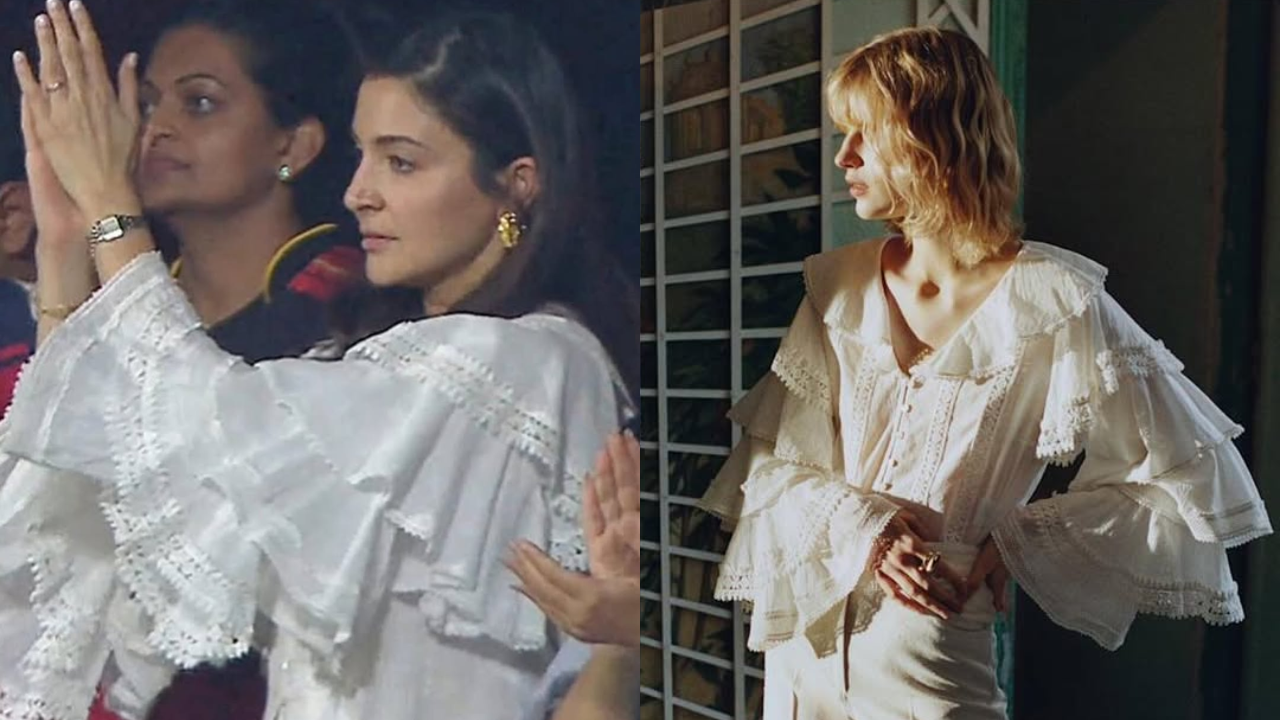
Cricket was always considered the main event in the IPL, but when Anushka Sharma On the stadium benches, the spotlight will definitely be on them. Sitting in the stands at the RCB vs GT clash, the ‘Sultan’ girl gave a masterclass in low-key luxury. She wore a simple white top, showing effortless chic, accompanied by a Cartier watch worth millions, adding strength.For the match, she sat in the audience and wore a white ruffle-sleeve top by Cézanne, which featured embroidered long sleeves, a statement neckline, pretty lace detailing on the sleeves and a subtle button closure at the front. Exuding high comfort with pure elegance, this simple yet powerful piece came with a hefty price tag of Rs 17,000.

Anushka's cricket match look is calm luxury chaos

(Image credit: Instagram)

She paired this look with fitted high-waist denim jeans and minimal bracelets, and then she came out with the big guns. The diva wore a Panthere de Cartier watch from her personal collection created in the 1980s. Since then, it has become a face of quiet luxury in the elite market.Its ultra-flexible structure echoes the movements of the maison’s symbolic animal. This timeless watch is a statement fashion icon for women who are known for their bold style. Dazzled in 18K yellow gold, the crown comes with a set of blue sapphires, comprising a silver dial with blue steel and sword-shaped hands.

Watch

Presence of Raveena Tandon, Virat and Anushka at the airport

This watch is water resistant up to 30 meters and is priced between Rs 28 lakh to Rs 61.5 lakh depending on the diamond-studded case and crown.For her hair and makeup, she opted for a no-makeup look with tinted cheeks, nude-pink lipstick and light neutral eyeshadow. Leaving her hair open with soft blow-dried locks, she added the perfect casual finishing touch to her ultra-luxurious ensemble. This is the kind of styling that doesn’t attract attention but is something to own proudly. Without any loud logos and overly dramatic edge, it quietly gave off a sharp and calculated look that settled perfectly into the stadium full of jerseys and chaos.

Source link

UK weather forecast: UK temperatures rise to 21°C as early heat returns to Wales and southern England World News

UK temperatures soar to 21°C as early summer returns to Wales and southern England
UK temperatures soar to 21°C as heat returns to Wales and southern England / Image: File

There is a big change in Britain’s weather patterns this week, with forecasts showing a strong area of ​​high pressure settling over much of the country, bringing dry, stable and increasingly warm conditions at the start of the week.According to many forecast models and meteorological updates, this high pressure system, often known as an anticyclone, creates sinking air that suppresses cloud formation, allowing for clear skies and calm conditions.Weather maps indicate the system will sit near or over the UK early in the week, bringing widespread sunshine, light winds and limited rainfall to many areas.In parts of Wales and southern Britain, temperatures are expected to reach a high of 20 degrees Celsius and a low of 20 degrees Celsius, making it feel hotter than in recent days. However, nights can still be cool under clear skies, with some rural areas seeing a slight drop in temperatures.

wales weather Today

Forecast maps highlighted by regional reports show Wales is enjoying one of the hottest and driest periods of the week, with sunshine dominating and only the occasional passing of light high clouds.The initial part of the week is expected to remain largely settled, with intervals of sunshine and light winds continuing, especially over western areas. Day temperatures in many areas are likely to be around 20-21 degrees Celsius, giving a spring-like feel.However, the effects of high pressure mean that nights can cool quickly despite daytime warmth, creating a sharp contrast between daytime heat and nighttime cold, a typical feature of stable spring weather systems.

UK weather forecast

Although calm conditions may initially dominate, forecasts continue to point to a marked change in weather patterns as the week progresses.Meteorological guidance suggests the high pressure system will gradually weaken or shift, allowing the low pressure system to move across the Atlantic. This change is expected to bring a return of clouds, rain and more unsettled conditions across the UK.By mid- to late-week, the chance for rain or extended periods is increasing, with some areas potentially experiencing heavy thunderstorms and strong winds. Temperatures are expected to be near or slightly above seasonal averages, but the steady experience of the early weeks will give way to more variable patterns.

long range uk approach

Looking further, a broader view suggests that this pattern of change is part of a broader transition to a more variable spring weather phase.Forecasts indicate that while high pressure may still bring occasional dry and sunny intervals, low pressure systems are likely to occur more frequently in early May, increasing the chances of rain and strong winds.By mid-May, sometimes unstable conditions may dominate, with rain, longer periods of rain and temperature fluctuations becoming more common, potentially stabilizing again towards the end of the month.This change highlights the classic unpredictability of UK spring weather, where short periods of warmth and sunshine are often followed by a rapid return to cool, wet conditions.

Source link

7 out of 10 heart failure patients in India lack financial cover; Cost of treatment pushes families to the brink. india news

7 out of 10 heart failure patients in India lack financial cover; Treatment costs push families to the brink

New Delhi: For thousands of Indians living with heart failure, the biggest stress is not just the disease itself, but also the cost of avoiding it. A nationwide study found that seven out of 10 patients have no financial protection, leaving families to pay almost entirely out of pocket.published in journal global heartThe study led by Dr Panniamakkal Jeemon of SCTIMST, Thiruvananthapuram, analyzed 1,859 patients across 21 tertiary hospitals in India between September 2019 and December 2022.This shows that more than 90% of treatment costs are borne directly by patients, highlighting a deep gap in financial security for chronic diseases.The numbers reflect a harsh truth. On an average, a patient spends more than ₹1 lakh per year on treatment. Additionally, income is declining – nearly one in three patients and more than a third of families report a decline in income after diagnosis.Doctors say income often drops as patients stop working and families cut back on providing care. Nearly 38% face catastrophic spending and nearly one in six borrows money or sells assets, with many cutting back on basic expenses. The burden is greatest on rural, low-income and uninsured patients.Insurance provides some relief – but not enough. Schemes like Ayushman Bharat provide coverage for hospitalization, but shortcomings remain. Most plans don’t fully cover outpatient care, medications, and long-term follow-up – which are a major part of treatment in chronic conditions like heart failure. As a result, patients have to spend heavily out of their own pockets.“Heart failure care in India shows a clear distinction between acute treatment and long-term management, driven by affordability, accessibility and availability,” said Dr Mohit Gupta, cardiologist, GTB Hospital. “Costs often force patients to cut back on medications, delay follow-up, or skip trials. The biggest burden is not the medications, but frequent hospitalizations. We often treat patients according to their capacity. Insurance largely covers hospitalization, but heart failure is a chronic outpatient disease, and gaps in covering medications and follow-up care leave patients vulnerable. Increasing access to affordable medicines and structured follow-up can improve outcomes and reduce costs.Dr Ambuj Roy, professor in cardiology at AIIMS, said insurance schemes still prioritize one-time procedures rather than continuous care, while heart diseases demand long-term therapy. Even though new drugs have improved survival and quality of life, most patients pay out of pocket, making heart failure treatment a significant financial burden.Experts warn that financial stress leads to delays in care and skipping medications, worsening outcomes. Despite improved access, financial security is lagging, making coverage of outpatient care and medicines critical.

Source link

नैनीताल: नैनीताल क्षेत्र में पांच दिन से लापता युवक का शव ब्रोकन माउंटेन क्षेत्र से बरामद हुआ.

नैनीताल के अल्मोडा क्षेत्र से युवक दीपक उपाध्याय के लापता होने के मामले में सोमवार को बड़ा अपडेट सामने आया है. लापता होने के पांच दिन बाद युवक का शव टूटा पहाड़ इलाके से बरामद किया गया. शव मिलने से इलाके में सनसनी मच गई है.

जानकारी के अनुसार, बुधवार को अल्मोडा निवासी दीपक उपाध्याय तल्लीताल रोडवेज स्टेशन क्षेत्र से संदिग्ध परिस्थितियों में लापता हो गया था। पुलिस ने मामले में 20 से ज्यादा सीसीटीवी कैमरों की फुटेज खंगाली और लगातार सर्च अभियान चलाया, लेकिन पहले चार दिनों तक कोई सुराग नहीं मिल सका. इस दौरान पुलिस ने युवक के तीन दोस्तों से भी सख्ती से पूछताछ शुरू कर दी.

सोमवार को सर्च ऑपरेशन के दौरान टूटा पहाड़ इलाके में करीब 80 मीटर गहरी खाई में एक युवक का शव मिलने से मामले में नया मोड़ आ गया है. मृतक के भाई ने युवक के साथ मौजूद दोस्तों पर हत्या का आरोप लगाया है। परिजनों का कहना है कि दीपक का अचानक गायब होना और फिर इस तरह शव मिलना संदेह पैदा करता है.

घटना की गंभीरता को देखते हुए फॉरेंसिक टीम भी मौके पर पहुंच गई है. टीम आवश्यक साक्ष्य जुटाने के लिए मौके से नमूने एकत्र करेगी ताकि मौत का कारण वैज्ञानिक रूप से निर्धारित किया जा सके। पुलिस शव को कब्जे में लेकर पोस्टमार्टम के लिए भेजेगी. मामले की गंभीरता को देखते हुए पुलिस ने जांच तेज कर दी है. अधिकारियों का कहना है कि पोस्टमार्टम रिपोर्ट और फोरेंसिक जांच के आधार पर आगे की कार्रवाई की जाएगी.

थाना प्रभारी मनोज नयाल ने बताया कि मामले की हर पहलू से जांच की जा रही है और संबंधित लोगों से पूछताछ जारी है. घटना का शीघ्र खुलासा करने का प्रयास किया जा रहा है।

Source link