
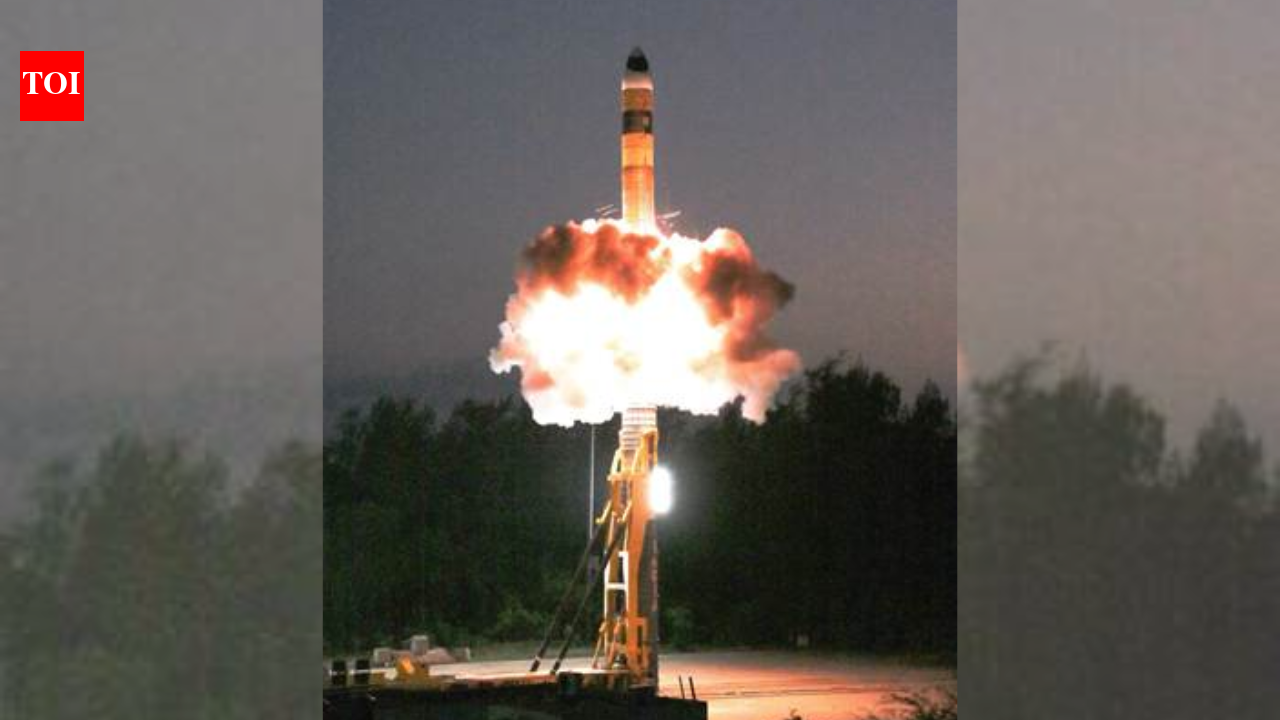

Major defense boost: India successfully tests advanced Agni missile with MIRV capability
India successfully tests advanced Agni missile with MIRV capability
New Delhi: India on Saturday announced the successful flight test of the advanced Agni missile equipped with Multiple Independently Targeted Re-entry Vehicle (MIRV) system, a major boost to the country’s strategic defense capabilities.The missile was tested on Friday from Dr. APJ Abdul Kalam Island off the Odisha coast. The missile was tested with multiple payloads against various targets spread over a large geographical area in the Indian Ocean region.The government said telemetry and tracking operations were conducted through multiple ground-based and ship-based stations, which monitored the missile’s trajectory from launch to impact with all payloads.“Flight data confirmed that all mission objectives were met during the test,” the government said.
Ability to hit multiple targets
The successful test demonstrated India’s ability to hit multiple strategic targets using a single missile system through MIRV technology, which allows a single missile to carry and deliver multiple warheads on different targets.The missile has been developed by laboratories under the Defense Research and Development Organization (DRDO).DRDO) with the support of industries across the country.Senior DRDO scientists and Indian Army personnel witnessed the test.
Rajnath Singh congratulated DRDO, Army
Defense Minister Rajnath Singh congratulated DRDO, Indian Army and industry partners for the successful test.Singh said the achievement will add “incredible capability” to India’s defense preparedness amid emerging security challenges and rising threat perceptions.The test comes as India continues to strengthen its strategic deterrent capabilities and expand indigenous defense technologies as part of its domestic military modernization effort.

ब्रिटेन: श्मशान भूमि की जमीन पर बना अवैध पोल्ट्री फार्म ध्वस्त, विभाग ने कब्जाधारी को भेजे दो नोटिस
केलाखेड़ा में एसडीएम के निर्देश पर राजस्व विभाग की टीम ने अतिक्रमण के खिलाफ कार्रवाई करते हुए श्मशान घाट की भूमि पर बने पोल्ट्री फार्म को ध्वस्त कर दिया। जेसीबी से अतिक्रमण हटाते समय अफरा-तफरी मच गई। इस दौरान मौके पर पुलिस तैनात रही।
10 मार्च को ग्राम रम्पुराकाजी के ग्राम प्रधान बलविंदर सिंह ने ग्रामीणों के साथ गांव की खसरा नंबर 196 रकबा 0.538 हेक्टेयर भूमि को कब्जा मुक्त कराने के लिए एसडीएम डॉ. अमृता शर्मा को शिकायती पत्र सौंपा था। एसडीएम के निर्देश पर तहसीलदार ने ग्राम रम्पुराकाजी निवासी कुलवंत सिंह को उक्त जमीन से कब्जा हटाने का नोटिस भेजा था।
शुक्रवार को तहसीलदार प्रताप सिंह चौहान के नेतृत्व में राजस्व विभाग की टीम ने श्मशान घाट के नाम दर्ज भूमि पर हुए निर्माण को जेसीबी से ध्वस्त कर दिया। सुरक्षा की दृष्टि से थाना प्रभारी धर्मवीर सोलंकी पुलिस बल के साथ मुस्तैद रहे।
तहसीलदार ने बताया कि श्मशान घाट के नाम दर्ज जमीन पर अतिक्रमण कर बनाए गए पोल्ट्री फार्म को हटाने के लिए कब्जेदार को दो बार नोटिस दिया गया था। समयावधि पूरी होने पर जेसीबी से निर्माण ध्वस्त कराकर जमीन को कब्जा मुक्त कराया गया। वहां कानूनगो धनेश शर्मा, पटवारी विपिन कुमार, प्रधान बलविंदर सिंह, कृपाल सिंह, नसीम आदि थे।
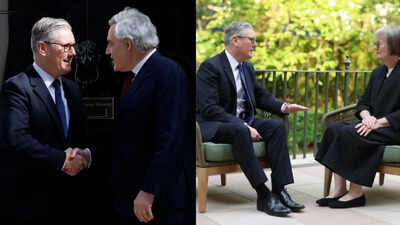
Starmer appoints Gordon Brown, Harriet Harman as advisers on post-election transition after Labor defeat
Starmer appoints Labor veterans as advisers
Following Labour’s landslide defeat in the 2026 local elections, Prime Minister Keir Starmer has turned to senior party stalwarts to stabilize the situation, and appointed former Prime Minister Gordon Brown and former deputy leader Harriet Harman to key advisory roles.In a surprise move, Gordon Brown has been appointed special envoy on global finance, while Harriet Harman has been named adviser on women and girls.Starmer said, “I am delighted to appoint Harriet Harman as my adviser on women and girls. Harriet is a strong advocate for women and girls and I know she will deliver great opportunities for women in public life.”
Big shock in local elections
Labor suffered major defeats in local elections, losing over 1,300 council seats across England. Key areas including Manchester, Salford, Wigan and Oldham fell away from Labor control, while the party lost control of the Welsh Senedd for the first time and performed poorly in Scotland.The results triggered criticism within the party and increased pressure on Starmer, although senior leaders have publicly supported him.Following the appointments of Brown and Harman, Starmer posted a video on Twitter, titled: “Together, we will build a stronger and fairer Britain.”
Brown returns as global finance ambassador
Brown will advise the government on international financial cooperation and help develop partnerships to support defense and economic security. Former Chancellor and Prime Minister Brown will also engage with global institutions and leaders in this unpaid, part-time role.Downing Street said his experience during the financial crisis made him suitable for the job.
Harman will focus on women and girls
Harman will work on issues affecting women and girls, including violence against women, job opportunities and representation in public life. She will also push for cultural changes within government systems.While the appointments are seen as an attempt to reset the government’s image after the election shock, questions remain within Labor about its direction.Senior figures have urged focus and unity, even as pressure mounts after a poor election performance.

Big mistake! Broadcasters show India’s scorecard during Pakistan vs Bangladesh Test; Meme festival broke out. cricket news

New Delhi: There have been many broadcasting mistakes over the years, but the one that happened during the first Test between Pakistan and Bangladesh will definitely stand out. During the opening Test in Dhaka, the broadcasters mistakenly displayed India’s scorecard instead of Pakistan’s playing XI.The error occurred after Pakistan won the toss and decided to field at the Sher-e-Bangla National Cricket Stadium. While the broadcasters were supposed to show Pakistan’s playing XI, they mistakenly showed India’s scorecard which included players like Rohit Sharma, Shubman Gill, Tilak Verma, Shivam Dubey, Jitesh Sharma, Rinku Singh, Axar Patel, Washington Sundar, Ravi Bishnoi, Arshdeep Singh and Mukesh Kumar.The incident reportedly occurred during the live telecast when scenes involving the Indian team were shown instead of match graphics of the Pakistan vs Bangladesh Test.Although the video of the mistake is no longer available on social media, fans immediately took screenshots and photos of the moment, which soon went viral on various platforms.The broadcast mistake soon turned into an online meme fest, with fans flooding social media with reactions and jokes.So far, there has been no official explanation from the broadcasters regarding the glitch.Meanwhile, Pakistan bowled out Bangladesh for 413 after electing to field first. Nazmul Hossain Shanto scored a brilliant century, while Mominul Haq contributed 91 runs. Shento brought up his ninth Test century with the help of 12 fours and two sixes in just 129 balls to entertain the home crowd at the Sher-e-Bangla National Cricket Stadium.

Sleepless planet: Why nights are warming faster than days india news

There was a time when nightfall meant relief. After the glare of a long summer day, with the promise of a cool breeze through an open window in the hours after sunset, the temperature had dropped enough that a light blanket had been pulled up, sleep coming easily. That time, for much of the world, is quietly disappearing.Across all continents and climates, nights are getting warmer, and they are warming faster than our days. While record daytime temperatures dominate the headlines and heatwave warnings dominate our phones, a subtle, arguably more consequential change is taking place in the dark. The minimum temperature, which is the lowest point a thermometer reaches in a 24-hour cycle, almost always occurs in the dark of night, exceeding the rise in daytime temperatures in many parts of the world. Scientists are observing this disparity with increasing concern.The results are not abstract. Farmers depend on cool nights to help their crops recover from the stress of the daytime heat. Ecosystems run on temperature rhythms that have been calibrated over millennia.
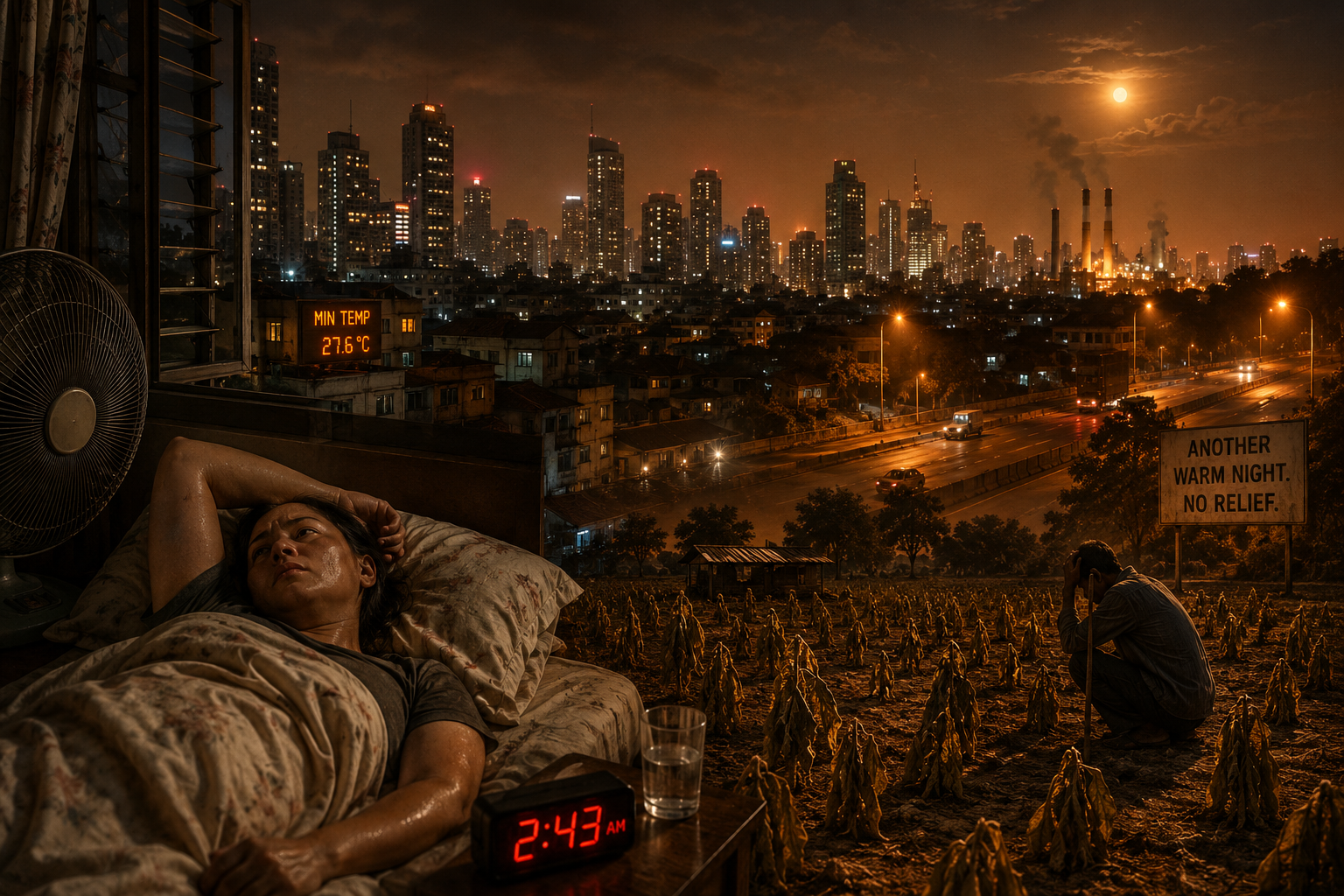
AI generated image
The human body uses the nighttime drop in temperature as a biological signal to repair cells, strengthen memory, regulate hormones, and prepare for the next day. When that decline doesn’t occur, everything from crop yields to heart health begins to suffer.There are many factors driving warming nights, including greenhouse gas accumulation, urban expansion, changing cloud patterns and a planet that has absorbed more heat than it can handle. Each factor feeds off the others in ways that are still being mapped by researchers.
The urban heat island effect: how cities trap the heat of the day
Go out into any major city at midnight in July, and you’ll feel it, a thick, lingering heat that makes no sense. The sun had set hours ago, yet the heat radiated through the streets as if the day had never ended. This is the urban heat island effect, and it is one of the most important and most overlooked factors in hot nights.The criminal is hiding in plain sight: in the city itself.Concrete, asphalt, brick, and steel are the primary building blocks of modern urban life, and they are remarkably efficient heat trappers. Unlike soil or vegetation, which reflect sunlight and release moisture through evaporation, these dense materials behave like thermal sponges. They aggressively absorb solar radiation throughout the day, store it deep within their mass, and then slowly release that stored heat throughout the night. A sun-warmed street or rooftop can remain hot even after midnight, effectively turning entire city blocks into low-grade radiators.Lack of trees in cities is further increasing the problem. Green cover provides shade that keeps surfaces from overheating in the first place, and through transpiration, trees release moisture that cools the surrounding air, nature’s own air conditioning. As cities have expanded, green spaces have replaced parking lots, towers and roads, destroying this natural buffer and sending urban temperatures out of control.Then there’s the heat that cities actively generate. Every car engine idling in traffic, every air conditioning unit pushing hot exhaust onto the street, every industrial process humming at night adds thermal energy directly to the urban environment. In dense metropolitan areas, this anthropogenic heat, heat generated by human activity, can spike local temperatures, especially after dark when natural cooling processes are already diminished by heat-saturated infrastructure.The result is that such cities never really get cold, and for the millions of people who live in them, they don’t get cold either.“Nighttime temperatures are rising fastest in already hot and densely populated areas such as South Asia, the Middle East, Africa and other rapidly urbanizing tropical regions. The World Meteorological Organization has confirmed that 2024 was the hottest year on record, about 1.55 degrees Celsius above pre-industrial levels, the previous decade was the hottest ever. “This global trend is clearly visible in India, where CEEW’s analysis shows that more than 70% of districts have experienced at least five additional very hot nights every year over the past decade compared to the 1982-2011 baseline,” said Dr Vishwas Chitale, Fellow at the Council on Energy, Environment and Water (CEEW).
Greenhouse gases and the blanket of night: why the atmosphere no longer lets heat out
Think of the atmosphere as a blanket wrapped around the Earth. During the day, sunlight passes through it and warms the ground. At night, Earth tries to release that heat back into space, but the blanket is getting thicker, and less heat is getting out.

AI generated image
That thick blanket is made up of greenhouse gases, primarily carbon dioxide, methane and water vapor. These gases absorb heat rising from the Earth’s surface and push it back down, warming the lower atmosphere instead of letting it escape into space. The more of these gases there are, the more heat will be trapped and the warmer our nights will become.Since the Industrial Revolution, CO₂ levels in the atmosphere have increased from 280 parts per million to more than 400, driven primarily by the burning of fossil fuels, and methane and nitrous oxide levels have also increased rapidly. Each additional molecule of these gases adds another layer to that blanket. This matters most at night. During the day, the sun keeps the temperature up regardless. But after sunset, the Earth relies entirely on releasing heat into the atmosphere to cool down. When greenhouse gases prevent that release, nighttime temperatures remain elevated after dark, and the natural cool of night never fully recedes.The numbers testify to this. Over the past 50 years, nighttime temperatures globally have increased about 40 percent faster than daytime temperatures. On the world’s land surface, almost twice as much heat is observed at night as during the day. It’s a quiet but impactful change. The same mechanism that warms our days is warming our nights, doing its most damaging work in the dark, when the planet has no sun to blame and no place left for the heat to hide.“Summer is no longer just about hot afternoons – India is now seeing very hot days, very hot nights and a combined increase in humidity, even in traditionally dry regions, making heat more persistent, more humid and harder for both people and infrastructure to deal with,” Dr Chitale said.
Asymmetric warming: Why are scientists more concerned about night temperatures than day temperatures?
when climate scientists talk global warmingThe public imagines scorching afternoons and record-breaking summer days. But among researchers, it is that night that causes deep concern. Not because the heat of the day is harmless, it’s not, but because what happens after sunset tells a more honest story about the state of the planet.This concept is called asymmetric warming. Day and night are not warming at the same pace. Over most of the world’s land surface, nighttime minimum temperatures are rising faster than daytime maximum temperatures. It’s a distinction that may seem technical, but it is of great importance to climate scientists.Minimum temperatures are difficult to manipulate. They are less affected by short-term weather events, urban activity, or seasonal fluctuations. They reflect the baseline, the bottom of the climate system, and when that bottom keeps rising, it signals that something deep and structural is changing.A hot day can be explained by a passing heat wave, dry weather or summer sunshine. But one hot night, and then another, and then a decade of them – all that points to is that the atmosphere is behaving fundamentally differently. After dark the heat of the planet is decreasing. The insulating effect of accumulated greenhouse gases is not a day’s story; This is going on around the clock, and nights are where it is most clearly visible.This is why minimum temperature trends have become one of the key indicators that climate researchers watch most closely. They act like a vital sign, a pulse check on the planet’s ability to cool itself. And right now, that pulse is heating up night after night, giving the natural world less and less room to recover before the next day begins.

बिजनोर की सोन पापड़ी को मिली नई पहचान, मशहूर मिठाई ‘वन डिस्ट्रिक्ट-वन डिश’ योजना में शामिल

उत्तर प्रदेश सरकार की ‘एक जिला-एक व्यंजन’ योजना के तहत बिजनौर जिले की मशहूर सोन पापड़ी को अब एक नई पहचान मिल गई है. योगी सरकार पारंपरिक व्यंजनों को देश-दुनिया तक पहुंचाने के लिए लगातार काम कर रही है. इसी कड़ी में नजीबाबाद की प्रसिद्ध सोन पापड़ी को जिले के विशेष व्यंजन के रूप में चुना गया है। करीब 75 साल पुराना इतिहास रखने वाली यह मिठाई अपने खास स्वाद और बारीक परतों के लिए जानी जाती है। इस फैसले से स्थानीय व्यापारियों और मिठाई कारोबार से जुड़े लोगों में खुशी का माहौल है. इससे रोजगार और बिजनेस को भी काफी फायदा मिलने की उम्मीद है.
नजीबाबाद की सोन पापड़ी का इतिहास 75 वर्ष पुराना है।
नजीबाबाद की सोन पापड़ी का स्वाद दशकों से लोगों की पसंद बना हुआ है। कहा जाता है कि इसकी शुरुआत करीब 75 साल पहले चतुर्वेदी मिष्ठान भंडार से हुई थी. बेसन से बनी यह मिठाई अपनी बारीक परतों और मुंह में घुलते ही स्वाद के कारण खास पहचान रखती है. चतुर्वेदी परिवार ने इस मिठाई की परंपरा को आज भी बरकरार रखा है। सोन पापड़ी में सूखे मेवे और इलायची का संतुलित इस्तेमाल इसे अन्य मिठाइयों से अलग बनाता है.
अब सोन पापड़ी 15 किस्मों में उपलब्ध है
पहले सोन पापड़ी मुख्य रूप से गोल आकार में बनाई जाती थी, लेकिन समय के साथ बाजार में कई नए डिजाइन आए। अब यह मिठाई काजू कतली स्टाइल, चौकोर डिजाइन और कई आकर्षक कटिंग में उपलब्ध है। बाजार में इसकी लगभग 15 किस्में उपलब्ध हैं। इनमें चॉकलेट फ्लेवर, ड्राई फ्रूट्स और कई अन्य फ्लेवर शामिल हैं। इसकी सबसे बड़ी खासियत यह है कि यह करीब चार महीने तक खराब नहीं होता है, जिससे इसे दूर-दराज के बाजारों में आसानी से भेजा जा सकता है.
निर्यात और रोजगार को बढ़ावा मिलेगा
अब आधुनिक पैकेजिंग तकनीक के जरिए इसकी ताजगी को लंबे समय तक बरकरार रखा जा रहा है, ताकि इसे वैश्विक निर्यात के लिए तैयार किया जा सके। जिलाधिकारी जसजीत कौर के मुताबिक सोन पापड़ी हर वर्ग के लोगों की पसंदीदा मिठाई है. इसे बच्चे, बूढ़े, अमीर और गरीब सभी पसंद करते हैं। उन्होंने बताया कि इस मिठाई को बिजनौर के विशेष उत्पाद के रूप में सूचीबद्ध किया गया है। इस पहल से लगभग 500 परिवारों को प्रत्यक्ष और अप्रत्यक्ष रूप से रोजगार मिलने की संभावना है। स्थानीय व्यापारियों को उम्मीद है कि इससे नजीबाबाद की सोन पापड़ी को देश ही नहीं बल्कि विदेश में भी नई पहचान मिलेगी.
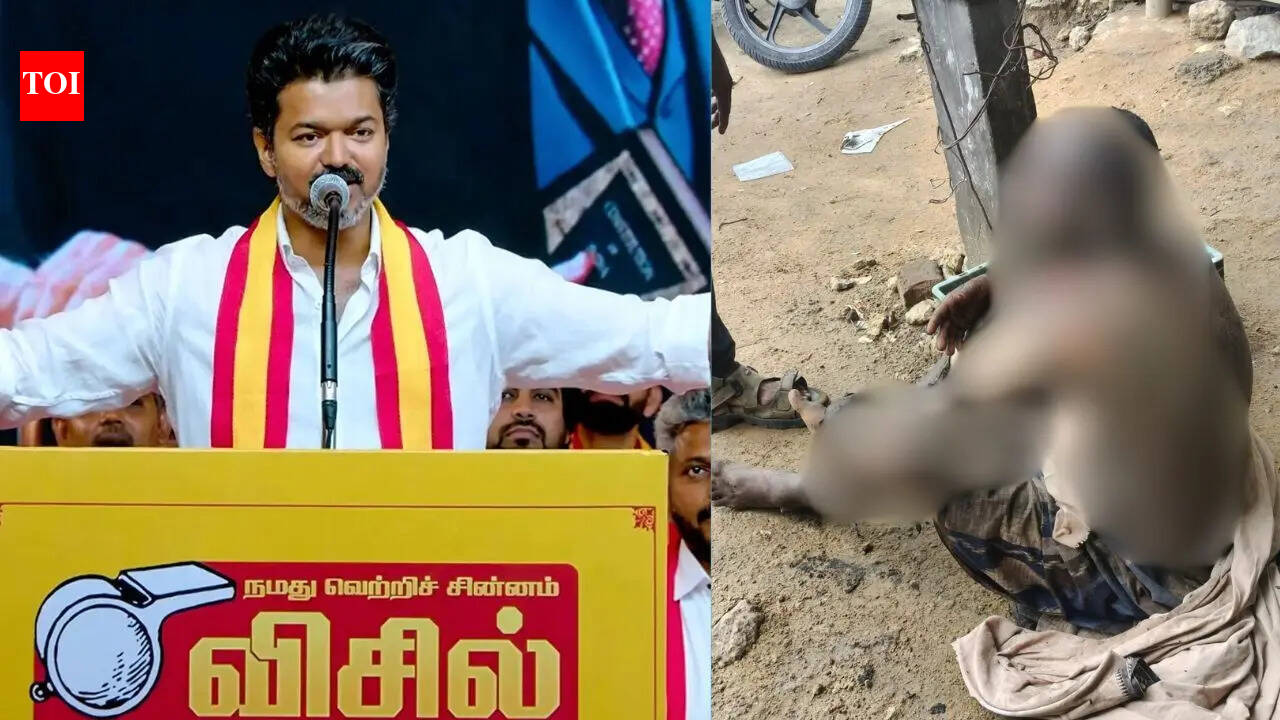
Tamil Nadu government formation: TVK official attempts self-immolation due to delay in Vijay’s ambition to become Chief Minister. madurai news

Tirunelveli: A 47-year-old Tamilaga Vetri Kazhagam (TVK) functionary attempted self-immolation near Settikulam in Tirunelveli district on Saturday, reportedly distressed by his party leader’s delay. VictoryTo hold the post of Chief Minister.The victim has been identified as Isakiyappan, who works as TVK branch secretary in Puthumanai village.
According to sources, Isakiappan, a staunch devotee of TVK chief Vijay, had attracted local attention four months ago by performing a ritual by piercing his body with a 16-foot long ‘vel’ (spear) as a penance to ensure Vijay’s victory in the upcoming elections.Police officials said Isakiyappan had recently been showing signs of mental distress due to the alleged slow pace of TVK’s political development.He suddenly sprinkled kerosene oil on himself and set himself on fire.People standing nearby ran to save him and extinguished the fire. He was initially taken to a local hospital, but later transferred to Kanyakumari Government Medical College Hospital for further treatment and intensive medical care.Police have registered the case and are investigating the incident.
voting
Do you think political party leaders should be more sensitive to the mental health concerns of their supporters?

UAE education: UAE to decide on remote or in-person classes on May 10 as schools and universities remain on alert World News

Students, parents and teachers in the UAE are awaiting a key announcement on May 10 that will determine whether schools and universities will continue with remote learning or return to classes fully next week.The UAE Ministry of Education confirmed that the country’s learning model for the upcoming period, whether online or in-person, will be announced after authorities complete a nationwide security assessment in coordination with relevant agencies. The Ministry of Higher Education and Scientific Research said universities and higher education institutions would also receive updated instructions on Sunday evening.Dubai’s Knowledge and Human Development Authority (KHDA) is expected to issue separate guidance for private schools and educational institutions in the emirate. Officials said the decision prioritizes two things: protecting students and staff and ensuring that education continues without disruption.The announcement comes after UAE schools, nurseries and universities moved back to remote learning from May 5 to May 8 due to renewed regional tensions and emergency alerts across the country.Officials stressed that all examinations and international assessments will continue in-person as per the approved schedule, even as a review of the broader teaching model is underway.
Why did UAE schools return to e-learning?
The latest shift to online learning follows heightened regional security developments linked to renewed Iranian attacks earlier this month.On 4 May, the UAE emergency alert system was activated several times after authorities confirmed the interception of ballistic missiles, cruise missiles and drones launched from Iran. Officials later confirmed that UAE air defense systems had successfully shot down 12 ballistic missiles, three cruise missiles and four drones.As a precautionary measure, education officials immediately ordered a nationwide transition to remote learning in public and private schools, universities and nurseries.The UAE’s education sector has now become highly adaptable to the rapid shift between classroom and online learning following years of operational planning following the COVID-19 pandemic. School leaders say institutions are now able to change learning models within hours while maintaining full academic schedules.Many schools immediately resumed regular online timetables, digital attendance systems and virtual classroom teaching without any major disruption.Officials repeatedly stressed that student safety remains the country’s top priority while ensuring educational continuity during a period of uncertainty
UAE’s flexible learning model
The UAE’s ability to rapidly transition between online and classroom learning is being seen as one of the strongest results of the country’s post-pandemic education reforms.Earlier this year, UAE students recently returned to physical classrooms on April 20 after nearly seven weeks of remote learning linked to regional tensions. Authorities conducted extensive safety inspections, operational checks and employee preparation programs before reopening campuses nationwide.Even after campuses reopened, regulators instructed schools and universities to be prepared for immediate changes if circumstances change again.Many universities adopted hybrid systems, allowing some students to continue learning remotely depending on course requirements and operational preparation. Institutions including Middlesex University Dubai and the American University of Sharjah implemented flexible approaches combining online and physical teaching.Education authorities have also introduced a strict framework for the quality of distance education.In Abu Dhabi, the Abu Dhabi Department of Education and Knowledge (ADEK) instructed schools to maintain full teaching standards during online education. Schools were required to conduct live interactive lessons, monitor attendance daily and conduct regular student welfare checks.Officials stressed that distance education should provide the same academic quality as classroom teaching, and not an abbreviated or simplified program.
What can you expect next?
At the moment, schools and universities across the UAE are in a state of readiness as authorities monitor the development.Education regulators said institutions are ready to pursue distance learning, hybrid systems or full classroom reopening depending on the outcome of ongoing safety reviews.Parents have largely embraced the UAE’s increasingly flexible education system, although many keep a close eye on updates due to concerns about exams, transport, child care arrangements and student welfare.School operators say one of the biggest changes since the pandemic is how quickly teachers, parents and students can now shift between learning methods with minimal disruption.The upcoming May 10 decision is expected to impact lakhs of students in public schools, private institutions, universities and nurseries across the country.Until then, officials will continue to emphasize peace, preparedness and continuity as the UAE balances education stability with emerging regional development.
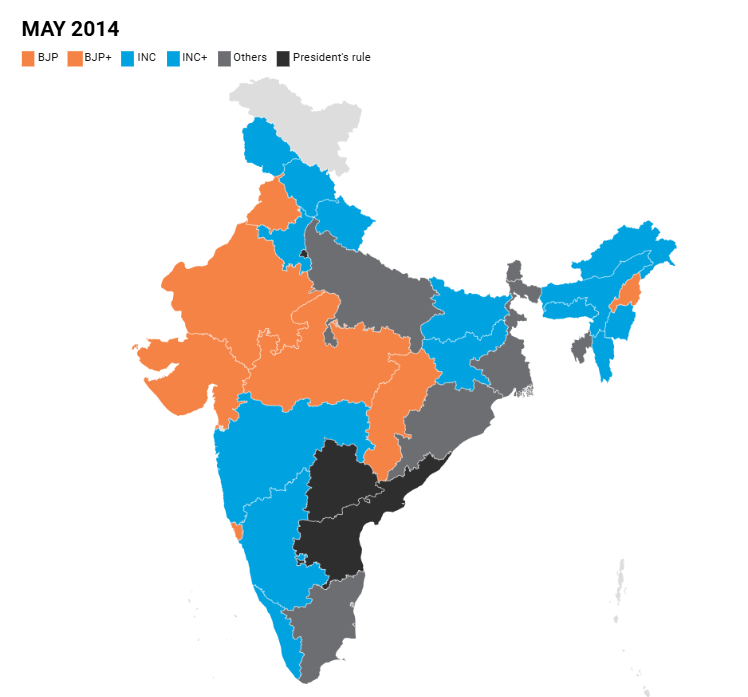
From Haryana to West Bengal – How PM Modi expanded BJP’s reach since 2014 india news
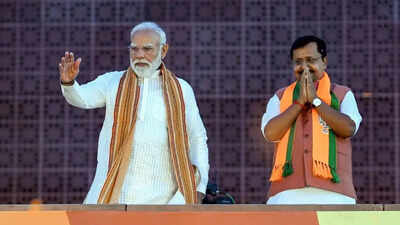
New Delhi: After the Congress lost seven states in 1967, a popular saying went that one could travel by train from Delhi to Howrah without passing through a Congress-ruled state.Almost six decades later, the Bharatiya Janata Party has fulfilled another adage that the journey from Chandigarh to Howrah in Haryana will now pass only through BJP-ruled states.On May 4, after a landslide victory in West Bengal, Suvendu Adhikari took oath as the Chief Minister, giving the BJP its first government in the state and making it the ninth state where the party has appointed a BJP Chief Minister for the first time since Narendra Modi became Prime Minister in 2014.
The BJP’s expansion began with victories in the Haryana and Maharashtra assembly elections in 2014, followed by Assam and Arunachal Pradesh in 2016, Manipur in 2017, Tripura in 2018, Odisha in 2024, Bihar in 2026 and now West Bengal.
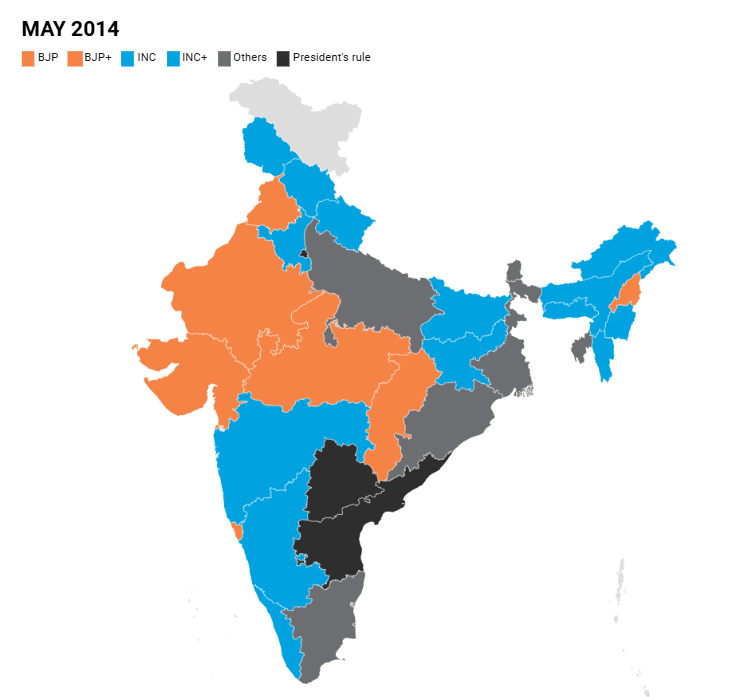
For the first time in Haryana, BJP formed the government on its own and made Manohar Lal Khattar the Chief Minister.In Maharashtra, Devendra Fadnavis became the first BJP chief minister of the state after the party emerged as the single largest party in the assembly elections and formed the government with partners in the Mahayuti alliance.The BJP expanded its reach in the Northeast by winning Assam in 2016, where Sarbananda Sonowal became the party’s first chief minister in the state.Since then, the BJP has retained power in Assam and has since won two consecutive assembly elections, including the one held in April.In the same year, the BJP formed its first full-fledged government in Arunachal Pradesh after a major political realignment.Congress leader Pema Khandu became the Chief Minister in July 2016 amid a prolonged political crisis. Two months later, he and most of the Congress MLAs joined the People’s Party of Arunachal, an ally of the BJP.In December that year, Khandu and 33 MLAs joined the BJP, giving the party a clear majority and forming its first stable government in the state.The BJP had earlier formed the government in Arunachal Pradesh for some time in 2003 under the leadership of former Chief Minister Gegong Apang. Apang left Congress and joined BJP, but his government lasted only 44 days and then he returned to Congress.
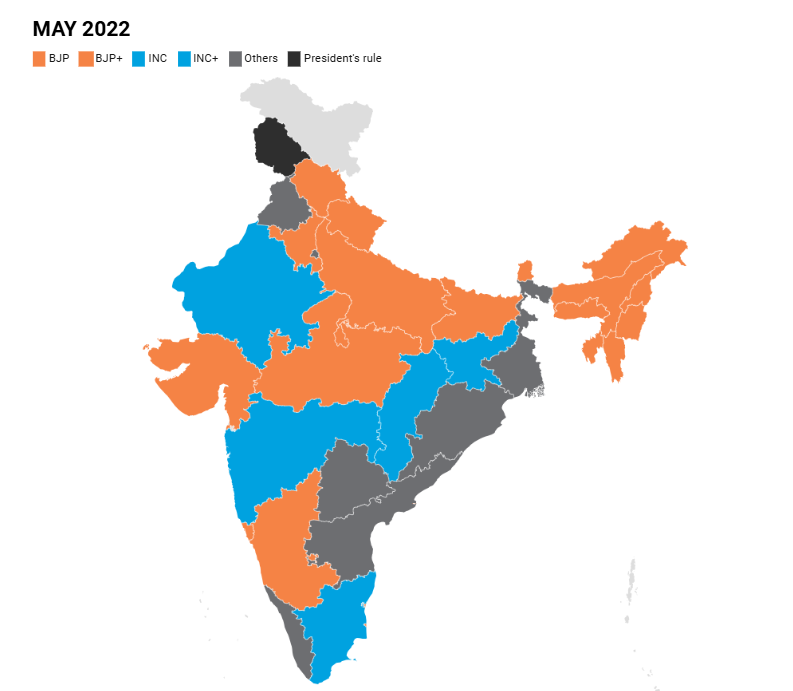
In 2017, the BJP formed a post-poll alliance with the National People’s Party, Naga People’s Front and regional parties in Manipur to install N Biren Singh as the Chief Minister, the party’s first government in the border state.A year later, the BJP ended the Left Front’s decades-long rule in Tripura and formed its first government under the leadership of Biplab Kumar Deb.The party registered another major success in eastern India by defeating Biju Janata Dal in Odisha in 2024. Mohan Charan Majhi was then sworn in as the first BJP Chief Minister of the state, ending Naveen Patnaik’s 24-year uninterrupted tenure.Also read: BJP’s Bharat Jodo Yatra: From 7 to 22 states, how did BJP create the political map of India?In Bihar, where the BJP was part of Nitish Kumar-led coalition governments for a long time, the party did not have its own chief minister until 2026.Nitish, who served as chief minister for several terms with brief interruptions over two decades, stepped down earlier this year and moved to the Rajya Sabha. After his departure, BJP appointed Samrat Chaudhary as the party’s first Chief Minister in the state.
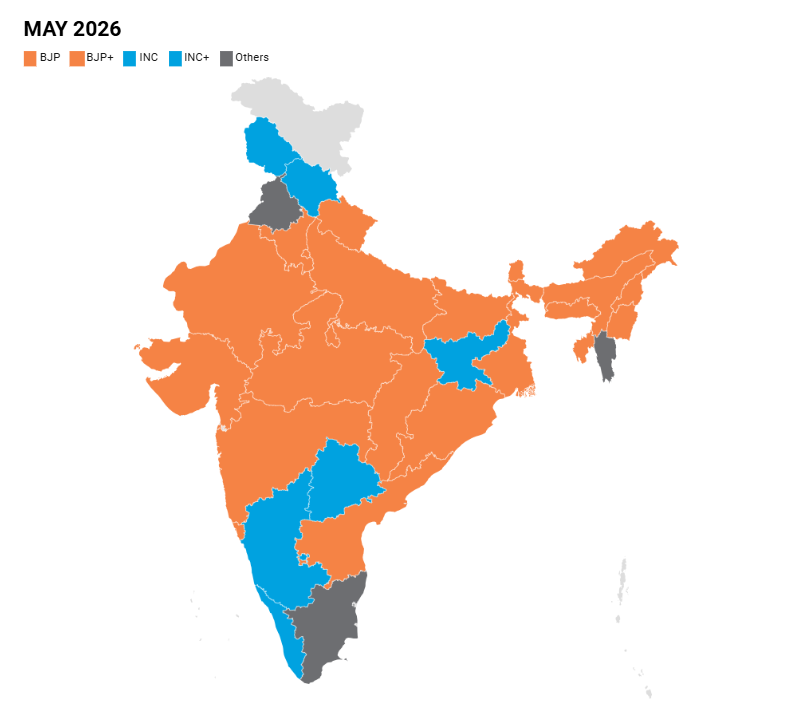
With its victory in West Bengal, the BJP has now formed the government in another state that was long considered politically elusive for the party. BJP won 207 out of 294 assembly seats.The party’s rise in eastern and northeastern India also reflects a major political shift in the last decade. Once seen as a largely Hindi-speaking force, the BJP has steadily expanded in areas where it historically had little organizational presence, and has benefited from a mix of organizational growth, welfare outreach, leadership projection and the collapse or fragmentation of opposition parties.BJP national spokesperson Shehzad Poonawala said the party’s expansion under the leadership of Prime Minister Modi reflects its governance model and growing public acceptance.He said, “Under the leadership of Prime Minister Modi, the BJP and the NDA have continuously expanded their political footprint across India on the basis of governance, performance and delivery. In states that never had a BJP government or a BJP chief minister before, BJP governments were elected after Modi became the Prime Minister.”“Prime Minister Modi has now become synonymous with the pro-incumbency wave. In the recent elections, BJP-NDA governments have returned to power in states like Assam and Puducherry, while governments in many opposition-ruled states have faced anti-incumbency wave,” he said.With West Bengal now adding to its seats, the rise of the BJP marks one of the most significant political expansions in post-independence India – transforming the party from a largely Hindi-speaking force into a major pan-India political machine.
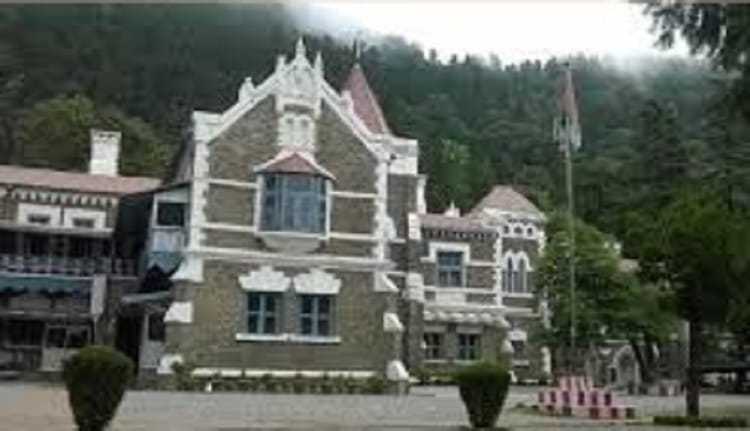
उत्तराखंड: हाईकोर्ट का सख्त रुख, नियमों का उल्लंघन करने वाले दो रिसॉर्ट्स के खिलाफ कार्रवाई के निर्देश – हाईकोर्ट ने नियमों का उल्लंघन करने पर दो रिसॉर्ट्स के खिलाफ कार्रवाई का निर्देश दिया
खुर्पाताल स्थित दो रिसॉर्ट्स द्वारा नियमों का पालन किए बगैर संचालन को लेकर दायर जनहित याचिका पर सुनवाई के बाद हाईकोर्ट ने मामले की अगली सुनवाई के लिए 3 जून की तारीख तय की है और पक्षकारों को अपना जवाब दाखिल करने का निर्देश दिया है. मामले की सुनवाई मुख्य न्यायाधीश मनोज कुमार गुप्ता एवं न्यायमूर्ति सुभाष उपाध्याय की खंडपीठ के समक्ष हुई. मामले के अनुसार, हरिद्वार निवासी ललित मिगलानी ने हाई कोर्ट में जनहित याचिका दायर कर कहा था कि उत्तराखंड पर्यावरण नियंत्रण बोर्ड की ओर से दो होटलों यानी मैसर्स हॉलिडे होम और मैसर्स डायनेस्टी रिजॉर्ट को नियमों का पालन नहीं करते हुए पाए जाने पर मैसर्स डायनेस्टी रिजॉर्ट के खिलाफ 20 अप्रैल 2026 को क्लोजर ऑर्डर जारी किया गया था।
बोर्ड ने कहा कि प्रदूषण नियंत्रण बोर्ड सभी वैधानिक अनुपालन पूरा होने तक होटल को बंद करने की तत्काल कार्रवाई करेगा। याचिकाकर्ता ने कहा कि जिस मेसर्स डायनेस्टी रिजॉर्ट को बंद करने का आदेश पारित किया गया है वह अभी भी चल रहा है। बोर्ड के अधिवक्ता की ओर से कहा गया कि 48 घंटे के अंदर यह सुनिश्चित किया जायेगा कि उक्त होटल को सभी नियमों का पालन होने तक बंद रखा जाये. कोर्ट ने नये शामिल प्रतिवादियों को स्पीड पोस्ट के जरिये नोटिस जारी करने का निर्देश दिया.
कोर्ट ने मामले की अगली सुनवाई के लिए 3 जून की तारीख तय की है. याचिकाकर्ता के वकील को जिला मजिस्ट्रेट, नैनीताल और उप-विभागीय मजिस्ट्रेट, नैनीताल को भी प्रतिवादी के रूप में शामिल करने की अनुमति दी गई है, उन्होंने कहा कि वे यह सुनिश्चित करेंगे कि अस्थायी स्टॉल, जिन्हें कथित तौर पर जलग्रहण क्षेत्र से हटा दिया गया था, उस क्षेत्र पर दोबारा कब्जा न करें। इस संबंध में संबंधित एसडीएम को अगली तारीख तक अनुपालन रिपोर्ट पेश करने को कहा गया है. अदालत ने यह सुनिश्चित करने के लिए जिला प्रशासन से नियमित निगरानी करने को कहा है कि इस क्षेत्र पर किसी भी व्यक्ति द्वारा दोबारा कब्जा न किया जाए।