Italian Open: Brilliant Iga Swiatek beats Jessica Pegula to reach semi-finals

Three-time Italian Open champion Iga Swiatek produced one of her sharpest performances of the season to beat American fifth seed Jessica Pegula 6-1, 6-2 and book her place in the semi-finals in Rome on Wednesday.

The Polish fourth seed needed just 67 minutes to defeat Pegula in a one-sided quarter-final, confirming her growing form on clay ahead of the French Open later this month.

Swiatek came into the contest full of confidence after an emphatic win over Naomi Osaka in the previous round and she wasted no time in imposing herself on Pegula. The 24-year-old raced to a 5-0 lead in the opening set before the American finally managed to get on the board and avoid the bagel.

After that Pegula got some relief. Swiatek continued to dictate rallies with her trademark depth and movement, allowing her opponent only three games throughout the match. Pol produced a brilliant all-round performance to finish with 15 winners compared to Pegula’s six.

“I feel much better,” Swiatek said after the win. “I have a lot of confidence in my shots. I used it from the beginning of the match today and kept the pressure on JC, so I’m really happy with the way I played.”

The win marked Swiatek’s first win over a top-10 opponent this season and continued an encouraging turnaround after a difficult start to the year. The former world number one began working with Rafael Nadal’s former coach Francisco Roig last month as she looked to rediscover her best form on clay.

A deep run in Rome would give Swiatek a timely boost before the start of the French Open on May 24. She faced a disappointing performance at the Madrid Open earlier this month, where she had to retire in the round-of-32 due to illness.

The road to the title in Rome has become even more favorable after world number one Aryna Sabalenka suffered an unexpected third round defeat against Romania’s Sorana Cristea.

Swiatek will face defending Australian Open champion Elena Rybakina or Ukrainian seventh seed Elina Svitolina in the semi-finals.

In the other last four matches, Cirstea will face two-time Grand Slam winner Coco Gauff.

– ends

published by:

-Saurabh Kumar

Published on:

May 13, 2026 20:27 IST

Source link

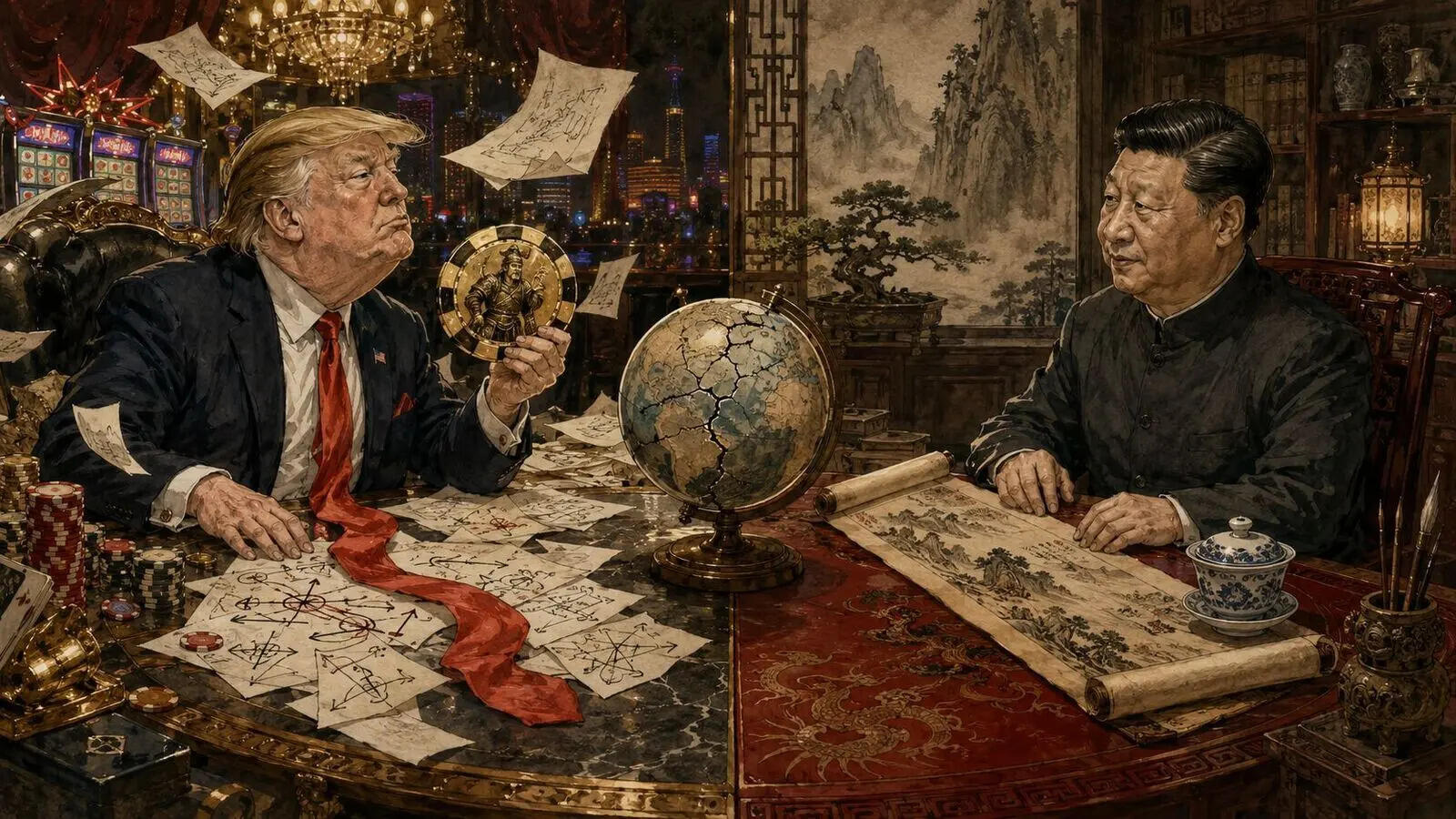
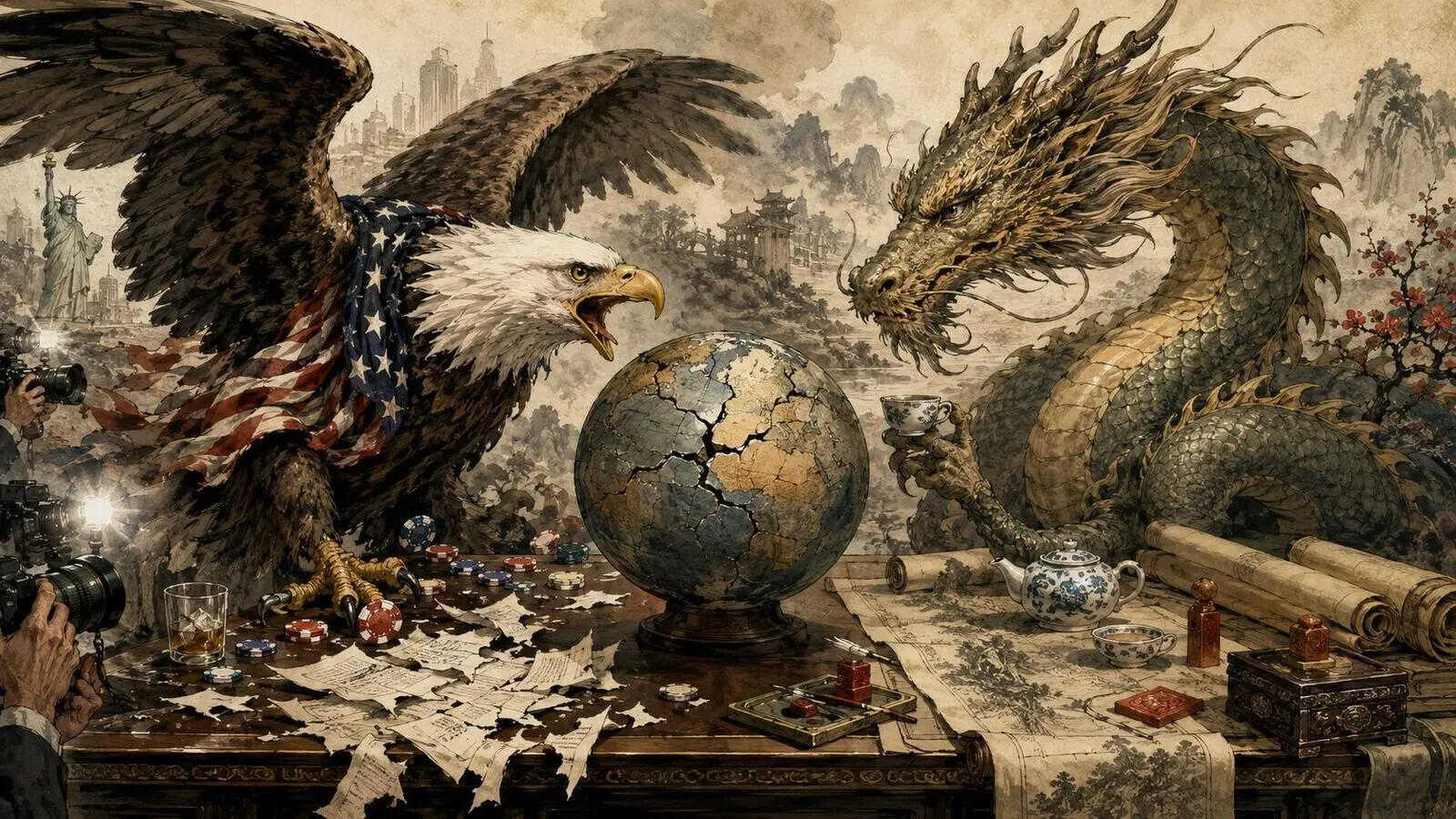
Don Tzu vs. ‘Philosopher King’ Xi: Decoding the worldviews of Donald Trump and Xi Jinping world News

Don Tzu vs. 'Philosopher King' Xi: Decoding the worldviews of Donald Trump and Xi Jinping
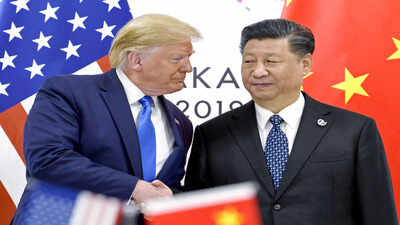
FILE – President Donald Trump, left, shakes hands with China’s President Xi Jinping during a meeting on the sidelines of the G-20 summit in Osaka, Japan, on June 29, 2019. (AP Photo/Susan Walsh, File)

In April, a particular meme took over the Chinese Internet: Don Tzu. an illustration of donald trump And Sun Tzu, it imagined the 47th President of the United States as a strategic sage whose wisdom somehow escaped both grammar and causality. The meme was filled with Trumpian aphorisms on “winning”, including gems like “Break the enemy’s blockade by blocking the enemy’s blockade”, “If you don’t know what you’re doing, neither does your enemy”, and “You can’t lose if you don’t have a goal.” Sun Tzu wrote The Art of War. Don Tzu appears to have written The Art of What Is Happening?The meme worked because it revealed something real about how Trump uses power. He does not practice strategy in the old sense with principles, discipline, patience and a clearly defined end position. If one is generous, his genius lies in turning confusion into leverage. He makes so much noise that everyone else has to explain it. He declares victory before the war, during the war, after the war and sometimes instead of the war. In the Trumpian universe, the declaration is not a description of reality. There is an effort to change this.Which brings us to the man standing across the table. If Trump is Don Tzu, Xi Jinping The philosopher is the king. A recent New York Times report on Xi behind closed doors described a ruler who has no close domestic rivals, who is willing to preach to weaker leaders, and who models himself on ancient Chinese rulers who combined political authority with civilizational learning. Don Tzu is funny because he turns strategy into nonsense. Xi is annoying because he turns other people’s nonsense into proof of his own seriousness. Trump moves into politics like a man convinced the room exists because he has entered it. Xi approaches politics like a man who is convinced that this room has existed for 5,000 years and is patiently waiting for everyone else to figure out the correct form of address.

art of winning without any consistency

Trump’s philosophy is often mistaken for the absence of philosophy, but if practiced with enough confidence the absence can become a system. Every problem becomes a deal, every deal becomes a performance, every performance needs a winner, and the winner, ideally before even checking the paperwork, is Donald Trump.

trump vs xi

That’s why Trump’s foreign policy has always had the air of a casino floor where there’s also a house, a bouncer, and a guy selling souvenir steaks near the exit. Alliances are unpaid invoices. Trade deficit is an insult. Summits are televised manhood competitions in which someone has to come forward afterward and tell the camera that the conversation was historic, beautiful, and very strong. Form is more important than substance because form is substance.Trump’s inconsistency has political utility because it defies explanation. Allies, enemies, markets, bureaucrats, generals and journalists spend enormous energy trying to figure out whether his latest statement is policy, provocation, bargaining chip, grievance, brain freeze or some previously unseen fifth state of the matter. If you don’t know what you’re doing, your enemy doesn’t know either. If there is no stated objective, there can be no failure. If reality contradicts the statement, reality may be accused of liberal bias.

uses of she and order

Xi appears to have already understood Trump, though not with admiration. In details of Xi’s last meeting with Barack Obama in Lima in 2016, Trump had shocked the world by winning the US presidential election, and Xi was shocked that American voters could choose such an unconventional person. Obama tried to portray Trump’s rise as the result of American economic frustration, including anger over lost manufacturing jobs and intellectual property theft. Xi was reportedly angry. He put down his pen, folded his hands and uttered a line that sounded less like diplomatic analysis than a verdict carved on a palace wall: If an immature leader throws the world into chaos, the world will know who to blame.The moment is significant because it reflects Xi’s view of Trump, America and the consolidation of democracy. Trump was proof that the American system has lost the ability to filter seriousness, that democracy can turn outrage into leadership, that the liberal order has given rise to a man who treats institutions as props and norms as traps. For a leader who has spent years presenting China as stable, disciplined and historically consistent, Trump’s rise was a gift from the gods of comparative politics. Beijing did not need to make any arguments about Western disarray. America had exported the live stream.Xi’s political performance is built around the opposite proposition: chaos is Western, order is Chinese, and history has finally found its adult superintendent. The Chinese Communist Party claims legitimacy not just from revolution or economic development, but from its role as custodian of Chinese history. Xi has intensified that claim. He speaks as if China is not simply a modern nation-state, but a civilization that was temporarily out of whack for a few centuries and is now regaining its rightful place in the universe. During Obama’s 2014 visit to Beijing, aides were expected to discuss the South China Sea. Instead, Obama and Xi reportedly had a long conversation about whether an individualist society and a collectivist Confucian society could be compatible. That was politics conducted as a study of civilization.

How do they treat the middle powers?

The difference between Trump and Xi in their dealings with middle powers is highlighted with unusual clarity. Trump treats the middle powers like supporting actors in a drama of American grievances. Canada, Denmark, NATO allies and trading partners are often included not as diplomatic entities with their own constraints and dignity, but as extras in White House productions about American strength. The Greenland case is the clearest example of this. Trump’s recurring interest in acquiring or controlling the autonomous Danish territory turned an ally’s sovereign question into a dominance ritual, forcing the islanders and Denmark to explain that they were not distressed assets on a golf-course balance sheet. Trump’s approach is pressure attached to a microphone. He doesn’t just want concessions; He wants other countries to be forced to obey him.

chaos vs order

Xi’s style of behavior toward middle powers is distinct, though not necessarily soft in substance. He doesn’t need a carnival. He prefers controlled rooms, stern smiles and reprimands as protocol. exchange with 2022 justin trudeau remains the clearest example. Xi confronted the Canadian leader at the G20 in Indonesia after details of their previous conversation emerged in the media. Xi told Trudeau that this was not appropriate and not how the negotiations were conducted. Trudeau tried to explain that Canada believes in open dialogue and agree-to-disagree diplomacy. Xi cut him off, said he should first create conditions, shook his hand and left.That brief exchange contained the grammar of Xi’s power. He was not objecting to just a leak. He was objecting to the violation of hierarchy. Speak in the right room. Raise objections in the right tone. Do not embarrass the Sovereign in public. Mark Carney’s account of his meeting with Xi points in this direction. According to Carney, Xi spent the first part of their conversation explaining how he wanted the personal relationship to work. The message, as Carney explained, was simple: No surprises, be direct, raise the issues privately and don’t lecture me in public.So the difference is sharp. Trump humiliated the middle powers by publicly applying pressure; Xi disciplines protocols by sanctifying them. Trump uses them to demonstrate that America can still push. Xi uses these to demonstrate that China should not be talked about as if it were another country.

complaint and destiny

His criticisms of democracy are similarly revealing. Trump’s criticism is emotional. Democracy is legitimate when it loves it, questionable when it rejects it and sacred when it returns it to power. Xi’s criticism is historical. Joe Biden has reiterated Xi’s statement in which he said that democracy cannot survive in the 21st century because consensus is very difficult and autocratic rule can escalate rapidly. For Trump, democracy is a test of loyalty. For Xi, it is a museum exhibit: perhaps brilliant, certainly interesting, but too slow for the coming century.His foreign policies flow naturally from these dispositions. Trump wants deals. Xi wants architecture. Trump wants obvious concessions: purchases, tariff relief, the promise of factories, a handshake that can be sold to voters. Xi wants slow and deep changes: acceptance of China’s red lines, respect for its status, and recognition that Taiwan is not just a flashpoint but a sacred question of national integrity. Trump’s time horizon is the news cycle, market reaction, and rallying applause. Xi’s time horizon is the Party Congress, the five-year plan and the historical arc. Trump wants the trophy. Xi needs a map.

chaos of the new world

The easy read is that Trump and Xi are opposites: Trump is anarchy, Xi is order; Trump improvised, Xi planned; Trump shouted, Xi was lecturing; Trump is the casino, Xi is the court. It’s more disturbing to read in depth. They are rival answers to the same crisis. Both have emerged in an era when the old liberal order no longer commands automatic trust. Both speak on complaints. Both distrust barriers. Both privatize power. Both view rules as tools created by others for their own benefit.The difference is in the method. Trump wants every morning to start with his mood. Xi wants every century to start from China. Trump insisted on reality and twisted it. Xi twisted reality by historicizing it. Trump turns politics into a spectacle so attention becomes a privilege. Xi turned politics into destiny, so power became an inevitability.Don Tzu and the philosopher King Xi are what happens when the old world loses faith in its own rules. A man says there are no rules, only winning. Another says there are rules, but China wrote them before you were born. The rest of the world sits between them, waiting to know whether the future will be shaped by the man who treats geopolitics like a casino, or by the man who treats it like a dynasty with broadband.

Source link

‘This is the right thing’: Former Army chief Naravane supports RSS general secretary Hosabale on talks with Pakistan. india news

'This is the right thing': Former Army chief Naravane supports RSS general secretary Hosabale on talks with Pakistan
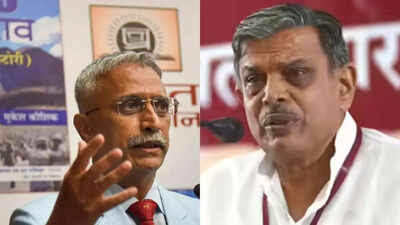
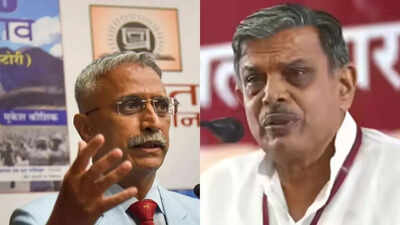
General (Retd) MM Naravane; RSS General Secretary Dattatreya Hosabale

New Delhi: Former Army chief General (retd) Manoj Mukund Naravane on Wednesday supported Rashtriya Swayamsevak Sangh (RSS) general secretary Dattatreya Hosabale’s stance on better people-to-people contacts between India and Pakistan and said stronger ties between citizens of the two sides can help improve bilateral relations.Read this also ‘India should not close the doors of talks with Pakistan’: RSS general secretary Dattatreya HosabaleHe said common people on both sides of the border “have nothing to do with politics”.“The common people live on both sides of the border, they have the same problems of ‘roti, kapda aur makaan’ (food, clothing and shelter). The common man has nothing to do with politics. When there is friendship between two people, there will be friendship between the two countries too,” Naravane told PTI.The former army chief said, “This is the right thing. People-to-people contact is important.”Naravane’s comments come a day after Hosabale, the second-ranking RSS leader after Sangh chief Mohan Bhagwat, said that India should keep the channels of dialogue open with Pakistan.“If Pakistan is trying to carry out Pulwama-like incidents, we will have to respond appropriately as per the situation… At the same time, we should not close the doors. We should always be ready to engage in dialogue,” Hosabale told PTI.He said, “People-to-people ties can reduce India-Pakistan tensions because we have cultural ties and we were once one nation. I strongly believe that civil society contacts will eventually help normalize relations with Pakistan; this should be attempted more now.”Hosabale urged Pakistani players, scientists and civil society members to “move forward” for peace and said the neighboring country’s military “cannot be trusted”.The RSS is the ideological guru of the ruling Bharatiya Janata Party (BJP).Naravane, who served as the Army chief from December 2019 to April 2022, was in the news in February when excerpts from a chapter on the India-China Ladakh crisis, mentioned in his unpublished memoir, were quoted by opposition leader Rahul Gandhi to target Prime Minister Narendra Modi.

Source link

Angelina Jolie’s father Jon Voight married Cecil B. DeMille appeals to meet actress one last time before leaving Los Angeles amid property listing english movie news

Angelina Jolie's father Jon Voight married Cecil B. DeMille appeals to meet actress one last time before leaving Los Angeles amid property listing
Rumors of Angelina Jolie’s move abroad have sparked a wave of emotions from her father Jon Voight. The thought of distance increases her concerns about their fragile relationship; He longs for one last chance to see her before she leaves.

angelina jolieHer father is reportedly concerned about the possibility of moving away from Los Angeles, Jon VoightEmotional and worried about their already strained relationship. The Oscar-winning actor has previously spoken about his desire to live abroad when his youngest children turn 18. Now, Voight fears the move could create more distance between them and is reportedly asking Angelina to see him before he leaves town.

Jon Voight is worried about Angelina Jolie leaving LA

According to In Touch, Jon Voight is battling reports that Angelina Jolie is planning to leave Los Angeles and start over elsewhere. The outlet reported that the 87-year-old actor fears he may never get another chance to see his daughter after she leaves.An insider tells In Touch, “It’s taking a toll on him. Now, he’s begging Angie to meet him at least one last time before he leaves town.”The report states that John and Angelina’s relationship became more strained in 2024 after he commented on his long divorce battle with Angelina. brad pitt. The former couple filed for divorce in September 2016 after two years of marriage.The insider said, “John and Angelina barely speak to each other or see each other these days. But it’s not for lack of effort on his part. He still checks birthday and holiday messages, asks about the kids and prays that one day they’ll be able to put aside their differences and spend quality time together. He misses Angie desperately. John realizes that Angie is ready to start over. But his move still makes her seem a little cold,” the insider said.

Angelina Jolie plans to live life abroad after divorce

Angelina sparked fresh discussion about leaving Los Angeles during an August 2024 interview with The Hollywood Reporter. She said she only lives there “because I have to live here after the divorce.”Angelina and Brad have six children: Maddox, 24, Pax, 22, Zahara, 20, Shiloh, 19, and twins Knox and Vivienne, 17. The twins will turn 18 on July 12 this year.Angelina said, “When you have a big family, you want them to have privacy, peace, security. I have a home now to raise my children, but sometimes it can be too much space… The humanity I found around the world is not what I grew up with here. I will spend a lot of time in Cambodia. I will spend time visiting my family members, no matter where they are in the world.”The actor has also listed his California compound, which was once owned by film producer Cecil B. DeMille, for US$29.85 million.Angelina and John remained separated for nearly seven years before reuniting in 2010 with Brad’s encouragement. In 2017, Angelina told Vanity Fair that John was “very good at understanding that he needs his grandfather at this point. He knows this kind of rule – don’t force him to play with you.”They have different political views, but they have worked on their relationship for 15 years. Angelina’s mother, Marcheline Bertrand, divorced Voight due to adultery when Angelina was a child. Marchelin died in 2017 at the age of 56 after battling breast cancer and ovarian cancer.

Source link

The underground secret world of Mexico City: ancient temples, ritual skulls and a lost civilization that still lurks beneath modern streets. world News

The underground secret world of Mexico City: ancient temples, ritual skulls and a lost civilization still hidden beneath modern streets

Beneath Mexico City’s modern skyline, something old still quietly exists. On the surface, it is a crowded capital full of traffic, offices and constant movement. But just a few meters below, another world appears to exist, one almost frozen in time. Ancient temples, burial courtyards, carved stones and ceremonial remains are hidden beneath layers of concrete and history. It is not visible in everyday life, yet keeps emerging in bits and pieces. Workers digging foundations often find unexpected traces of the past. Archaeologists say the city feels like a living archive, where every excavation can open a new chapter of an old civilization that never completely disappeared.

Tenochtitlan’s buried history under modern Mexico City development

The center of Mexico City is located directly above what was once the Mexica capital of Tenochtitlan. It was a powerful and highly organized city built on islands in a lake. Experts suggest that it was one of the most advanced urban settlements in the Americas before the Spanish conquest. After the arrival of the Spaniards, much of the old city was destroyed or buried under new construction. Churches, palaces, and roads were built directly on sacred Mexica sites. Over time, the original city became hidden under the growing colonial capital.According to the BBC report, even today traces of that ancient world continue to emerge. Archaeologists working near the historic center have discovered temple platforms, ritual objects, and the remains of ceremonial structures. These discoveries show that large parts of the ancient city are still untouched by modern buildings. It is a layered landscape where the past and the present lie virtually on the same ground.

The underground temple beneath the Metropolitan Cathedral of Mexico City

The most fascinating example of this hidden history is located beneath the Metropolitan Cathedral in Mexico City. Archaeologists have found remains associated with the Templo Mayor, the main religious center of the Mexica civilization. This temple was once in the center of Tenochtitlan and was dedicated to powerful gods. Today, parts of its base still exist underground, just beneath busy streets and religious buildings.Tourists can now take guided tours of these underground places. As they descend below ground level, the noise of the city subsides, replaced by stone walls and ancient foundations. Some people find this experience disturbing, while others find it extremely fascinating. Experts say these underground remains help reconstruct how the ancient city was once organized. They also show how deeply connected modern Mexico City is to its pre-Hispanic past.

Find skull racks, ball courts and rituals beneath Mexico City

Over the years, excavations have revealed surprising and sometimes shocking findings. Archaeologists have unearthed a large rack of skulls, which is believed to have been used for ritual performances. Hundreds of skulls were found arranged in structured patterns, suggesting that they were once part of a ceremonial forum. Nearby, the remains of a ball court were also discovered, where the ancient Mesoamerican ball game was played using heavy rubber balls and physical skill.Other discoveries include religious offerings placed near the temple stairs. These include animal bones, shells, coral and carefully arranged objects. Some discoveries reveal connections to important rulers of the Mexica civilization. Experts believe that further structures, including possible tombs, may still be hidden beneath the city. Each excavation appears to add another piece to a much larger puzzle that is still far from complete.

The sinking city reveals secrets beneath Mexico City

Mexico City’s geological foundation is difficult, making the process more challenging. Mexico City lies at the former bottom of a lake that is slowly sinking at different rates in different places. Buildings lean, roads crack, and underground utilities begin to stir. According to archaeologists, due to constant shaking of the foundation, some buried artefacts get exposed.Today, technological advancements are used to survey underground areas through radar and 3D scanners. Despite technological advances, digging is done manually because signals can be misinterpreted. Some artefacts from the colonial period can be considered old.

Everyday life on a buried civilization in Mexico City

What makes Mexico City unusual is how everyday life runs directly over this hidden history. People travel, shop and work without realizing that they are walking on one of the most important archaeological areas in the world. Subway stations sometimes display ancient symbols, and in some underground areas parts of pre-Hispanic structures are visible behind glass panels.Experts say this constant overlap between past and present gives the city a unique identity. It is not just a modern capital, but also a place built on centuries of layered civilization. The remains of Tenochtitlan are no different from those of today’s Mexico City. They are part of it, yet influencing its structure and story.Ultimately, Mexico City feels like a place where two timelines exist at once. One appears, one gets buried. And yet, much of that ancient world remains undiscovered, waiting quietly beneath the streets for the next accidental discovery.

Source link

Uttarakhand government announces fuel-saving measures, cuts number of ministers’ convoys by 50%; Promotes the use of EVs. india news

Uttarakhand government announces fuel-saving measures, cuts number of ministers' convoys by 50%; Promotes EV use

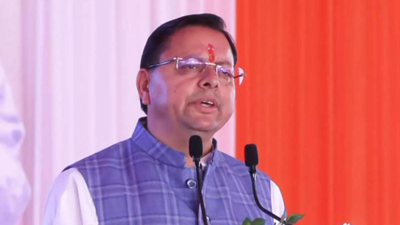
Uttarakhand Chief Minister Pushkar Singh Dhami announced a series of measures aimed at fuel and energy conservation during the cabinet meeting held in Dehradun on Wednesday, citing global economic pressure arising from the Russia-Ukraine war and the ongoing Middle East crisis.The state government said these decisions were taken amid concerns over rising fuel prices, dependence on imports and supply chain disruptions affecting fuel, food items and fertilizers.In major decisions, the number of vehicles in the fleet of the Chief Minister and ministers will be reduced by 50 percent. The government said it would also observe a “No Vehicle Day” every week, during which work-from-home practices would be encouraged.The Cabinet has decided to promote video conferencing for official meetings and encourage greater use of public transport by government employees. Officers handling multiple departments will be allowed to use only one official vehicle per day.The state also announced plans to introduce a new electric vehicle policy under which 50% of all new government vehicle purchases will be electric vehicles. Expansion of EV charging infrastructure will also be given priority.The government said official foreign visits would be restricted and domestic tourism within Uttarakhand would be promoted through campaigns focusing on religious, wellness, rural and eco-tourism circuits.The Cabinet also decided to launch a public awareness campaign to encourage lower consumption of fuel and edible oil. Hotels and eateries will be encouraged to offer less oil-rich menus, while schools, hospitals and government canteens will review oil use.The state government also announced measures to promote natural farming, rooftop solar installation, PNG connections and biogas projects. A high-powered committee headed by the Chief Secretary will give fast track approval for mining, solar and power projects within 60 days.

Source link

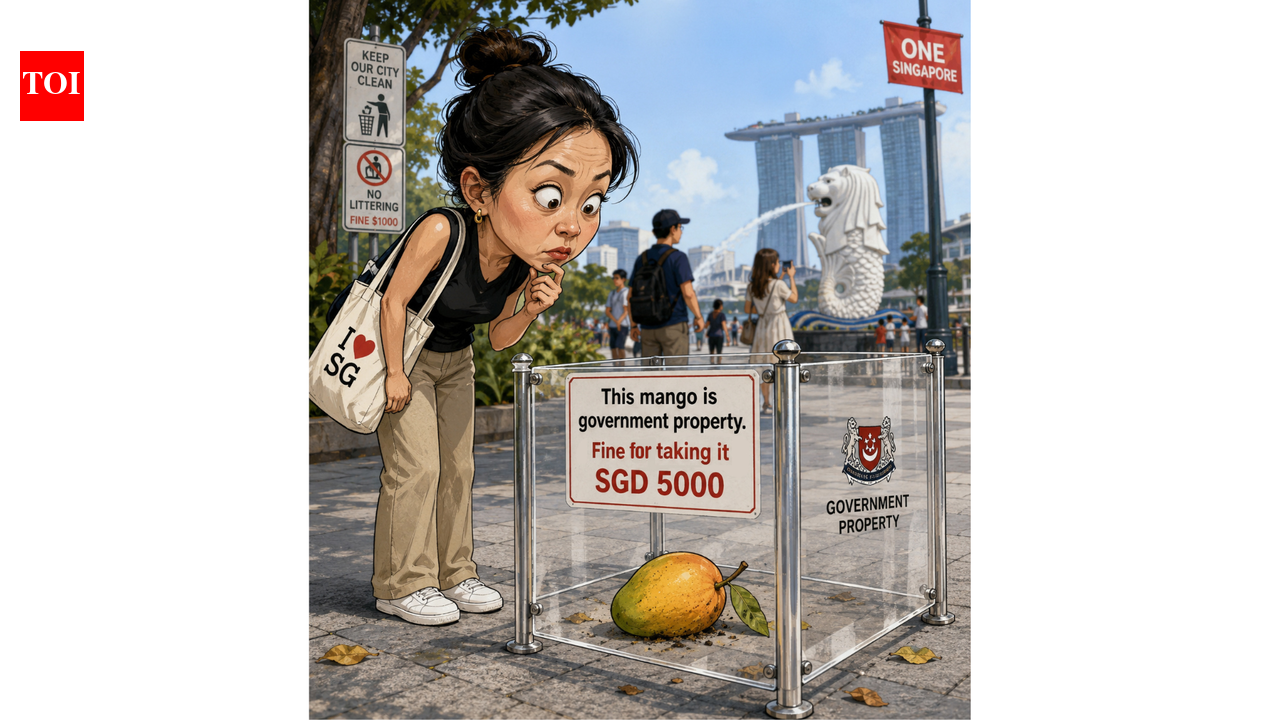
Cost of picking up fallen mango in Singapore: Shocking fine of Rs 3.5 lakh

Picking up a fallen mango in Singapore may cost you Rs 3.5 lakh

Picking up a mango that has fallen from a public tree in Singapore can reportedly land you a fine of up to SGD5,000 (about `3.5 lakh) – a fact that has shocked Indian social media users recently. The debate started when Indian-origin Singaporean Priyanka Sinha shared on X that fruit-bearing trees in public places are considered government property, meaning residents cannot pluck or collect the fruit without permission.The Ministry of National Development (MND) states on its website: “Trees, including their fruits, which lie on State lands, belong to the State. NParks manages the majority of trees on State lands. Members of the public who wish to pick fruit from trees, or collect fruit that has fallen from trees on state land, must contact NParks for permission. Those plucking or gathering fruit without permission in a public park can be fined up to $5,000 under the Parks and Trees Act. People who do so in a nature reserve or national park can be fined up to $50,000, and/or imprisoned for up to 6 months.‘What if our pets help us collect?’Naturally, the jokes were ready on the Internet. Many online users compared the situation to India, where roadside fruit trees are often freely accessible to locals. While some joked that such a rule would be impossible to enforce here, others said it reflected Singapore’s strict civil discipline. One user cheekily asked, “What if our pets could help collect?” Another quickly replied, “In Singapore, pets are treated as extensions of the owner. If your pet plucks fruit from a public tree, you are legally considered to have committed or permitted such an act.”

Source link

‘Punjabi Devils’ biker gang founder Jashanpreet Singh gets over 5 years in jail after police seize illegal weapons in California

'पंजाबी डेविल्स' बाइकर गैंग के संस्थापक जशनप्रीत सिंह को कैलिफोर्निया में पुलिस द्वारा अवैध हथियार जब्त करने के बाद 5 साल से अधिक की जेल हुईJashanpreet Singh, 27, of Lodi, California, was sentenced to five years and four months in prison for illegally dealing firearms and possessing a machine gun, according to the U.S. Attorney’s Office for the Eastern District of California.Announcing the sentence, US Attorney Eric Grant said Singh was convicted of illegal firearms dealing and illegal possession of a machine gun. Singh founded the Punjabi Devils Motorcycle Club, an outlaw motorcycle gang based in Stockton. His motorcycle club used Punjab-themed symbols and Sikh imagery.The case relates to an undercover operation conducted on June 6, 2025, when Singh allegedly attempted to sell weapons and firearms-related equipment to an undercover officer. The items included a short-barreled rifle, three assault weapons, three machine gun conversion devices and a revolver.Officers later searched Singh’s residence and vehicle, where they found more weapons and items, including another machine gun conversion device, a machine gun and a silencer. Investigators also seized firearm parts, high capacity drum magazines and numerous other items associated with illegal firearms possession.During the search, officers discovered a suspected military electronic-capped Claymore mine as well as a ‘pineapple-style’ capped and fused hand grenade. Later the bomb squad carefully destroyed both the items at the spot.Singh initially faced charges in San Joaquin County, but failed to appear in court on July 21, 2025. A bench warrant was issued for his arrest.Just a few days later, on July 23, 2025, the FBI received information from US Customs and Border Protection that Singh had booked a flight to India and was scheduled to depart from San Francisco International Airport on July 26. Law enforcement officials arrested him at the airport before he could board the flight. Federal authorities said Singh has since been in custody on charges of fleeing.The prosecution was part of Operation Take Back America, a U.S. Department of Justice (DOJ) initiative focused on combating violent crime, organized gangs, illegal immigration, and transnational criminal networks.
Source link

Evening News Wrap: Prateek Yadav’s autopsy reveals cause of death; CM Vijay cancels appointment of astrologer as OSD and much more. india news

Evening News Wrap: Prateek Yadav's autopsy reveals cause of death; CM Vijay cancels appointment of astrologer as OSD and much more
  • The post-mortem report of late Mulayam Singh Yadav’s son Prateek Yadav has revealed that a blood clot had accumulated in his lungs, leading to cardiorespiratory failure.
  • Tamil Nadu CM Vijay has canceled the OSD appointment of astrologer Ricky Radhan Pandit Vetrivel, a day after opposition parties and allies objected to the move.
  • Arvind Kejriwal urged Gen Z students to demand accountability over the alleged NEET paper leak and questioned the previous CBI investigation into exam leak cases while comparing them with Gen Z of Bangladesh and Nepal.
  • Prime Minister Narendra Modi has asked the Special Protection Group (SPG) – the elite security corps that looks after his security – to make efforts to reduce the number of cars in his convoy by 50%.
  • Air India suspended and reduced flights on 29 international routes till August due to the Middle East conflict, high fuel prices and airspace restrictions.

Here are the top 5 news of the day:

Prateek Yadav died due to blood clot in the lungs, post mortem report revealed!

The post-mortem report of Prateek Yadav, son of late Mulayam Singh Yadav and step-brother of Akhilesh Yadav, revealed that 38-year-old Prateek died due to massive blockage in the blood vessels of the lungs. According to the autopsy findings, the provisional cause of death was recorded as “cardiorespiratory collapse due to massive pulmonary thromboembolism”. Doctors said a large blood clot blocked blood flow to the lungs, causing the heart and respiratory systems to fail. Prateek Yadav was found unconscious at his residence in Lucknow on Wednesday and was taken to the hospital, where doctors declared him brought dead. Read the full story

Tamil Nadu CM Vijay cancels appointment of astrologer as OSD after objection from colleagues

Tamil Nadu Chief Minister Vijay canceled the appointment of his close aide and astrologer Ricky Radhan Pandit Vetrivel as Officer on Special Duty (Political), a day after the decision triggered criticism from opposition parties and allies who argued that personal beliefs should not influence governance. The Tamil Nadu government issued a circular canceling the appointment immediately after the floor test in the assembly. Vetrivel was appointed through an official government order issued on Tuesday and was tasked with assisting the Chief Minister in political coordination and advisory functions within the Chief Minister’s Office. Read the full story

Consequences of fuel crisis: Air India suspends flights on 29 international routes till August, reduces frequency

Air India announced suspension and reduction of services on 29 international routes between June and August 2026 amid the ongoing conflict in West Asia, rising jet fuel prices and airspace restrictions in key regions. The airline said the temporary changes are aimed at improving operational stability and reducing last-minute inconvenience to passengers as the Iran conflict and instability around the Strait of Hormuz continue to disrupt global aviation. Read full list

PM Modi asks SPG to cut convoy size by 50%, promote use of EVs

Prime Minister Narendra Modi has asked the Special Protection Group (SPG) – the elite security corps that looks after his security – to make efforts to reduce the number of cars in his convoy by 50%. Additionally, his wish was to encourage the number of electric vehicles in the fleet, but without purchasing new vehicles to avoid additional expenses. SPG has already started implementing the directive, while ensuring that there is no compromise on the mandatory safety guidelines laid down in the Blue Book. Read the full story

If youth of Bangladesh, Nepal can do this, Indian students can also ensure accountability: Arvind Kejriwal appeals to Gen Z after NEET paper leak

AAP national convenor Arvind Kejriwal urged India’s Gen Z population to demand accountability over the alleged NEET paper leak issue, alleging that repeated exam leaks have shaken students’ faith in the system. Addressing a press conference, the former Delhi Chief Minister called on the youth to protest against those involved in the paper leak cases and questioned the effectiveness of the investigation by the Central Bureau of Investigation in the earlier incidents. Taking a dig at BJP, Kejriwal said, ‘If Gen Z can change governments in countries like Bangladesh and Nepal, then Indian youth can also ensure accountability in paper leak cases.’ Read the full story

Source link