Trump on accepting 500,000 Chinese students in America

'I can tell them I don't want any students but...': Trump on accepting 500,000 Chinese students into US
Trump says it is beneficial for America to admit 500,000 good Chinese students.

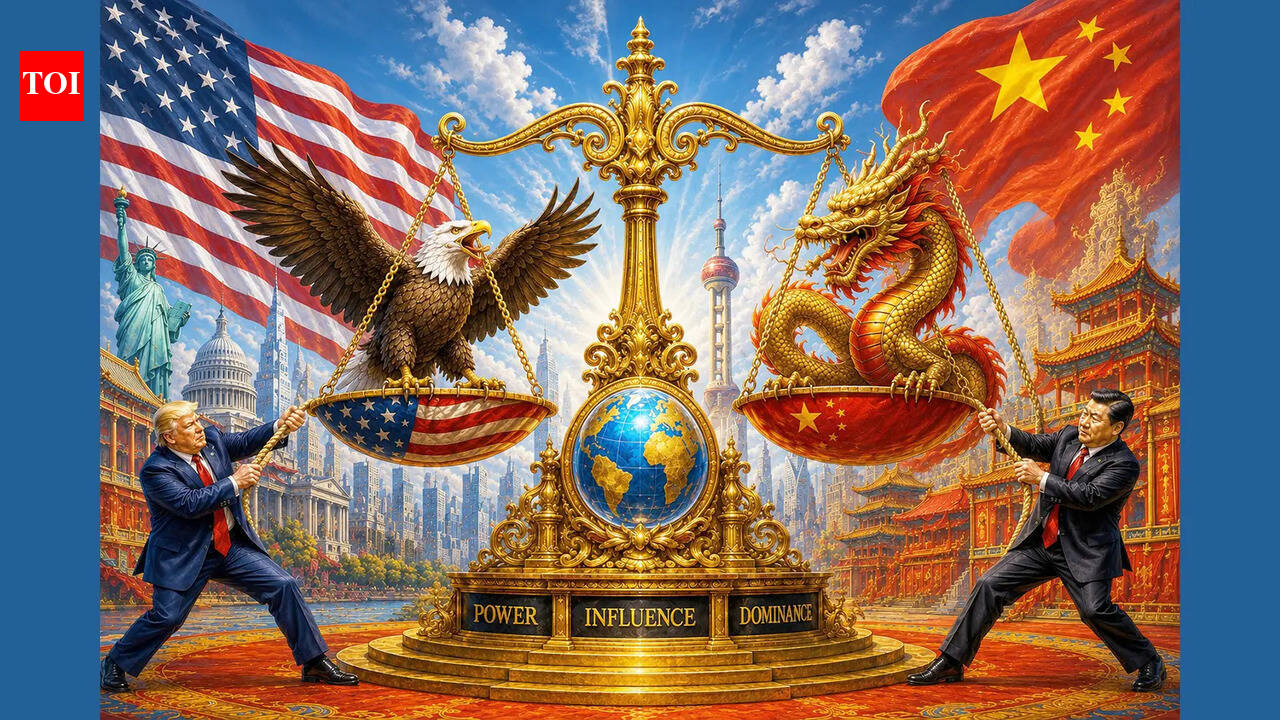
US President Donald Trump has talked about accepting 500,000 Chinese students into the US at a time when his administration has also cracked down on legal immigration, saying it is an insult to a country to say “I don’t want any students”. These are good students and America will give them green cards, Trump said, adding that this is not just about China but also about students from other countries.“As far as students, it’s 500,000 students. They come, good students. I can tell them, “I don’t want any students.” That’s a very insulting thing for a country to say. Then they’ll immediately go out and start building universities all over China. But if you don’t have those students – well, good students – if you don’t… And another thing we do is, you know, if they’re good and they want to live in America, we’ll give them green cards and things like that. You know, I am, and it’s not just them but other countries,” Trump told Sean Hannity in his interview for Fox News.“But if you want to see a university system die, take five million people out of it. And you know, the ones that won’t be hit are the top schools. The top schools will do well. But your bottom schools, your bottom… students who don’t perform well… they’ll be dying all over the place.”“I obviously think it’s good that people come from other countries and they learn our culture, and many of them want to live here. I think it’s good. Not everyone agrees with me. And it doesn’t seem like a very conservative position. And I’m conservative… I’m a conservative guy. I’m really a common sense guy, I think more than a conservative guy. I think MAGA is common sense. You know, people understand that we want strong borders, we want strong military, we want good education, we want low interest rates, we want...You know,” Trump continued.

This isn’t common sense: MAGA angry at Trump’s soft stance

Former Congresswoman Marjorie Taylor Greene said it is not common sense to admit Chinese students over American students. “Trump says it’s outrageous to tell China their students can’t go to our universities, imagine being an American student and getting rejection letters while 500,000 Chinese students are coming in! And no, it’s not okay for China to buy our farmland!!! And no, that’s not common sense!!!” Green said.James Fischbach, who is running for governor of Florida, said he would raise tuition fees if Trump brought in 500,000 Chinese students. Fischbach posted, “I respect President Trump, but if he brings 500,000 Chinese students to Florida colleges, I will raise tuition on them to $1,000,000 a year. As governor, I refuse to let the limited admissions spots in our taxpayer-funded colleges be stolen by foreigners.”

Source link

After suspending 3 policemen for irregularities in RG tax victim’s mother case

'Mamata is the leader of criminals': RG tax victim's mother after 3 policemen were suspended for irregularities in the case
‘Mamata is the head of criminals’: RG Kar victim’s mother after 3 policemen were suspended for irregularities in the case (Image credit: PTI)

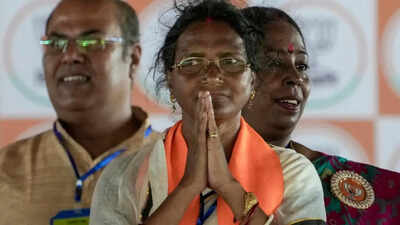
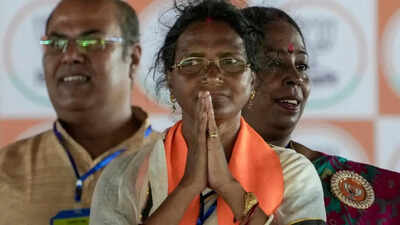
New Delhi: Ratna Debnath’s mother RG Kar Medical College The rape and murder victim called the former Chief Minister of West Bengal on Friday. Mamata Banerjee A ‘criminal’ and alleged that if he is ‘caught and put in jail’ then the truth behind the case will be revealed.Speaking to reporters, he said, “There are many criminals, their leader is Mamata Banerjee. If they are caught and put in jail, then the names of all the criminals will be revealed.”Debnath was recently elected BJP MLA from Panihati assembly constituency of West Bengal.He alleged that college officials, including Banerjee and former health secretary Narayanswaroop Nigam, were involved in the murder of his daughter.“The people who had dinner with my daughter that night have not been investigated yet. Only the principal is in jail. The college authorities, including Mamata Banerjee, are responsible for this incident. Also, our then health secretary Narayanswaroop Nigam is also involved in my daughter’s murder.”The West Bengal government on Friday suspended three police officers, including former Kolkata Police Commissioner Vineet Goyal and former Deputy Commissioners Indira Mukherjee and Abhishek Gupta, over alleged lapses in the investigation of the RG tax case. Chief Minister Suvendu Adhikari alleged that he mishandled the case, including offering bribes to the victim’s parents.

Source link

British student dies of meningitis, expert warns the disease can be ‘very fatal’

ब्रिटेन के छात्र की मेनिनजाइटिस से मौत, विशेषज्ञ ने चेतावनी दी है कि यह बीमारी 'बहुत घातक' हो सकती है

A UK college student has died of meningitis, while two others are being treated/Image: Getty Images

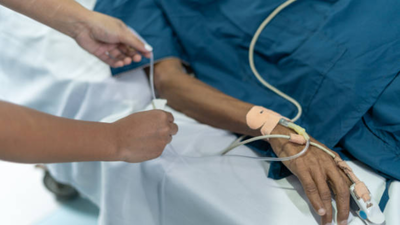
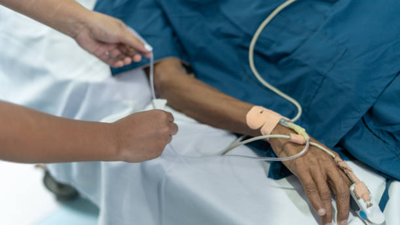
Health officials said a college student in Britain has died of meningitis, while two others are being treated, the BBC reports.The UK Health Protection Agency (UKHSA) has identified the student who died as a student at Henley College in Oxfordshire. Officials said close contacts of the affected people were being given antibiotics as a precaution.The agency confirmed one case as meningitis B, commonly known as MenB, while further testing was ongoing on the remaining cases.In a statement, the college confirmed that the student died earlier this week.“Our thoughts and sincere condolences are with the student’s family and friends at this extremely difficult time,” the college said.“We are supporting those affected within our college community and are following the advice and guidance provided by the UK Health Protection Agency.”Health officials stressed that the overall risk to the broader public is low, although the investigation is ongoing.Dr Shamez Ladhani, consultant epidemiologist at the UKHSA, told the BBC it was “really unfortunate” to see multiple outbreaks reported within a short period.“This is a very rare disease but when it strikes it can be very fatal,” he said.Ladhani said investigators had identified a social connection between the three cases linked to Reading and believed they were likely linked to the same strain.He said authorities are tracing contacts and providing preventive antibiotics and vaccines where necessary.The development follows recent meningitis outbreaks in England, including cases in Kent linked to a nightclub in Canterbury and another cluster reported in Dorset earlier this year.According to health officials, meningococcal disease affects about 300 to 400 people a year in England and is most common in infants, teenagers and young adults.Symptoms may include high fever, severe headache, stiff neck, vomiting, confusion, seizures, and a rash that does not go away even with pressure.The UKHSA has urged young people to ensure they keep up to date with vaccinations, including the MenACWY vaccine available through the NHS for people up to the age of 25.

Source link

Tamil Nadu CM Vijay’s first attack on the Centre; demand for rollback

'Fuel prices rise after 5 state elections': Tamil Nadu CM Vijay's first attack on the Centre; demand for rollback

New Delhi: Tamil Nadu’s newly appointed Chief Minister Vijay on Friday, for the first time after assuming office, targeted the BJP-led central government. He criticized the Centre’s move to increase petrol prices after the completion of assembly elections in five states.He demanded that the government withdraw the decision, calling it “unacceptable”, PTI reported. This comes after petrol and diesel prices were increased by Rs 3 per liter on Friday, amid the recent surge in global crude oil prices.The opposition, including the leader of the opposition in the Lok Sabha, has criticized the move, saying, “It is the Modi government’s fault, the public will pay the price. The shock of Rs 3 has already come, the rest will be recovered in instalments.”The prices have increased 16 days after the completion of assembly elections in Assam, Kerala, Tamil Nadu and West Bengal. Fuel rates remained unchanged throughout the voting period despite a sharp rise in global oil prices due to the conflict in West Asia.Fuel prices remained largely unchanged from April 2022, except for a one-time cut of Rs 2 per liter on both petrol and diesel in March 2024 ahead of the Lok Sabha elections. The last increase in rates was recorded in April 2022.

Source link

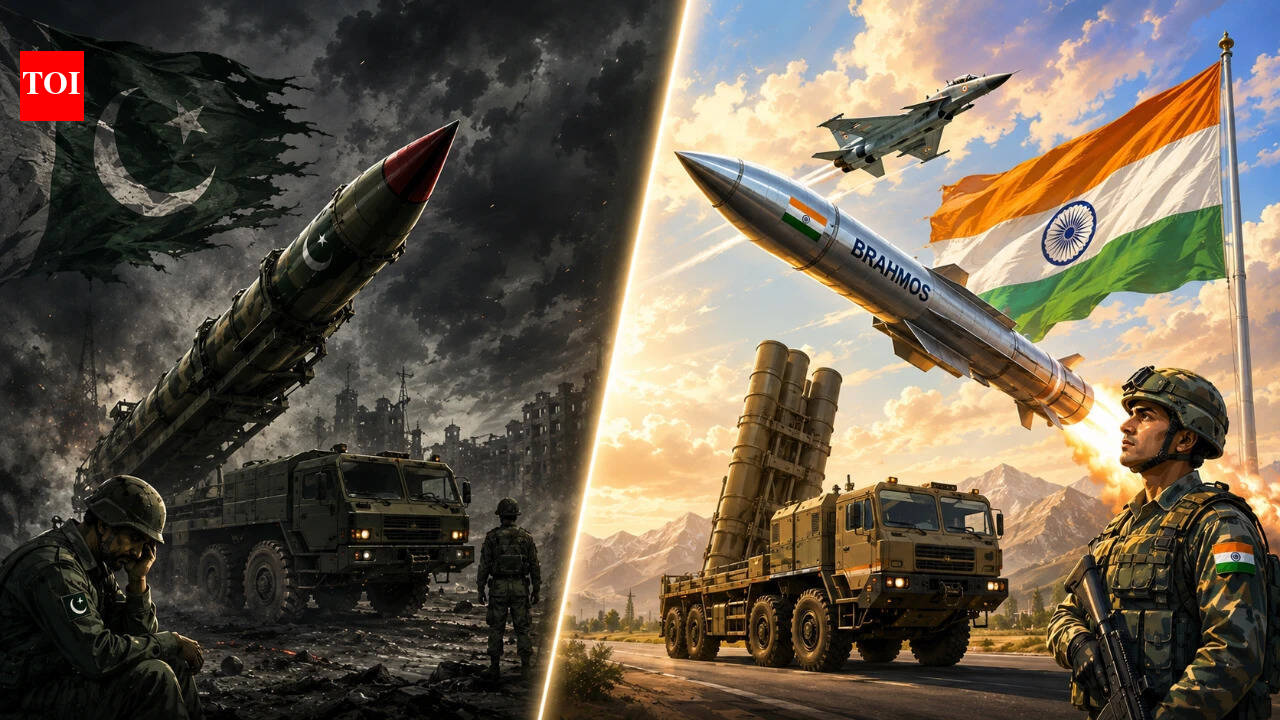
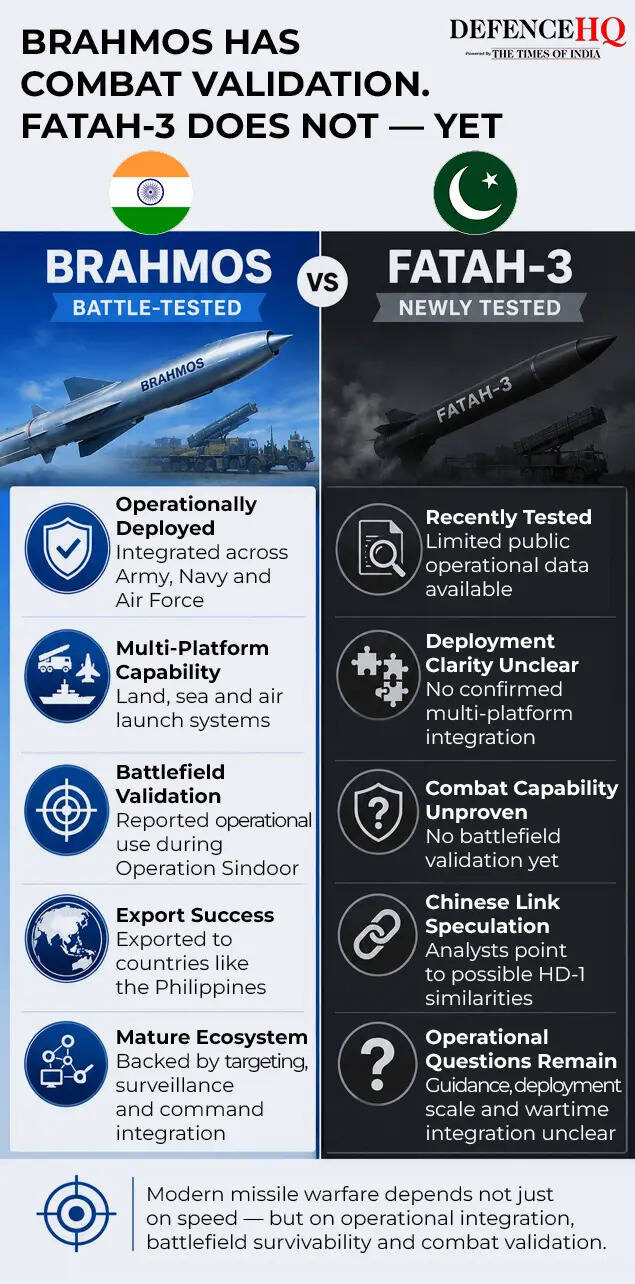
Fatah-3 Vs Brahmos: Fatah-3 vs BrahMos: Why Pakistan can’t match India’s missile edge

Fatah-3 vs BrahMos: Why Pakistan can't match India's missile edge

For years, India’s BrahMos missile occupied a near-mythical space in South Asia’s military balance, fast enough to terrify adversaries, precise enough to hit the smallest of targets and difficult enough to intercept that it fundamentally changed how India executed critical tasks during Operation Sindoor.Pakistan, meanwhile, largely relied on a mix of ballistic missiles, subsonic cruise systems and nuclear deterrence to balance India’s growing military edge.Being at the receiving end of such a weapon, now Islamabad too appears eager to show that it too has entered the supersonic precision-strike club.Pakistan’s recent Fatah-3 missile test is being projected by several commentators as the country’s closest answer yet to BrahMos. But beneath the military optics and patriotic messaging lies a more complicated reality. South Asia’s missile race is now about far more than just India and Pakistan.It is increasingly about China’s growing military footprint inside Pakistan’s defence ecosystem, from fighter jets and radars to missiles and air-defence systems.And that raises the bigger question: Is Fatah-3 truly a Pakistani technological leap, or simply the latest example of Islamabad borrowing strategic parity through Chinese hardware, designs and support?Islamabad’s Fatah-3 test has also reignited debate over whether Pakistan is finally developing a credible answer to India’s BrahMos and whether New Delhi’s long-held monopoly in precision stand-off warfare is beginning to face a serious challenge.The answer matters because missiles today are not merely weapons. They are instruments of signalling, deterrence and escalation control. Their performance can shape battlefields within minutes and alter regional power balances for years.The timing is also significant. The discussion around Fatah-3 comes a year after Operation Sindoor, during which India reportedly used BrahMos missiles and other precision weapons to strike Pakistani military infrastructure with remarkable accuracy while successfully nullifying much of Pakistan’s retaliatory missile and drone fire.That operational contrast now forms the backdrop against which Pakistan’s new missile ambitions are being judged.

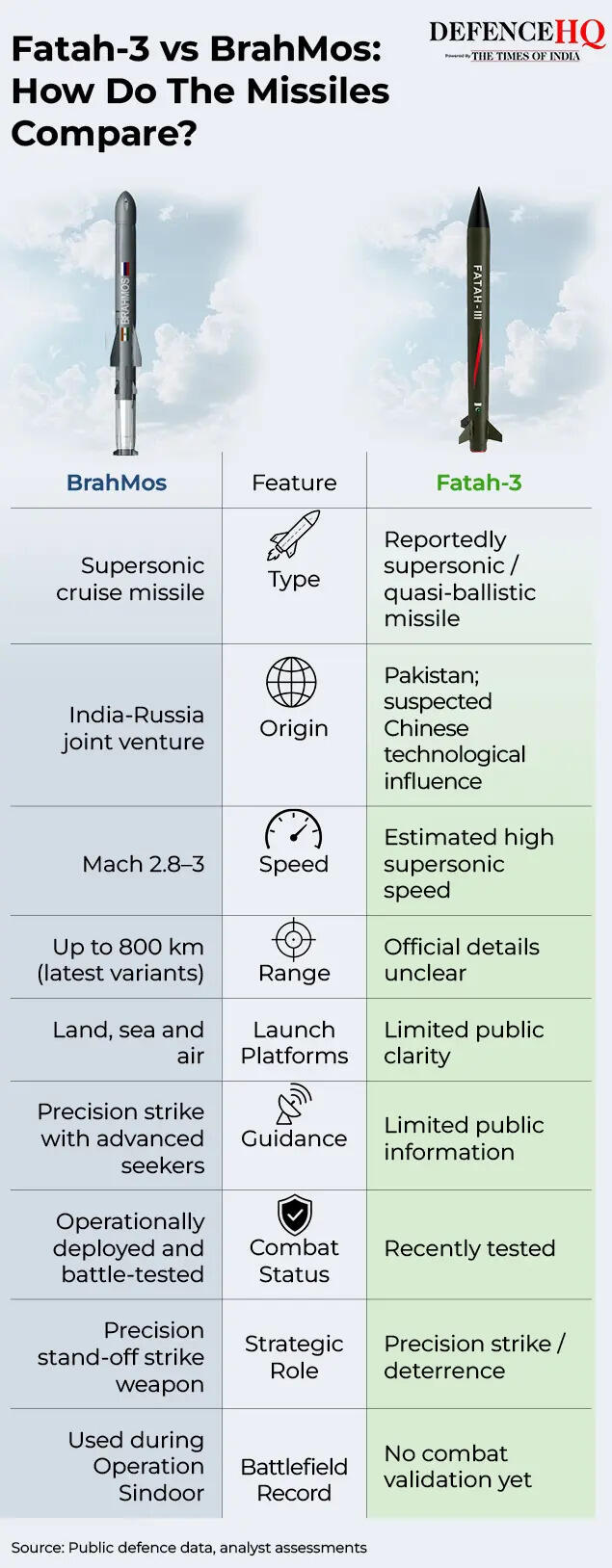
BrahMos vs Fatah-3

What exactly is Pakistan’s Fatah-3?

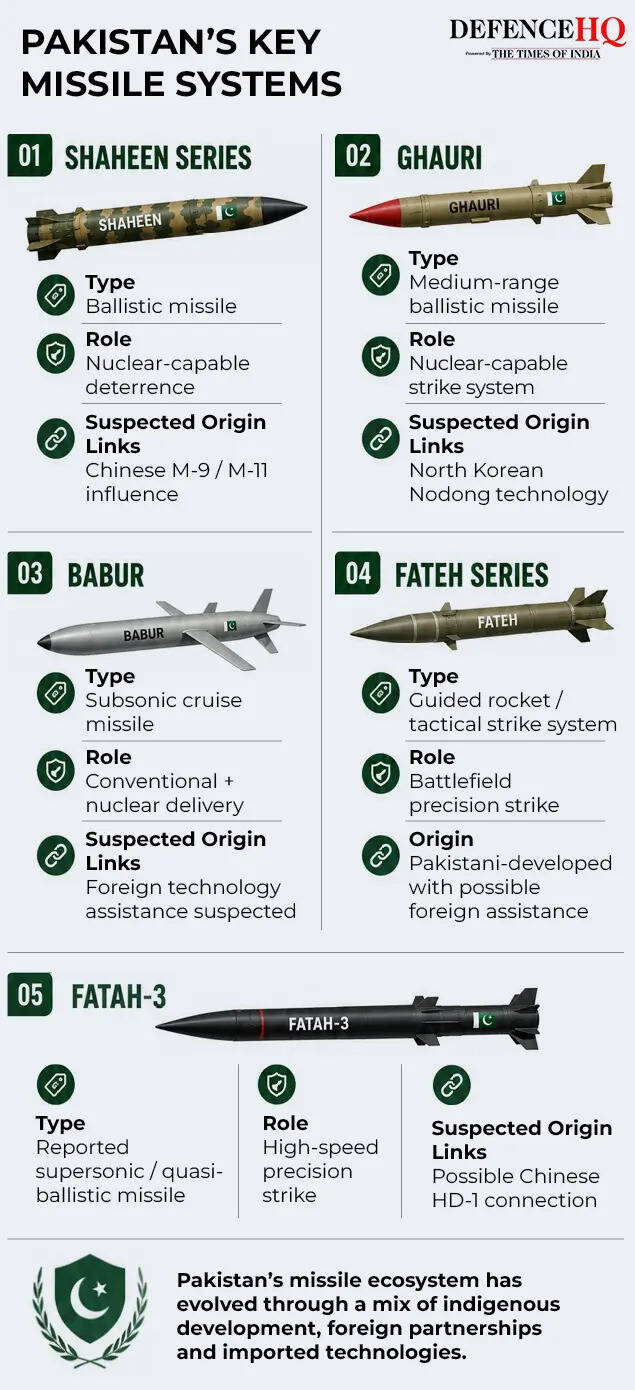
Pakistan has officially revealed little about the Fatah-3 beyond broad claims of precision-strike capability and extended ranges. That ambiguity itself is telling.Unlike India’s BrahMos programme, whose specifications, deployment patterns and operational roles are relatively well documented, Fatah-3 remains shrouded in uncertainty.Defence analysts believe the missile may either be a guided quasi-ballistic weapon or a supersonic cruise missile inspired by China’s HD-1 missile, a system developed for both anti-ship and land-attack roles.Reports from defence-focused publications and regional military analysts have pointed to visible similarities between the launcher systems and missile architecture associated with China’s HD-1 programme.Pakistan has neither confirmed nor denied those claims publicly.If those assessments are accurate, Fatah-3 would represent a major upgrade in Pakistan’s conventional warfare strategy. Islamabad has historically relied on ballistic missiles like Shaheen and Ghauri, alongside subsonic cruise missiles such as Babur or Fateh-series of guided rockets.These older systems primarily served deterrence, battlefield strike capability and nuclear delivery roles.

Pakistan's key missile systems

Fatah-3 appears aimed at something more ambitious, which is high-speed precision warfare designed to compress India’s reaction time during conflict.That is exactly the niche BrahMos carved out for India and gave it a decisive edge for years.

Why BrahMos changed the balance in South Asia

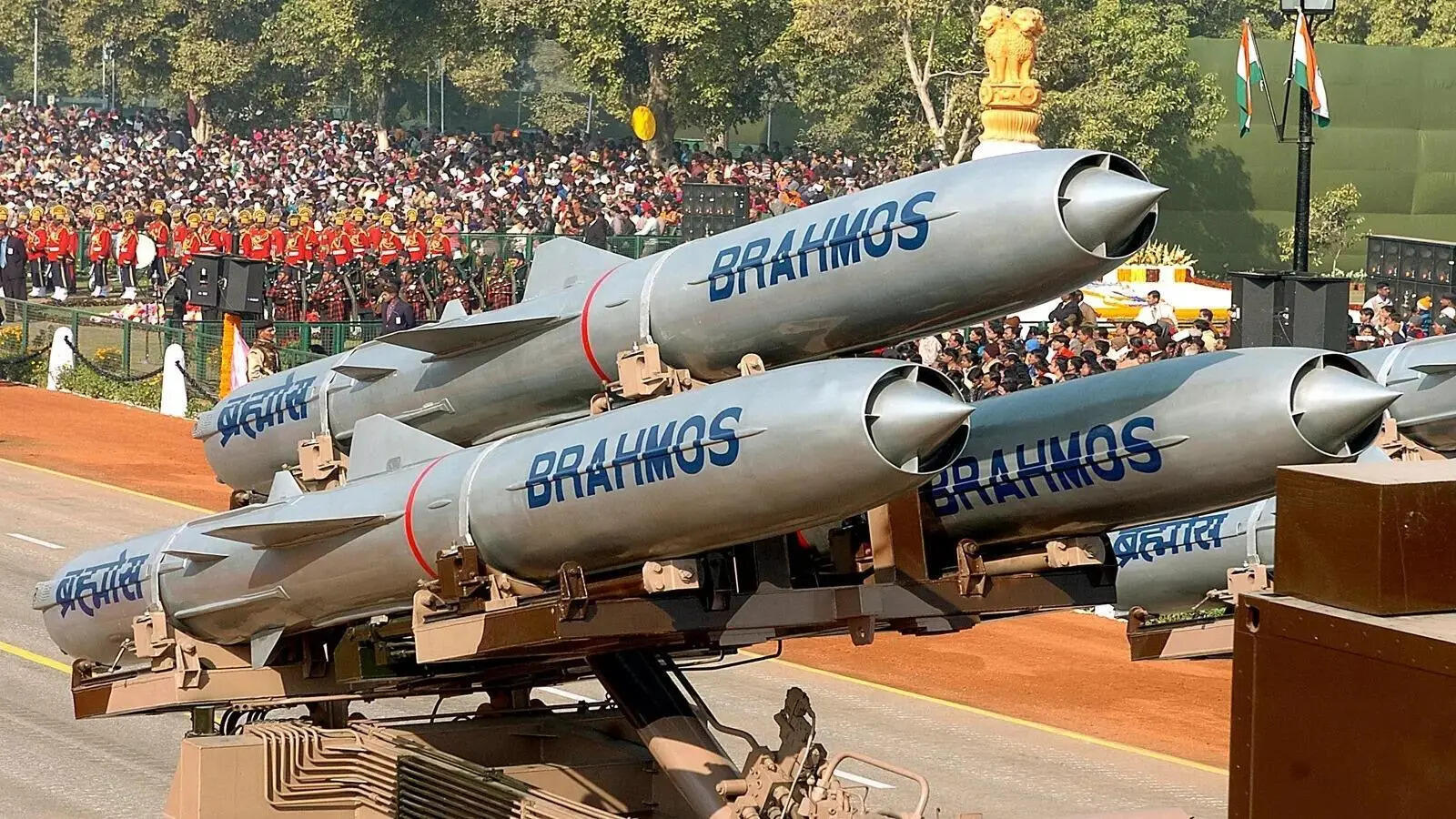
Developed jointly by India and Russia, BrahMos fundamentally altered India’s conventional strike doctrine.One of the world’s fastest supersonic cruise missiles has become one of New Delhi’s most potent conventional strike weapons.With speeds approaching Mach 2.8 to 3, the missile dramatically compresses enemy response time. It can be launched from land, sea and aircraft, making it one of the most versatile weapons in India’s arsenal.Unlike slower cruise missiles, supersonic systems are far harder to intercept because air defence systems have very limited time to detect, track and neutralise them.

What makes BrahMos dangerous?

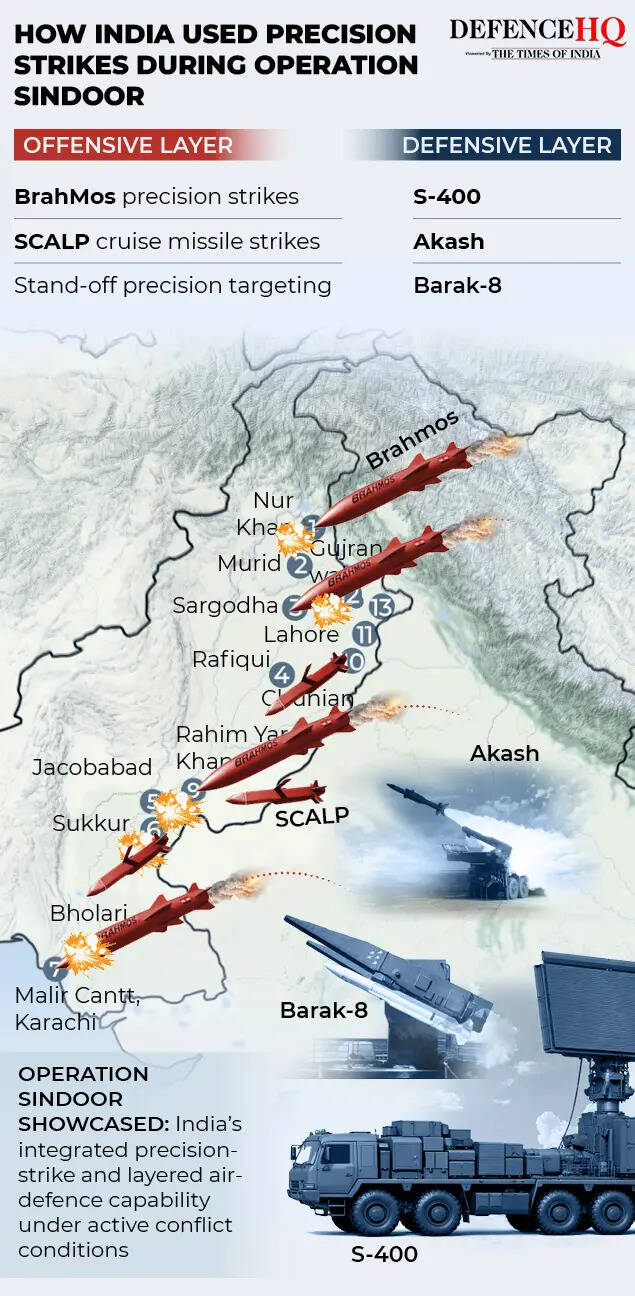
India has steadily expanded BrahMos deployment across the Navy, coastal batteries, frontline airbases and the Army’s strike formations.The missile has also become central to India’s strategy against both Pakistan and China, especially in high-intensity short-duration conflicts.The strategic value of BrahMos was demonstrated most visibly during Operation Sindoor in 2025.For years, BrahMos was viewed as a formidable weapon largely because of its technical capabilities. Operation Sindoor changed that perception by providing a real-world demonstration of how India’s precision-strike ecosystem functions during active conflict.BrahMos missiles were used in precision strikes against Pakistani military infrastructure and high-profile airbases such as Nur Khan.Indian strikes targeted multiple Pakistani airbases and command infrastructure using a combination of BrahMos missiles, SCALP cruise missiles and other stand-off weapons.The missile strikes were able to bypass Pakistan’s Chinese-origin air-defence systems and achieved high levels of precision.Moreover, Islamabad’s retaliatory missile and drone attacks were largely intercepted by India’s layered air defences, which include systems such as S-400, Akash and Barak-8.

How India used precision strikes during Operation Sindoor

As a result, the overall perception after Operation Sindoor was unmistakable. India’s offence appeared mature as it demonstrated operationally integrated precision-strike capability at scale, while Pakistan struggled to inflict comparable strategic damage.That real-world gap is important because missile programmes are ultimately judged not just by tests, but also by battlefield performance.“India’s precision strike capability and operational capability of the BrahMos were tested under fully operational conditions in Operation Sindoor. The Indian systems came through brilliantly,” Chatterji said.“Our multi-layered air defence also ensured our assets hardly faced any punishment from Pakistani platforms, including aircraft, drones and missiles”, he added.And that experience may partly explain why Islamabad now appears keen to strengthen its own precision-strike arsenal.

Is Fatah-3 really Pakistan’s “BrahMos”?

Technically, Pakistan may field a credible supersonic precision-strike missile. But matching the capabilities of the BrahMos involves more than just replicating speed or range. This is where the comparison becomes clearer as we delve into the details.On paper, Pakistan appears to be pursuing similar goals such as high-speed precision strikes, reduced interception windows and long-range conventional deterrence.But matching BrahMos requires far more than building a fast missile.Brigadier SK Chatterji (Retd), former DDG, Strategic Communication, Indian Army, author and strategic analyst, told TOI that BrahMos and Fatah-3 could appear “near peers” based on publicly available information, but stressed that India’s missile enjoys a major operational advantage.India has spent years integrating the missile into its Army, Navy and Air Force.“The BrahMos is a versatile system that has been tested operationally. It can be launched from land, ships and submarines, and also from fighter jets like the Su-30MKI,” he said.“Fatah-3 is a ground-based mounted system based on twin canister transporter erector launchers. It will take a lot of time to be transformed into a system as versatile as BrahMos”, he added.Also, Brahmos remains one of the few missiles globally that combines high speed, low-altitude flight and multi-platform deployment with a long and credible operational record, a major advantage that many rival systems still lack.

BrahMos

It has also undergone upgrades involving extended range, improved seekers and steeper terminal attack profiles.India’s advantage also lies in the ecosystem built around the weapon, which includes:

  • satellite-backed targeting
  • airborne surveillance
  • integrated command systems
  • multi-platform deployment
  • large-scale manufacturing capability

BrahMos is not just a missile, it is part of an integrated missile program that is woven into a warfighting architecture.Chatterji also argued that the supporting ecosystem around a missile is often more important than the weapon itself.“A missile is of little value until the entire support infrastructure, including detection, tracking, targeting, communications and command integration, is complete and efficient,” he said.Meanwhile, Pakistan may still be some distance away from replicating that ecosystem.Chatterji also noted that while Pakistan would certainly seek systems comparable to BrahMos, much would depend on the extent of advanced technology Beijing is willing to transfer directly.Moreover, its Fatah-3, at least publicly, has not yet demonstrated comparable deployment depth.There are still major unanswered questions regarding its production scale, guidance sophistication, resistance to electronic jamming, terrain-following capability and actual operational readiness.Even if Fatah-3 is heavily derived from Chinese technology, integrating such systems effectively into wartime doctrine is an entirely different challenge.Operation Sindoor reinforced this gap between acquisition and integration. Pakistan possessed Chinese-origin air-defence systems during the conflict but Indian strikes still managed to get results every time.In contrast, BrahMos has already undergone years of deployment, upgrades and operational integration.This difference between “testing capability” and “operational maturity” is critical.

BrahMos vs Fatah 3

Pakistan’s missile programme and the China factor

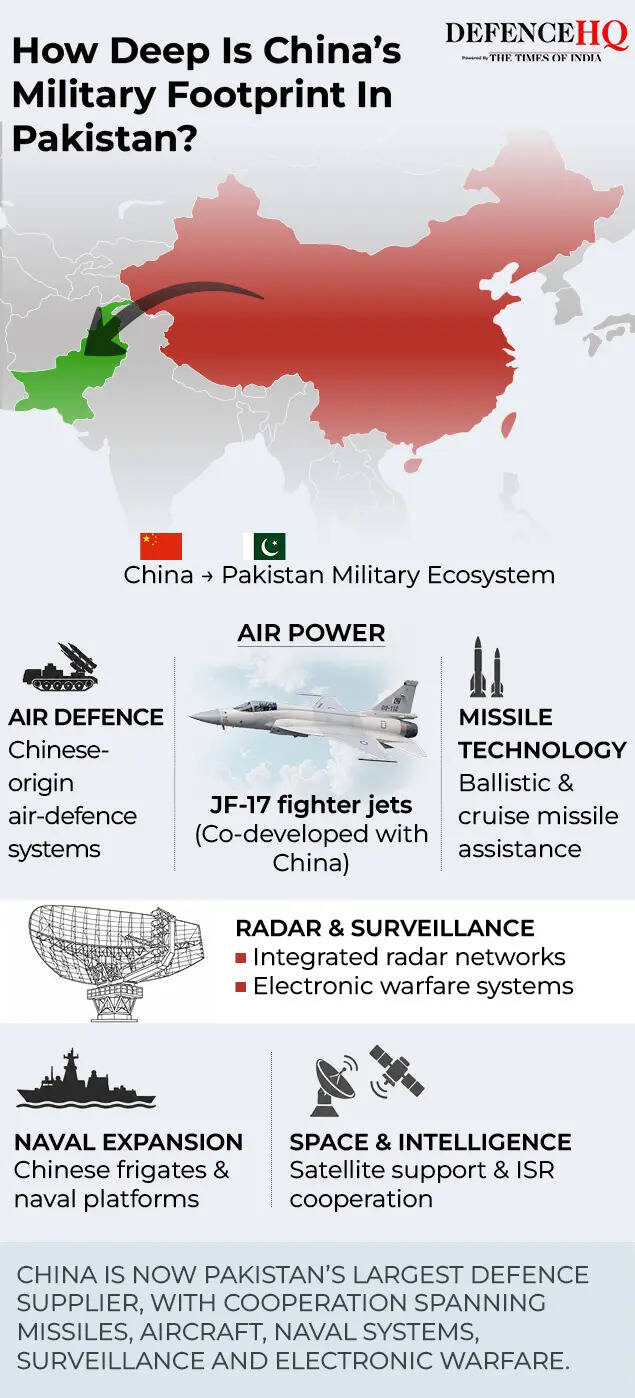
One of the most important angles in the induction of Fatah-3 is not the missile itself, but the long-standing pattern behind Pakistan’s military modernisation.Interestingly, Pakistan’s defence arsenal, especially missiles, has almost nothing indigenous, except for the paint that they use to rebrand and change the original names. Even their rebranded names are not of Pakistani origin but of invaders who plundered the same land where it is situated today.Pakistan has had a long history of external technological dependence. Its missile ecosystem has historically evolved through foreign partnerships, technology transfers and reverse engineering rather than fully indigenous development.For years, several Pakistani missile programmes have been linked to Chinese and North Korean origins.“Chinese assistance is crucial to the Pakistani defence sector making any progress using upstream technology. Pakistan’s missile programme has been supported by the Chinese all along,” he said, adding that Islamabad had also received significant assistance from North Korea.The Shaheen missile family, for instance, has often been compared to China’s M-9 and M-11 missile systems. Pakistan’s Ghauri missile has long been associated with North Korea’s Nodong missile technology.Its JF-17 fighter programme was co-developed with China. Even Pakistan’s naval expansion, radar architecture and air-defence systems now make the largest chunk of Chinese defence exports.Today, China is Pakistan’s largest defence exporter and Pakistan is the largest importer of Chinese defence systems..This military relationship has expanded beyond hardware into surveillance systems, satellite support, integrated radar networks, electronic warfare and air defence ecosystems.

How deep is China's military footprint in Pakistan?

Fatah-3 appears to fit into that broader pattern. That is why it is less likely to be an isolated Pakistani breakthrough and more as part of a wider China-Pakistan strategic alignment aimed at counterbalancing India.However, Operation Sindoor also intensified scrutiny of Chinese systems deployed in Pakistan.The failure of Chinese air defence systems raised uncomfortable questions not just for Pakistan, but also for China’s defence exports and military credibility.For Beijing, Islamabad serves as a strategic partner against New Delhi and a real-world testing ground for Chinese military technologies.Another important point to note is that even if Fatah 3 has Chinese imprints, it does not necessarily diminish the missile’s military value. Many countries build successful weapons using foreign technology partnerships. But it does weaken the narrative of Pakistan independently matching India’s missile innovation ecosystem.India’s BrahMos itself is a joint Indo-Russian programme, but New Delhi has steadily indigenised components, expanded manufacturing capability and integrated the missile across multiple combat platforms.Pakistan, by contrast, remains heavily dependent on external technological support for much of its military hardware.That distinction becomes important in prolonged conflicts where production scale, upgrades, battlefield integration and logistical independence often matter more than headline-grabbing missile tests.

Can India counter Fatah-3?

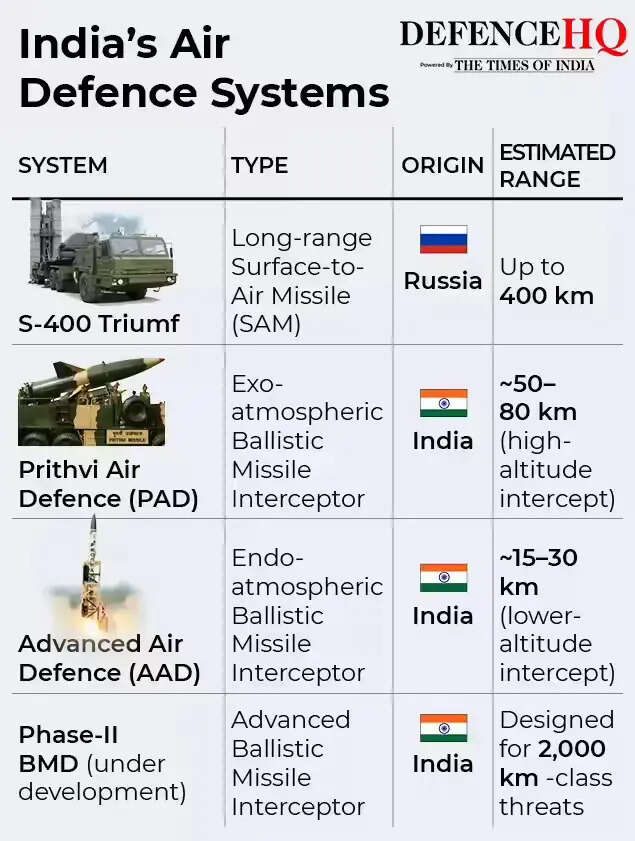
The uncomfortable reality is that even an imperfect supersonic missile can complicate battlefield calculations significantly.Supersonic missiles remain extremely difficult to intercept. These high-speed missiles reduce interception windows dramatically. Their combination of manoeuvrability and low-altitude flight places enormous pressure on radar and air-defence systems.However, even if Pakistan succeeds in operationalising a credible supersonic precision-strike missile, India is not entirely unprepared.India already possesses a layered battle proven air-defence architecture that includes:

  • The Russian S-400 system
  • Akash missile batteries
  • Barak-8 systems
  • indigenous missile defence projects
  • extensive radar coverage
India's air defence systems

Operation Sindoor itself was presented by Indian authorities as proof that India’s air-defence network could successfully intercept incoming Pakistani missiles and drones.Yet no defence system is foolproof.As a result, South Asia may now be entering an era where both sides increasingly prioritise stand-off precision strikes, rapid retaliation, electronic warfare and air-defence saturation tactics.Future India-Pakistan conflicts could become shorter, faster and far more difficult to control politically. Decision-making windows during crises may shrink even further.That raises escalation risks considerably, especially in a region where both countries possess nuclear weapons.

Strategic impact on India

The implications of this missile race go beyond defence alone.An intensifying India-Pakistan-China military competition could push India towards higher defence spending, faster procurement cycles, expanded domestic missile production and deeper investment in defence manufacturing.It could also strengthen India’s push for indigenous defence systems under the “Atmanirbhar Bharat” framework.Operation Sindoor already boosted confidence around Indian missile systems and precision warfare capabilities as BrahMos missiles achieved highly accurate strikes against fortified targets and airbases.That operational validation may further increase export interest in BrahMos and other Indian systems, especially among countries looking for battle proven high-speed precision weapons.India has already signed BrahMos export deals with countries like the Philippines and is exploring additional markets in Southeast Asia and the Middle East.Pakistan, meanwhile, appears to be trying to narrow the deterrence gap through Chinese-supported capability upgrades.

The bigger story is China

Ultimately, the successful test of Fatah-3 may not be about whether Pakistan has built a perfect BrahMos equivalent.The bigger story is that China increasingly appears to be helping Pakistan narrow specific military gaps with India, whether through fighter aircraft, air-defence systems, naval platforms or missile technology.For Beijing, Pakistan functions as a pressure point against India. For Islamabad, Chinese support offers a faster and cheaper route to military modernisation.But Operation Sindoor also exposed the limits of that strategy. Possessing advanced weapons is one thing; integrating them into a sophisticated, battle-ready military ecosystem is an entirely different ballgame.India currently retains advantages in operational integration, deployment scale, defence manufacturing and combat-tested precision warfare.Pakistan’s Fatah-3 may represent an attempt to reduce that gap, but it does not erase it overnight.Whether it can truly alter the strategic balance, however, will depend not just on missile tests or military parades, but on whether Islamabad can build the broader technological, industrial and operational ecosystem needed to sustain modern precision warfare.Still, the direction of travel is clear.The region is entering a new era of missile competition where speed, interception capability and networked warfare will increasingly define deterrence.In many ways, the real contest may no longer be about who builds the faster missile first. It may increasingly be about which country can integrate sensors, surveillance, targeting, air defence and strike systems into a seamless network capable of functioning under real combat conditions.And in that contest, the invisible hand shaping the battlefield may not belong to Islamabad alone, but to Beijing standing quietly behind it.

Source link

22-year-old Indian pleads guilty to people smuggling at US-Canada border; $100 per person

Yes, I did it: 22-year-old Indian pleads guilty to people smuggling at US-Canada border; $100 per person
Indian man pleads guilty to illegally smuggling Indians from Canada to the US.

Shivam, a 22-year-old Indian man, pleaded guilty in the US to conspiracy in a scheme to smuggle Indians across the US-Canada border. He was convicted in 2025 and will now be sentenced on September 4 after pleading guilty. According to US law, Shivam faces a mandatory minimum of five years in prison and a maximum of 15 years in prison. His status in the US – when he arrived or whether he is illegal or not – is not known.According to court documents, Shivam directed smuggling operations from October 2024 to June 2025. He coordinated with drivers to pick up Indians from specified locations on the border and drop them at safe houses in northern New York.The court document states that his role was to coordinate drivers to pick up aliens at the border and transport them further into the United States, specifically to hide in homes around Northern New York and hotels in Plattsburgh, New York.

Shivam was the mastermind, he paid his co-conspirators $100 per head for the smuggling

While Shivam was paid for his role, he ran a ring in which he paid his drivers for each person they smuggled. On January 25, 2025, Shivam directed a co-conspirator to smuggle 12 aliens from India and the United Kingdom from Canada to the United States. Court documents say he paid his co-conspirator $100 for each alien he smuggled.The gang was busted by border agents following a chase near the border when two cars became suspicious. On January 26, 2025, U.S. Border Patrol agents attempted to stop two vehicles traveling together near the U.S.–Canada border. Both vehicles sped up to avoid the agents, leading to a pursuit. One vehicle left the road and became immobile, while the other was later stopped in Moores, New York. There were a total of 12 illegal foreigners in the vehicles.

Source link

MP High Court recognizes Bhojshala as Saraswati temple, opposition attacks Center on fuel price hike and other issues

शाम का समाचार रैप: एमपी हाई कोर्ट ने भोजशाला को सरस्वती मंदिर के रूप में मान्यता दी, विपक्ष ने ईंधन की कीमतों में बढ़ोतरी और अन्य मुद्दों पर केंद्र पर हमला किया
  • The Madhya Pradesh High Court has recognized the disputed Bhojshala complex as a temple dedicated to Goddess Vagdevi, while directing the ASI to retain administrative control.
  • Opposition parties have criticized the Center on the latest issue fuel price increaseAccused the government of burdening consumers amid concerns of rising inflation.
  • India and UAE have signed major agreements on defence, energy and infrastructure during Prime Minister Narendra Modi’s visit to Abu Dhabi.
  • Iranian Foreign Minister Abbas Araghchi said Tehran had ‘received messages’ from the United States to continue talks.
  • For the first time in IPL history, all 10 teams have at least one player who has scored a century after Virat Kohli completed his 9th IPL century for RCB against KKR in Raipur.

Here are the top 5 stories of the day:

Madhya Pradesh High Court recognized Bhojshala as Saraswati temple

The Madhya Pradesh High Court has recognized the disputed Bhojshala complex in Dhar as a temple associated with Goddess Vagdevi, also known as Saraswati. The court observed that Hindu worship at the site continued over time and suggested that the Center may consider bringing back the statue, currently housed in the British Museum. While the ASI will continue to administer the site, the court also said that Muslim groups can look for alternative land for the mosque. Read the full story

Opposition attacks Center over increase in fuel prices

Opposition parties sharply criticized the Center after the price of petrol and diesel increased by Rs 3 per liter across the country. The Congress and Trinamool Congress accused the government of increasing the burden on consumers after the assembly elections are over and warned that the move could increase inflation and slow economic growth. The increase comes amid rising global crude oil prices linked to tensions in West Asia and disruptions around the Strait of Hormuz. Read the full story

India and UAE sign major energy and defense agreements

India and the UAE signed several agreements during Prime Minister Narendra Modi’s visit to Abu Dhabi, including agreements on strategic petroleum reserves, LPG supplies and defense cooperation. The visit also saw investment commitments of $5 billion for Indian infrastructure and financial projects. These agreements come at a time when India is trying to strengthen energy security amid global crude oil volatility and regional tensions. Read the full story

Iran says it has received new US messages calling for talks to continue amid shaky ceasefire

Iranian Foreign Minister Abbas Araghchi said Tehran had received new messages from the United States expressing its desire to continue diplomatic engagement despite recent tensions over Iran’s proposal to end hostilities. Speaking in New Delhi during the BRICS foreign ministers’ meeting, Araghchi said Iran ‘has no confidence in the Americans’ but was trying to preserve the ‘very shaky’ ceasefire to give diplomacy a chance. Read the full story

IPL 2026 creates history as all 10 teams score at least one century for the first time

2026 season of Indian Premier League This became the first time in the history of the tournament where all 10 franchises have scored at least one century. The milestone was achieved after Virat Kohli scored his ninth IPL century for Royal Challengers Bangalore against Kolkata Knight Riders in Raipur. From teenage batsman Vaibhav Suryavanshi to stalwarts including Kohli and Quinton de Kock, players from all franchises have crossed the three-figure mark in record-breaking seasons. Read the full story

Source link

All 10 teams have made a record of scoring centuries in a single season

आईपीएल 2026 ने रचा इतिहास: सभी 10 टीमों ने एक ही सीज़न में शतक बनाने का रिकॉर्ड बनाया

Virat Kohli and Vaibhav Suryavanshi (IPL Photos)

For the first time in IPL history, all 10 teams have at least one player who has scored back-to-back centuries. Virat Kohli completed 9th IPL Century for RCB against KKR in Raipur. IPL 2026, which is breaking record books, is the first season in the 19-year history of the tournament where all the franchises have scored at least one century.From teenage prodigies like Vaibhav Suryavanshi to established legends like Virat Kohli, Quinton de Kock, batsmen have crossed the three-figure mark in every single dugout. The players of each team who scored centuries this year are as follows: CSK: Sanju Samson

  • Samson scored his first century of this season by playing an unbeaten inning of 115 runs against DC at Chepauk Stadium. This was his fourth IPL century. Against arch-rivals MI, he scored his second century of this IPL season with a score of 101 not out.

MI: Quinton de Kock, Tilak Verma and Ryan Rickleton

  • Although MI are at the bottom of the table, they have scored 3 centuries this season. De Kock, playing his first match of the season against PBKS, scored unbeaten 112 runs in 60 balls. Tilak Verma played a century of 101 runs in 45 balls against GT. Wicketkeeper batsman Ryan Rickleton scored the fastest IPL century for MI and completed his century in 44 balls. Playing against SRH, Rickleton scored 123 runs in 55 balls.

RCB: Virat Kohli

  • Opening the innings for the defending champions, Kohli scored a match-winning century where he scored 105 runs off 60 balls against KKR.

KKR: Finn Allen

  • The Kiwi opener scored an unbeaten 100 off 47 balls in the target of 143 runs against DC.

LSG: Mitchell Marsh

  • Marsh registered the fastest century for LSG in IPL history against RCB, where he scored the century in just 49 balls. Marsh scored 111 runs in 56 balls.

PBKS: Cooper Connolly

  • Against SRH, the young Australian played a brilliant century of 107 runs off 59 balls. Connolly became the youngest foreign player to score a century in IPL history.

RR: Vaibhav Suryavanshi

  • The young sensation who has been the main reason for RR’s disastrous start scored a century of 103 runs off just 37 balls with the help of 12 sixes against SRH.

DC: KL Rahul

  • Rahul made the highest score of the season by scoring unbeaten 152 runs in 66 balls against PBKS. With his sixth IPL century, he became the highest-scoring Indian in IPL history.

GT: Sai Sudarshan

  • The GT opener scored a brilliant 100 off 57 balls against defending champions RCB.

SRH: Abhishek Sharma

  • The left-handed Indian opener scored an unbeaten 135 off just 68 balls against DC. This was his second IPL century.

Source link

Supported independents instead of their own candidates

Democrats test a new red state strategy: Support independents over their own candidates

New York: Democratic leaders, desperate to compete in red states where their party’s brand is toxic, are trying something new this midterm season: not endorsing Democrats.In states such as Nebraska and Alaska, Democratic officials are, in some cases, ignoring their own party’s candidates while encouraging, or openly campaigning for, independent candidates they hope can outperform the Democratic label. The Democratic National Committee and some of its allies in Washington are quietly supporting the new strategy.Meanwhile, some independent candidates are chatting in a group text about their approach as they chart a course that could shake up Congress, which is plagued by partisan gridlock.Nebraska Democrats this week chose Cindy Burbank, a candidate for U.S. Senate, who said a key priority of the campaign is to ensure no Democrat gets involved in the election to pull an endorsement from independent Dan Osborne. According to state Democratic Chairwoman Jane Kleeb, Burbank reiterated her plans to drop out in the coming weeks during a private conversation with a party official shortly after the election closed.Democratic leaders believe Osborn, who came within 7 percentage points of winning a Senate seat in 2024, has the best chance to defeat Republican Senator Pete Ricketts.Democrats’ tilt toward independents is part of a deliberate strategy in some places, and closer to a wink and a nod in others, covering a handful of high-profile Senate and House and even statehouse contests. Independent Senate candidates are also running in states like Idaho, South Dakota and Montana, where Democratic leadership is not yet ready to fully embrace independent candidates, although many see them as the best chance for Democrats to fend off Republicans this fall.“For some states, and Nebraska is one of them, where Democrats are 32 percent of the electorate, this is a long-term strategy for us,” said Klebb, who also serves as vice chairman of the Democratic National Committee.Kleeb said his state party is supporting independent candidates for at least four state legislative seats in addition to the U.S. Senate: “We have to build a coalition with independents to win elections so we can do a good job for the people. Duration.”It appears that some of the national political machinery of the Democratic Party has become involved.The Democrats’ fundraising site, ActBlue, like popular Democratic-allied website builders, serves some independent candidates. At the same time, some party campaign committees in Washington quietly provide logistical support in some cases, while avoiding public criticism of independent candidates even in some races where there is a Democratic nominee.“The brand of the Democratic Party is terrible right now,” said Democratic strategist Josh Schwerin. “The combination of the brand problem and the existential nature of the threat facing our country requires us to have a bigger tent and look for candidates who can win.”

Risk to the Democratic Party

Some Democratic donors, strategists and party leaders in other states have privately pushed back, insisting that Democrats should not look to their own candidates for short-term political gain. They want Democratic officials on the ground in Washington and red states to work harder to make the Democratic brand more attractive — even if it takes several more years to be competitive.“What will the independents do for the Democratic Party if they win?”. asked Democratic strategist Mike Ceraso, who sees the shift toward independents in some cases as an effort to overshadow the Democrats. “We are a party of truth, honesty and integrity, but we are playing these stupid political games?”And there is no guarantee that, if elected, independent candidates will support all of the Democrats’ policy priorities or even the Democratic leadership in Congress.In Idaho, independent Senate candidate Todd Achilles, an Army veteran and former Democratic state legislator, said he would not compromise with either party if elected. He described his politics as “straight down the middle” and said he believed in individual liberty.“Idahoans should be able to live how they want,” he said. But the Democratic Party was a bad fit because it “has abandoned small red states like Idaho.”On his list of problems with the Democrats is that the party made a big mistake by initially running Joe Biden for president again in 2024. But he also said Trump, whom Idaho voters support by 36 points in 2024, is “losing its luster.”Achilles said he and other military veterans running for Senate as independents chat in the text series and are “pretty much on the same page.” He says the group wants to see a “railroad,” including term and age limits and campaign finance reform.“The priority is to get Congress back into action,” he said. “We have to break the grip of the two-party system.”

‘I will never vote for a Democrat’

In South Dakota, Navy and Air Force veteran Brian Bennings has launched an independent bid to defeat Republican incumbent Senator Mike Rounds, who is seeking a third term this fall.Bengins ran as a Democrat against Senate Majority Leader John Thune four years ago and lost by 43 points.A lifelong independent, he said this time when he tried to contest elections with the party’s organizational support but without any label, he was rejected by the party. Nevertheless, he insists that he can win even without the party’s formal support.He says a key lesson from his 2022 campaign was how difficult it was to break out of the Democratic Party label.Voters will immediately ask, “What are you?” He remembered.“When you say, ‘I’m a lifelong independent running as a Democrat,'” Bengs said, the reaction was instant. “‘I will never vote for a Democrat.’ And that was it,” he said.“So that takeaway made me nervous about running in any party system again, because it was just a soul-sucking experience.”In Alaska, some Democrats believe commercial fisherman Bill Hill, a retired school superintendent, may represent their best hope at defeating first-term Republican Representative Nick Begich for the state’s only House seat.Hill, a lifelong independent, raised more than $780,000 in the first three months of the year and bested Democrat Matt Schultz, a pastor, who raised $578,000.The state Democratic Party declined to endorse Schultz at its recent convention, which Hill also attended. The campaign committee of House Democrats in Washington has also so far declined to promote Schultz’s candidacy. Meanwhile, Hill is gathering support from the local union.Hill’s message to voters, she said, is the same for Republicans, Democrats and independents: “You need to be pragmatic about who you support this election cycle, because at the end of the day, we need to flip the House seat in Alaska.”A spokesperson for the National Republican Senatorial Committee criticized independents such as Osborn, Bengs, Achilles and Seth Bodnar running in Montana as “fake independents who will pursue liberal Democratic policies in the Senate.”Currently, there are two independents in the Senate: Maine Senator Angus King and Vermont Senator Bernie Sanders. The caucus of both is with the Democrats.In an interview, Hill said she was unlikely to form a coalition with Republicans in Washington if elected, but she would not commit to joining the Democrats. He was reluctant to criticize the Democratic Party or Trump.Hill acknowledged the challenge of running for Congress as an independent, but said it also had its advantages.“There is freedom there,” he said. “I can really represent the working people of Alaska.”

Source link