Goat Sacrifice: The ritual of goat sacrifice was stopped in Goregaon Society after the clash before Eid al-Adha. mumbai news

Goat sacrifice ritual stopped in Goregaon society after clash before Eid-ul-Azha

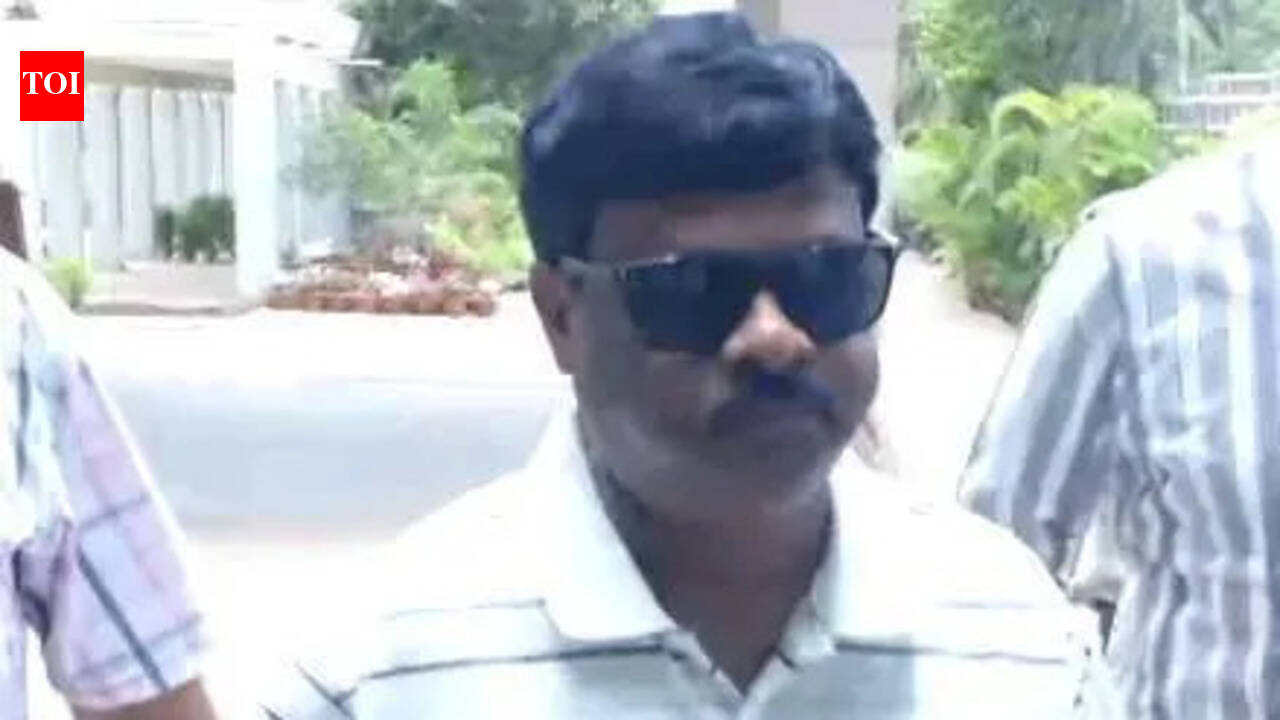
Mumbai: Ahead of Eid-ul-Adha celebrations, Mumbai Police on Wednesday confirmed that the ritual of goat sacrifice (qurbani) has been canceled at a housing society in Goregaon following a clash between two communities over the issue.Officials said the cattle would be removed from the society premises on Thursday morning to maintain law and order in the area.According to news agency ANI, tension prevailed in Satellite Garden Phase 2 in Gokuldham area as members of two communities clashed with each other over the sacrifice ritual, with residents raising strong objection to the practice within the residential complex.Representing the Muslim side, the residents claimed that they had taken permission from the Brihanmumbai Municipal Corporation (BMC) to perform the sacrifice in the society. He said this ritual has been in practice for a long time over the years, but it has not been performed at the site for the last two seasons.The opposition argued that designated facilities should be used for goat sacrifice and raised concerns over hygiene and potential public health risks within the society, saying it could lead to the spread of diseases.(with agency input)

Source link

Vaibhav Suryavanshi created history, breaking Chris Gayle’s 14 year old IPL record… | cricket news

Vaibhav Suryavanshi created history, breaking Chris Gayle's 14 year old IPL record...
Vaibhav Suryavanshi of Rajasthan Royals (AP Photo)

Fifteen-year-old Vaibhav Suryavanshi continues to rewrite IPL history with a season for the centuries. Rajasthan Royals Opener broke 14 year old record chris gayle During the IPL 2026 Eliminator match against Sunrisers Hyderabad in New Chandigarh. playing in the biggest match of RajasthanIn the season, Suryavanshi once again displayed a breathtaking display of fearless batting. The teenage sensation completed his half-century in just 16 balls and in the process, became the batsman to hit the most number of sixes in an IPL season so far. Most sixes in an IPL season:

  • 61*- grandeur Suryavanshi (2026)
  • 59 – Chris Gayle (2012)
  • 52 – Andre Russell (2019)
  • 51 – Chris Gayle (2013)
  • 45 – Jos Buttler (2022)

The record had remained untouched since Gayle’s iconic 2012 campaign, but Suryavanshi has now overtaken the great power-hitter at just 15 years of age. This knock full of milestones did not stop here. Suryavanshi also became the youngest player to score 600 runs in an IPL season, breaking the previous record. Rishabh PantWho achieved the feat for Delhi Daredevils in 2018. What’s even more remarkable is that, before IPL 2026, no batsman in the history of the tournament had scored 550 or more runs in a season at a strike rate above 200. Suryavanshi has now become the first player to achieve that extraordinary combination of volume and explosiveness. The SRH skipper came after the historic innings in a high-pressure eliminator at the Maharaja Yadvendra Singh International Cricket Stadium pat cummins After winning the toss, decided to bowl first.Rajasthan entered the competition under pressure after losing twice to Hyderabad at the start of the season, Suryavanshi showed no signs of nervousness as he dismantled the SRH attack right from the start. This knock has further cemented his status as the breakout superstar of IPL 2026 and one of the most extraordinary teenage talents the tournament has seen so far.

Source link

4 killed in fatal highway crash involving illegal immigrant who drove wrong while drunk in Oklahoma; may face deportation

4 killed in fatal highway crash involving illegal immigrant who drove wrong while drunk in Oklahoma; may face deportation

An illegal immigrant has been accused of killing four young people after driving while intoxicated (DUI) on an Oklahoma highway.Police identified the suspect as 27-year-old Michael Rosario-Cruz. He was released from the hospital and booked into the Canadian County Jail on multiple charges, including four counts of second-degree murder, DUI causing serious injury, driving while impaired, carrying a firearm while intoxicated and transporting an open container.The crash happened early Friday morning on Interstate 40 in Canadian County, according to the Oklahoma Highway Patrol. Rosario-Cruz was reportedly driving westbound in the eastbound lanes when he collided with another vehicle. Due to the collision, the car caught fire and all four occupants died.The victims were identified as Kiersey Hickson, 20, Quincy Jones, 19, and Haleigh Salazar, 18, and Brad Palmer.Rosario-Cruz is the subject of a U.S. Immigration and Customs Enforcement (ICE) detention request, meaning ICE has asked to be notified prior to any release so that deportation proceedings can begin. His nationality and when he entered the United States have not been confirmed.“Driving without a license is a reckless, life-altering decision,” the Highway Patrol said in a social media post announcing the charges.It added: “The loss of these young lives will have a lasting impact on countless family members, friends and communities.”The victims were remembered at a recent vigil held at El Reno High School, where three of them graduated. Nancy Salsman, a retired teacher, said she taught second grade to three of the victims.“You just make that connection that never goes away,” he told News 9.He added, “They’re always your kids. And when something like this happens we come together.”

Source link

‘Broken, corrupt system’: Rahul Gandhi meets family of NEET aspirant who committed suicide after paper leak. india news

'Broken, corrupt system': Rahul Gandhi meets family of NEET aspirant who committed suicide after paper leak

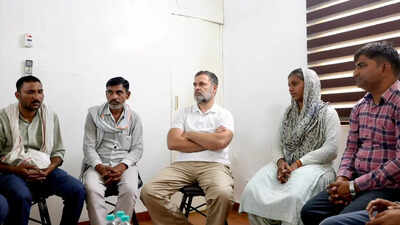
New Delhi: Leader of Opposition in Lok Sabha Rahul Gandhi on Wednesday met the family of a 22-year-old NEET aspirant who died by suicide in Rajasthan’s Sikar, days after the National Testing Agency (NTA) canceled the May 3 NEET-UG 2026 exam due to paper leak.In a social media post on Twitter, Rahul said that Pradeep’s death was not a suicide but the result of a broken and corrupt system.Rahul said, “Today I met the family of promising student Pradeep Meghwal, who was so hurt by the NEET paper leak that he committed suicide. Their pain cannot be expressed in words. A mother and father have lost their son and they were guilty without any fault.”“Lakhs of children across the country are living under pressure from studies, competition and their future. And when a paper leaks, it’s not just a test – a child’s dream is shattered, and an entire family’s. Those who handed over the examination system to the mafia, and who are still clinging to their chairs – the Modi-Shah duo are answerable to this family,” the Congress leader said.Pradeep’s family members said he was under a lot of stress after the medical entrance exam was canceled following the paper leak controversy.According to the police, Pradeep was found hanging in his room. He was taken to SK Hospital, where doctors declared him brought dead. Later his body was kept in the mortuary of the government hospital for postmortem procedures. Udyog Nagar Police has started investigation. Pradeep’s father Rajesh Kumar said that his son studied hard for three years for the medical entrance exam and performed very well this time.The NEET-UG 2026 exam conducted for admission to undergraduate medical courses was later canceled after allegations of paper leak.The Center later handed over the investigation into the irregularities to the CBI, which has so far arrested 10 people in the case.

Source link

HC seeks response from state, ASI on plea against ‘ecological destruction’ in Mahendragiri hills. bhubaneswar news

HC seeks response from state, ASI on plea against 'ecological destruction' in Mahendragiri hills

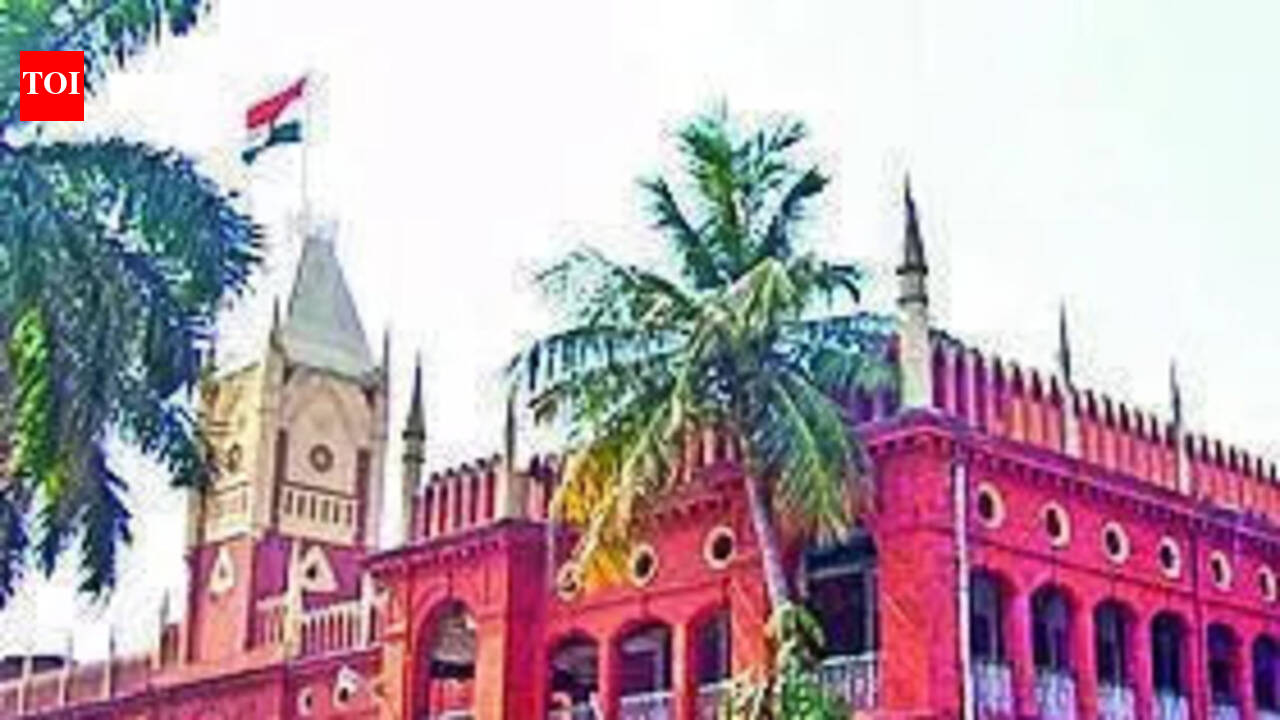
Cuttack: The Orissa High Court has sought response from the state government and the Archaeological Survey of India (ASI) on a public interest litigation (PIL) alleging illegal excavation, encroachment and ecological destruction in the protected Mahendragiri hills of Gajapati district.Hearing the case through virtual mode on Tuesday, a vacation bench of Justices KR Mohapatra and MS Sahu adjourned the matter till after the summer vacation after additional government counsel SR Patnaik sought time to get instructions. Deputy Solicitor General of India PK Parhi, appearing for the ASI, and the state counsel were directed to take instructions in the matter.The PIL was filed by Pradeep Kumar Bhuiyan of Gajapati district belonging to the Sabar (Sora) tribal community and three other residents who claimed to be hereditary worshipers associated with the sacred Mahendragiri hill under Paralakhemundi forest division. Advocate Shivshankar Mohanty presented arguments on behalf of the petitioners.The plea has sought immediate intervention to stop alleged unauthorized excavation, illegal construction, installation of artificial idols and illegal religious activities around the centrally protected Bhima, Kunti and Yudhishthir temples situated on the hill. It also prayed for demolition and removal of all alleged illegal structures and encroachments raised in violation of the Ancient Monuments and Archaeological Sites and Remains Act, forest laws and environment rules.The petition alleged that some private parties have carried out illegal excavation and construction activities near the protected monuments under the guise of “research work” and “Mahendra Ashram”. Photographs presented before the court allegedly show excavation near the Kunti temple, uprooting of trees near the Yudhishthir temple and construction of a concrete road within the prohibited areas around the monuments.The petition also objects to the proposed “Mahendra Mela” from June 1 to 13, alleging that the mass gatherings and rituals could have a serious impact on the delicate ecology, biodiversity and forest habitat of the area.According to the petitioners, the Mahendragiri hills are not only a sacred site for the Sabar and Kondh tribal communities but also an ecologically fragile mountain ecosystem, which is officially recognized by the Government of Odisha. In November 2022, the state declared 4,250 hectare area of ​​Mahendragiri as a biodiversity heritage site due to its rich biodiversity, endemic species and tribal cultural significance.

Source link

Sanjay Mehrotra, who was rebuffed thrice for US visa, joins Satya Nadella and Sundar Pichai in the trillion-dollar club

Sanjay Mehrotra, who was rebuffed thrice for US visa, joins Satya Nadella and Sundar Pichai in the trillion-dollar club

TOI correspondent from Washington: In the summer of 1976, the Kanpur-born teenage engineering student at BITS Pilani stood in the lobby of the US Embassy in New Delhi after being denied a student visa for the third time. His father, who had come with him, refused to go. She had seen the photo of the consular officer in the lobby, learned that he had gone out for lunch, and decided that she would wait to ask him why her son was being denied a visa even though admission to three universities was confirmed and all the documents were in order. Persistence worked. Half a century later, that student, Sanjay Mehrotra, is CEO of Micron Technology, the memory-chip giant that on Tuesday eclipsed the $1 trillion market capitalization that fueled Wall Street’s AI frenzy and joined the top 10 U.S. companies by valuation, surpassing more well-known giants like Walmart, Berkshire Hathaway and JPMorgan Chase. It’s one of Silicon Valley’s most incredible stories: A guy repeatedly shunned by America became the manager of one of America’s most strategically important technology companies in the MAGA era. He is not alone. Mehrotra’s rise also completes an extraordinary desi tableau at the top of corporate America. The world’s three most valuable technology companies – Microsoft, Alphabet and Micron, with market caps exceeding trillions – are now run by Indian-origin executives who arrived in America as middle-class strugglers with nothing but engineering talent, parental sacrifice and a quiet fire in the belly. Satya Nadella Grew up in Hyderabad as the son of a civil servant. Sundar Pichai He was brought up in a modest apartment in Chennai where the family once shared a rotary telephone. Mehrotra also came from a middle-class family in Kanpur that did not even have a phone. During his formative years in America calls to his parents were always via “PP” – “neighbor’s phone” – calling a neighbor who had a landline, who called his parents. Amazingly, their collective rise is now reshaping both Silicon Valley and the political debate over globalization in Donald Trump’s MAGA-backed America.Unlike Pichai and Nadella, who already inherited major software empires, Mehrotra’s achievement has been more industrial and arguably more difficult. Memory chips are cyclical, highly capital-intensive, and historically dominated by Asian giants like Samsung Electronics and SK Hynix. When Mehrotra became CEO of Micron in 2017, the company was worth about $20 billion. Today, Micron has reached the trillion-dollar mark amid an AI-driven explosion in demand for high-bandwidth memory chips that power data centers. Wall Street’s sudden fascination with Micron — driving the stock up 180 percent in 2026, including a 75 percent rise in May alone — reflects a terrible realization: AI may run on Nvidia processors, but it remembers via Micron memory. Micron’s rally has been so intense in recent days that President Trump personally praised the company as “one of the most popular stocks” after hosting Mehrotra at the White House, amid allegations of insider trading after allegations surfaced that Trump owned a stake of between $50,000 and $100,000 in Micron stock. Trump later took Mehrotra on his trip to China as part of a high-profile business delegation — a remarkable embrace from a president whose political movement has often attacked globalization and immigration.That tension now defines the Indian-American CEO moment in modern America that goes beyond the tech trio. MAGA activists and economic nationalists are accusing Indian-led technology companies of outsourcing jobs, favoring Indian engineers in hiring, and maintaining divided loyalties between the United States and India. In recent days, IBM’s Arvind Krishna – another Trump favorite – has come under fire from right-wing activists angry over the company’s huge Indian workforce. Similar allegations have been leveled against Microsoft’s Nadella and Google’s Pichai from time to time. Yet the same White House that is against globalization also relentlessly oppresses these executives because they now control companies central to America’s technological supremacy against China. Few industries illustrate that paradox more clearly than memory chips where Micron has invested extensively in India following ventures in Singapore, Taiwan, Japan, China and Malaysia. As part of India’s $2.75 billion effort to enter the global semiconductor supply chain, the company is investing over $800 million of its capital to build an ATMP (Assembly, Testing, Marking and Packaging) facility in Sanand, Gujarat. The Sanand facility is rapidly hiring engineers, automation specialists, manufacturing experts and quality technicians for its 500,000-square-foot cleanroom space, one of the largest single-floor assembly and test cleanrooms anywhere in the world, as India races to transform itself from a software-services back office to a hardware manufacturing hub.For Mehrotra it’s more personal. Unlike many Silicon Valley executives who maintain only formal ties with India, he has repeatedly viewed Micron’s India expansion as a strategic long-term investment in engineering talent and manufacturing depth. Symbolism matters: The student who was once denied entry to the US is now helping define America’s semiotic relationship with India.Still, the parallels with Nadella and Pichai are striking. Under Nadella, Microsoft’s market value has increased 10-fold – from about $300 billion in 2014 to more than $3 trillion today, largely through cloud computing and AI. Pichai, who became CEO in 2019, has seen 4x growth — from $1 billion to a $4 trillion-plus club that has only one other member, Nvidia. This is while navigating antitrust battles, AI disruption, and political scrutiny over search dominance. All three men have some management qualities in common: low-key demeanor, engineering passion, incrementalism over theatrics, and an aversion to Silicon Valley celebrity culture. None resemble the flamboyant founder ideal popularized by other tech giants like Elon Musk and Jeff Bezos. He is a smooth operator, not a showman. In an industry once dominated by charismatic dropouts – Steve Jobs, Bill Gates, Larry Ellison – corporate America has quietly shifted toward tech immigrant executives with deep managerial discipline.That change is not accidental. The AI ​​age is rewarding operational complexity, supply-chain coordination, and geopolitical balancing rather than pure product charisma. Mehrotra presents that change well. He co-founded SanDisk before leading Micron into one of the most important moments in semiconductor history. Today, memory chips are at the center of the AI ​​arms race between the United States and China. Micron’s fortunes are now tied not just to consumer electronics but to national security, data centers and global power politics.The irony is rich. A young Indian student once struggled to convince America that he was entitled to enter the country. Today, Washington views it as essential to maintaining America’s technological dominance. And somewhere in the story lies a larger truth about modern America: Even in an age of MAGA nativism and skepticism about globalization, some of the companies at the heart of American power are increasingly run by Indian immigrants, who have come after denied visas, middle-class anxieties, and parents willing to wait endlessly in embassy lobbies for a second chance.


Source link

Adequate buffer stock to meet demand from thermal power plants: Coal India india news

Adequate buffer stock to meet demand of thermal power plants: Coal India

New Delhi: Allaying fears of shortage amid scorching heat and high power demand, Coal India said the country has a buffer stock of 168 million tonnes of dry fuel, enough to meet the requirements of domestic thermal power plants for 19 days.The company also said that depletion of coal stock levels at thermal plants during peak summer was a natural phenomenon and about 50 MT of in-situ mine coal was readily available for quick extraction and supply if the demand required.Coal-fired power stations are expected to maintain a “standard” stock of 26 days, which is calculated on the amount of electricity generated compared to the maximum possible output at 85% plant load factor or full capacity. As against the requirement of 75 MT coal to maintain this level, the total stock availability was 49.7 MT or 66% of the standard requirement.According to the daily coal stock report compiled by the Central Electricity Authority, 24 of the country’s 190 coal-based plants with a collective capacity of 223 GW had significant coal stocks as of May 26, meaning the availability was less than 25% of the standard requirement.India is currently in the grip of extreme heat, due to which the demand for electricity is increasing in most parts of the country. The maximum power demand reached 271 GW on May 21. Coal-based power plants provide about 68% of the country’s total electricity requirement during the day.However, Coal India Ltd, which supplies about 80% of the country’s coal requirement, said stocks at domestic coal-fired plants stood at 47.6 MT on May 23, while inventories at its own mine heads stood at a “comfortable level” of 113.5 MT on May 24, 10% higher than the same period in 2025.“This level is sufficient to meet 19 days’ consumption. Besides, about 3 MT of coal is awaiting movement at goods sheds, private washeries and transit points like ports,” CIL said in a statement.The public sector company said about 4 MT of coal remains in transit at any point of time, taking the total coal available in the system to 168 MT. CIL said it had advised power plants with less coal availability to create stocks in advance for peak demand periods. “As such, CIL has sufficient quantities to meet the generation capacity of domestic coal-based plants,” it said.

Source link

TMC MLA arrested in Puri for threatening BJP workers during Bengal Assembly elections. bhubaneswar news

TMC MLA arrested in Puri for threatening BJP workers during Bengal Assembly elections
TMC MLA Dilip Mandal in police custody

Debabrata MahapatraBhubaneswar: West Bengal Police on Wednesday arrested TMC MLA Dilip Mandal from a beachside hotel in Puri for his alleged involvement in cases related to intimidation of BJP workers during the recently concluded assembly elections.Mandal was caught by a joint team of West Bengal and Puri police from the hotel lobby when he was preparing to check out and shift to another hotel in Baliapanda area.“We provided all necessary assistance to West Bengal Police to trace the suspect, who had checked in (at the hotel) with an associate on Tuesday,” said Puri SP, Prateek Singh. times of India.Mandal, who was taken to West Bengal on transit remand, claimed that he was being framed. “The BJP is doing vendetta politics. Since I have been vocal against their top leaders, they took revenge by arresting me,” he told reporters in Puri.Earlier, fearing his escape, around 30 officers, including 20 Puri police officers, surrounded the hotel.A Puri police officer said, “He had checked in in the name of his colleague. As soon as he came down to complete the check-out formalities, he was taken into custody. There was no resistance. He had already booked another hotel near the beach for Wednesday.”Sources said Mandal had reached Puri by train about a week ago and was changing hotels to avoid detection. His alleged hiding in Puri was confirmed after West Bengal Police received information from one of his close associates in Kolkata.Mandal’s arrest follows the arrest of his son Arghya on May 18 in Bakkhali-Fraserganj for allegedly possessing illegal firearms.

Source link

Quote of the Day by Plato: “Good men pay the price of indifference to public affairs…” | world News

Quote of the Day by Plato:

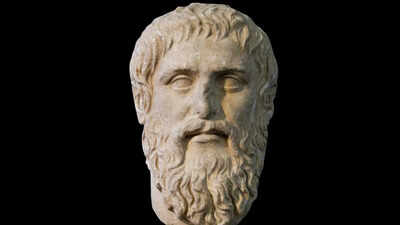
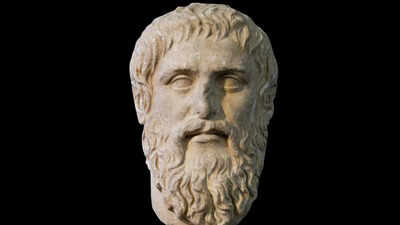
Some quotes survive because they seem wise. Others survive because they cause a small moment of discomfort. They stay in people’s minds because they touch something that feels real even after the world around them has changed. This line related to Plato falls in the same second category. This doesn’t seem gentle or reassuring. It almost feels like a warning uttered centuries ago that has somehow managed to remain relevant.People often imagine that ancient philosophers were merely talking about ideas stuck in another era. They depict old cities, stone buildings and conversations that seem far from ordinary life. Yet every now and then an old saying comes up and sounds unexpectedly modern. This is what makes this quote interesting. Even after thousands of years, it still raises the same questions in people’s minds.What happens when civilized people stop paying attention?This question sounds more familiar than many would like to admit.Today life is moving forward rapidly. Calendars fill up with work. Personal responsibilities increase. There is news every minute and opinions come out from all sides. After some time many people get tired of doing all this. Some people stop following public discussions because everything seems repetitive. Some people decide that they will focus solely on personal matters. Others quietly tell themselves that the bigger issues are those of leaders and governments rather than ordinary people.Plato’s quote seems to challenge that thinking.It doesn’t do it loudly. It simply suggests that walking away completely can produce consequences of its own.

Today’s Quote by Plato

“The price that good people have to pay for their indifference to public affairs is to be ruled by bad people.”

What is the meaning behind this statement of Plato?

At first glance this quote seems political. On closer inspection it seems that it is talking about responsibility in a broader sense.Plato does not suggest that everyone should be deeply involved in political debate every day. The message feels more connected to awareness and participation. Communities, societies and institutions function because people are connected to what is happening around them. They ask questions, make decisions, and pay attention to the events that shape their lives.The quote becomes interesting because of where Plato focuses his attention. He starts with the “good guys” instead of the “bad guys.” That detail changes the meaning of the entire sentence.The warning is not focused on the sudden appearance of bad people. The concern seems to be about civilized people becoming isolated or indifferent.Many people think that avoiding difficult issues creates distance from them. He believes that getting away makes life simpler and more peaceful. Sometimes that feeling is probably understandable. Public discussions can be frustrating and emotionally draining.Plato seems to suggest that complete indifference has a price.Vacant spaces rarely remain vacant for very long. If thoughtful people decide not to participate, other people eventually move into those spaces. The outcome may not always reflect the values ​​of those who walked away.This idea seems uncomfortable because it shifts the focus back to personal responsibility.

Plato’s own experiences may have shaped these ideas

Plato lived in ancient Greece during a time filled with political instability and social change. His thinking did not emerge from a peaceful world untouched by conflict. He witnessed events that reportedly left a deep impression on him.One of the most important moments involved his teacher, Socrates. Socrates was sentenced to death by Athens after being accused of influencing young people and questioning accepted beliefs.Imagine that someone you admire is standing in front of a system that suddenly turns against them.Such experiences rarely disappear from a person’s mind.For Plato, questions of justice, leadership, and responsibility became deeply personal. Later, these ideas would appear again and again throughout his work. He discovered how societies function and what causes them to weaken.It appears that he was interested in more than just political systems. Human behavior often became his subject.Perhaps that’s why many of his comments still seem surprisingly fresh.

There’s something strangely normal about depression

Most people do not consider indifference to be dangerous.Someone may decide that they no longer want to follow certain discussions because they feel tired. Another person may believe that their opinion doesn’t really matter. Another person may believe that someone else will eventually deal with the problem.Neither of these options seems dramatic.This is what makes them interesting.Depression usually comes quietly. It rarely announces itself. People don’t suddenly wake up and decide to stop caring about big issues altogether. This often happens gradually. Attention goes somewhere else. Daily life becomes busy. Personal concerns take priority.Days pass.Weeks pass.Months pass.Small choices repeated over a long period of time sometimes produce results that no one originally expected.A person assumes that their voice changes nothing.Then many people start thinking like this.

Why does this old quote still ring close? modern life

It’s a bit strange to read words written thousands of years ago and recognize modern behavior within them.Today’s world provides people with endless information. News updates appear instantly. Opinion spreads on social media within seconds. The discussion continues throughout the day without stopping.Yet, many individuals feel isolated despite having access to more information than ever before.Some people become overwhelmed by the constant headlines. Some people feel emotionally exhausted from endless arguments. Others stop paying attention simply because it seems easy.That reaction is understandable.Yet Plato’s quote raises an uneasy possibility. Whether people notice or not, public events continue to shape society. Decisions keep being taken. Systems keep changing.Ignoring something does not always prevent its impact from reaching people later.The same thing could happen below the quote.

The message can go beyond politics

Many people interpret this quote in ways that go beyond governments and public systems.Unhealthy situations sometimes develop in workplaces because no one wants to speak up first. Communities sometimes struggle because individuals assume that someone else will take responsibility. Family and friendships may experience similar patterns.A person notices inappropriate behavior but remains silent because it feels uncomfortable to engage in it.Someone sees a problem and assumes that someone else will eventually intervene.Someone sees the warning signs but decides it’s easier not to get involved.Later, people sometimes look back and wonder how situations became so complicated.The answer sometimes seems simple.The issue was not just what happened.The issue was what could not be done.

Other famous quotes from Plato

  • “Wise people speak because they have something to say; fools because they have to say something.”
  • “The beginning is the most important part of the work.”
  • “Human behavior flows from three main sources: desire, emotion, and knowledge.”
  • “Courage is knowing what not to be afraid of.”
  • “Necessity is the mother of invention.”

What Plato understood about silence still matters today

Plato’s quote does not demand endless debate or constant engagement on every issue that exists. The message seems to be more subtle than that.People often assume that avoiding difficult topics means avoiding their consequences. Plato challenged that notion. They suggest that complete indifference can shape outcomes even when individuals believe they are remaining neutral.Perhaps this explains why these words keep appearing again and again from generation to generation.The world changes fast. Technology changes rapidly. On the other hand, human habits sometimes move very slowly.And perhaps this is why this quote still sounds strange today. Sometimes silence can shape events as much as action.

Source link

‘Only differences of opinion’: SP Velumani says all is well in AIADMK after both factions withdraw petitions against each other india news

'Only difference of opinion': SP Velumani says all is well in AIADMK after both factions withdraw petitions against each other.

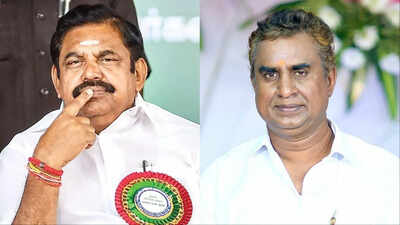
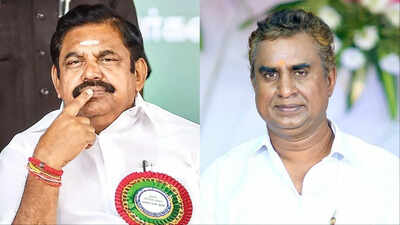
New Delhi: Senior All India Anna Dravida Munnetra Kazhagam (AIADMK) leader SP Velumani on Wednesday said “there is no division in the party, only differences”, indicating a possible reconciliation within the AIADMK after the rival factions withdrew petitions filed against each other before the Tamil Nadu Assembly Speaker.Referring to the tensions that have emerged within the party after the Tamil Nadu Assembly elections, Velumani told reporters, “There is no division in the party, only differences. We are all united. There are no conflicting views.”These comments came after both Edappadi K Palaniswami The (EPS) camp and the Velumani-CV Shanmugam faction decided to withdraw petitions seeking action against each other.“After the elections, we expressed some views and took some decisions which were seen as supporting the ruling party. He had filed a petition demanding disqualification of 25 of our members. Similarly, we had also filed a petition demanding his disqualification. Now both the parties have withdrawn their filed petitions. Velumani said, we have submitted the return letter to the Assembly Speaker.He said that despite internal differences after the election defeat, the party leadership structure remained unchanged and Edappadi K. Palaniswami remained AIADMK general secretary.“After the defeat, we had put forward some ideas. We expressed our opinion with the belief that AIADMK should continue to exist even a hundred years from now,” he said.Velumani also said that there have been discussions within the party regarding organizational reforms, including convening a general council meeting and forming a committee. According to him, the party leadership had assured that the suggestions would be considered.Earlier in the day, Velumani and MLAs supporting his faction met Tamil Nadu Assembly Speaker JCD Prabhakar at the Secretariat.The Speaker later said that he would examine the petitions presented by both sides before taking a decision.“I cannot disclose the contents of the petitions filed by the two groups of AIADMK. I will study the petition in detail and tell you about my decision tomorrow morning,” he said.The development comes after weeks of internal unrest within the AIADMK after the Velumani-Shanmugam faction extended support to actor-politician Vijay’s Tamilaga Vetri Kazhagam government during the floor test in the Assembly.The EPS camp had later sought disqualification of 25 rebel MLAs under the anti-defection law, while the rival faction had also filed petitions against the EPS side.However, reconciliation efforts appeared to gain momentum after leaders of the Velumani-Shanmugam camp met EPS and handed over an apology letter to the AIADMK leadership. Almost all the MLAs from the so-called rebel camp, except senior leader C Ve Shanmugam, attended the meeting.The AIADMK later indicated that “there will be no further division” within the party, hinting at a possible conflict between rival camps.

Source link