SC says integrate all emergency helplines into ‘112’ in three months India News

SC says integrate all emergency helplines into '112' in three months

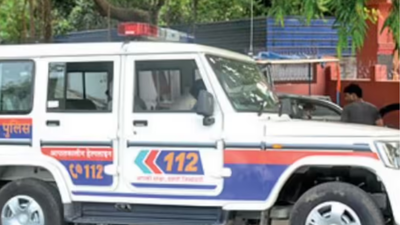
Noting that a citizen’s right to trauma care is an integral part of the right to life, the Supreme Court has directed the States and Union Territories to integrate all emergency/ambulance helplines into a single helpline number ‘112’ within three months for emergency responses.A bench of Justices JK Maheshwari and AS Chandurkar also directed them to set up a functional grievance redressal system under the Good Samaritan laws. The apex court said there is a need for a systemic intervention, creation of a uniform framework for trauma care, creation of public awareness, standardization of first aid skills and appropriate Good Samaritan laws, as “the right of citizens to trauma care is an integral part of the right to life enshrined under Article 21 of the Constitution”.The bench said, “The State/UT shall complete complete technical and operational integration of all emergency/ambulance helplines (100, 101, 108, 102, 1033, 1091, etc.) into Helpline 112 within a period of three months and give concurrent mass-media publicity to Helpline 112 and report on compliance.”“The Union of India (Ministry of Health/Ministry of Road Transport and Highways) is permitted to issue a medical rescue protocol for trauma cases within a period of three months, and all States/UTs are directed to implement the same at the State/UT level within three months of its issue,” the bench said.

Source link

The farmer’s sudden death left 1,400 acres of land unharvested, then 75 neighbors came and harvested everything for his family. world News

Farmer's sudden death leaves 1,400 acres of land unharvested, then 75 neighbors arrive and harvest everything for his family

When North Dakota farmer Randy Filsvold dies unexpectedly in a car accident in September 2025, his family is faced with grief as well as an overwhelming reality. About 1,400 acres of corn and soybeans were still standing unharvested as the winter season approached. For farming families, missing a narrow range of crops can mean devastating financial losses. Randy’s wife, Kharra, and their children were suddenly faced with personal tragedy and the possibility of losing an entire season’s work. However, what happened next became a remarkable example of how rural communities still come together in moments of crisis.

After the death of a farmer, 1,400 acres of land was saved due to the efforts of neighbors

Shortly after Randy’s death, two of his close friends, Wyatt Thompson and Andy Gates, decided that the family would not face the harvest alone. He began contacting neighboring farmers in surrounding North Dakota communities, asking if anyone could donate equipment, trucks, or time to help bring in the harvest.The response was immediate.Within a few days, about 75 farmers arrived with combines, grain carts and trucks ready to work in the fields. What might have taken one family several weeks to complete soon turned into a coordinated community effort.According to local reports, the volunteer operation involved about 12 combines, seven grain carts and more than 40 trucks. Farmers traveled from more than 10 nearby towns, bringing their own fuel, machinery and labor without asking for payment.For two days, the fields were busy almost non-stop as equipment moved in orderly lines between the crops. The operation resembled a professional large-scale harvest, yet everyone involved volunteered to help a grieving family.Some social media posts later described the scene as “42 trucks”, although local coverage generally reported the number to be more than 40.

Randy Filsvold with his wife Kharra.

Why is time so important?

The harvest season in the northern United States is largely weather dependent. Once snow, freezing temperatures or wet ground occurs, crops can quickly deteriorate or become impossible to gather efficiently.For the Filswold family, the stakes were huge. 1,400 acres of land represents not only the crops on a farm, but an entire year’s worth of labor, investment, and income. Losing the crop would have created severe financial pressure in addition to the already devastating personal loss.This urgency is one reason so many farmers understood the need for immediate action.

‘To know Randy is to love Randy’

Friends described Randy Filsvold as a well-respected man in the local farming community. Several volunteers later explained that helping the family was a natural reaction because of the kind of person he was.One friend expressed a sentiment shared throughout the community, saying, “To know Randy was to love Randy.”Kharra Filsvold later described watching the combines and trucks filling the fields as emotional and overwhelming. For her family, the harvest became much more than a farming operation. It became a public show of support during one of the most difficult moments of his life.

A story that resonates far beyond North Dakota

After local television coverage and social media posts circulated online, the story quickly spread across the country. Many people were impressed not only by the scale of the volunteer effort, but also by its representation.In many rural farming communities, neighbors still rely heavily on each other during emergencies, accidents, and natural disasters. While modern farming often relies on advanced machinery and technology, stories like this continue to highlight the strong personal relationships that lie behind the industry.For many readers, the image of dozens of combines and trucks arriving to save a distressed family’s crop is a rare reminder of collective kindness and solidarity in difficult times.

Source link

Cyprus’s desire to buy BrahMos, Kamikaze drones from India has worried Turkey. india news

Cyprus's desire to buy BrahMos, Kamikaze drones from India has Turkey worried

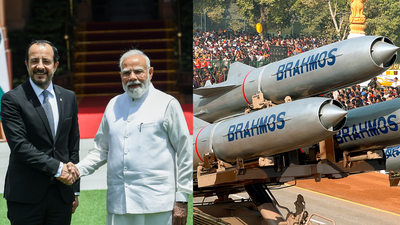
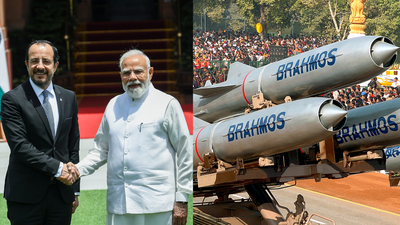
New Delhi: Cyprus has shown keen desire to purchase Brahmos Cruise missiles and unmanned aerial vehicles from India. The recent visit of Cyprus President Nicos Christodoulides to New Delhi has set the stage for this possible takeover. However, the possibility of Cyprus acquiring BrahMos missiles has already raised alarm bells in Turkish strategic and security circles.Apart from BrahMos, Cyprus is also interested in purchasing kamikaze drones like India’s Nagastra-1 and Skystriker. If these defense deals are finalized, the agreements would be a major strategic blow to Turkish President Recep Tayyip Erdogan, given Ankara’s decades-long occupation of Northern Cyprus. If the deal is signed, it will also mark the first deployment of Indian-made weapons systems in the Eastern Mediterranean.Turkey’s move to secretly send hundreds of drones to Pakistan during the height of the India-Pakistan conflict in May 2025 and its repeated controversial comments on Kashmir on various platforms had already created a rift between New Delhi and Ankara.Defense analysts in Ankara fear that deploying these supersonic missiles or kamikaze drones in the Mediterranean Sea could fundamentally alter the regional military balance and threaten Turkey’s security.Countries around the world have already seen how India used BrahMos missiles to destroy key military targets of Pakistan during the conflict in May. Some reports claim that the potential BrahMos purchase for Cyprus would be made under the EU’s SAFE program as part of a defense package of approximately 1.2 billion euros allocated to the Greek Cypriot administration.During Christodoulides’ visit, PM Modi and the President welcomed the conclusion of the Roadmap for Bilateral Defense Cooperation (2026-2031) between the Defense Ministries. They underlined the potential for significant cooperation in the defense sector and also welcomed the signing of a technical arrangement for the establishment of official coordination and cooperation on Search and Rescue (SAR) matters.“These will provide an institutional framework to promote defense industrial cooperation and technology partnership, build on the momentum of the India-EU Defense and Security Partnership signed on January 27, 2026, as well as facilitate exchanges, training and capacity building.

Source link

More than 8 thousand BLAs are required for SIR in Pune district, but the parties showed a little haste. pune news

More than 8 thousand BLAs are needed for SIR in Pune district, but the parties showed a little haste.
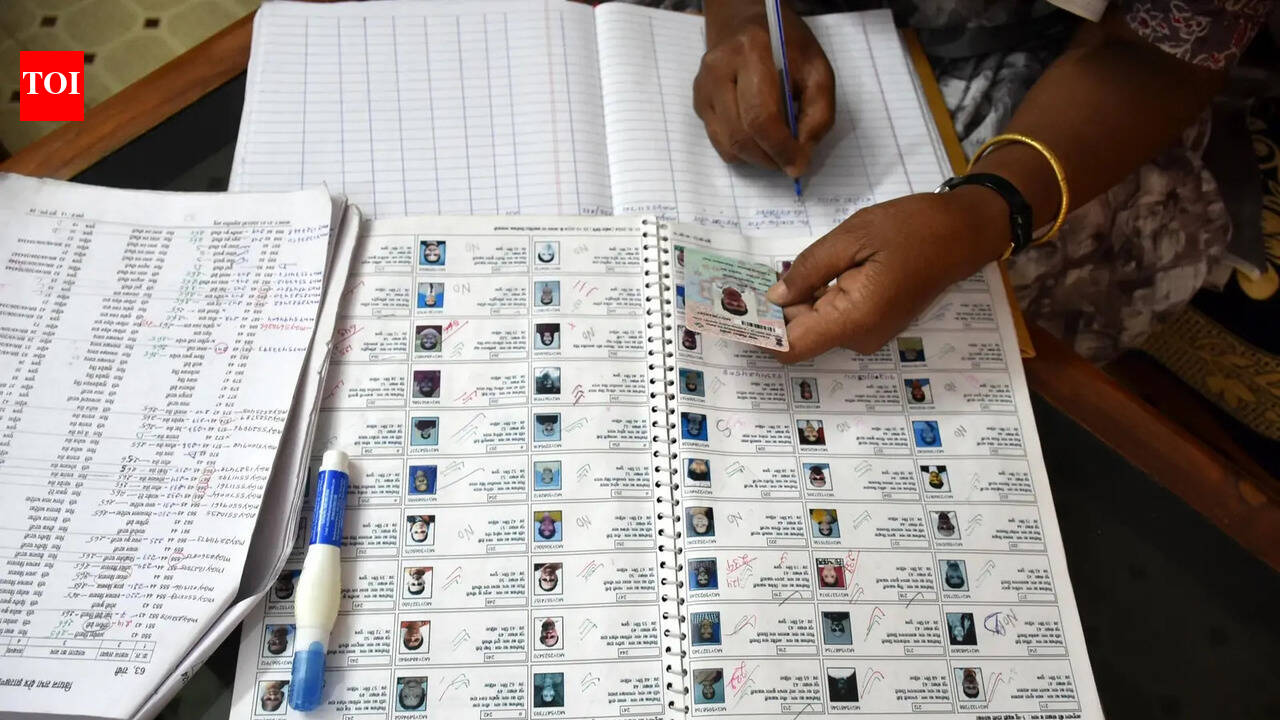
BLO checking voter list

Pune: Political parties in Pune district are lagging behind in appointing booth-level agents (BLAs) for the upcoming special intensive revision (SIR) of voter lists, while the administration needs more than 8,000 personnel for the exercise.Pune District Collector and District Election Officer Jitendra Dudi said times of India Repeated appeals have been made to the parties. “We have asked them to complete the appointments as soon as possible so that the work can proceed smoothly,” Doody said.Deputy election officer Meenal Kalaskar said political parties are required to formally appoint a BLA for each polling station. “We have 8,417 polling stations in Pune district and each party has to appoint equal number of agents. Once the appointments are made, the details have to be submitted to the election office. Only then can these agents assist the Booth Level Officers (BLOs) in special intensive vetting work,” she said.Kalaskar said many parties need to complete the process before the June 20 deadline. “These political agents can assist BLOs during domestic visits as part of the SIR exercise,” he said.The District Administration will conduct SIR campaign to update and clean the voter list across Pune district under the instructions of Election Commission of India. Between June 30 and July 29, physical verification of approximately 91.16 lakh voter records will be done door-to-door.During the exercise, BLOs will verify voter details including name, address, photo and other details. Entries under the category “Absent, Transferred, Dead and Duplicate” will also be scrutinized.Officials said that out of the total 91.15 lakh voters in Pune district, around 51.41 lakh voters have been identified so far.According to the schedule released by the election authorities, printing of counting forms and BLO training will be conducted between June 20 and June 29. The draft voter list will be published on August 5, while claims and objections can be filed till September 4. The final voter list is scheduled to be published on October 7.District administration data shows that political parties have so far appointed only a fraction of the required BLAs.in Pune district BJP has appointed 2,746 BLAs, followed by NCP 984, NCP (SP) 658, Shiv Sena 400 and Congress 204.Shiv Sena (UBT) has appointed 28 BLAs, while MNS has appointed only one. AAP and Samajwadi Party have not appointed any agent yet.Maharashtra There are 1,00,253 polling stations. BJP has named 52,215 BLAs, Shiv Sena 17,800, Congress 17,421, Shiv Sena (UBT) 10,140 and NCP (SP) 4,468.In the state, voter list mapping has reached 72%, with seven crore voters out of 9.86 crore voters mapped.State election officials said BLOs will visit every house from June 30 to July 29 and verify whether the mapping has been completed.A party official said that they will soon start the BLA naming process. “We are already working and we will adhere to the deadline,” he said.

Source link

Today’s Quote by Canadian-American Psychologist Albert Bandura: “Where everyone is responsible, no one is really responsible” |

Today's quote from Canadian-American psychologist Albert Bandura:
Albert Bandura (Image: Wikipedia)

Some quotes remain relevant because human nature rarely changes as much as people think. Societies develop. Technology changes rapidly. Entire industries disappear and new ones emerge. Yet human behavior often repeats the same patterns from generation to generation, especially when responsibility is shared among large groups of people. Perhaps that’s why this quote by Canadian-American psychologist Albert Bandura still sounds surprisingly modern.“Where everyone is responsible, no one is really responsible.”At first glance this sentence seems simple. Almost too simple. Yet the more one thinks about it, the more uncomfortable it becomes because most people have seen such exact situations many times in ordinary life.A problem arises.Everyone notices it.Everyone assumes someone else will handle it.Nothing happens.This pattern is present almost everywhere. Office. School. Governments. Friend group. online community. Even family sometimes. People tend to believe that shared responsibility automatically creates cooperation, although Bandura’s quote suggests that the opposite may also be true. When accountability becomes unclear or spread too widely, action often disappears as individuals cease to feel personally responsible.The result may be disappointing. Sometimes even dangerous.

today’s thought by albert bandura

“Where everyone is responsible, no one is really responsible”

Know the meaning behind Albert Bandura’s quote

At its core, the quote seems to describe how responsibility is diluted when too many people assume that someone else will step up first. Humans often behave differently in groups than they do individually. A person who usually acts quickly when alone may become completely hesitant when surrounded by others.Psychologists sometimes call this “diffusion of responsibility.” The larger the group becomes, the easier it becomes for individuals to mentally distance themselves from the action. People unconsciously assume that someone more competent, more confident, or more authoritative will eventually intervene.This belief often produces surprising paralysis.Imagine a workplace where a serious mistake is visible to everyone. Every employee notices it, although no one addresses it directly because everyone assumes another co-worker has already reported the problem. Eventually, the problem became larger as responsibility became shared rather than clearly defined.Bandura’s quote seems to warn against this kind of collective passivity.This line may seem crazy at first, however it reflects a very real pattern in human behavior.

Albert Bandura spent years studying human behavior

Albert Bandura became one of the most influential psychologists of the twentieth century because his work focused heavily on how people learn to behave socially. He is particularly known for developing social learning theory, which explored how observation, imitation, and environment shape human actions.Bandura believed that people are greatly influenced by what they see around them. Man does not learn only from direct experience. They also learn by observing how other people behave and seeing which behaviors are rewarded or ignored.That idea connects strongly to this quote.When individuals repeatedly observe situations where no one accepts responsibility, that behavior itself becomes normalized. Over time, people become increasingly passive because they unconsciously expect passivity from the group around them.Bandura was deeply interested in these subtle social dynamics as they affect almost every part of life, from education and workplaces to politics and relationships.

Modern workplaces often struggle with this problem

One reason this quote seems especially relevant now is that modern workplaces often operate through large teams, complex structures, and endless collaboration systems. In theory, teamwork sounds ideal. In fact, unclear accountability sometimes creates confusion rather than efficiency.Employees participate in meetings where everyone enthusiastically discusses problems, although no one has direct ownership over solving them. Emails keep getting copied to dozens of people simultaneously until the responsibility is completely reduced. Deadlines pass because everyone silently assumes that someone else is already handling the situation.Many employees probably recognize this immediately.The problem becomes worse inside larger organizations where communication already feels impersonal. When people feel emotionally detached from outcomes, accountability naturally weakens.Bandura’s quote captures that dynamic with uncomfortable accuracy.Sometimes, responsibility requires clarity more than quantity.

Social media created new versions of the same behavior

Interestingly, this quote seems highly relevant even in the age of social media. Now millions of people watch tragedies, controversies or crises simultaneously online. Information spreads instantly. Emotional reactions also spread. Yet actual action is often surprisingly limited.Part of the reason may include what Bandura described.When large numbers of people become aware of the same issue, individuals sometimes assume that collective awareness equals meaningful action. Sharing outrage publicly can create a feeling that the responsibility has already been met.In fact, nothing significant may actually change.That disconnect is often visible online. A topic trends for several days. Everyone discusses it in depth. Then the attention goes elsewhere before a meaningful solution can emerge. Collective visibility sometimes creates the illusion of responsibility while undermining individual action.In this sense Bandura’s observation seems remarkably ahead of its time.

This quote also says something uncomfortable about human nature

Another reason this quote remains memorable is that it forces people to confront an uncomfortable truth about themselves. Most individuals like to believe that they will act responsibly in difficult situations. Once group psychology comes into the picture the reality can become more complex.People often wait for permission from others without thinking.During a conflict one hesitates to speak first because silence has already become the norm of the group. Another person notices the inappropriate behavior, but avoids intervening because no one seems concerned enough to react publicly. Over time, passivity spreads socially.That process can happen silently.Almost invisibly.Bandura seems to be interested in exactly those moments where responsibility disappears, not because people are cruel, but because humans are strongly influenced by the behavior of others.This quote feels powerful because many readers recognize themselves somewhere inside it.

Why does accountability matter now more than ever?

Modern life is increasingly interconnected, although personal accountability still matters a lot. Organizations, governments, and communities function well only when individuals feel real ownership over actions and decisions.Without a sense of ownership, problems flow endlessly.Everyone talks about him.No one solves them.That’s why strong leaders often define responsibility very clearly. Effective teams generally work best when people understand what is theirs individually, rather than assuming that collective awareness alone will automatically lead to action.Bandura’s quote quietly reminds readers that responsibility must feel personal before it can be meaningful.Otherwise, it dissolves.

Life lessons hidden inside Albert Bandura’s quotes

The quote teaches that accountability is weakened when roles remain unclear. People are more likely to act when responsibility feels personal and direct rather than vague or collective. Another important lesson involves self-awareness. Humans naturally look to groups for behavioral cues, often without consciously noticing it.This saying also highlights the danger of passive observation. Problems rarely disappear because too many people notice them at once. Awareness matters, however action matters even more.Perhaps the greatest lesson hidden inside this quote is that responsibility requires courage. Making the first move can feel uncomfortable because it breaks social inhibitions. Yet many important actions throughout history occurred because one person refused to believe that someone else would eventually deal with the problem.

Other famous quotes from Albert Bandura

  • “People not only gain understanding through reflection, but they also evaluate and change their thinking.”
  • “To be successful, people need a sense of self-efficacy.”
  • “Learning would be extremely laborious if people had to rely only on the effects of their actions.”
  • “Moral justification is a powerful alienation mechanism.”
  • “People’s beliefs about their abilities have a profound effect on those abilities.”

final conclusion from the quote

Albert Bandura’s quote continues to resonate because it reflects the frustrating reality that people constantly face in ordinary life. Shared responsibility sounds positive in theory, although in practice, it sometimes weakens rather than strengthens accountability.People assume that someone else will speak first.Someone else will intervene.Eventually someone else will solve the problem.Bandura seems to challenge that instinct directly. His quote reminds readers that responsibility is only meaningful when individuals accept it personally rather than silently delegating it to a group around them.Maybe that’s why this line still seems so relevant. Modern life has become increasingly collective and interconnected, although meaningful change still usually starts with one person deciding not to wait for everyone else to do the same first.

Source link

Tribal people demand stop of tiger safari, eviction from forests of South India. india news

Tribals demand stop of tiger safari, eviction from forests of South India

TOI correspondent from London: Save the tiger. Sell ​​the forest. Destroy people. to stop. Tribal communities from Karnataka, Kerala and forests spread across the country Tamil Nadu There has been a pushback against wildlife tourism and tiger reserve expansion, accusing forest officials and conservation groups of turning ancestral homelands into a commercial safari “spectacle”, while indigenous families are evicted and forced into marginalization.More than 35 tribal villages under the Nagarhole Adivasi Jamma Pale Hakku Sthapana Samiti of Kodagu and Mysuru in the forest region of Karnataka, about 220 km southwest of Bengaluru, on Thursday issued a joint “Nagarhole Declaration” demanding an immediate stop to all transfers from the forests, saying none were voluntary.The announcement came after a marathon community dialogue held at Balekavu village inside the Nagarhole forests from May 5 to 7, where tribal activists from Wayanad in northern Kerala, the Muthanga Wildlife Area near the Kerala-Karnataka border, the Sathyamangalam tiger landscape in western Tamil Nadu and the Mudumalai Reserve in the Nilgiris gathered to form a common front in the Western Ghats tiger belt.Their charge was clear: forests once visited, hunted, worshiped and buried by indigenous communities are being fenced, branded and monetized through tiger safaris and conservation projects without the forest dwellers’ consent.The manifesto accused the forest department and the National Tiger Conservation Authority of usurping customary land and turning it into a “commercial spectacle”. It says, “What the forest bureaucracy calls core areas or critical tiger habitat is our ancestral land, our sacred space.”It says the Forest Rights Act of 2006, designed to address historical injustice against forest communities, has failed to protect them on the ground. Instead, “the injustice continues” through safari jeeps driving on lands where “our ancestors walked and are buried”, through conservation schemes imposed on villages and through generations trapped in bonded labor on tea and coffee plantations.“It is unconscionable that in states like Karnataka, Kerala and Tamil Nadu that proclaim themselves as champions of social justice, thousands of tribal families remain trapped in conditions that can only honestly be described as slavery,” the manifesto said.The document portrays the conservation fight in historical contexts, arguing that the violence unleashed under colonial forest laws never ended after independence, but only “put on a green uniform under the mask of conservation”.Tribal people alleged that notifications declaring national parks and tiger reserves were put forward without following legal procedures. He demanded that the ancestral areas be recognized as “Scheduled Areas” under the Constitution, giving stronger self-governance rights to tribal communities.The declaration claimed that forest and tourism departments in the three states have “no legitimate authority” to operate, license or commercialize wildlife safaris on traditional tribal lands without the informed consent of village councils. It demanded immediate suspension of all safari operations until such consent was obtained.The sharpest words were aimed at wildlife NGOs supporting a fortress-style conservation model. “Conservation that requires us, the indigenous people, to be evicted from the land is not conservation. This is colonization,” the declaration said.Activists said the fight over forests is no longer just about wildlife conservation. It is about whether ancient indigenous footprints will survive under the tire tracks of rapidly expanding safari tourism. Jenu Kuruba activist JK Thimma said, “We are the first people of this land. We are not encroachers.” “There is no conflict between us and the animals in the forest.”The declaration said that the rights guaranteed under the Forest Rights Act – which recognizes forest dwellers as custodians of forest resources – have allegedly been ignored, rendering many tribal communities “constitutionally invisible”.

Source link

Look at those snacks! Ultra-processed foods can increase your blood pressure. hyderabad news

Look at those snacks! Ultra-processed foods can increase your blood pressure
The study findings showed that 12.5% ​​of participants already had blood pressure at or above 140/90 mmHg, indicating emerging cardiovascular risk in young adults.

Hyderabad: According to a recent study conducted by the Hyderabad-based ICMR-National Institute of Nutrition, frequent consumption of ultra-processed foods (UPF) such as packaged snacks, sweet drinks, biscuits and instant foods can significantly increase the risk of hypertension in urban youth.The study, recently published in the journal ‘Nutrients’, examined the dietary patterns and blood pressure profiles of 311 undergraduate students aged 18 to 24 years from colleges in Hyderabad. Researchers found that students who consumed higher amounts of high-fat and high-salt ultra-processed foods were nearly three times more likely to have increased blood pressure than those who consumed less.The findings showed that 12.5% ​​of participants already had blood pressure levels of 140/90 mmHg or higher, indicating emerging cardiovascular risk in young adults. Ultra-processed foods commonly consumed among participants included biscuits, chocolate, packaged salty snacks, bread products, sugary drinks, and instant foods.Scientists identified taste. Convenience, affordability and easy availability are the major reasons for the increasing consumption of ultra-processed foods among urban youth. The study noted that the association between UPF intake and elevated blood pressure remained significant even after adjusting for factors such as age, gender, residence and family income.The researchers used a detailed food survey based on the NOVA classification system to study how often participants consumed 24 commonly eaten ultra-processed foods. Blood pressure levels were measured using standard medical procedures.Lead authors Dr Karthikeyan S and Dr Samarasimha Reddy said the increasing dependence on packaged and convenient foods among urban youth requires urgent public health attention. “Targeted interventions are needed in colleges and universities to encourage healthy dietary choices and increase awareness of the health risks associated with excessive ultra-processed food consumption,” she said.“India is witnessing rapid nutrition changes, especially among adolescents and young adults,” said Dr Bharati Kulkarni, NIN Director, and stressed the need to strengthen nutrition literacy and create healthy food environments.

Source link