Skyscrapers have become a kind of silent competition between nations. It hasn’t always been planned this way, but it’s clearly visible in the skylines. Cities are moving upwards faster than outwards. The idea of ”top 10 countries with the most skyscrapers” is usually associated with urban growth, population pressure, and economic ambition. China dominates this space by a large margin, while the United States still holds the historical lead in coveted high-rise development. Other countries in Asia and the Middle East are rapidly falling prey to it. Modern construction trends, commercial centers and demand for real estate are driving cities to build taller than ever. Some skylines are still developing, while others already look almost entirely filled with glass towers and steel giants.
List of countries with most skyscrapers 2026
Country
|
skyscrapers |
| China |
3,492 |
| United States of America |
905 |
| united arab emirates |
342 |
| malaysia |
319 |
| Japan |
283 |
| south korea |
281 |
| Canada |
178 |
| Australia |
163 |
| Thailand |
144 |
| Indonesia |
139 |
Source: World Population Review
Top 10 countries in the world with most skyscrapers in 2026
China
China is in first place, but by a considerable distance. Cities such as Shenzhen, Shanghai and Guangzhou have an abundance of tall buildings. The districts look like entire vertical cities. It seems that the reason behind such rapid growth is urbanization as well as the development of industries. Most skyscrapers in the country are mixed-use buildings that include both office space, hotel accommodation and residential properties. Obviously, construction activity in China over the past few decades exceeds anything that has occurred anywhere else. The views of some cities seem almost futuristic, even more so in the evening. Yet the pace of construction continues, albeit at a slower rate than before.
United States of America
The United States has a long tradition with skyscrapers and ranks as the second largest country in the world. New York and Chicago were among the first cities to be recognized by skyscrapers. In the context of the country’s architectural flag, its dominance in the global architectural world is quite evident. New York City alone contributes huge numbers. It appears as if the objective here is not quantity but quality, and modern skyscrapers are used for luxury residences or headquarters of corporations.
united arab emirates
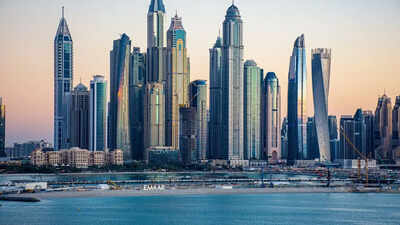
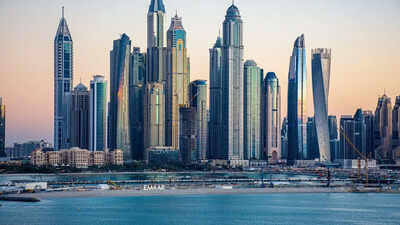
What makes the United Arab Emirates unique is Dubai and Abu Dhabi. Indeed, Dubai has transformed its skyline unprecedentedly in just a few years. The existence of landmarks like Burj Khalifa reflects its ambition to become a global power. Skyscrapers in Dubai are known for their emphasis on luxury, tourism and corporate branding. In other words, the UAE seems to use tall buildings to build its global image.
malaysia
Malaysia, especially Kuala Lumpur, contributes heavily to the number of skyscrapers in the country. The city has a dense cluster of modern towers including residential and commercial buildings. The Petronas Towers remain an iconic part of the skyline. Urban development policies seem to have encouraged vertical growth to efficiently manage land use. Skyscrapers here are often functional and integrated into public transportation networks. The overall horizon continues to expand, although not as aggressively as China or the United Arab Emirates.
Japan
Due to earthquake risks, Japan’s skyscrapers are shaped according to strict engineering standards. With a mix of commercial and residential towers, Tokyo is leading the country in high-rise development. The design focus is often on safety and functionality rather than excessive height. The scarcity of land in major cities appears to have encouraged vertical expansion. Japanese skyscrapers are compact but highly efficient. The horizon continues to evolve gradually with advanced construction techniques.
south korea
Many high-rise buildings are being built in South Korea, especially in Seoul. For example, Songdo District shows an emphasis on modern urban planning. It appears that the progress made by South Korea is related to the technological sector and globalization. The skyscrapers present in South Korea are efficient and in line with the demands of today’s lifestyle.
Canada
Skyscrapers in Canada are dominated by cities such as Toronto and Vancouver. They have grown steadily, not suddenly. In Toronto, skyscrapers make up the highly populated central part of the city, which contains many residential buildings. Immigration and urban population growth appear to have contributed to the growth of skyscrapers. The skyscrapers are fairly new but well-proportioned, leaving ample room for further expansion.
Australia
The construction of tall buildings in Australia is mostly concentrated in the cities of Sydney and Melbourne. It is highly associated with coastal city planning and design. The buildings are characterized by a combination of residential and commercial functions. There may be a need for building construction due to the high demand for land in the city. Modern high-rise buildings in Australia feature attractive design and integration with the coast.
Thailand
Thailand, especially Bangkok, shows rapid skyscraper development. The city’s skyline is becoming denser with residential towers and hotels. Tourism plays a strong role in this expansion. Urban migration also appears to be contributing to vertical growth. Bangkok’s skyline is still changing, with ongoing construction projects shaping its future identity.
Indonesia
Indonesia is slowly expanding its skyscraper presence, following Jakarta’s lead. The city faces high population density, which encourages vertical construction. Economic growth and urban demand appear to be driving new development. Despite lagging behind regional leaders, the horizon is changing rapidly. New projects suggest continued expansion in the coming years.









 “To eliminate the possibility of entry of any unauthorized person into the counting centres, the Election Commission of India has introduced a QR code-based photo identity card module on ECINET,” the commission said in a statement on Thursday.This system – being introduced for the recently concluded elections in Assam, Tamil Nadu, Kerala, West Bengal and Puducherry – will be extended to all future elections to the Lok Sabha and State/UT Assemblies.Under the vote counting arrangements on May 4, a three-tier security mechanism has been set up for identity verification at the counting centres. At the first and second level, photo identity cards issued by the respective returning officers will be manually scrutinized. Entry will be allowed only after successful verification through QR-code scanning in the third and innermost security circle near the counting hall.The new QR code-based photo identity cards will be applicable for categories of persons authorized by the ECI to enter counting centers and halls, including Returning Officers (ROs), Assistant Returning Officers, counting staff, technical personnel, candidates, election agents and counting agents.“This important initiative is in continuation of the series of over 30 initiatives taken by the Election Commission of India over the past one year, including the introduction of standardized QR code-based photo ID cards for key officials, Booth Level Officers (BLOs) involved in conducting the Special Intensive Vetting (SIR) exercise.A media center will be set up near the counting hall in each counting center for the convenience of authorized media persons. As per the existing instructions of the Commission, entry of media persons will continue to be allowed on the basis of authorization letters issued by the EC.District Election Officers (DEOs) and Returning Officers (ROs) have been directed to make all necessary arrangements for effective implementation of this system, including deployment of trained personnel at designated checkpoints to ensure seamless and secure access control.According to an Election Commission spokesperson, all Chief Electoral Officers, DEOs, ROs and Assistant ROs have been directed to ensure strict compliance with the latest instructions of the Election Commission “to maintain the highest standards of transparency, security and efficiency in the counting process”.