

Mamata Banerjee: Mamata’s big test: Will brand ‘Didi’ work again in Bengal? | india news
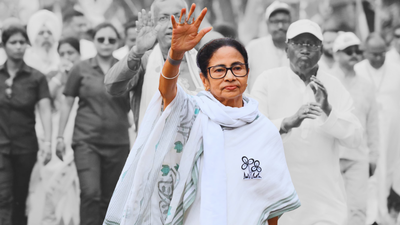
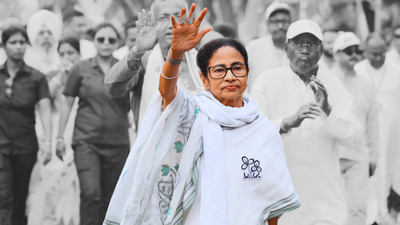
New Delhi: At a time when centralized leadership and national narratives play a major role in politics, Mamata Banerjee Has stood as one of the strongest regional satraps opposing the national trend. He has ruled West Bengal for the last 15 years, defeating his rivals time and again. But the big question is whether the Trinamool chief will be successful in doing this once again? BJPHer chief rival in West Bengal, this time, is trying everything possible to remove her from the post – putting the brand ‘Mamata’ to perhaps one of the toughest political tests.Little wonder, the West Bengal Assembly elections 2026 have literally become a referendum on brand ‘Didi’ – that carefully constructed public identity. TMC Supremo, who has combined grassroots populism, Bengali sub-nationalism and an expansive welfare state based on direct benefit transfers.The question now is whether this brand, once seen as electorally Teflon, can still withstand voter fatigue, allegations of corruption and a much stronger opposition this time from the Bharatiya Janata Party (BJP).
its own brand
The brand ‘Didi’ that Mamata Banerjee created was never just about governance; It was about this that he reduced the distance between state power and the individual citizen, turning policy into personal reach.From the anti-Left rebel who came to power in 2011 to the welfare architect of the last decade, Banerjee’s politics have evolved, but its core has remained intact: a direct emotional and physical connection with the voter.
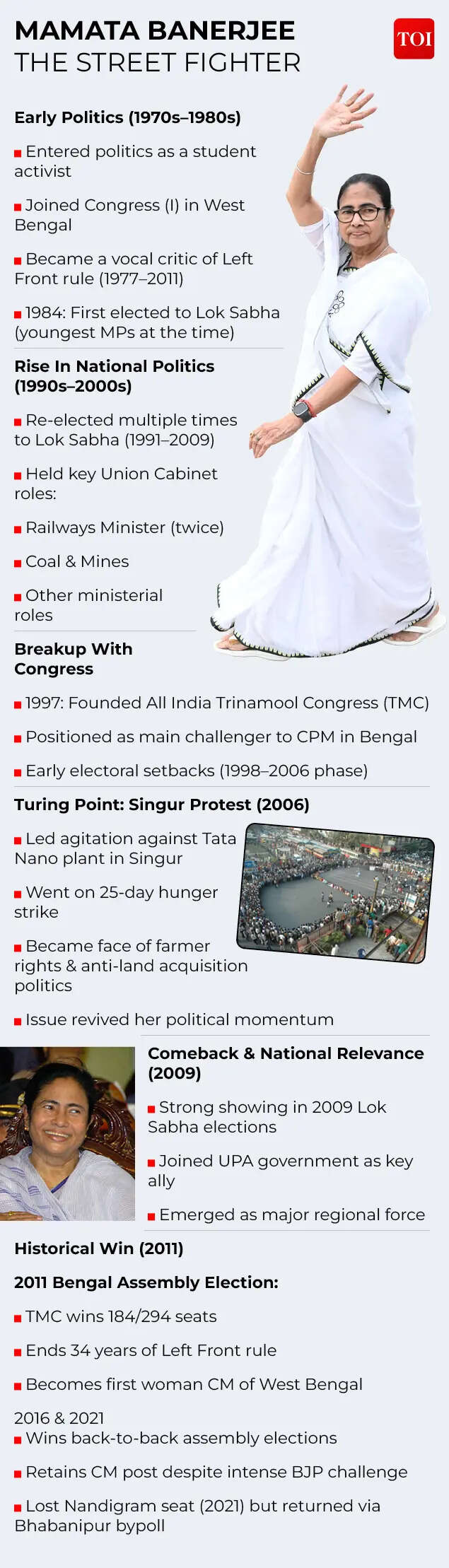
By 2021, this model had reached its peak. Despite a strong campaign by BJP, TMC won 215 seats with 48.5% vote share. However, BJP managed to secure a major share of 77 seats with 38.4% vote share.Five years later, this election will once again test whether the brand holds up.
The Maternal State: Welfare as Political Glue
At the core of brand ‘Didi’ lies what can best be described as a maternalist welfare state, a governance model that prioritizes domestic liquidity over macro-economic signals. Rather than promising long-term infrastructure benefits, it offers immediate, concrete benefits that matter to voters in their daily lives.Schemes like ‘Lakshmi Bhandar’ have become the cornerstone of this model. With the enrollment of about 2.21 crore women, and the monthly stipend increased to Rs 1,500 for general categories and Rs 1,700 for SC/ST beneficiaries, the scheme has effectively created a huge, cross-cutting support base among women voters that transcends caste and religious divides.
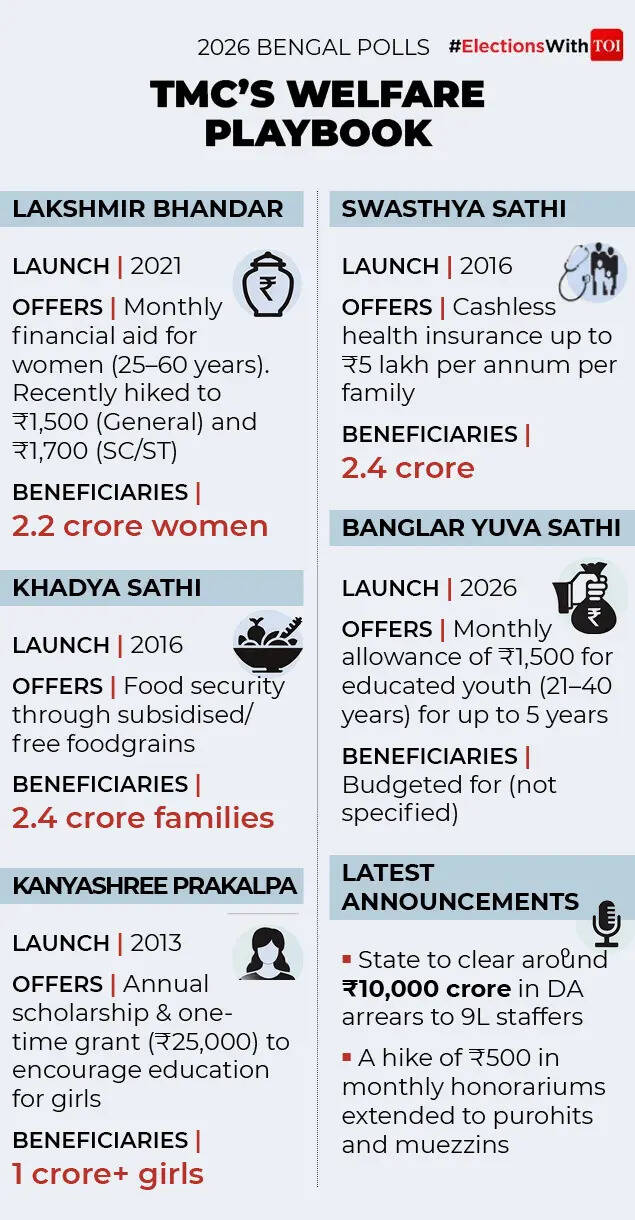
The scale of the state’s food security network strengthens this bond. Under ‘Khadya Sathi’ and ‘Duare Ration’, around 9 crore people receive subsidized food grains, with 7.5 crore beneficiaries accessing doorstep delivery. In large parts of rural Bengal, these schemes make the Mamata government a strong monthly presence in many households.This is similar to what J Jayalalitha did Tamil Nadu With its ‘Amma’ initiative, which provided affordable, nutritious food to low-income groups. The flagship programme, Amma Canteen, revolutionized food security, selling idli for Rs 1, sambar rice for Rs 5 and curd rice for Rs 3.
Street Fighter 2.0
Days before the election dates were announced, Mamata Banerjee adopted a sharp strategy to recast her street fighter image. Facing anti-incumbency and growing institutional pressure, he shifted the arena of confrontation from street protests to the courtroom. On February 4, she became a rare sitting chief minister to personally address the Supreme Court, turning the legal hearing into a political moment.
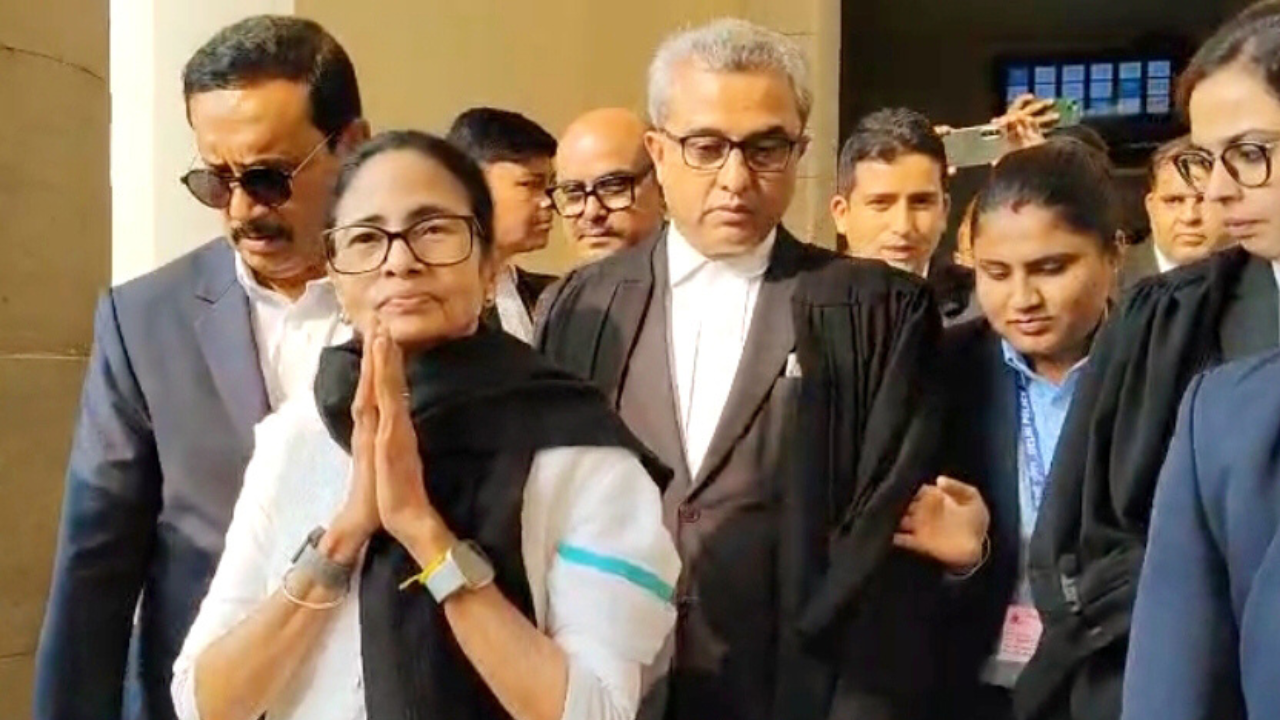
At the center of the move was the SIR of the voter list, in which more than 90 lakh names were removed. While the BJP presented it as a cleanliness drive, Banerjee presented it as a question of disenfranchisement. Appearing in person wearing her trademark cotton saree and slippers, she reinforced her image as a grassroots leader taking on the powerful institutions that had helped her in her early days in politics.The move also marked a subtle restructuring. From being introduced as a combative street politician, he established himself as a “constitutional fighter”, arguing that it is necessary to confront the system from within to protect voters’ rights.
Stress Factors: Corruption and Credibility
Yet, at this time in more than a decade, the brand is clearly under pressure. The 2026 election cycle has exposed fault lines that go beyond routine anti-incumbency.The most damaging challenge is what can be described as an ethics crisis. Incidents like the RG Kar Medical College tragedy and the allegations emerging from Sandeshkhali have struck at the emotional core of Banerjee’s political identity – ‘Maa, Mati, Manush’. The ‘mother’ component, which established him as a protective figure, especially with regard to women’s safety, has come under scrutiny.
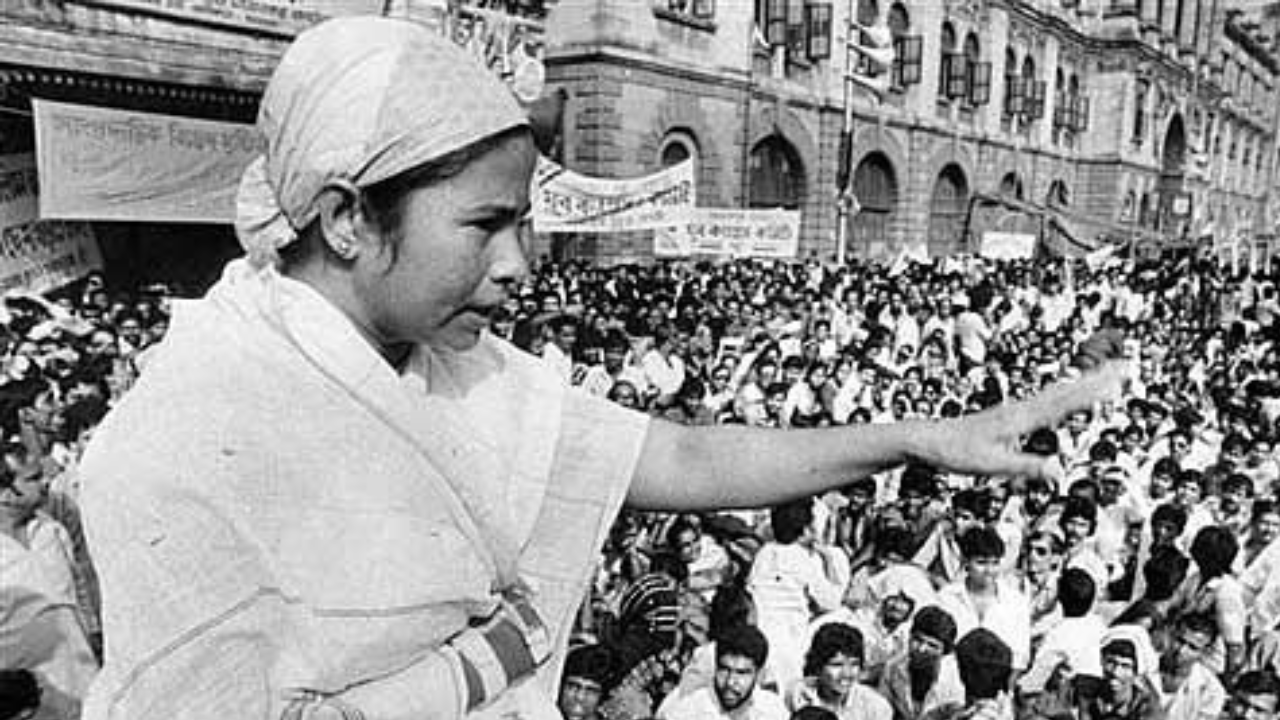
During the second phase of the election campaign in Bengal, Prime Minister Narendra Modi used it to drive a rift in his party, saying: “15 years ago, TMC came to power by talking about ‘Maa, Mati, Manush’. Now they can’t even speak those words. I will tell you the reason behind it. If these people speak those words, their sins will be exposed.” The cruelty of TMC made the ‘Mother’ cry, handed over the ‘Soil’ to the syndicates and infiltrators and forced the ‘Manush’ of Bengal to flee.“In fact, BJP has also given election ticket to the mother of the RG tax case victim, for whom PM Modi had campaigned in Dum Dum on Saturday. In the 2024 Lok Sabha elections, BJP had also given ticket to Rekha Patra, one of the Sandeshkhali victims, from Basirhat, West Bengal. However, Patra lost the election.The growing corruption saga, fueled by investigations by central agencies like the Enforcement Directorate and CBI, complicates the issue of women’s safety. Although TMC has questioned these investigations and Mamata herself has openly fought the institution, they may contribute to a broader credibility challenge.
identity politics
The 2026 election has also been shaped by the controversial Special Intensive Revision (SIR) of the electoral rolls, in which around 91 lakh names were reportedly removed. Voting in the first phase was 92.59%, the highest since independence.Mamata Banerjee made sure to make this exercise by the Election Commission a political issue – to deny identity and vote. By portraying this as an effort to exclude vulnerable populations (read Muslims), they have mobilized their base around a defensive narrative: not just voting for a party, but protecting one’s political survival.On Phase 1 voting, TMC spokesperson Kunal Ghosh said the increase in voting percentage “has gone decisively in favor of the ruling party” and signals a clear rejection of the BJP.Echoing the same sentiment, TMC minister Bratya Basu said, “In Bihar, we saw a similar pattern where voting increased significantly, but the government remained unchanged. Bengal is also reflecting the same trend.”In contrast, the BJP has framed the SIR exercise as a corrective measure targeting illegal migration. The result is an intensely polarized discourse, where the electoral contest doubles as a battle of belonging.In such a scenario, ‘Brand Didi’ may gain renewed relevance among sections of the electorate – not as a vehicle of aspiration, but as a shield against perceived exclusion.
permanent edge
Despite the adverse circumstances, Mamata Banerjee has retained three important advantages which may work in electoral favor for TMC again this time.First, the lack of a reliable local model. The BJP’s campaign, despite being organizationally strong, still hinges heavily on the promise of national leadership and its ‘double-engine’ governance. This allows TMC to present the election as a contest between the ‘daughter of Bengal’ and outside forces, while strengthening regional identity.TMC has raised the slogan of “Bangla Nijer Meyekei Chai” (Bengal wants its own daughter) this election season, while terming BJP as an outsider who wants to destroy Bengali culture.The second is the depth of the grassroots network. Through self-help groups like Anandadhara, which includes more than 12 lakh groups and more than 1 crore women, TMC has built a decentralized mobility structure.The third is Banerjee’s adaptive populism. Faced with crises, they have continuously recalibrated – launching schemes like Shramshree and expanding the social safety net to regain lost ground. Shramshree Scheme supports the return of Bengali speaking migrant workers who faced harassment or hardship in other states. It provides a one-time travel grant of Rs 5,000, monthly financial assistance up to Rs 5,000 for a year and relocation assistance, which benefits registered workers.This ability to respond quickly has prevented discontent from turning into a unified anti-establishment wave.
brand development
Perhaps the most important change is ideological. The brand ‘Didi’ of 2026 is no longer the aspirational force of 2011, when it promised ‘poriborton’ (change), nor the rebellious force of 2021, captured in the slogan ‘Khela Hobe’.It has now rebranded itself as a utility with welfare schemes. This time, it is also a crusader against the BJP, which is currently the dominant national party.Banerjee has already said that after winning the assembly elections, she will focus her attention on Delhi.“Remember this, you cannot defeat us. We fight against injustice; we fight for our rights. I was born in Bengal, and I will take my last breath in this very Bengal. After winning in Bengal, I will capture Delhi. I will do this by bringing all the political parties together. I don’t want a seat (of power); I want complete eradication of BJP in Delhi. While their destruction in Bengal is inevitable, the BJP must be ousted from Delhi too,” he said at a rally in Kolkata.
So will the ‘Didi’ brand work this time?
Voting has been held for 152 constituencies in the first phase on April 23 in the state and voting for the second phase will be held on Wednesday.Whether she will win power for the fourth time or not will be known when the results are declared on May 4. But at present the last woman is still in power.