
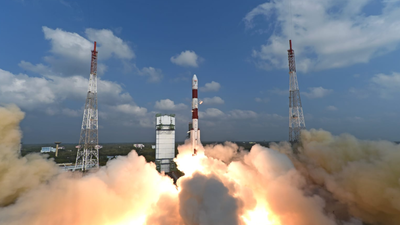

Even before the first industry PSLV flies, IN-SPACe offers full PSLV technology transfer. india news
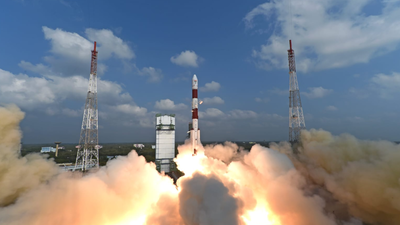
Bengaluru: Nearly four years after space PSU NewSpace India Limited (NSIL) was awarded the first private sector contract of Rs 860 crore to build five Polar Satellite Launch Vehicles (PSLV), space regulator Indian National Space Promotion and Authorization Center (IN-SPACE) is offering complete transfer of technology (ToT) of the rocket to the industry.If the industry accepts the proposal, it will be the second rocket developed by ISRO whose technology will be transferred. Last year, IN-SPACe completed the ToT for ISRO’s Small Satellite Launch Vehicle (SSLV). The PSLV TOT move is surprising as the first PSLV, being manufactured by NSIL under the first industry contract awarded to the Hindustan Aeronautics Limited-Larsen & Toubro (HAL-L&T) consortium in 2022, has not yet been launched. The first rocket was supposed to be ready in 24 months, but it has almost doubled that time.In its EoI accessed by TOI, IN-SPACe said: The technology transfer aims to enable Indian industry to “realise, operate and commercialize PSLV launches in the global medium-lift satellite market”. According to IN-SPACe: “To ensure seamless technology absorption, infrastructure and hand-holding support will be provided by ISRO for a ‘defined period’ of 30 months or till the receipt and launch of two PSLV vehicles by the selected party, whichever is earlier.” EOI is restricted to Indian-owned non-government entities with significant industrial and aerospace capabilities. Eligible firms must have at least seven years of operations, five years of space or aerospace experience and an average turnover of more than Rs 400 crore or a valuation of more than Rs 1,000 crore.At the time of NSIL’s 2022 contract, officials had described the arrangement as a gradual outsourcing model. The rocket stages will be rapidly realized by industry, even though sensitive systems such as separation mechanism, inertial system and mission operations will continue to be under ISRO’s surveillance during the initial phase.The PSLV EOI raises questions about the preparedness of the industry to build and operate the rocket. While the consortium’s first PSLV has not yet flown, a similar pattern is visible with the SSLV programme: About a year ago, HAL won the full TOT bid for Rs 511 crore, becoming the first Indian company to acquire complete launch vehicle technology from ISRO.Unlike the PSLV manufacturing contract, the SSLV deal gives ownership of the rocket to HAL after the technology absorption phase. The company is expected to independently manufacture, market and launch SSLV missions after initial support from ISRO and IN-SPACe.But the first SSLV launch operated by HAL is nowhere close to being ready. PSLV remains India’s most trusted launcher with more than 50 missions since its first flight in 1993. It has launched major missions including Chandrayaan-1, Mars Orbiter Mission and Astrosat, besides deploying hundreds of foreign satellites.As for reforms in India’s space sector, the latest EOI signals that the government wants to accelerate the transition from an ISRO-led production model to an industry-driven launch ecosystem. Yet the slow progress of the first two privatization experiments – PSLV manufacturing and SSLV technology transfer – also highlights the complexity involved in moving launch vehicle capability from a state-run program into commercial hands.