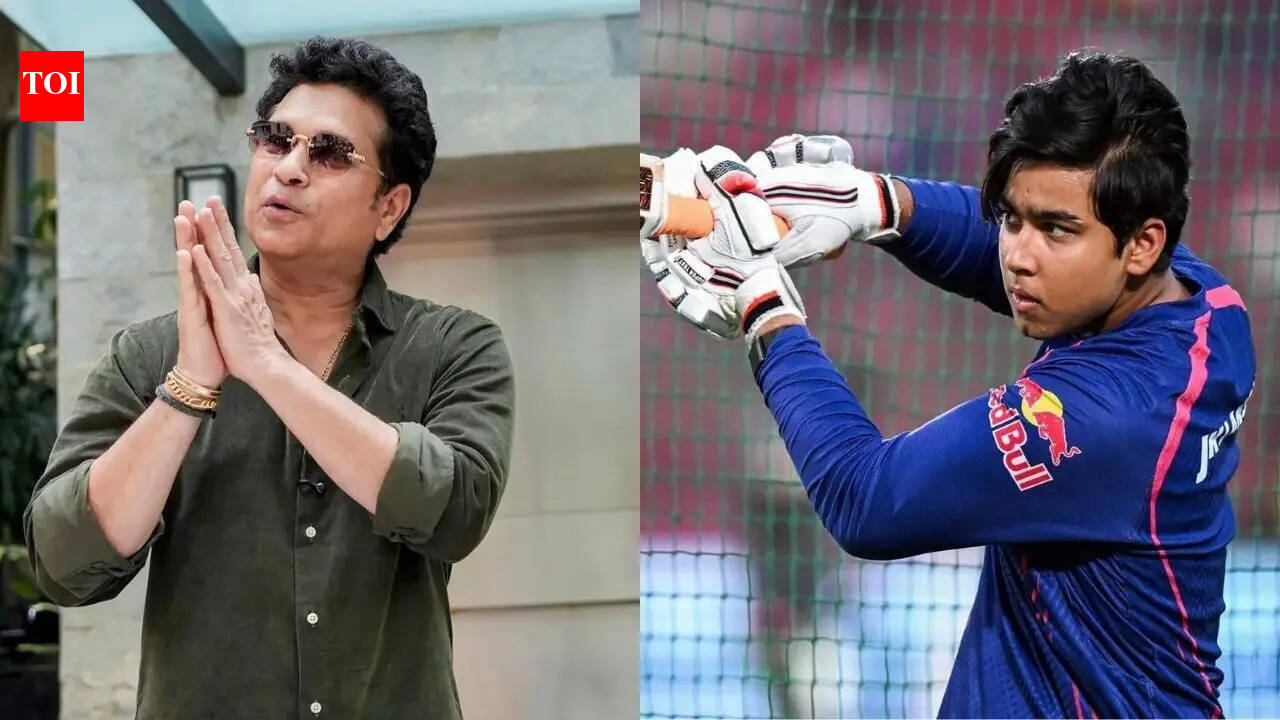
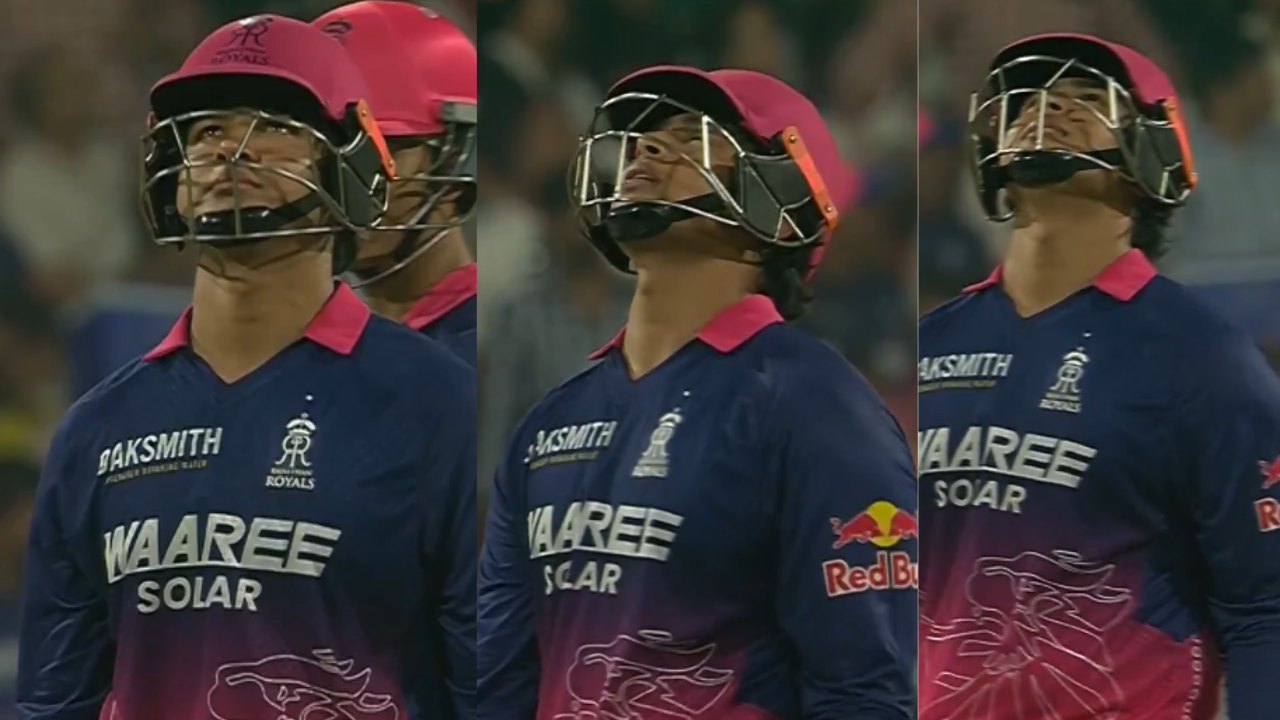
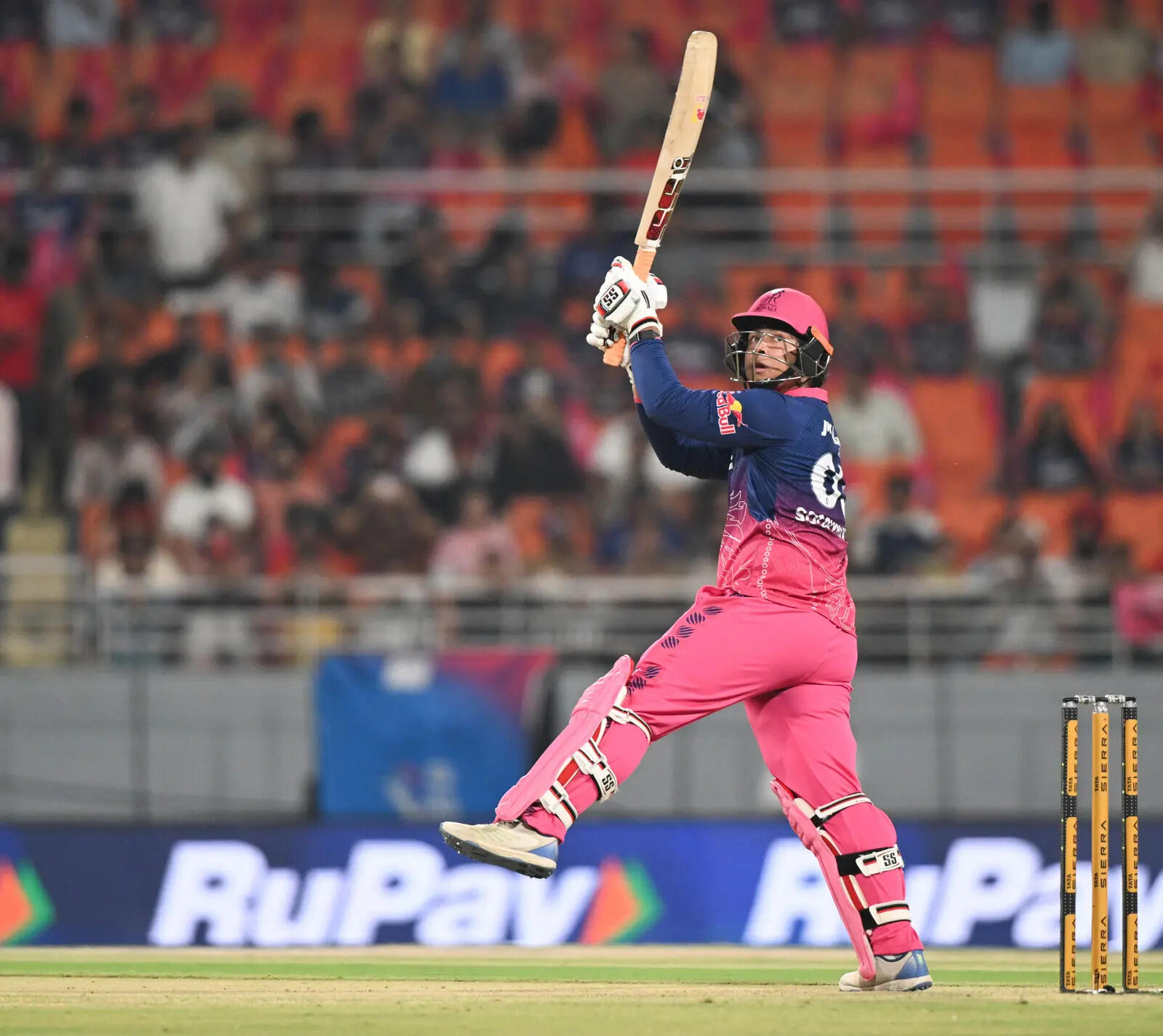
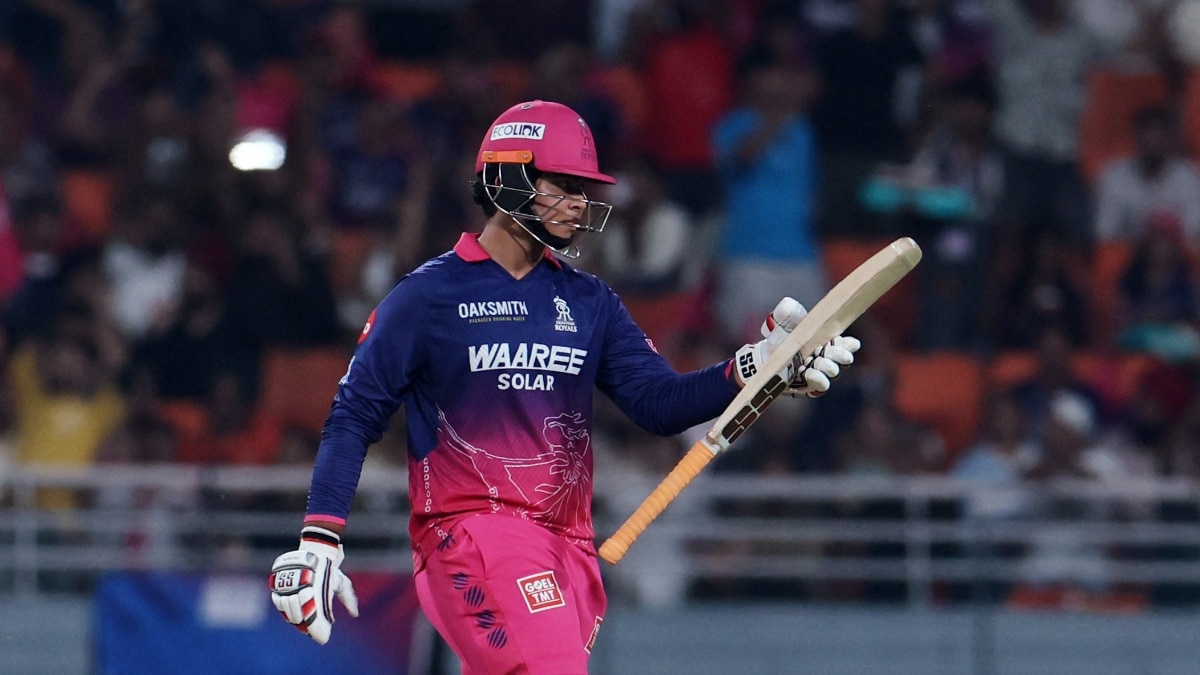
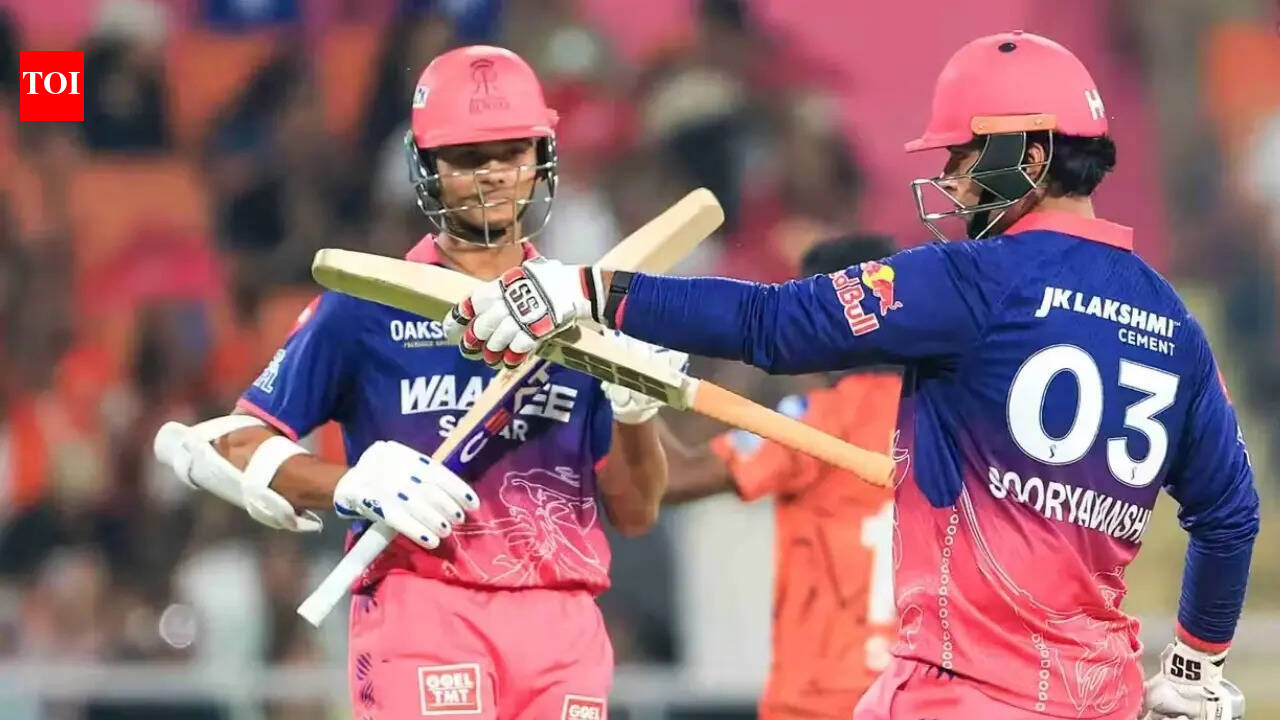
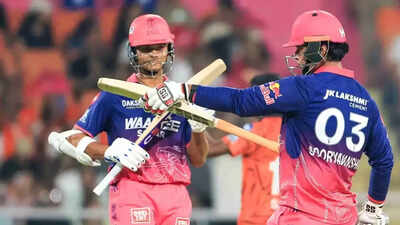
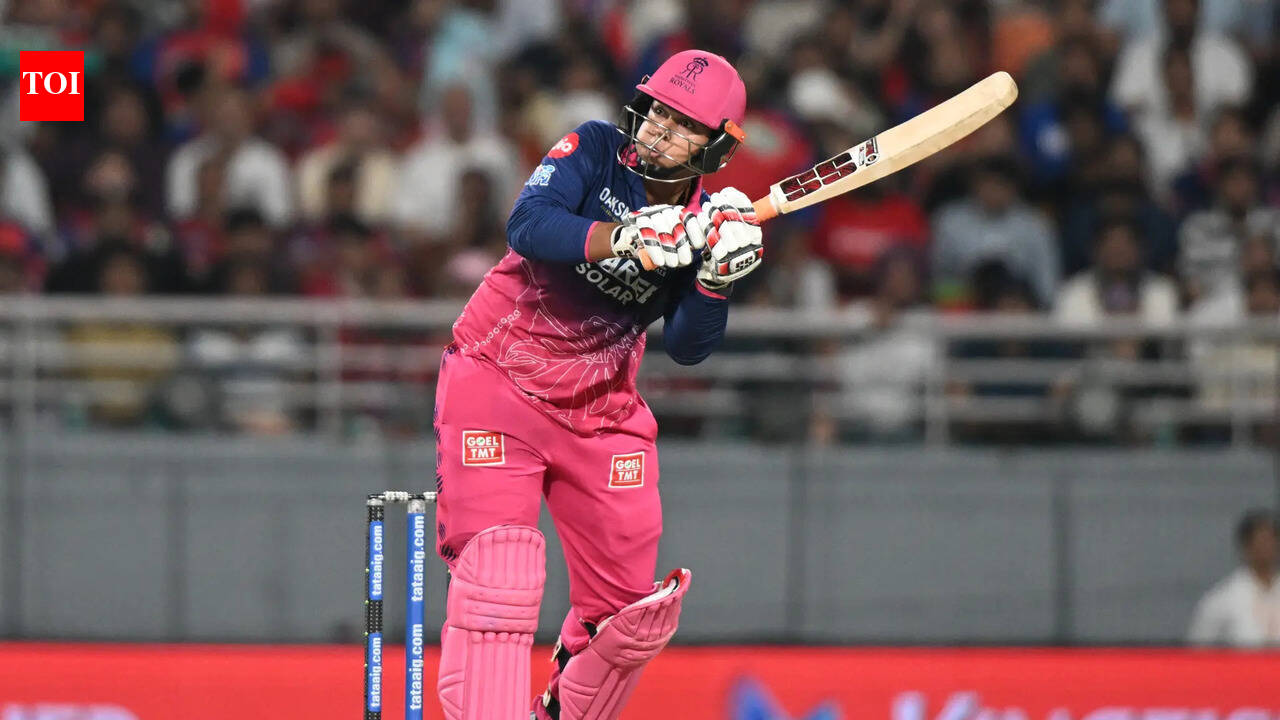
New Delhi: Rajasthan Royals Manager Romi Bhinder was seen using a mobile phone in the team’s dugout during his team’s game against Royal Challengers Bangalore in Guwahati on Friday, violating the PMOA (Players and Match Officials’ Area) protocol. The incident happened during the 11th over of the RR chase when Bhinder was using his phone and Vaibhav Suryavanshi, sitting to his right, was peeking at his screen.
Watch
How Justin Langer’s confidence helped Mukul Choudhary shine?
As per “PMOA Protocol-2026” published on IPLA manager may carry a phone, but is not allowed to use it in the dugout. Here’s what the protocol says:phonesUse of mobile phones and other electronic communication devices is not permitted in the PMOA except by a few team members.* The team manager can use the phone in the dressing room area but not in the dugoutIn addition to the team manager, the media manager is allowed to have a phone in the PMOA area, but use is clearly defined in the protocol, which was published before the start of the tournament. Bhinder may face trouble for this act and may be summoned by the match referee and the anti-corruption unit. The incident has now gone viral on social media timelines and it remains to be seen how the IPL Governing Council addresses it. An IPL official says, “Managers and media managers keep phones but the rules are very clear regarding its use. Using it in the dugout is a serious lapse as Romy was sitting next to players who looked at his screen while scrolling. There is no gray area here and it is now up to the authorities to investigate the matter.”IPL founding chairman Lalit Modi also made a post on Twitter regarding the incident and urged the Governing Council to take “immediate action”.Dressing rooms, players’ outdoor match viewing areas, TV/third umpire area, match referee’s room, players’ and match officials’ dining areas, dugouts, any other areas identified by the BCCI Anti-Corruption and Security Manager are all part of the PMOA, and two BCCI Anti-Corruption Managers appointed by the Head of the BCCI Anti-Corruption and Security Unit (ACSU) are responsible for ensuring proper arrangements at least 30 minutes before the arrival of the teams. Before entering the field, players and support staff deposit their phones and retrieve them only after the game is over. Only certain team members are allowed to use phones or other communication devices, but usage guidelines are clearly listed in the PMOA protocol document.
Brief Scores: Chennai Super Kings (212/2 in 20 overs) beat Delhi Capitals (189-all out in 20 overs) by 23 runs at Chepauk. highlighted | Achievement:
When the wait was finally over, there was celebration in Chepauk and across Chennai. After six consecutive defeats at home, Chennai Super Kings had something to be happy about, and they did it the hard way, with a complete performance.
Sanju Samson was standing at the center of it. He looked poor at finding timing and flow in the early part of the season, but everything clicked into place on Saturday night. Opening the innings, he played with clarity and intent, remaining unbeaten on 115 off 56 balls, taking CSK to 212 for 2. This was his first century for the franchisehis fourth in IPLAnd it registered a 23-run win over Delhi Capitals, which was CSK’s first win of IPL 2026.
Samson sets the tone
Samson immediately set the tone. He took command in the powerplay and scored 45 of CSK’s 61 runs in the first six overs. Mukesh Kumar’s early boundaries inspired him to move forward, but more than the runs, it was his way of moving that was most special. His footwork was decisive, his head was steady and the bat was moving freely. There was a sense of assurance that was missing in the first season.
The Chepauk crowd responded in the same manner. When he completed his half-century in just 26 balls, more than 30,000 fans started applauding him. When he completed his century in 52 balls, the noise turned into slogans in his name. One of the standout shots was a clean strike at extra cover off Kuldeep Yadav, a shot that won him confidence on the night.
A moment of luck came when he was dropped by Pathum Nissanka off Axar Patel on 55, but Samson made sure Delhi had to pay for it. He didn’t slow down, lost form and took the innings deep, making it one of CSK’s most complete batting performances this season.
Ayush Mhatre continued to impress at the other end. The young batsman played with maturity beyond his years and scored 59 runs on 36 balls. He and Samson put on a 113-run partnership for the second wicket in a little over 11 overs, a partnership that laid the foundation for a big score. Mhatre mixed caution with aggression, choosing his moments and finding boundaries with ease in the first. Shivam Dubey is being retired to allow To play the last role.
Dubey added to the excitement with a quick cameo at the end of the innings, taking CSK past 200. Ruturaj Gaikwad, though unable to accelerate, still played a part in the opening stand of 62, largely inspired by Samson’s aggressive approach. CSK never lost momentum throughout the innings, which had cost them in the previous matches.
Capitals missed another goal
If 212 seemed strong, Delhi Capitals made it achievable with a blistering start. KL Rahul and Pathum Nissanka came out with intent and reached 61 runs in just five overs. For a short while, CSK were under pressure, and memories of recent games came back fresh.
But change came quickly. Nissanka, who was already out, could not take advantage of this and was caught by Anshul Kamboj in the circle. Leading at 61 for two in 5.2 overs, Delhi still had a platform to go, but CSK tightened their grip from there.
The bowlers made clever adjustments. Jamie Overton, Khaleel Ahmed and Kamboj began to attack the red clay surface hard, providing strong bounce and forcing the batsmen to make space. The plan was clear and it worked. Sameer Rizvi and Axar Patel fell trying to hit hard shots on balls that pitched awkwardly, while Sarfaraz Khan produced a sharp full-length diving catch at point to remove Axar and take the momentum further.
Delhi still had the experience of David Miller and the form of Tristan Stubbs, but Overton’s magic broke down their resistance. His hard-length delivery which hit the top of Miller’s stumps was a crucial moment, and he returned later to remove the stumps as well. Overton took 4 for 18, his best performance in the IPL and his standout bowling performance of the season so far.
Debutant Gurjapaneet Singh followed the same approach and bowled well, while Khaleel and Kamboj kept the pressure on from the other end. CSK were quick in the field, cutting singles and supporting their bowlers throughout. Till the end of the powerplay, they remained in control and did not allow Delhi to rebuild.
Tristan Stubbs fought back with 60 off 38 balls to try and keep the target alive, but the frustration was palpable when it ended. After being dismissed, Stubbs waved his helmet as he entered the dressing room, a clear indication of how important the moment was and how disappointed he was at not being able to complete the job.
Nitish Rana, coach Hemang Badani and Karun Nair were seen discussing with the fourth umpire, clearly unhappy with how things unfolded in the closing stages. On air, Simon Doull reported that Stubbs had been refused a change of gloves at the end of the previous over.
This is where the chase started. The asking rate kept rising and wickets kept falling at the other end, leaving a lot to be desired. What once looked like a manageable target soon turned into a melee as Delhi lost their way in the middle overs and were bowled out for 189, suffering their second consecutive defeat.
For CSK, it was as complete a performance as they could have expected. The batting had authority, the bowling had purpose and the fielding matched intent. More importantly, it brought confidence back into the group after a difficult start to the season.
And fittingly, that night was Samson’s. After three quiet visits and a lot of questions, he responded in the best way he could, by running. His unbeaten 115 not only took the innings forward but also improved the atmosphere of the team and the stands.
Sanju Samson of Chennai Super Kings (AP Photo/Mahesh Kumar A)
sanju samson Returned to form with a brilliant century Chennai Super Kings Against Delhi Capitals in IPL 2026, marking a decisive return to form after a slow start to his new franchise career. After being traded from Rajasthan Royals to CSK, Samson faced a difficult start to the season, failing to reach double figures in his first three matches. But in his fourth match, he played a brilliant innings that reminded everyone of his class and consistency. walk after initial loss of Ruturaj Gaikwad In the powerplay, Samson opened the innings brilliantly and shared a crucial 113-run partnership with young Ayush Mhatre, who scored 59 before retiring, inspiring CSK to accelerate. Samson batted with fluency and control throughout, getting relief on 52 before making DC pay in style. He scored a brilliant century, his fourth in the IPL, and carried on with his innings with authority against both pace and spin. Coming into the season after an extraordinary campaign that saw him win Player of the Tournament honors at the T20 World Cup, expectations were high, and Samson ultimately fulfilled them with a brilliant innings. The milestone also helped him reach 400 sixes in T20 cricket, making him the fourth Indian to achieve the feat Rohit Sharma, Virat KohliAnd Suryakumar Yadav. Now read Samson’s IPL centuries: 102 vs RPS (Pune, 2017), 102* vs SRH (Hyderabad, 2019), 119 vs PBKS (Wankhede, 2021), and 102* vs DC (Chennai, 2026). This innings is only the second IPL century by a CSK batsman against Delhi Capitals, after Murali Vijay’s 113 in 2012.
The Athletics Federation of India has come under intense scrutiny after a major organizational lapse during the Indian Athletics Series-3 at the Jawaharlal Nehru Stadium in New Delhi on Saturday, April 11.
The criticism stemmed from a video that went viral on social media, showing a man casually walking on the track in the middle of the 200m final in the junior men’s category. The incident occurred when athletes were running at full speed, with one runner forced to adjust his line slightly to avoid a potential collision.
This violation has raised serious questions on athlete safety and event management at the national level competition. With multiple races taking place simultaneously, many have raised questions as to how an unauthorized person was able to access the track without immediate intervention from officials or security personnel.
Serious mistake exposed here
Fans immediately reacted online, expressing disbelief at what they described as a “shocking” omission. Many pointed out that such incidents are rarely seen even in low-level meetings, leave alone a recognized domestic event. Others were more critical of the wider ecosystem, suggesting that the episode reflected deeper issues in the organization and implementation of athletics competitions in the country.
There was also a sense of sarcasm in some of the responses, with users commenting that it was fortunate the situation did not cause any serious accidents. He argued that the narrow escape should serve as a wake-up call rather than a moment of relief.
watch the video here
A man is walking casually on the track during the race!
Is this the standard for domestic events of the Athletics Federation of India (AFI)?
Against that backdrop, shortcomings of this nature have raised questions about whether the current standards of event management and infrastructure are in line with those ambitions. For many, this incident is not just an isolated mistake, but a reflection of shortcomings that need urgent attention if the country hopes to compete on the global stage, both on and off the field.
Former Indian all-rounder Ravichandran Ashwin have come out in support of darryl mitchell After New Zealand batsman expressed concern Osman TariqAbnormal delivery stopped during pakistan super league (PSL) 2026 match in Karachi.The incident occurred during the match between Quetta Gladiators and Rawalpindi, where Mitchell pulled the ball twice while facing Tariq, who was clearly uncomfortable with the bowler’s stop-start action. During the ninth over at the National Stadium, Mitchell initially played a paddle sweep but soon looked troubled by Tariq’s late release. As the over progressed, he moved away twice in between, indicating a halt to the bowler’s action.Repeated interruptions led to the on-field umpires having to intervene and have a brief discussion with the batsman before allowing play to continue. Mitchell was later caught and bowled by Saud Shakeel, leading to a heavy 61-run defeat for Rawalpindi.Ashwin’s opinion: “Batsmen have every right”Ashwin, who had earlier talked about such tactics on his YouTube show Aish Ki Baat, reiterated that batsmen have the right to withdraw if they feel the bowler’s action disrupts the timing.“Now it is up to the umpires and match referee to decide when to stop his delivery. If the break is not consistent, the batsman has every right to walk away. Captains and opposition batsmen should raise the issue with the umpires and match referee before the start of play. “Well done, Michelle,” Ashwin wrote.Interestingly, Ashwin had earlier suggested this exact approach, encouraging batsmen to move away, forcing umpires to award dead balls and thus neutralizing any advantage gained from irregular bowling rhythm. Tariq’s actions have been under scrutiny for some time due to the conspicuous pause before release and little follow-through thereafter. While he has been reported twice for suspicious activity in the past, he has been acquitted both times.
The world of sports always works in cycles. Teams that dominate for long stretches eventually fall down, before finding their way back again. This is where Chennai Super Kings find themselves. After more than a decade of continuity, the team is now in a state of rebuilding. The core elements that define them have weakened and a shift from experience to youth has become inevitable.
Last season, that change became apparent. Chennai moved away from its trusted core and brought in a group of young, largely uncapped players to rebuild the team. One of those players was Ayush Mhatre. Mhatre adds missing intent to batting line-up in 2025 CSK was desperately looking for this formula For new age T20 batting.
Mhatre is one of the few things CSK fans can look forward to this season. (Photo: PTI)
However, this season has not started the same way. Mhatre’s IPL The 2026 campaign has been mixed. Took control of the innings for some time after playing an innings of 73 runs against Punjab Kings. He was on a tear, but in the other two games he got out for single-digit scores. He has also lost his starting spot, with Sanju Samson and Ruturaj Gaikwad moving up the order despite struggling for runs themselves.
This is not the easiest phase for a young batsman. But perhaps that struggle is not too unfamiliar.
In the ICC Under-19 Cricket World Cup, which India won, Mhatre did not have an easy tournament with the bat. Runs were not coming in large parts. He still found ways to contribute. He bowled more than expected, contributed off-spin and remained involved as captain.
Runs came late. Two half-centuries in the semi-finals and final. India won the World Cup and Mhatre returned as captain, joining a list that includes Mohammad Kaif, Virat Kohli, Unmukt Chand, Prithvi Shaw and Yash Dhull.
His upbringing has shaped how he handles such phases.
“I am mentally strong. I used to go from Virar to Churchgate (a 1:30 hour train journey one way). Sometimes I wouldn’t even get a seat. I had to stand there. I had to go on the field and bat. Even after batting, I didn’t get a seat. I had to stand and go,” Mhatre said on Geostar’s Dream On.
“It was mentally tough. Sometimes you feel bored, you feel like you are not going every day. But my goal was to play cricket. I had the motivation to go out and bat.”
This routine was not unusual for a young cricketer in Mumbai. But they do leave a mark. Long journeys, little rest, and the expectation to show up and perform every day.
It was during those years that his game began to take shape.
Mhatre first trained under Mumbai-based coach Prashant Shetty, who worked with him when he was a young boy trying to find his game. Later, when he moved on to school and age-group cricket, Sachin Kohli was instrumental in guiding him through his teenage years and to higher levels of competition.
Both of them soon noticed something.
“I think there was definitely a spark,” Shetty says. “The backfoot shot he had, normally at that age, 9 or 10, we don’t see that. I was sure he was a good talent.”
That foundation remained with him as he grew up.
“His backfoot shots were a lot stronger than before,” says Collie. “At the higher level, bowlers don’t throw it too much. If you have a strong backfoot game, you can survive. Looking at those shots, everyone thought he would go very far.”
But as his father recalls, ability was only part of it. The way he reacted to situations also matters equally.
One such example was seen in the Under-14 match in Pune.
It was played on a mat wicket, which Mhatre was not used to. He slipped a little at the crease at the beginning of his innings. On the cover, a fielder commented about a Mumbai player who was not even able to stand properly.
Mhatre did not give any answer. He remained at the crease.
After this there was an innings which soon went out of the hands of the opposition team. He started facing the bowlers and when the same player came to bowl, Mhatre hit six sixes in one over.
By the end of the innings, he had scored 256 runs in 94 balls with 36 sixes and 15 fours.
There was a reaction. But there was also an improvement.
After the game, his father talked to him about the inning, not to praise it, but to put it in context.
“You showed him. But you can’t carry on playing with anger. It could have gone the other way too. Don’t let it linger in your mind. Play your game.”
It was a small intervention, but it stuck.
For his coaches, there were other moments that marked his progress.
“I think when he got selected in CSK,” says Shetty, “Playing under MS Dhoni, that was a big moment.
“And when he became the captain of India. When you are leading the country, there is nothing bigger than that.”
Mhatre is one of the lucky few who shares the dressing room with Dhoni. (Photo: PTI)
He also had early success in first-class cricket with Mumbai, where big scores caught the attention of a strong dressing room.
However, right now Mhatre is going through a phase where runs are not being scored consistently. This is also a stage where roles are changing, opportunities are not fixed and performance is being intensely scrutinized. For a young player on a team that is itself developing, that uncertainty is part of the process.
What Chennai is going through is not just a decline in form. This is a change that was always going to take time. The players who defined the team for years are no longer at its core. In their place is a group that is still finding its footing while adjusting to the demands of the league.
This is not a phase that leads to quick fixes. Chennai has rarely worked like this.
The decisions over the past two seasons point to a longer term plan, where the focus is on building a core that can last rather than bridging gaps year after year. Returns have been uneven in the short term, but that doesn’t change the outlook.
Players like Ayush Mhatre are part of that thinking. His game comes from the plains of Mumbai, and his temperament has been shaped by the daily toil of traveling across the city to train and play.
He’s still early in that journey. The returns haven’t been consistent yet, and the role is still settling in. At the center of this phase is Stephen Fleming, who has overseen much of the franchise’s success and now guides its next phase.
More importantly, the expectation is not the immediate result. It is such that this group, over time, becomes the next group that takes Chennai back to the top.
New Delhi: Calm under pressure and fearless at the death, Mukul Choudhary smashed 57 off 27 balls and seven sixes to lead Lucknow Super Giants to a spectacular victory in the last over at the Eden Gardens on Thursday against Kolkata Knight Riders.The emotions on the 21-year-old Jhunjhunu’s face as he scored the winning run were clear – keeping his nerve, battling anxiety, negotiating a yorker in the final over from Vaibhav Arora, waiting for the right ball to send it across the ropes and then raising both hands to celebrate, before his teammates rushed to surround him from the dugout.hitting that six IPL However, the night of preparation is supported by an even bigger story. This was not the first time that the youth of Sikar, Jhunjhunu, Rajasthan had thrashed the bowlers. Even before making headlines in the IPL, he had already hit an incredible 36 sixes in an innings.
36 sixes in one innings
In Sikar (Jhunjhunu), where Mukul trains, he practices on black soil. However, adjusting to the red-clay wickets became a major challenge. That’s when he turned to his under-23 batting coach Chandrapal Singh. In Rajasthan, red soil pitches are found in Udaipur and Nathdwara. The distance was difficult, but the stubborn Mukul accepted the challenge.Packing his kit at night, he would board a bus to Udaipur (in Rajasthan) and sometimes to Nathdwara (in Rajasthan), about 500 km from Jhunjhunu.“Mukul is extremely hard-working. I didn’t know whether he would agree to it or not, but he took up the challenge despite all the travelling. He had to cover long distances – traveling 500 km by bus, playing a match, staying overnight and then coming back is not easy. “He did this about three times a week,” Chandrapal told TimesofIndia.com. Chanderpaul said, “He once hit 36 sixes in a T20 match. We had called some teams and Mukul’s team was against them. I knew he would play a big innings, but I did not expect him to set it on fire like this. He was hitting the ball ruthlessly. He has also practiced MS Dhoni’s helicopter shot.”“You will find red soil in places like Mumbai, Chennai, Ahmedabad, Cuttack and Karnataka. The way he stepped out of his comfort zone to prepare for this IPL is remarkable. He is a complete team man – for him the team always comes first,” he said.Mukul performed brilliantly in domestic cricket. After making his mark at the Under-23 level, he scored 173 runs at a strike rate of 198.85 in five innings in the Syed Mushtaq Ali Trophy 2025-26. His excellent form with the bat earned him an IPL contract, with Lucknow Super Giants buying him for Rs 2.60 crore in the IPL 2026 auction.
Mukul Chaudhary: Not just another hitter
For the 21-year-old, the ability to clear the ropes with ease – from bat swing to footwork, reach and reading the situation – has not come overnight.“I have practiced that shot since my childhood,” Mukul had said during the post-match press conference after the robbery.“My body is naturally a bit powerful, and that has helped me. I also practice hitting 100-150 sixes every day, so the bat speed develops if you keep repeating it.” I have been training hard for the last five to six months and now it has become a part of my game.After the match, LSG captain Rishabh Pant, who was looking tense till the final delivery, looked relieved. A wide smile spread across Mukul’s face as he moved forward to hug him.For Chanderpaul, Mukul has always been a player who puts the team above everything else.“More than a classy batsman, he is a brilliant team man. His first priority is always the team.” I noticed it when he first came to me. In every situation he would ask, ‘Sir, how can I help the team win?’ This attitude is what makes him special and has brought him this far.”“We have seen players like Russell and Pollard, who are physically very strong hitters. He is similar in that sense. He has that kind of muscular build and a very different mindset. If he has to hit 100 sixes in a day, he can do that comfortably,” Chanderpaul said.
Last dream – meeting Dhoni
One of his seven sixes against Kolkata Knight Riders on Saturday night was a Dhoni-like helicopter shot that sent the Eden Gardens crowd into a deafening roar. The entire LSG dugout including Rishabh Pant was stunned.Lucknow Super Giants will next face Chennai Super Kings on May 10 and for Mukul Choudhary, he will not only be at the pinnacle of his incredible innings, but he will also be looking forward to meeting his idol MS Dhoni. Mukul had said on JioHotstar after the match, “I always look up to MS Dhoni because I am also a finisher. I always look up to him. His helicopter shot, which is very iconic, is my favourite. Everyone remembers the way he led India in the 2011 World Cup. I want to be like him and finish matches and help my team win.”
Lucknow Super Giants’ next match will be against Chennai Super Kings on May 10.
Ahead of that, their schedule is packed: They will face Gujarat Titans on Sunday, followed by Royal Challengers Bangalore on April 15, Punjab Kings on April 19, Rajasthan Royals on April 22, Kolkata Knight Riders on April 26, Mumbai Indians on April 15, and Kolkata Knight Riders on April 26. Indian On 4 May and once again against Royal Challengers Bangalore on 7 May.
Be it commentators or common spectators, it was natural to assume that Vaibhav Suryavanshi’s breathtaking strike against Royal Challengers Bangalore in Guwahati had completely turned the game in favor of Rajasthan Royals. The young batsman’s fearless strokeplay started the chase and it looked like it would slip away from RCB in just a few overs.
But amid the fireworks, another innings was quietly shaping the outcome. Dhruv Jurel’s calmness, awareness and control under pressure proved equally decisive and assured Rajasthan Royals are on the way to their fourth consecutive win And maintain your unbeaten streak.
There is probably a reason for that nature. Jurel comes from a family with deep ties to the Indian Army, his father being a veteran of the Kargil War. And on a night when the chase threatened to escalate, that discipline and restraint were on full display.
Suryavanshi’s aggressive pace undoubtedly put RCB on the backfoot. Their attack forced the bowlers into defensive zones and reactive plans. However, once his innings ended, the game suddenly reopened.
Krunal Pandya struck twice in succession, first removing Suryavanshi and then dismissing Shimron Hetmyer, who was moved up the order in an attempt to accelerate his finishing. Hetmyer’s dismissal by a well-directed short ball brought the momentum back to RCB. The pressure started to build with Josh Hazlewood also finding his rhythm.
The situation became even more tense when Riyan Parag fell, leaving Rajasthan still with work to do and only a few recognized batsmen left. From a position of dominance, the Royals suddenly felt that restraint was needed more than aggression.
This is where Jurrell stood out.
Like a soldier under constant fire, Jurel endured the pressure without allowing the situation to overwhelm him. He did not hold back nor was he swayed by the urgency of the occasion. Instead, he struck the right balance between caution and intention.
Jurel, along with Ravindra Jadeja, ensured that there were no further obstacles. While many wickets fell around him, he remained steady, taking the chase back to the safe zone. The partnership was built not on brute force but on clarity, communication and smart decision making.
Behind the chaos is Jurel’s calm control
The most underrated aspect of Jurel’s innings was how he kept Rajasthan ahead even during the match Explosive phase of Suryavanshi. While the spotlight was firmly on the latter, Jurel was a far from passive presence at the other end.
Unlike earlier instances this season, where partners had taken a back seat, Jurel matched the pace. He attacked when opportunities presented themselves and ensured that the pressure never fell entirely on the chasing side. His innings of 27 off just 10 balls in the powerplay was a statement of intent, showing that he was not just playing the second innings.
By the time Jadeja came in, Jurel had already laid a strong foundation by scoring 40 runs in 18 balls. From there, he adjusted his approach to suit the match situation. The next phase of his innings was not one of dominance but of control.
It took him a few balls to reach his half-century, but that slowness was a reflection of awareness rather than hesitation. As wickets fell at the other end, Jurel prioritized consistency without completely shutting down scoring opportunities. He continued to hit boundaries at crucial moments, ensuring that the chase never got into a risky phase.
Jadeja, on the other hand, played an excellent supporting role. Known for his ability to hold one end and rotate the strike, he complemented Jurel’s vision effortlessly. The left-hander did not need to increase the pace, allowing Jurel to dictate terms when necessary while maintaining overall balance.
With that determination, Jurel calmly took charge of the chase like a field commander executing a plan to perfection. There was no panic, no unnecessary risks, just a clear understanding of what was needed to get the job done.
In the end, while Suryavanshi’s innings provided the spark, it was Jurel’s composure under pressure that ensured the job was finished. In a contest swinging between chaos and control, it was his calm, almost battle-hardened approach that made the difference and took Rajasthan Royals home safely once again.
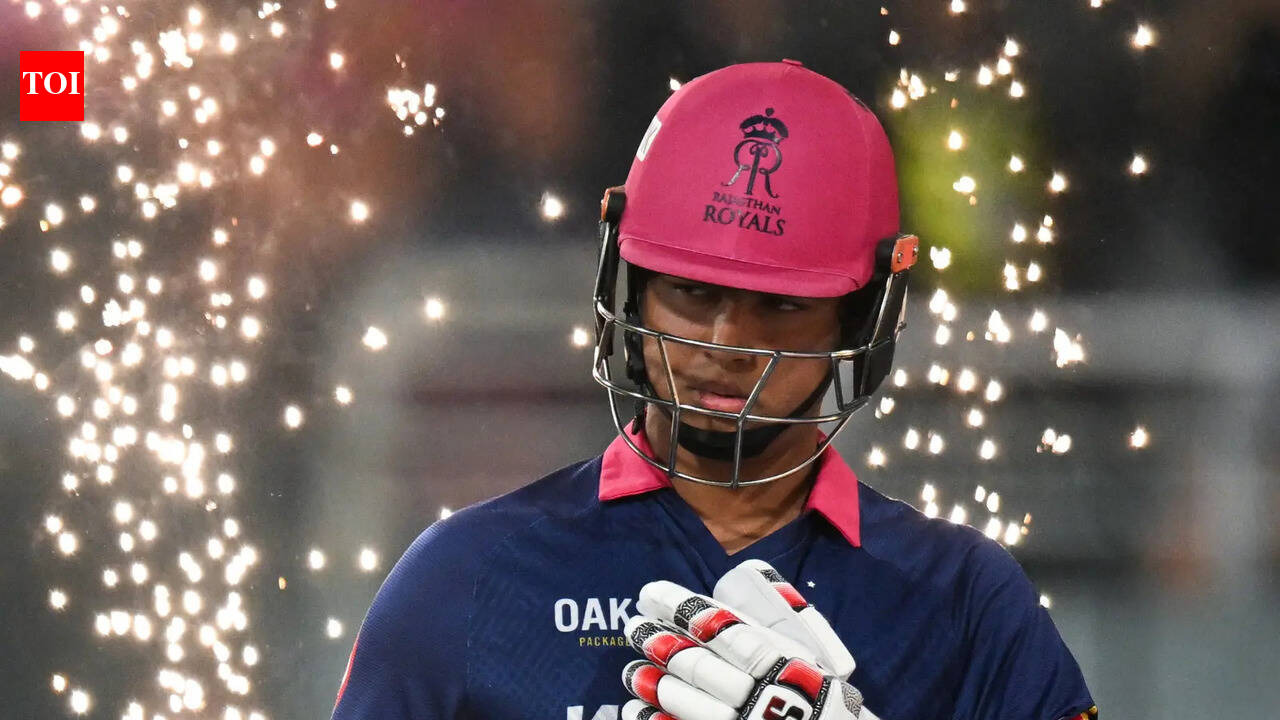
New Delhi: Rajasthan Royals A breathtaking innings from young sensation Vaibhav Suryavanshi led the Royal Challengers Bangalore to a comfortable six-wicket win over Royal Challengers Bangalore. Chasing 202, the 15-year-old played a brilliant inning of 78 runs in just 26 balls including seven sixes, helping his team complete the target in just 18 overs. While most teenagers of his age are busy with examinations, Suryavanshi lit up the stadium with fearless hitting, completing his half-century in just 15 balls.
Watch
How Justin Langer’s confidence helped Mukul Choudhary shine?
Along with him, Dhruv Jurel played a steady and classy innings of 81 not out, but the spotlight remained on Suryavanshi’s explosive batting. The two made a quick partnership of 108 runs and snatched the game away from RCB in no time.Suryavanshi faced experienced bowlers like Josh Hazlewood and Bhuvneshwar Kumar with ease and hit fours and sixes all around the ground. His fearless approach and clean striking surprised both the bowlers and the spectators. From bowling yorkers into the stands to dominating even tight balls, he showed remarkable confidence and skill.This innings proved that Suryavanshi is not an ordinary young player. After an impressive debut season, he has come back even stronger, pushing the boundaries of T20 batting with an incredible strike rate. He is not only following trends but setting new trends, showing that even 200 strike rate can be crossed.Earlier, RCB scored 201/8 thanks to a solid innings of 63 runs. Rajat Patidar And late encouragement from Venkatesh Iyer. However, once Suryavanshi got going, the goal seemed far away.With performances like these, the young batsman is fast emerging as one of the most exciting talents in the IPL, and perhaps even knocking loudly on the doors of the national team.Brief Score: Royal Challengers Bangalore: 201 for 8 in 20 overs (Rajat Patidar 63; Jofra Archer 2/33, Ravi Bishnoi 2/32, Brijesh Sharma 2/37)Rajasthan Royals: 202 for 4 in 18 overs (Vaibhav Suryavanshi 78, Dhruv Jurel 80 not out; Krunal Pandya 2/30, Josh Hazlewood 2/44)
The canteen at the Sports Authority of India headquarters has suspended operations after the vendor complained of shortage of LPG supply, although a well-placed source said it was related to “the high prices he is quoting.”
According to a reputed source, the canteen at the SAI complex inside the huge Jawaharlal Nehru Stadium has been closed for about a month.
“Initially the vendor said he would serve only tea due to shortage of LPG, but now that too has stopped. Employees who depend on the canteen are currently making do with their meals at nearby outlets,” the source said.
However, the suspension of canteen operations will not affect the athletes training at the stadium, as they have their meals in the stadium mess, which remains fully functional.
SAI canteens at its National Centers of Excellence across the country are also functioning normally and no shortage of LPG has been reported so far.
It is learned that the vendor has taken charge of the canteen only a few months ago.
Another SAI source said, “The prices being quoted by this vendor were also quite high and he didn’t really have any explanation as to why he was charging so much. So he complained about being interrogated.”
“At big meetings of the minister and the SAI director general, the canteen serves tea and snacks like dhokla, some cashew nuts and a sweet. He was charging Rs 425 per plate for this.
“When the DG (Hari Ranjan Rao) came to know about it, he put a stop to the whole thing and raised questions on these prices,” the source said.
The LPG crisis has arisen due to the ongoing military conflict in West Asia, which was triggered by the US and Israel bombing of Iran. The war affected the supply chain in India, which is heavily dependent on imports for its LPG requirements.
There are reports coming from many parts of the country in which commercial establishments and individual consumers have complained of shortage of LPG.