Election Commission of India: ‘ECI did not act outside its statutory powers’: Supreme Court upholds Election Commission’s SIR process in Bihar, Bengal and other states | india news

'ECI did not act outside its statutory powers': Supreme Court upholds Election Commission's SIR process in Bihar, Bengal and other states

New Delhi: The Supreme Court on Wednesday said that Election Commission of India (ECI) did not “act outside its statutory powers” while conducting the Special In-depth Review (SIR), ruling that the exercise cannot be termed “ultra vires merely because it is different from the normal vetting process”.According to Live Law, the Supreme Court ruled, “The SIR meets proportionality and is clearly not excessive. It was established with the constitutional objective of restoring the accuracy of the electoral rolls. The measures adopted by the ECI cannot be considered disproportionate.”Terming the controversial roll revision as “legally valid”, the apex court said the Election Commission has not violated the Representation of the People Act (RPA) by ordering special intensive revision of the Bihar voter list as such an exercise ensures the purity of the voter list and helps in free and fair elections.A bench led by Chief Justice of India Surya Kant and Justice Joymalya Bagchi delivered the verdict on Wednesday after reserving the verdict in January this year after an extensive hearing in the case.However, the Supreme Court said that the election body cannot determine the citizenship of a voter. The court said that the determination of citizenship by the Election Commission for inclusion in the electoral roll is not final as it has to be scrutinized by the Central Government after giving adequate opportunity to the doubtful voter removed from the electoral roll.Meanwhile, the top court asked the Election Commission to send within four weeks the names of persons who were removed from the voter list due to doubtful citizenship to the Union Home Ministry, which will carry out the detailed process to determine their citizenship.The petitions challenged the legality of the Special Intensive Review (SIR) exercise conducted by the ECI, arguing that the process went beyond the powers given to the election body under Article 326 of the Constitution, the Representation of the People Act, 1950 and the rules made thereunder.Read this also Pre-SIR exercise finds logical discrepancies in 20% of mapped voters in PunjabThe controversy largely centered on the ECI’s stipulation that voters whose names did not appear in the 2002 voter list or, in some states, the 2003 voter list would have to prove ancestral connection to the person whose name appears in those electoral records.The petitioners had argued before the top court that this situation threatens to disenfranchise genuine voters, especially those from marginalized and migrant communities, who often lack documentary evidence to trace their lineage to the old voter list.During the hearing, the Supreme Court had issued interim directions aimed at improving transparency and reducing hardship for voters affected by the SIR practice in several states and union territories.The polling body had initially listed 11 documents for verification. However, the apex court later directed that Aadhaar also be accepted as an additional document for the SIR process.Most of the petitions were filed after the ECI started the SIR exercise in Bihar in June last year.The amendment process was later extended to several other states and union territories, including West Bengal, Kerala and Tamil Nadu.Defending the process before the top court, the ECI had said the amendment was necessary to maintain the purity of the voter list and prevent duplication or inclusion of ineligible voters.After hearing all the parties in detail, the bench headed by CJI Surya Kant had reserved its decision on January 29.Read this also Sir: AP Chief Electoral Officer seeks cooperation of political parties for clean, accurate voter list

Source link

Tiger Shroff Box Office Failures: Jackie Shroff on son Tiger Shroff’s recent box office failures: ‘These things are not in our hands, he will be fine’ | hindi movie news

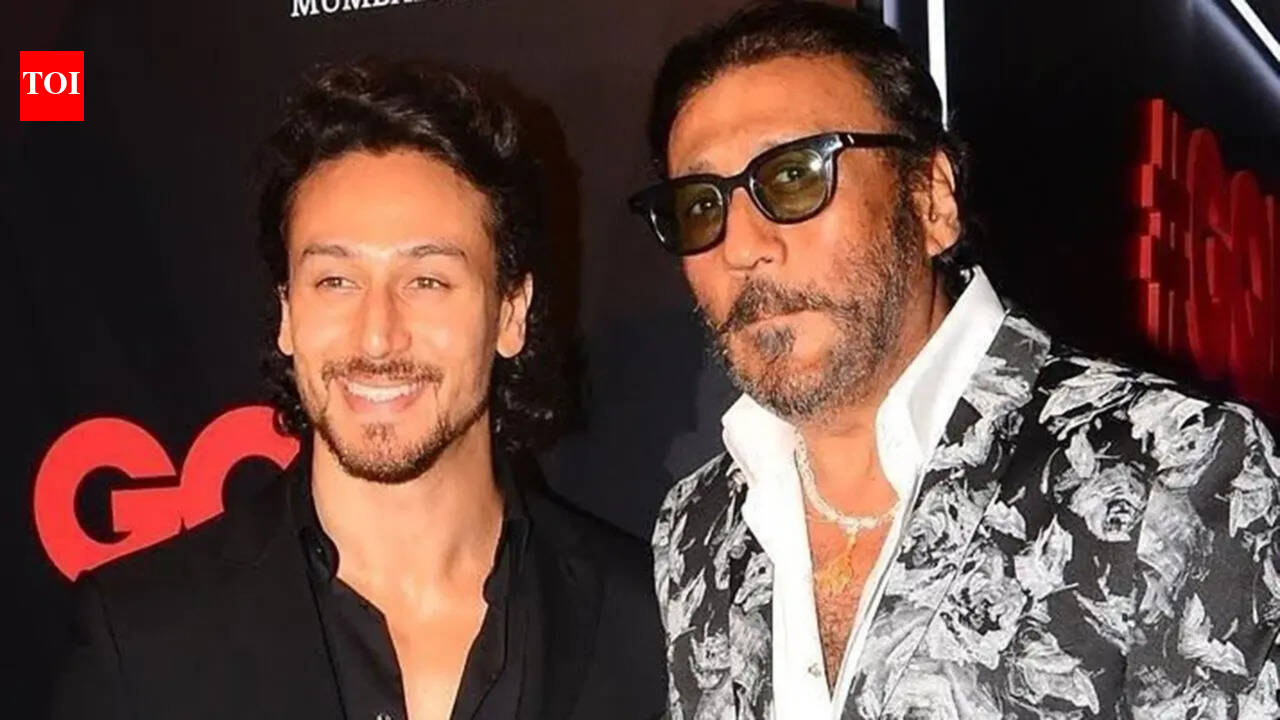
Jackie Shroff on son Tiger Shroff's recent box office failure: 'These things are not in our hands, he will be fine'
Jackie Shroff and Tiger Shroff (Instagram)

While Tiger Shroff is currently busy shooting for ‘Lag Jaa Gale’ with Janhvi Kapoor and Lakshya, the actor is also looking forward to an important phase of his career. After a series of films like ‘Baaghi 4’ (2025), ‘Bade Miyan Chhote Miyan’ (2024), ‘Ganpat’ (2023), and ‘Heropanti 2’ (2022) failed to perform as per expectations, many are curious to know how he is handling the pressure.Speaking candidly to Mid-Day about his son’s journey, veteran actor Jackie Shroff shared that ups and downs are an inevitable part of life and the film industry. Reflecting on the situation, he explained that success and failure are often beyond one’s control and the only thing an actor can really focus on is hard work and dedication.Jackie talked about Tiger’s mindset and failures towards his career with a practical approach. “Life is such that these things are not in our hands. You have to work hard. Sometimes you will get results, and sometimes not,” he said. The senior actor also mentioned that he deeply respects Tiger’s honesty and discipline when it comes to work. According to Jackie, the young actor does not let failures distract him from his commitment towards cinema and fitness.

Tiger’s positive attitude impresses Jackie

Talking further about Tiger’s attitude, Jackie revealed that his son remains down to earth despite professional disappointments. “We are actors, we have to go through everything. Tiger knows this. He says, ‘I will work honestly. The rest is up to the audience.’ He [approach] is fantastic. He’s going to be okay,” he shared.Fans are now hoping that ‘Lag Ja Gale’, backed by Karan Johar’s production banner, will be a strong comeback for Tiger Shroff and help him reconnect with the audience on the big screen.

Tiger Shroff on work front

Tiger Shroff is currently busy filming an ambitious action thriller in Mumbai backed by producer Murad Khetani. The actor also has an exciting lineup for 2026, including the spiritual action-thriller ‘Vajra’ directed by Ram Madhvani, as well as Dharma Productions’ ‘Lag Jaa Gale’, in which he stars alongside Janhvi Kapoor.

Source link

Qualifier 1: Bhuvneshwar Kumar reinvents himself, leads Purple Cap race and leads RCB to IPL 2026 final

Bhuvneshwar Kumar last played for India in the ill-fated semi-final of the T20 World Cup against England in November 2022, a match that later changed the way white-ball cricket is played in India. While some of the legends of Indian cricket reshaped the game, unfortunately, Bhuvneshwar Kumar became one of its victims.

That kind of defeat, followed by being sidelined, usually spells a certain departure from top-level cricket. And yet, here we are, three and a half years later, Bhuvneshwar Kumar holds the Purple Cap once again. The fast bowler has taken 26 wickets this season, which is equal to his best haul so far in the Indian Premier League. At the age of 36, he has now reached consecutive finals in the world’s most demanding cricket league.

Qualifier 1, RCB vs GT: highlight | Achievement:

While in 2025 he was part of the support contingent led by the extraordinary Josh Hazlewood, Bhuvneshwar Kumar has made this season his own, leading the attack from the front in his usual manner. On Tuesday, that humility was once again on display when Bhuvi spoke after his match-winning performance. On a night when the ball was expected to go out of the park, the right-arm pacer returned figures of 4/0/28/2 and broke the back of Gujarat Titans’ batting in Qualifier 1. IPL.

The bowlers faced a big challenge in Dharamshala on Tuesday. He needed to find the exact length at which the ball would not disappear for a run. The ball was too full and the batsmen did not even need to keep the ball on the ground; Bowled a little shorter and the pitch didn’t have enough zip to trouble them.

It was an incredibly difficult task, so much so that two world-class fast bowlers, Mohammed Siraj and Kagiso Rabada, conceded runs at economy rates of 13 and 15 respectively. The bowler is playing his first IPL 2026 match, Kulwant Khejroliya gave away 28 runs in a single over. And yet Bhuvi barely gave anything away while bowling against one of the most consistent top three players in the IPL.

How does he keep doing this? This question was clear when he appeared with Ravichandran Ashwin and Irfan Pathan in the post-match show.

The answer lies in how they have got their game down to a science. At a time when bowlers are constantly having to look for new variations in modern T20 cricket, Bhuvi’s renewal this season really comes from doing less.

For years, his knuckleball was his weapon of choice. But this season he has reduced its use considerably. Instead, he has turned to the scrambled seam, a deliberate tactic designed to create constant uncertainty in the batsman’s mind. When the ball hits the crooked seam on flat Indian pitches, the batsman cannot predict whether it will bounce, slide or remain off the surface.

“You’re absolutely right. We’ve certainly talked about swing and angles, but the use of the scramble seam, which you saw more of today and which we’ve used a lot this season, has been a very deliberate strategy,” he explained.

“I think I have enough experience in reading situations now, so there was no need for more [the knuckleball] In this weather. What needed more was scrambled seams.”

What makes Bhuvi so effective at 36 is his ability to adapt quickly. He doesn’t go into the game with rigid ideas. In Qualifier 1, it took him exactly six balls to realize that his original plan of swinging the new ball would have to be abandoned. Seeing Jacob Duffy bowl the first over, Bhuvi adjusted his strategy even before bowling his first ball.

“When Duffy bowled the first over, I was about to bowl the second and somewhere in my mind I had the feeling that there would not be much swing. So all these things are part of our plan. It is not that we are just bowling randomly. There is always a plan behind understanding how the wicket is behaving.”

While young, fast bowlers like Siraj and Rabada struggled to find their length and score runs on the Dharamshala surface, Bhuvi relied on his processing speed. He understood the pitch faster than any other player on the field.

He was dropped from the national team in 2022 as Indian cricket wanted to move towards a different template. But three-and-a-half years later, with 26 wickets and the Purple Cap to his name, Bhuvneshwar Kumar has shown that simple, clear-minded planning can still demolish the world’s best batting line-ups. Royal Challengers Bangalore is in the finalAnd it is their most experienced bowler who has taken them there.

– ends

published by:

Amar Panikkar

Published on:

May 27, 2026 11:00 IST

Source link

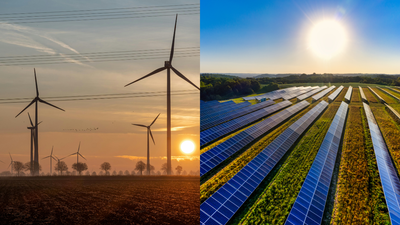
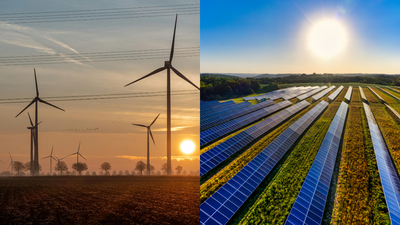
China is planning a massive offshore renewable energy plant with 1,000 turbines and millions of solar panels. world News

China is planning a massive offshore renewable energy plant with 1,000 turbines and millions of solar panels

In the largest renewable energy plan ever proposed by any country, China plans to develop the most extensive clean energy plants off its shores. From reports about this plan, it appears that China aims to develop 1,000 wind turbines with millions of solar panels, which will be built on an area located about 4,300 miles from mainland China. The initiative comes after China’s increasing focus on renewable energy, offshore solar power systems, wind power generation and long-distance electric power transmission. Given the fact that China is currently the leader in the production of solar panels and large-scale renewable energy projects, it seems that this renewable energy plant could revolutionize international energy cooperation.

How China is taking its renewable energy experience abroad

However, China’s efforts toward clean energy have extended beyond its borders. Over the past ten years, Beijing has made substantial investments in solar farms, offshore wind power and hybrid energy systems in other parts of Asia, Africa and the Middle East.This can be understood from the example of its achievements at the domestic level. In December 2025, China commissioned the world’s largest solar power station in Xinjiang province, consisting of more than 5.26 million solar panels and generating billions of kilowatt-hours of energy per year.According to PV Magazine International, the construction of the Midong solar project involved extensive infrastructure, such as transportation and distribution of electricity over large distances.This type of experience gained over the last ten years is currently being implemented abroad. According to the plan, the new mega project will include both large wind power plants and solar power sources, which will enable continuous power generation regardless of weather conditions.

Why is China investing in huge wind and solar projects?

The move toward renewable energy in China has been largely driven by energy security and economic planning considerations. President Xi Jinping has already announced that China plans to significantly increase its wind and solar power production as part of its emissions reduction strategy. Projects using renewable energy sources will help reduce China’s dependence on imported fossil fuels. This will give China the power to exercise better control over global infrastructure development.According to industry experts, the feasibility of combining wind turbines, solar panels and batteries has improved significantly in the last decade, due to lower costs. As a result, China has a distinct competitive advantage when it comes to building such projects on a large scale. China produces most of the world’s solar panels and wind turbine parts.In an analysis by World Economic ForumIt was reported that China is leading the world in investment in renewable energy, accounting for the largest growth of global clean energy.

offshore solar and long distance power transmission Industries are changing

Another unique aspect of renewable energy development in China is the sheer scale on which the technology is deployed. In late 2025, China will launch the world’s first gigawatt-scale offshore solar farm in Shandong province, officials said.The project was engineered by China Energy Investment CorporationCombining offshore solar farms with energy storage and marine engineering capabilities. According to officials, the plant was capable of producing about 1.78 billion kilowatt-hours annually. According to a spokesperson for the group, in 2026, it will focus on stabilizing coal supplies and upgrading coal-fired power plants, with relevant investments accounting for about 30 percent of the total.On another front, China continues to develop ultra-high voltage transmission lines capable of transmitting power several thousand miles with low losses. This technology will be important for renewable energy development in locations far from urban centers that require electricity.

A glimpse of the future of global energy

If the overseas renewable energy facility goes ahead on a large scale, it will certainly qualify as one of the major infrastructure initiatives in the renewable energy era. Building a project with 1,000 turbines and millions of photovoltaic panels would be much more than a giant source of electrical energy; This will be a testament to the international nature of renewable energy sources.In the Chinese context, the project involves much more than just generating power. Instead, it would mean that China is dedicated to becoming a leader in the worldwide transition to renewable energy.

Source link

NEET paper leak: CBI arrests two more accused, 13 in custody so far. india news

NEET UG 2026 paper leak allegation surfaced by Rajasthan whistleblower after viral PDF matches

PTI Image

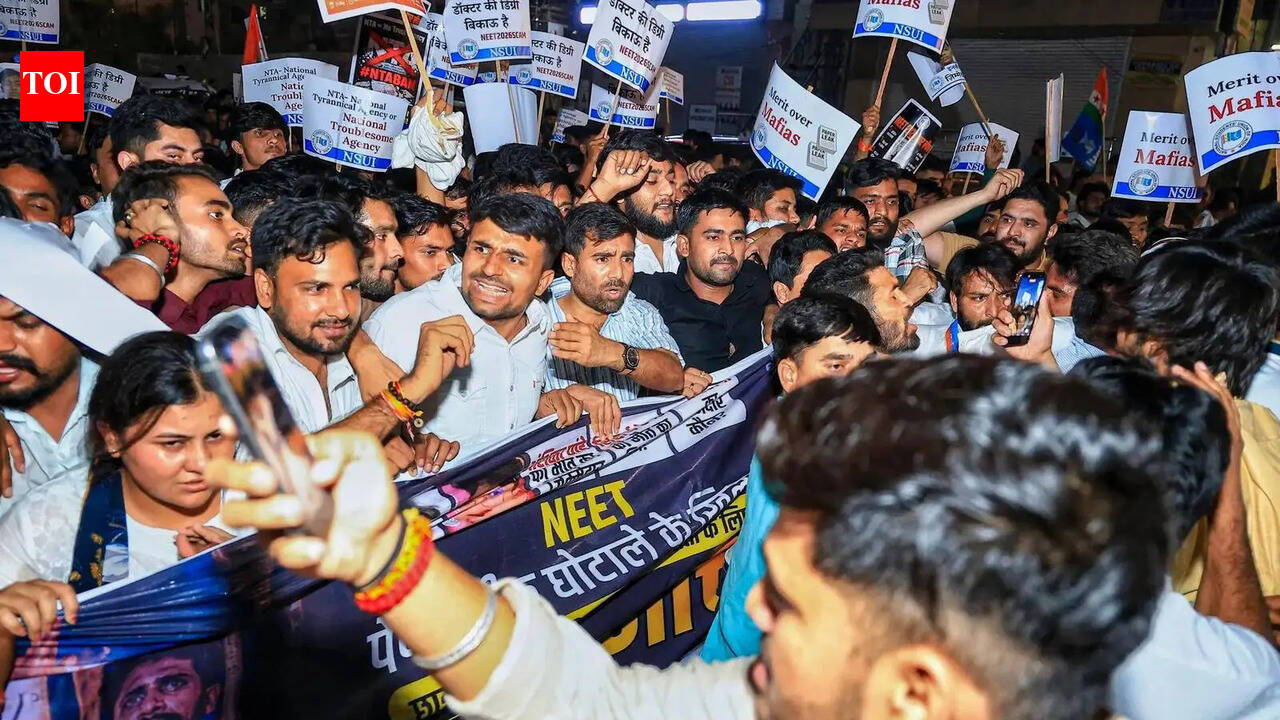
New Delhi: The Central Bureau of Investigation (CBI) has arrested a doctor from Latur and a faculty member of a coaching center in the NEET-UG 2026 exam paper leak case, taking the total number of persons arrested to 13.The arrested medical professional has been identified as Dr Manoj Shirure, who allegedly played a key role in facilitating the leaked chemistry questions for three students, including the son of a coaching center owner.According to investigators, Dr Shirure obtained these questions through PV Kulkarni, another accused in the case.The second person, Tejas Harshadkumar Shah, works as a physics faculty member at Dr. Abhang Prabhu Medical Academy (APMA), a premier coaching institute in Pune. Shah reportedly received the leaked physics questions for the high-stakes medical entrance exam from Manisha Havildar, who is already in custody.The federal agency registered the case on May 12, 2026, following a written complaint by the Department of Higher Education under the Education Ministry.Soon after taking over the case, the CBI formed special teams and launched a massive nationwide crackdown. So far, massive search operations have been conducted at 49 locations, resulting in the seizure of laptops, mobile phones and several incriminating documents.The investigation, which spans multiple cities including Delhi, Jaipur, Gurugram, Nashik, Pune, Latur and Ahilyanagar, has successfully traced the real source of the leaked Physics, Chemistry and Biology questions that were circulated ahead of the exam. CBI officials said multiple special teams are working together to unearth the entire chain of conspiracy, and detailed forensic analysis of all seized digital evidence is currently underway to ensure a comprehensive and professional investigation.

Source link

Today people discuss box office more than cinema: Kumud Mishra. hindi movie news

Today people discuss box office more than cinema: Kumud Mishra

Kumud Mishra He has already carved a niche for himself in theatre, films and OTT platforms, but the actor continues to explore new creative avenues. Debuting in Gujarati cinema from bartendersHe gave a brief but impressive performance, confirming his belief that “Agar script Is it good, So medium Then Language doesn’t matter” Kumud, who was in Vadodara for the play smokingTalks about theater, carefully selecting scripts, and much more.‘Theatre still values ​​stories and craft over numbers’Kumud believes that the priorities of both creators and audiences have changed. He says, “Today, every art is judged by the number of people who see it. A few years ago, after watching a film, the conversation revolved around cinema itself – was the film good, how was the story, the making, the production, etc. But now the discussion is only about how much it will earn or how it will perform at the box office, all in crores. Unfortunately, even today the audience focuses more on discussing everything related to the work rather than the craft, which is sad.He adds, “However, there is still that unique space in theater where the discussions about style, story, challenges and creative process keep it exciting for me. Of course, there are economic considerations, but our focus remains on making plays that audiences really enjoy and are also creatively satisfying for us. I also enjoy the fact that new directors and actors keep joining the group.”‘You can fail in theater without fear’Today, working extensively on OTT platforms and films, Kumud is deeply involved in theatre. “I never left theatre, nor did I feel like leaving it,” he says. If you feel like you’re holding on to something, it stops working—but theater was never like that for me. It is a necessity in my life. This was long before films, OTT or any such ambitions entered my mind. Theater has given me everything I have as an actor today, and it still gives me the freedom to experiment fearlessly. You can fail in theater without fear. The focus is on experimenting with the content, not the money associated with it.”‘I read the script in one go before saying yes’When asked how he chooses projects, he said, “The truth is I have a lot of work Proposal doesn’t happen. whatever happens, out of that I choose. When I read a script, I finish it in one go and can clearly see that world spinning before my eyes. Even if it’s a script for a web show, say 300-400 pages, I’ll still read the entire thing. People may find it amusing, but I see it as part of my job. There may be other reasons as well, such as a desire to collaborate with a particular filmmaker, but the script remains the most important factor.Talking about adopting the characters, Kumud says, “I don’t just portray the characters that are given to me – I become them. Be it a billionaire or a policeman, to me they are all real people. I don’t imitate them; I step into their lives. What really makes a character stand out is their place within the story and the way they react to the situations around them. I have always believed that an actor should play the role. So, I have undergone a physical transformation for my character. Asi. I needed to look lean for this role. In theatre, this is not a big issue because there you 40 despite being a bastard 17 brother-in-law’s son Character can doAnd vice versa. But in films you cannot deceive the audience, so casting becomes extremely important.‘Hoping to do more Gujarati films’talking about bartendersHe shares, “Abhishek (director) is a dear friend, and I loved the scripts too. Some scripts are so good that you just want to be associated with them in some way. I also enjoyed the way this industry works. It felt like I was part of a family. Everyone worked with a lot of focus and dedication, which was heart-touching. Also, while we have always seen (Devan) Bhojani doing comedy, seeing him play such an intense character was quite an experience.” Was. We talked a lot and had a lot of fun.”He says, “I wish I had the opportunity to learn and speak more Gujarati, because as artistes, we always feel the need to completely understand a language and its nuances. I hope people will appreciate my work and I will get more opportunities to work in Gujarati films.”‘Barodians are warm and welcoming’Talking about Vadodara, he says, “My experience in Gujarat has always been wonderful. I have visited Ahmedabad many times, and we also perform regularly in Vadodara. This time in Vadodara, it was a unique experience because we were performing in a new venue, for an audience that was completely new to us. Vadodara has long been known as a vibrant and thriving center for the arts. I first visited the city several years ago. Visited when my brother was working there. He liked the city so much that he eventually bought a house there, which later became my base. “The people are incredibly warm and welcoming, making you immediately feel at home, as if you’ve known them forever.”

Source link

Top 10 countries with fastest growth of billionaires by 2031: Saudi Arabia, Poland and Sweden lead the global wealth race. world News

Top 10 countries with fastest growth of billionaires by 2031: Saudi Arabia, Poland and Sweden lead global wealth race

The next few years are expected to reshape parts of the global wealth map in ways that do not always match familiar economic narratives. Some of the fastest movements in the billionaire population are projected to occur outside the typical Western centres, with changes associated with capital flows, policy changes, technological expansion and regional investment cycles. Some countries show unusually sharp percentage jumps rather than steady growth, indicating concentrated bursts of wealth creation rather than slow accumulation. The pattern is not uniform, and it does not follow a single model of development. Instead, it looks like a scattered boom across Asia, Europe, and the Middle East, each driven by different local engines and timing effects.As reported by the World of Statistics (ex Twitter) post, projections for 2026-2031 highlight a sharp increase in the billionaire population, with selected global economies expected to have the fastest growing number of billionaires by 2031.

Countries with fastest growing number of billionaires by 2031

Post
Country
projected growth
1 saudi arabia 183%
2 poland 123%
3 sweden 81%
4 Australia 77%
5 denmark 75%
6 Japan 65%
7 Mexico 63%
8 philippines 63%
9 norway 53%
10 India 51%

Countries with the Highest Growth Rate of Billionaires Expected

saudi arabia

Saudi Arabia stands out with a leap that is far ahead of the rest of the list. This shift is often linked to ongoing economic diversification, where oil-related assets are increasingly deployed into new sectors such as logistics, tourism and large-scale infrastructure. Private capital is moving into areas that previously did not attract that level of attention.What makes this figure unusual is not just the shape but also the movement inherent in it. This suggests a relatively compact base of high-net-worth individuals that is growing rapidly rather than a broad, gradual spread.

poland

Poland ranked unexpectedly high due to a mix of manufacturing strength, technology outsourcing and deep integration with European supply chains. Wealth creation here feels less tied to old industries and more to new business structures, often as medium-sized companies enter global markets.There is also a sense of time. Capital that once flowed westward within Europe has begun to circulate more locally, allowing domestic entrepreneurs to maintain larger stakes in growing companies.

sweden

Sweden is showing steady growth rather than rapid disruption. Much of its billionaire growth is tied to technology, green industries, and export-heavy industrial clusters that have long operated internationally.The pattern here is less about sudden emergence and more about existing companies continuing to compound value in quiet ways. Ownership structures also matter, with long-standing family or founder shares increasing in value over time.

Australia

Australia represents a combination that is becoming increasingly visible: traditional resource wealth coupled with a growing technology sector. The luck associated with mining still plays a role, but new wealth clusters are forming around fintech, biotech and digital platforms.The growth rate suggests a system where capital cycles between old and new sectors without complete replacement. This overlap seems to be working quite well.

denmark

Denmark does not typically feature heavily in the global wealth discussion, yet the projected growth points to strong performance in companies involved in specialized industrial design, pharmaceuticals and renewable energy.It is a relatively small economy, which may exaggerate percentage movements, but the underlying businesses tend to be globally rather than domestic-facing.

Japan

Japan shows a more modest climb than emerging markets, but it is still notable given the already established wealth base. This shift is often linked to the impact of corporate restructuring, new shareholder focus and the gradual reopening of parts of its economy.Here wealth creation proceeds through large corporate ecosystems rather than fast-moving startup cycles.

Mexico

Mexico shows a mix of manufacturing expansion, particularly tied to near-term trends, and long-standing industrial houses expanding their reach. Proximity to US supply chains has changed investment patterns in subtle but persistent ways.Growth is not spread evenly, with some regions and sectors growing while others remain stagnant.

philippines

The Philippines is benefiting from service-based expansion, including outsourcing, remittance-linked consumption, and a gradually growing digital economy.Wealth accumulation here is often linked to service networks rather than heavy industry, giving it a different rhythm than resource-based economies.

norway

Norway shows more modest growth, shaped by energy-related capital and sovereign wealth effects. While not explosive, it remains stable, with wealth often concentrated in long-term holdings rather than rapidly traded sectors.

India

India features in the list with a lower percentage growth than some peers, albeit with a much larger base of entrepreneurs and family wealth. Technology services, digital platforms and manufacturing expansion all contribute to this movement.Growth feels distributed rather than concentrated, causing percentage changes to often be over-measured even if the absolute numbers are important.

Source link

Delhi government to launch CBDC-based smart ration distribution system for greater transparency and consumer choice india news

Delhi government to launch CBDC-based smart ration distribution system for greater transparency and consumer choice

New Delhi: In a major welfare-oriented decision aimed at expanding food security coverage in the national capital, the Delhi Cabinet has approved a proposal to increase the annual income eligibility limit for ration cards under the Public Distribution System (PDS) from Rs 1.2 lakh to Rs 2.5 lakh.The decision is expected to benefit lakhs of families across Delhi who were earlier excluded due to low income limits, a release said.Speaking on the Cabinet decision, Food and Supplies Minister Manjinder Singh Sirsa said that the Delhi government under CM Rekha Gupta is also working towards implementing a CBDC (Central Bank Digital Currency) enabled ration distribution mechanism.Under this system, financial assistance for ration will be deposited directly into the accounts of the beneficiaries, allowing them to purchase ration as per requirement through digital currency at ration shops.“This will increase transparency and eliminate mismanagement in the system,” Sirsa said.The minister said the proposed CBDC-based model will be gradually implemented at ration shops and integrated with banking systems, including private banks, in the future. The initiative aims to ensure efficient delivery of benefits, reduce leakages and empower beneficiaries to access food supplies with greater flexibility and dignity.CBDC in the PDS system refers to the use of central bank digital currency to deliver food subsidy benefits to beneficiaries, instead of relying only on physical food grain distribution through Fair Price Shops (FPS) or unrestricted cash transfers to bank accounts. CBDC is a digital form of sovereign currency issued by the Reserve Bank of India and has the same legal status as physical currency.Under the proposed CBDC-based PDS model, the government will calculate the subsidy equivalent to the entitled food grain and transfer the amount to the CBDC wallet of the beneficiary. Beneficiaries will be able to purchase ration from authorized FPS shops after authentication through Aadhaar/e-POS system, wherein all transactions will be digitally recorded and adjusted for greater accountability.The CBDC-enabled PDS model is expected to make the system more transparent, portable and citizen-friendly, the release said. This mechanism will provide beneficiaries greater flexibility in choosing authorized outlets, real-time visibility of subsidy eligibility and transaction history and a robust grievance redressal framework through digitally traceable records.This model is also expected to reduce disputes at FPS levels, strengthen audit trails, improve monitoring of subsidy utilization and simplify reconciliation processes.CM Rekha Gupta had earlier talked about increasing the income limit for ration card eligibility in Delhi.To benefit more and more low-income families, the income eligibility limit has been increased from Rs 1 lakh to Rs 1.2 lakh and now to Rs 2.5 lakh.“Earlier, the income eligibility for a ration card was very low. Today, even an annual income of Rs 1 lakh is below the minimum wage level for a family. Keeping this in mind, the Rekha Gupta-led Delhi government has increased the income limit to Rs 2.5 lakh so that more eligible families can avail subsidized ration under the PDS system,” Sirsa said.“The Delhi government under the leadership of Chief Minister Rekha Gupta is also working towards implementing a CBDC (Central Bank Digital Currency)-enabled ration distribution mechanism,” he said.He said, “Under this system, financial assistance for ration will be deposited directly into the accounts of the beneficiaries, enabling them to purchase ration as per requirement through digital currency at ration shops. This will increase transparency and eliminate mismanagement in the system.”

Source link

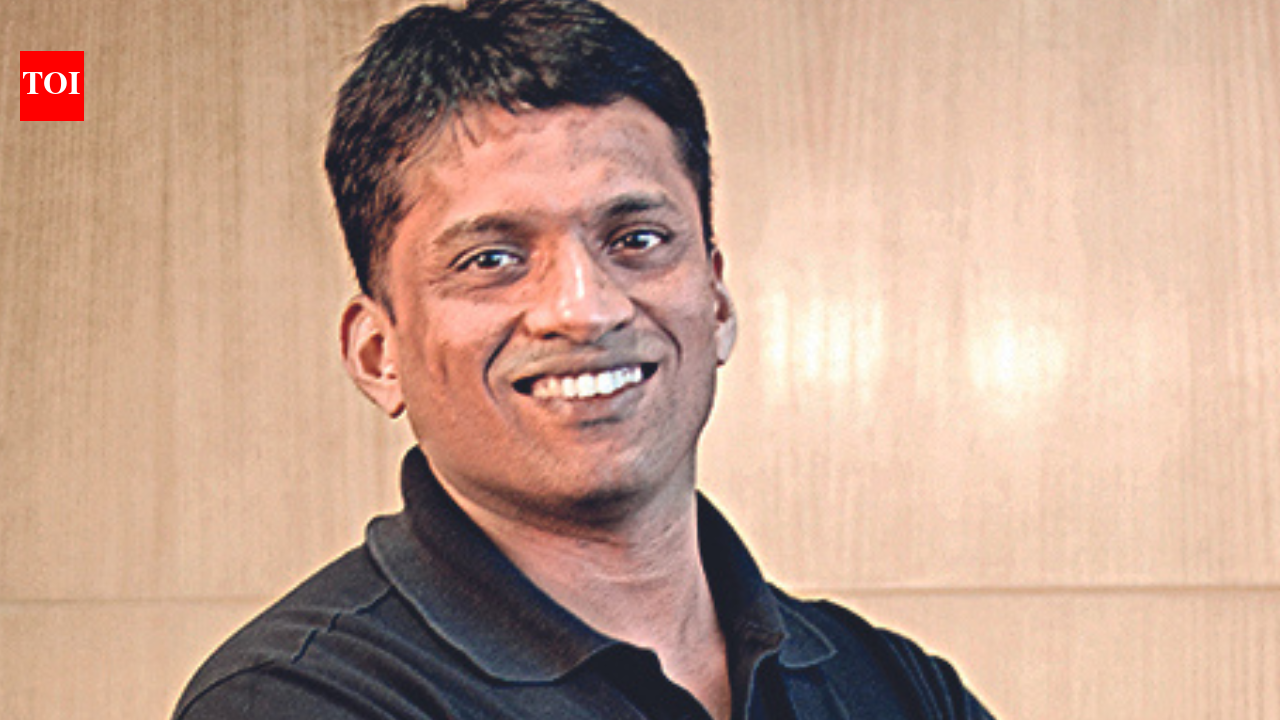
Byju’s founder Raveendran sentenced to six months in jail for contempt of court: Report

Byju's founder Raveendran sentenced to six months in jail for contempt of court: Report
Byju Raveendran (file photo)

Byju Raveendran, founder of collapsed edtech company Byju’s, has been sentenced to six months in jail by a Singapore court in a contempt case, people with knowledge of the development told Bloomberg.The court directed Raveendran to face jail term after he failed to comply with several court orders related to his assets from April 2024.He has also been asked to surrender to authorities, pay legal costs of S$90,000 (about $70,500) and submit documents establishing his legal ownership of Beaar Investco Pte, an entity that holds shares in an affiliated company.The decision is another blow to the entrepreneur, who is already facing legal challenges from foreign investors in multiple jurisdictions. In the United States, lenders are attempting to recoup losses associated with $1.2 billion of loans.According to the report, it is not clear whether Raveendran is currently in Singapore or any other country.Raveendran founded Think & Learn Pvt Ltd, widely known as Byju’s, which once emerged as one of India’s biggest startup success stories and turned him into a billionaire amid increased interest from global investors in Indian technology firms.He is currently facing legal action in Singapore on behalf of a subsidiary of the Qatar Investment Authority, which participated in a funding round for the edtech company during a period when the company was cutting jobs and scaling back operations.Qatar Holdings was represented by Drew & Napier in the case, while Byju Investments was represented by Fervent Chambers, the report said.(This is a top Google Trends topic.)

Source link

Ugandan returnee quarantined in Bengaluru amid Ebola alert; No case has been confirmed yet. india news

Ugandan returnee quarantined in Bengaluru amid Ebola alert; No cases have been confirmed yet

New Delhi: A traveler who recently traveled from Uganda has been quarantined at a government hospital in Bengaluru after complaining of mild body ache, prompting heightened surveillance by the Center amid the Ebola outbreak in parts of Africa.The Union Ministry of Health and Family Welfare on Wednesday said the man has been admitted to the state-run Epidemic Diseases Hospital in Bengaluru for observation and further evaluation. Officials said the man is otherwise healthy and stable except for mild body pain.A sample has been collected and sent to the National Institute of Virology for laboratory testing, the results of which are still awaited.The ministry stressed that there is no case ebola virus disease This has been confirmed so far in India.“In view of the recent Ebola virus outbreak in parts of Africa, the Government of India is closely monitoring the emerging Ebola virus disease situation,” the ministry said in a statement.Health officials said the Centre, in coordination with the Karnataka government and other concerned agencies, is keeping a close watch and all necessary public health protocols are being followed in line with World Health Organization guidelines.The government said screening and surveillance measures are continuing at designated points of entry and in the public health system as part of preparedness efforts.The ministry also urged citizens not to panic or spread misinformation and advised people to rely only on official sources for updates related to the Ebola situation.

Source link