Vaibhav Suryavanshi’s 93 runs keep Rajasthan Royals’ playoff hopes alive

IPL 2026: Vaibhav Suryavanshi's 93 runs keep Rajasthan Royals' playoff hopes alive
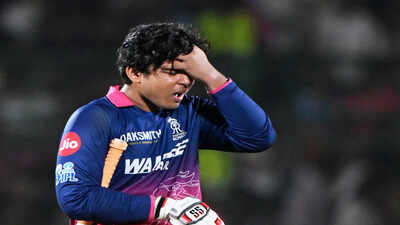
Vaibhav Suryavanshi of Rajasthan Royals (AP Photo)

New Delhi: Vaibhav Suryavanshi once again made headlines as the 15-year-old played a brilliant inning of 93 runs in just 38 balls. Rajasthan Royals Easy win by seven wickets over Lucknow Super Giants in an important match of IPL 2026 in Jaipur. The win has kept Rajasthan firmly in the race for the playoffs, with the team now needing another win against Mumbai Indians to strengthen their qualification hopes.While chasing the huge target of 221 runs, Rajasthan looked fearless from the beginning. Suryavanshi hit 10 sixes and attacked almost every bowler, making the difficult target look surprisingly easy. He first made a quick partnership with the acting captain Yashasvi Jaiswal Before making another big stand with Dhruv Jurel, who remained unbeaten with a half-century. Although the teenager missed his century by just seven runs, he had already taken the game away from Lucknow.Former cricketer Ian Bishop aptly described the youngster’s talent in the commentary, saying: “He’s ready.”First, Michelle Marsh Lucknow was taken to 220/5 with a stormy inning of 96 runs in 57 balls. Josh Inglis also played aggressively and scored 60 runs and the pair gave LSG a great start with an opening partnership of 109 runs. Even after Inglis was out, Marsh continued the attack and hit boundaries around the ground and missed a century.However, Rajasthan’s bowlers struggled for most of the innings, with only young spinner Yashraj Punja managing to exert some control by taking two wickets. Jofra Archer’s disciplined final over also helped limit further damage.The young batsman has now come close to several IPL records, including Chris Gayle’s record of hitting most sixes in a season. His fearless batting also put pressure on India’s fast bowler Mayank Yadav, who gave away a lot of runs in one over.While Lucknow’s playoff hopes ended with the defeat, Rajasthan now head into their final league match with qualification still within reach.

Source link

Indian family of 4 completes 3 months in Texas ICE custody; 12 year old child was bleeding in stool, his sister was vomiting again and again

Indian family of 4 completes 3 months in Texas ICE custody; 12 year old child was bleeding in stool, his sister was vomiting again and again
An Indian family of four was arrested by ICE and taken to a family jail. (Left: Guri; Right: Manpreet and her mother)

The Indian family of four – parents and two children – have completed almost 90 days in the Dilley Detention Center in Texas, with their future looking bleak and their health deteriorating. He was arrested during a routine check-in appointment in February and held at the controversial center, which reopened last year after the Donald Trump administration resumed family detention. YouTuber Ms. Rachel, who has been advocating for the closure of the ICE detention center, visited Dili and met with the Indian family.Ms. Rachel wrote, “I never thought I would be advocating to get families out of prison. It is an honor to meet this hard-working, compassionate family. Please free them. When Guri goes to the bathroom he is not receiving proper care for bleeding, which is dangerous medical neglect.”There is a 12 year old boy of Guri family who is having blood in his stool. This started before his detention, but he received no treatment after the entire family was taken away and thrown into a family prison. Her sister, 11-year-old Manpreet, is vomiting repeatedly because the tap water is hurting her stomach. “Both children were very kind but you could tell they were sad,” Ms Rachel wrote.Rachel wrote, “Their mother’s condition is deteriorating due to lack of proper medicines and treatment for diabetes and arthritis. Manpreet and Guri take great care of their mother and look after her as the pain has made it difficult for her to move around. Both the children are unable to sleep properly at night as the lights are on 24/7.” Meet his hard-working, kind family. It was devastating to see them all deteriorate from family detention, which is like prison.” The father, Jagadish, came to the US in 2022 seeking asylum. According to reports, he cited persistent threats and violence in his community in Punjab, India as the reason he converted from Sikhism to Catholicism. The family settled in Central Los Angeles, near Jagadish’s brother’s family.Gurvinder and the children follow the Sikh-Hindu religion and must eat vegetarian food on Tuesdays and Thursdays, but there is no vegetarian food option in the detention centre. That’s why they don’t eat anything on those days.“I worry that I came here to save myself, and I ruined three lives,” Jagadish said in an earlier Guardian interview.

Source link

Amit Shah says Naxalism in Bastar is the result of lack of development

Amit Shah says Naxalism in Bastar is the result of lack of development

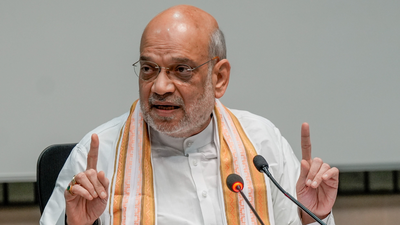
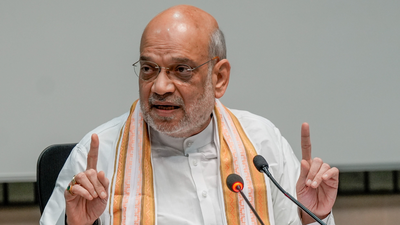
Jagdalpur: Home Minister Amit Shah, who concluded his first visit to this erstwhile ‘red’ pocket borough after the end of Left-wing extremism, on Tuesday listed four dates as milestones in the journey of making Bastar Naxal-free, the first being December 23, 2024, when the BJP government was elected in Chhattisgarh; August 24, 2024, when the deadline to root out Naxalism was announced as March 31, 2026; 31 March 2026, before which Naxalism would have been completely uprooted; and May 19, 2026, which launched an initiative aimed at doorstep delivery of all government benefits to the tribals of Bastar by renovating security camps into one-stop public service centres. “It is a matter of great pride that Naxalism has been completely eliminated,” Shah said. But it also said that a major obstacle in this journey till December 13, 2023 was the lack of cooperation from the previous Congress government (led by Bhupesh Baghel) in Chhattisgarh. “I can now say without any hesitation that other non-BJP governments have cooperated in the fight against Naxalism, but the Congress government in Chhattisgarh has not,” he said at a press conference in Jagdalpur. “After the BJP government was elected in Chhattisgarh on December 13, 2024, we intensified our efforts. After reviewing the situation of Left Wing Extremism in the annual conference of police chiefs of all states on August 24, 2024, March 31, 2026 was declared the deadline to make the country Naxalism-free. The target was achieved even before the deadline.” The latest milestone he mentioned is May 19, 2026, when the initiative to create 70 Veer Shaheed Gunda Dhur ‘Seva Dera’ (public service camps) and pursue integrated development across Bastar was launched. He said, “Contrary to the narrative propagated by leftist intellectuals that Naxalism was due to lack of development in the affected areas, the reality is that Naxalism was a result of lack of development.” “There were far more backward areas in the country…Why is it that Naxalism did not raise its head in these areas? Other areas eventually developed, but Bastar remained backward and the local people were deprived of basic development.”..” “Now that Bastar has become Naxal-free, an initiative to pursue integrated development has been launched… It aims to compensate the local people who have been deprived of the benefits for the last five decades with doorstep delivery of government schemes and benefits.”

Source link

Election Commission should ensure that no eligible voter is left out in SIR: JMM

Election Commission should ensure that no eligible voter is left out in SIR: JMM

Ranchi: Jharkhand Mukti Morcha (JMM) on Tuesday cautioned booth level agents as well as micro observers to be sensitive and alert ahead of the implementation of the special intensive revision (SIR) of voter lists to be held in Jharkhand next month. Home visits of enumerators for SIR in the state will start from June 30.Addressing the media, party’s central general secretary Supriyo Bhattacharya said, “Given the way SIR was implemented in West Bengal, Bihar etc. to suit a particular party, we want to caution the BLOs and astute observers to know that this is Jharkhand, a state born out of political colonialism and conflict.”JMM further said Election Commission (EC) should ensure that no legitimate voter is left out and also said that the party is already working on plans to ensure this when SIR is implemented in the state.Bhattacharya alleged that efforts will be made to change not only the voter demography but also the constituencies through the delimitation to be held in the coming days. “For example in Assam, after SIR, constituencies were truncated to suit the BJP. We know such efforts will be made here too, where seats will not increase, but all efforts will be made to change the nature of the constituency,” he claimed.JMM’s ally Congress in the coalition government led by Chief Minister Hemant Soren has also expressed similar apprehensions. Addressing the media, party president Keshav Mahato Kamlesh along with Poraiyahat MLA Pradeep Yadav said, “We have already deployed around 19,000 Booth Level Agents (BLAs) and more will be deployed to ensure that no eligible voter is left out.”The BJP hit out at JMM and Congress for trying to intimidate the Election Commission as well as those involved in the SIR work. A party spokesperson said, “SIR is a mandatory process carried out by a constitutional body and no one can threaten anyone or try to stop it.”

Source link

Woman falls straight out of her Mercedes-Benz into open sewer hole

Death in manhole in NYC: A woman fell straight from her Mercedes-Benz into an uncovered sewer hole
Woman dies after falling into open manhole in NYC.

A 56-year-old woman died after falling into an open manhole after getting out of her parked Mercedes-Benz in Midtown Manhattan, New York City. The incident occurred outside the Cartier store at 653 Fifth Avenue on Monday, May 16, at approximately 11:19 pm local time. The woman fell 10 feet into a Con Edison manhole.They found the woman unconscious and unconscious inside the manhole. He was then taken to New York Presbyterian/Weill Cornell Medical Center, where he was pronounced dead, police said.A Con Edison spokesperson told the outlet that they were “saddened” to hear about the woman’s death and said they were investigating how it happened. “Our thoughts are with the man’s family and safety is our top priority,” he said.The woman’s family visited the spot on Tuesday morning and tried to understand how this unimaginable tragedy happened. His daughter-in-law told CBS News New York that there were no cones, warning signs or barriers around the manhole. According to the CBS report, the daughter-in-law was quite shaken up, saying that the family is still trying to understand the incident.

Source link

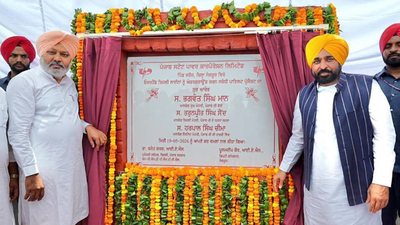
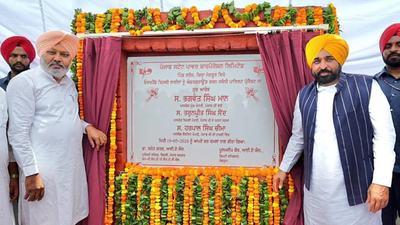
Underground power wiring project started on pilot basis in CM Mann’s native village

Underground power wiring project started on pilot basis in CM Mann's native village

Sangrur: An underground power wiring project launched by Punjab Chief Minister Bhagwant Maan He described it as a first of its kind initiative to make the state the first state in the country to have poll-free villages on a pilot basis in his native village Satoj here.Mann said the project will prevent crop fires, fatal accidents and frequent power cuts due to overhead lines, and will also free villages from the maze of dangerous poles and tangled wires.Under the pilot project, 384 electric poles will be removed from Satauj and underground cables will be laid without digging the road.Describing the “Satauj Model” as a roadmap for the entire country, Mann said the Aam Aadmi Party (AAP) government has fulfilled its promise of creating wire-free villages for Punjab’s farmers and said underground power supply will also end politics over installation of electric poles in villages.“Today is a historic day for the villages of Punjab as a big project to free the villages from the web of electric wires and unnecessary poles is being launched here.Addressing a gathering here, Mann said, “Under this pilot project, all the overhead power lines in Satoj will be taken underground at a cost of about Rs 8 crore. This is the first project in the country and with this initiative Punjab will emerge as a model project for the entire country.”Giving technical details of the project, Mann said, “Under this project, seven kilometer long high tension lines, 9.5 kilometer long low tension lines and 41 kilometer long service cables connecting the houses of 800 consumers will be laid underground.”All the high tension lines connected to the 66 KV grid Satoj to the village through three 11 KV feeders and connected to 28 transformers will go underground. He said that after this, under a historic initiative, all the low tension lines from 28 transformers to meter boxes will also be laid underground.The cable connecting meter boxes to all houses will also be underground, removing 384 unnecessary electric poles.A special feature of the project is that there will be no need to dig roads for laying underground cables because trenchless drilling machines will be used to lay underground pipes. He said that these pipes will be laid three feet below the ground, which will prove to be a big boon for the common people.Highlighting the dangers posed by overhead power wires, Mann said that electric poles and overhead wires pose a risk of electric shock to animals and people, especially children.Accidents often occur when tractors, combine harvesters and other vehicles come in contact with overhead wires.Similarly, farmers suffer huge losses due to crop fire incidents.He said rains, storms and strong winds damage poles and wires, disrupting power supply and causing financial loss to the power corporation.The network of poles and wires also affects the aesthetic appearance of the villages. By shifting high tension and low tension lines underground, power leakage will be eliminated, thereby reducing transmission and distribution losses, Mann said.“Villages will get uninterrupted power supply, underground cables will significantly reduce accidents, crop fires caused by power lines will be prevented, and power supply will no longer be disrupted by rain and strong winds. Removing unnecessary poles and tangled wires will further enhance the beauty and appearance of the villages.”Recalling the tragic incidents in the village, Mann said, “Three youths from this village lost their lives due to electric shock in their combine harvester. They were the sole earners for their families. This project is a tribute to those youths as such tragic incidents should never happen in the future.”Referring to the anti-sacrilege law, Mann said the state government has enacted it against sacrilege, which has a provision of punishment up to life imprisonment, to ensure that in future no one would dare to disrespect the Guru Granth Sahib.He said, “The previous rulers neither had the intention nor the will to enact laws to prevent sacrilege, due to which desecration of Sri Guru Granth Sahib Ji became a regular occurrence during their reign. However, the Act passed by the Punjab Government will put a stop to it as no one would ever dare to indulge in this unpardonable crime.”

Source link

CBI arrests fifth accused in the murder case of Bengal CM Suvendu Adhikari’s aide

CBI arrests fifth accused in the murder case of Bengal CM Suvendu Adhikari's aide
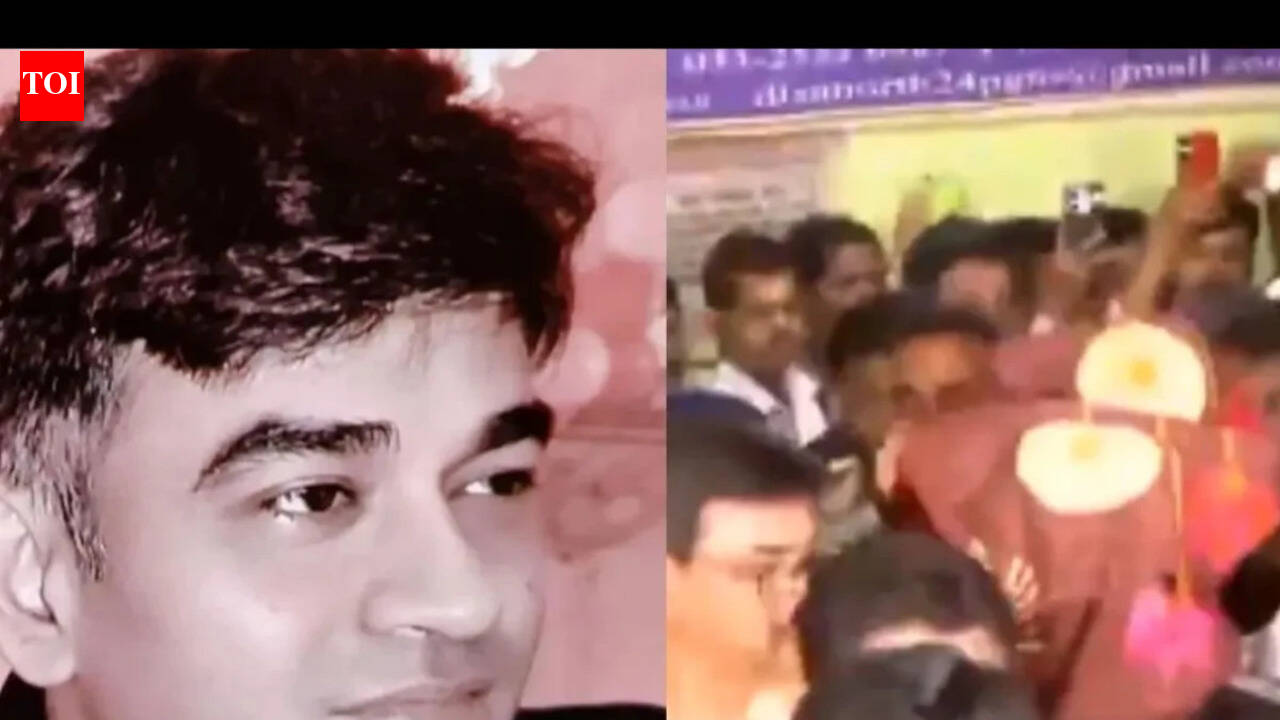
Chandranath Rath, aide to West Bengal Chief Minister Suvendu Adhikari

New Delhi: The Central Bureau of Investigation has arrested Vinay Rai, the fifth accused in the murder case of Chandranath Rath, personal assistant to West Bengal Chief Minister Suvendu Adhikari.Rai was arrested from Varanasi in Uttar Pradesh after the investigation into this high-profile murder spread to several states. Investigators are probing the role of hired shooters and a wider conspiracy behind the murder.Adhikari’s close aide Chandranath Rath was shot dead inside his car near Dohariya crossing in Madhyamgram in North 24 Parganas district, barely 170 meters from his residence, on the night of May 6. His driver Buddhadeb Bera suffered serious injuries in the attack and is undergoing treatment.Earlier, a Special Investigation Team (SIT) probing the murder had arrested four accused before expanding its investigation beyond West Bengal. According to investigators, the attackers carried out the operation with “military-style precision” in less than a minute.The police suspect that hired sharpshooters were brought in from outside the state to carry out the murder. Investigators said a silver hatchback stopped Rath’s vehicle before the bike-borne assailants opened fire at close range.The SIT recovered two motorcycles allegedly used in the crime, one from the airport area and the other near railway gates 11 and 12 in Barasat. Preliminary findings revealed that both the motorcycles and the hatchback used in the attack were previously stolen and had fake number plates fitted to avoid identification.The breakthrough in the investigation came when the police traced the UPI payment made at the Nivedita Setu toll plaza on May 6. Officials said the digital trail led investigators to Jharkhand, where the hatchback used in the murder may have been purchased.Sources close to the TOI investigation said the accused deliberately avoided using FASTag and instead made digital payments directly, which helped investigators track the vehicle’s movement in Kolkata.

Source link

Fashion giant ‘Mango’ founder Isak Andik’s son arrested in connection with tycoon’s death in 2024

Fashion giant 'Mango' founder Isak Andik's son arrested in connection with tycoon's death in 2024
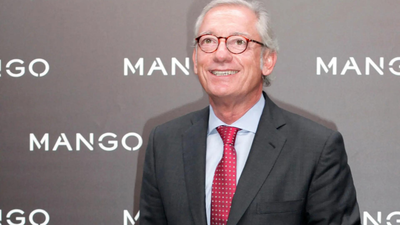
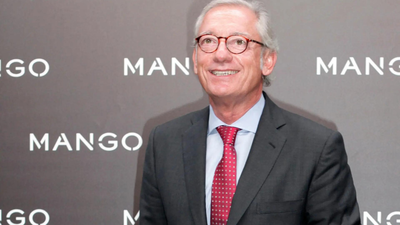
Isac Andic is the founder of Spanish fashion brand Mango.

Spanish police said on Tuesday they had arrested Jonathan Andic, the eldest son of Mango founder Isaac Andic, in connection with the death of the billionaire businessman while hiking in December 2024.Jonathan Endick, 45, was alone with his father when the 71-year-old retail giant fell to his death in the Montserrat mountains near Barcelona. Catalan regional police confirmed that he was taken into custody and taken in handcuffs to a court in Martorell for questioning.Sources close to the family, quoted by AFP, said they were “completely” confident in Jonathan Andik’s innocence, adding that “there is no and there will be no valid evidence against him”.He also said he believed “this will be demonstrated during the investigation,” and called for “respect for the presumption of innocence.”Authorities initially treated Isak Endić’s death as an accident, saying he appeared to have slipped near the Salnitre Caves in Kolbato, an area known for steep slopes and ravines. A judge closed the case in January 2025 after finding no evidence of criminal wrongdoing.However, the investigation was reopened in October 2025 after police, prosecutors, and the court reportedly found inconsistencies in Jonathan Andik’s testimony.Spanish newspaper El Pais reported that investigators had seized Jonathan Andic’s phone immediately after the incident. The report also cited the testimony of Isak Andić’s partner, professional golfer Estefania Knuth, who described the at times strained relationship between father and son. According to the newspaper, the two disagreed over Jonathan’s role in the company. Isak Andik reportedly handed him greater operational responsibility in 2014 before taking back tighter control a year later amid business difficulties at Mango. Knuth was also reportedly involved in a financial dispute with Isak Endik’s three children over the businessman’s will.Catalonia’s High Court said details of the case would remain under judicial confidentiality.Meanwhile, Jonathan Endick has denied any involvement in his father’s death and said the fall was accidental. He joined Mango in 2005 after studying audiovisual communications in the United States and business in Spain. Two years later, he began managing the Mango Man Line and later became vice chairman of the company’s board. “If you’re clear about where you want to go and keep moving forward, you will achieve your goals,” Jonathan Andik said in a 2023 Mango promotional video posted on YouTube.Born in Istanbul, Isak Endik moved from Türkiye to Barcelona with his family in the late 1960s. He founded Mango with his brother Nahman in 1984 after opening the brand’s first store in Barcelona’s Paseo de Gràcia.Mango later became one of the world’s leading fashion retailers, operating approximately 2,850 stores in more than 120 markets and employing more than 16,400 people globally.In December 2023, Isak Andik transferred 5 percent of the company to Mango CEO Tony Ruiz, who currently leads the group. At the time of his death, Forbes estimated Isak Andik’s net worth at $4.5 billion.

Source link

How to know when nation is under stress? When focus shifts to behavioural management

How to know when nation is under stress? When focus shifts to behavioural management

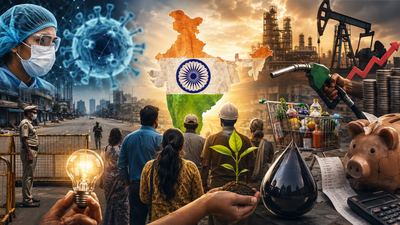
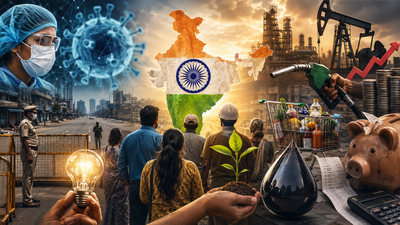
“We the people of India” saved the nation during Covid by “living like soldiers”. Today, citizens are again being asked to help the country by “living responsibly”.The language has changed from pandemic precautions to economic discipline, but the political pattern feels familiar.One way to detect coming trouble is to watch how governments speak. When administrations begin talking less about policy and more about behaviour — conserving fuel, avoiding excess spending, reducing travel, consuming responsibly — it often means the state is psychologically preparing society for harder economic measures.India has now seen this twice within five years: during Covid and now during the ongoing Gulf crisis triggered by the US-Israrel-Iran war.In both moments, governance shifted from direct administration to behavioural management. Citizens were no longer treated merely as taxpayers or voters, but as participants in national survival.The BJP-led NDA government has in the past resorted to direct administration when it believed it was necessary. Demonetisation, the rollout of GST are examples of high-impact executive action that had a huge impact on public life.However, during periods of economic or geopolitical stress, the Centre often changes tone before it changes policy.This is the politics of behavioural governance, and it may be one of the clearest early warning signs of a nation facing stress.

The grammar of distress

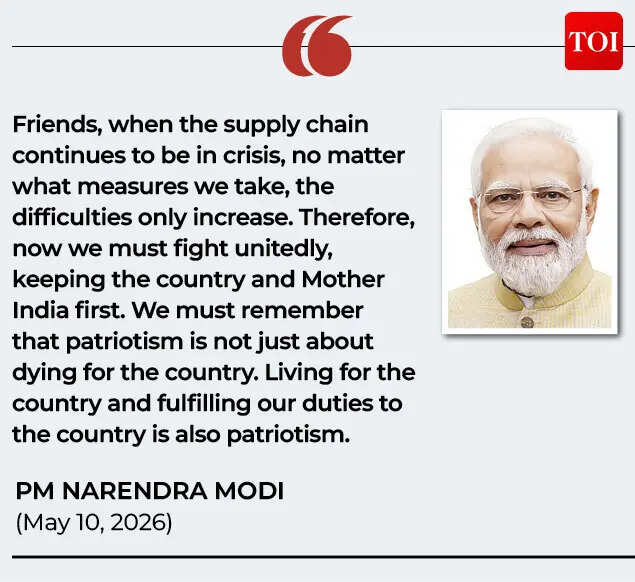
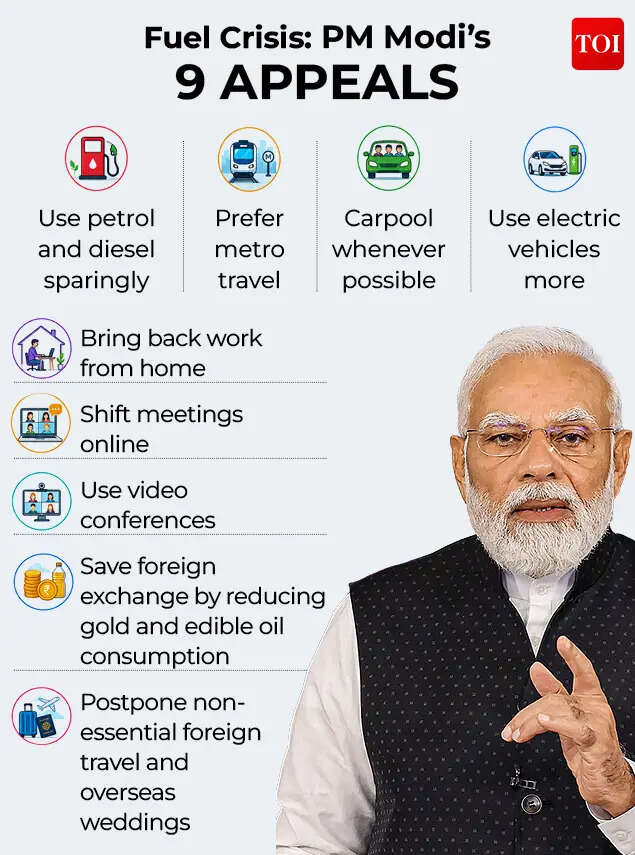
Prime Minister Narendra Modi‘s recent speech in Hyderabad carried echoes familiar to anyone who remembers the pandemic years. The message was framed as an appeal, not an emergency order. There was no announcement of rationing or restrictions. Instead, the emphasis was on restraint, conservation and collective responsibility.The tone mattered.

-

Governments rarely begin crisis management with force. They begin with persuasion.Economists often describe this as behavioural economics applied to governance — influencing public decision-making through messaging rather than compulsion. Instead of immediately imposing harsh measures, governments attempt to gently reshape behaviour first: consume less fuel, postpone discretionary spending, reduce imports, avoid panic buying, travel differently, work from home where possible.“The basic economics is that behavioural appeals are generally fast and low-cost because major fiscal interventions—subsidies, tax changes, stimulus packages, rationing systems, or price controls — require legislative approval, budget allocation, administrative coordination, and so on. Whereas, behavioural appeals, or a sort of signal, which sometimes also called ‘demand-side adjustment through norms’, shift part of the adjustment burden onto citizens voluntarily, reducing immediate state expenditure,” said Surya Bhushan, an alumnus of CESP, JNU, and now economics professor at DMI, Patna.Adding a political logic to it, he said “behavioural messaging avoids politically painful policies”.

Are crises psychological before they get administrative?

Economic distress is not only about shortages or numbers on a spreadsheet. They are also about public emotion.Bhushan argues that governments increasingly recognise this psychological dimension.“Crises are often partly psychological … economic crises are not only about material shortages; expectations matter enormously. For instance, if consumers panic: they hoard, rush to banks, speculate, overbuy fuel, or trigger inflationary spirals. In this regard, behavioural appeals aim to stabilize expectations and reduce panic behaviour.”This helps explain why official communication during crises often sounds calm even when underlying risks are serious. The objective is not only economic management, but emotional management.The speech itself becomes an economic tool.That was visible during Covid. It is visible again now amid fears surrounding oil supply disruptions and instability in the Persian Gulf that has impacted countries across the globe.

-

Has India seen this form of governance before?

Yes, long before behavioural governance became an academic phrase, governments were already using it during moments of national stress.During the 1962 India-China war, then PM Jawaharlal Nehru appealed directly to citizens not merely for support, but for participation. Asking Indians to contribute to the Prime Minister’s National Defence Fund, he framed the war effort as a collective civic responsibility rather than a task for the state alone.“The hardships which our soldiers are facing are not unknown to you,” Nehru said, urging citizens to become “comrades in this great struggle”.The appeal was not only financial. It psychologically transformed civilians into stakeholders in national defence.

-

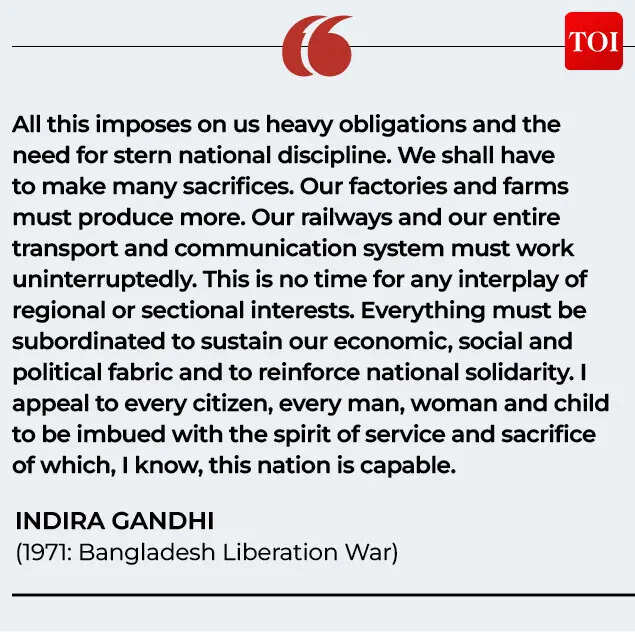
A similar pattern emerged during the 1965 Indo-Pak war, when Lal Bahadur Shastri urged citizens to voluntarily fast once a week to conserve food supplies amid shortages. Importantly, Shastri reportedly implemented the practice within his own household before asking the country to follow, giving the appeal moral legitimacy.By the 1971 war and the Bangladesh refugee crisis, behavioural messaging had become even more explicit. With the country’s economy under severe strain, Indira Gandhi appealed for “stern national discipline” and sacrifice.“Our factories and farms must produce more. Our railways and our entire transport and communication system must work uninterruptedly,” she said, warning that “everything must be subordinated” to preserving national stability.What connects these moments across decades is the language of collective duty. During crises, governments begin treating citizens not simply as governed populations, but as instruments of national resilience.

-

The current appeals around fuel conservation, restrained consumption and “duty-first” behaviour follow the same political grammar — only updated for a modern economy shaped by oil shocks, global supply chains and digital life.The recent fuel price increase is a case in point.Petrol and diesel prices are not just economic indicators in India. They are deeply political symbols. Fuel prices shape transport costs, food inflation and household budgets, affecting nearly every layer of daily life. That is perhaps why fuel prices were not raised in the last four years.Finally, when the fuel prices were hiked it was timed to avoid the ongoing assembly election period despite rising global crude prices linked to West Asian tensions. Economically, the increase reflected global pressures. Politically, the timing reflected management.And before citizens fully processed the implications, the language of conservation had already entered public discourse.

Why oil shocks hit India so deeply?

India’s vulnerability to energy shocks makes behavioural governance especially relevant.Bhushan points out that oil is not just another commodity in the Indian economy: “Of course, India is structurally vulnerable to a prolonged oil-supply disruption because crude oil sits at the center of multiple systems simultaneously: transport, agriculture, logistics, chemicals, inflation management, fiscal stability, and the rupee itself.”That interconnectedness explains why governments become cautious when disruptions emerge around the Strait of Hormuz or the wider Gulf region. A sustained oil shock quickly spills into inflation, transport costs, fertiliser prices, currency pressure and household budgets.“What needs to be kept in mind is that the government had already cushioned the impact by cutting the excise duty on petrol and diesel by Rs 10 at the end of March. That has significant fiscal impact on the finances of both the Central and state governments,” said Ananth Krishna Varahe, head of the Nation First Policy Research Centre (NFPRC).“As a country without significant petroleum resources, we are downstream of a huge oil shock that we have more or less not seen the full effect of. The Government of India has taken in my opinion a calibrated approach in managing that shock to the domestic economy, which was the only right approach,” he added.He further argued that rising prices were unavoidable “considering that the OMCs were making losses up to Rs 1,000 crore a day”.

How does behavioural governance work?

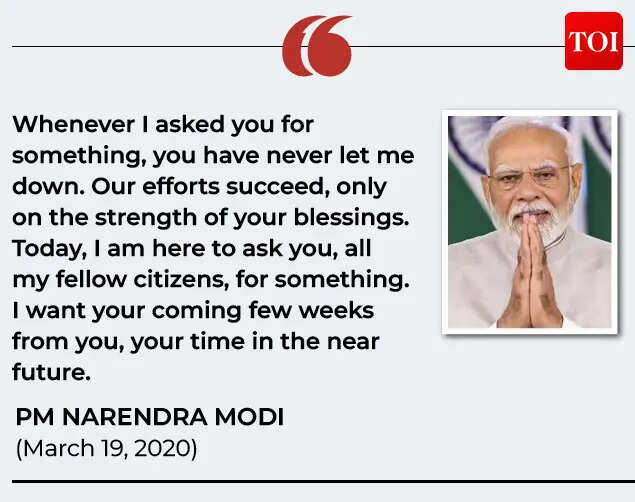
Behavioural governance works by making citizens feel like active participants in managing a national crisis rather than passive subjects of state control. Governments first shape public behaviour through emotion, symbolism and collective responsibility before enforcing stricter measures.The Covid-19 pandemic offered perhaps the clearest example of this strategy.Before the nationwide lockdown was announced, Prime Minister Narendra Modi appealed for a voluntary “Janta Curfew” on March 22, 2020. There was no immediate coercive enforcement attached to it. Yet millions across the country stayed indoors, roads emptied, markets shut and public life paused almost entirely.What made the appeal effective was not law, but psychological mobilisation.The language used during the period deliberately transformed ordinary citizens into participants in a national mission. PM Modi repeatedly framed the pandemic as a collective battle and citizens as “soldiers” fighting it together.A similar vocabulary is visible again in the current Gulf-linked economic stress. Speaking at a public event in Secunderabad, PM Modi argued that rising global energy prices and supply-chain disruptions required “collective restraint” and a “duty-first” approach from citizens, once again framing behavioural adjustment as part of a national response.“Crises are often partly psychological … economic crises are not only about material shortages; expectations matter enormously,” said Bhushan.

-

Can everyone equally participate in ‘national sacrifice’?

Behavioural governance works best when sacrifice appears collective. But in practice, the ability to participate in it is deeply unequal.The Covid experience exposed this divide sharply. While sections of the middle class shifted to online meetings, home offices and app-based services, millions of migrant workers and informal labourers faced immediate economic collapse once transportation systems shut down and work disappeared almost overnight.The migrant crisis during the lockdown became one of the starkest reminders of how unevenly national sacrifice is experienced. As cities closed and transport networks stopped, thousands of migrant workers were forced to walk hundreds of kilometres back to their villages, often without income, food or shelter. For many of them, “staying home” was never a realistic option because survival itself depended on physical mobility and daily wages.“Behavioural austerity has hard limits, we all know because of informality of the economy, like, a street vendor, factory worker, truck driver, or migrant labourer cannot easily ‘opt out’ of fuel dependence. So we still need to think and work towards energy security,” Bhushan said.

Crisis management or shifting responsibility?

Many argue that behavioural governance builds resilience during emergencies. Encouraging lower fuel consumption, restrained imports and moderated spending can genuinely reduce pressure on foreign exchange reserves during periods of global instability.Critics, however, ask where responsible citizenship ends and the shifting of state responsibility begins.Varahe rejected the argument that responsibility is being outsourced to citizens. “The state responsibility has not been ‘shifted’. While there has been a ‘call to action’ from the PM himself, the Government has introduced measures to increase duty on imported gold or cap import of duty free gold. Similarly, the petrol/diesel prices have been increased. There are likely going to be many other measures that the Government will take.He argued that the government is attempting to balance intervention with economic flexibility.“The line of thought is that the citizen should be pointed to ideal action, but not limited from making their own decisions.”Behavioural governance works because it turns citizens from passive recipients of policy into participants in crisis management. But it also raises a difficult question: how much of the burden of crisis should be absorbed by citizens themselves?That is why political language matters during uncertain times. When leaders begin speaking about discipline, restraint, conservation and sacrifice, they are also preparing society psychologically for the turbulence ahead.The speech becomes a policy instrument.And perhaps that is the real warning sign of a crisis – not when governments impose restrictions, but when they begin asking citizens to voluntarily change how they live.

Source link

BenQ MOBIUZ EX321UZ QD-OLED gaming monitor launched in India: Price, specifications and more

BenQ MOBIUZ EX321UZ QD-OLED gaming monitor launched in India: Price, specifications and more

BenQ India has launched MOBIUZ EX321UZ 31.5-inch 4th Gen QD-OLED gaming monitor for gamers, content creators and entertainment enthusiasts. Positioned as the world’s first game art monitor, the EX321UZ features BenQ’s next-generation technologies designed specifically for modern AAA and open-world gaming experiences.

BenQ MOBIUZ EX321UZ QD-OLED gaming monitor price and availability in India

BenQ MOBIUZ EX321UZ will be available in India from May 19 across leading online and offline channels at a special launch price of Rs 1,28,998.The monitor is powered by a 4th generation QD-OLED panel with an advanced 5-layer tandem structure for increased brightness, deeper blacks and better color purity. The company claims that this new panel architecture improves light efficiency and durability while maintaining the ultra-fast response and infinite contrast OLED technology. Combined with quantum dot color enhancement, the EX321UZ produces richer, more vibrant visuals with superior HDR performance. The EX321UZ features razor-sharp clarity and near-instant responsiveness for fluid gameplay with 4K UHD (3840×2160) resolution, 240Hz refresh rate, and 0.03ms GtG response time. Designed for both immersive story-driven games and high-performance gaming, the monitor supports AMD FreeSync Premium Pro and next-generation connectivity including DisplayPort 2.1a UHBR20 (80Gbps) and HDMI 2.1 with eARC support.

BenQ Smart Game Art Technology

It is an AI-powered color optimization system trained on the AAA game art database. Through BenQ’s Color Shuttle software, the monitor claims to intelligently detect game art styles and automatically apply optimized visual settings for genres ranging from realistic RPG to anime-inspired worlds.Additionally, the MOBIUZ EX321UZ features an advanced thermal design with BenQ’s proprietary Brightness Flow technology, which enables more stable brightness performance and efficient heat dissipation during extended gaming sessions. BenQ has also incorporated a newly developed reinforced surface coating that increases perceived black depth by up to 40%, while offering 3H hardness and up to 2.5x greater scratch resistance for improved panel protection and premium visual clarity. BenQ-exclusive technologies in EX321UZ:

  • Spectral color refinement for ultra-smooth color gradation and less color banding
  • High pixel contrast for enhanced shadow and highlight detail
  • 99% DCI-P3 color gamut with Delta E < 2 for studio-grade color accuracy
  • VESA DisplayHDR True Black 500 certification for exceptional HDR performance
  • Graphene Film OLED protection is backed by a comprehensive warranty

Other BenQ EX321UZ features:

  • USB-C with 90W Power Delivery
  • Smart KVM functionality
  • integrated remote controller
  • eARC support for premium soundbar connectivity
  • Ergonomic height, tilt and swivel adjustments

Key Specifications – BenQ MOBIUZ EX321UZ

  • 31.5” 4K UHD 3840×2160
  • Fourth generation tandem QD-OLED panel
  • 240Hz refresh rate
  • 0.03ms GTG response time
  • amd freesync premium pro
  • 99% DCI-P3 color gamut
  • VESA DisplayHDR True Black 500
  • DP 2.1A (80Gbps)
  • HDMI 2.1 with eARC
  • USB-C with 90W PD
  • smart kvm
  • remote controller included

Source link