

IPL 2026: MCC defends ‘obstructing the field’ call on Angkris Raghuvanshi. cricket news
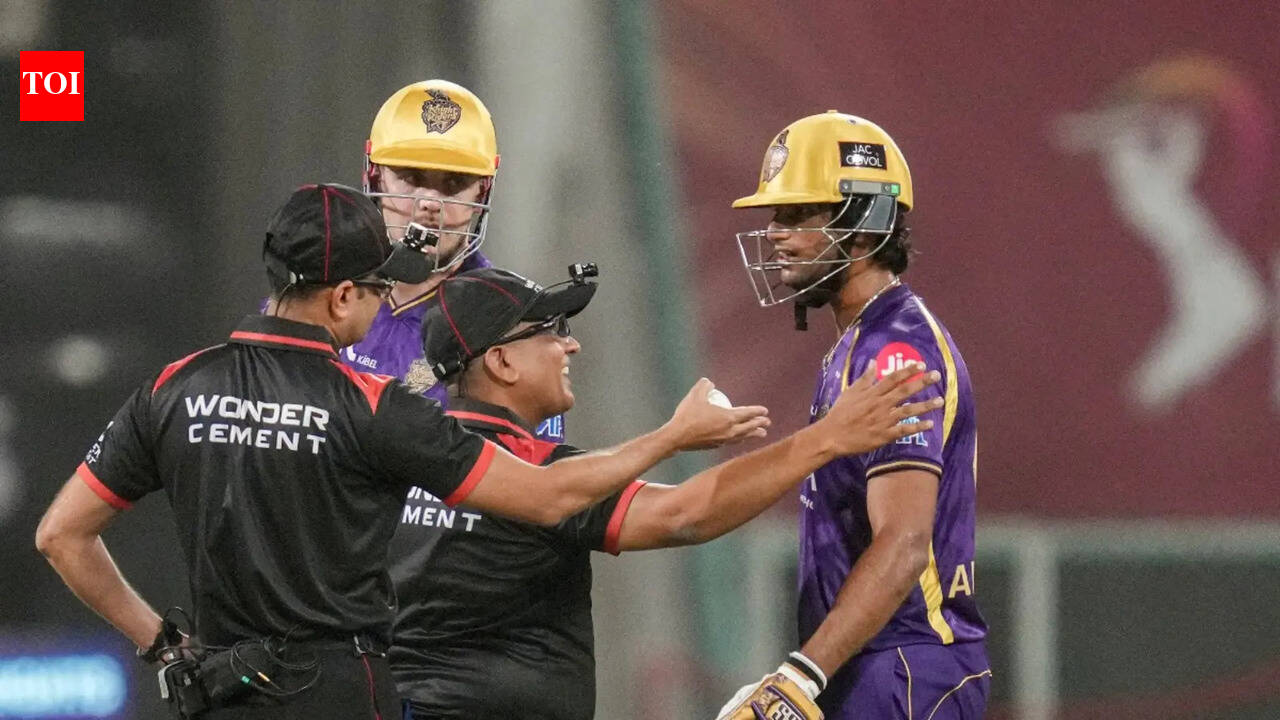
Mumbai: The prestigious Marylebone Cricket Club, which is the custodian of the rules of the game, on Thursday defended the controversial decision of the umpires to give out Kolkata Knight Riders batsman Angkrish Raghuvanshi for obstructing the field during a recent IPL 2026 match. The London-based club, which is headquartered at the historic Lord’s Cricket Ground, issued a ‘legal clarification’ regarding obstruction of the field, saying Raghuvanshi’s dismissal met the criteria that “a batsman who changes direction while running, particularly one who changes direction to run across the pitch, or takes any other route that would not be the fastest route to the other end, is acting knowingly.”Go beyond limits with our YouTube channel. Subscribe now!The controversial incident took place during KKR’s match against Lucknow Super Giants at the Ekana Stadium in Lucknow last Sunday. Raghuvanshi took a quick single and was sent back by her partner. He turned, dived to tighten his grip and was caught by the ball as the throw arrived. LSG’s fielders appealed, and on review, the third umpire, Rohan Pandit, gave him out. The pundit ruled that Raghuvanshi “changed his direction of motion” after seeing the ball thrown at him.
Explaining the law regarding ‘obstructing the field’, the MCC state that “Law 37.1.1 states that any batsman is out for obstructing the field if they “knowingly attempt to obstruct or distract the fielding side by word or action.” This means that the obstruction must have been deliberate, which can be difficult to determine. There has long been an interpretation on this exact matter, where the batsman is running as the throw arrives. – This is published in Tom Smith’s Cricket Umpiring and Scoring, the MCC’s official interpretation of the Laws of Cricket, and has been accepted for many years. It states: ‘A batsman who changes direction while running, especially one who changes direction in order to run onto the pitch, or takes any other path which would not be the fastest way to reach the other end, is acting deliberately.’The MCA said that the case for Raghuvanshi’s dismissal for ‘obstructing the field’ was made out in accordance with this law, as he had “deliberately” changed his direction from off-side to leg-side while running between the wickets. “Raghuvanshi clearly meets these criteria. When he comes out for his run, he is on the off side of the wicket. As the ball approaches the fielder, he runs down the middle of the pitch – which is not where he should be running in any situation – and then turns and runs back down the leg side, putting himself between the ball and the wicket. By definition, it is an intentional act. If he had stayed away from the pitch, on the off side, the ball would not have hit him and the question of obstruction would not have arisen. If he had started running towards the leg side, then turned and returned to his ground on the same side before being hit by the ball, he would also have been considered not out – he would have been in the way, but not intentionally. “Deliberate crossing of the pitch was what led to his collapse,” the MCC said.The MCC also clarified that dismissals for ‘obstructing the field’ do not take into account whether the batsman could have survived without any obstruction. The MCC statement concluded, “There has been some suggestion that Raghuvanshi should not have been given out because he would have made his ground even if the throw had not hit him. However, this is not a consideration. Provided that the obstruction was not to prevent the taking of a catch, whether dismissal was likely or not is not a criterion in obstructing the field.”