Fact Check: Is IShowSpeed ​​invited to Cristiano Ronaldo and Georgina Rodriguez’s wedding and planning a livestream? the truth came out

Fact Check: Is IShowSpeed ​​invited to Cristiano Ronaldo and Georgina Rodriguez's wedding and planning a livestream? the truth came out
A viral post claimed that IShowSpeed ​​was invited to Cristiano Ronaldo and Georgina Rodriguez’s wedding and would livestream it. This quote spread quickly but there was no official confirmation. The claim comes from a meme account using old photos. In fact, the couple is planning a private ceremony after the 2026 World Cup, and the earlier mention of Speed ​​was just a joke.

The rumor spread fast and loudly. A viral post claims that a popular streamer has received an invite to one of football’s most awaited weddings and will be livestreaming it. The quote fueling the discussion is as follows: “🚨 IShowSpeed ​​has confirmed that it has been invited Cristiano Ronaldo And Georgina Rodriguez’s wedding and it will be broadcast live.” At first glance it seemed credible. big name. Big promotion. But the story does not stop here. There is no verified confirmation from anyone involved. No official statement. No reliable source. What exists instead is a familiar pattern in the age of social media, where recycled jokes and edited scenes are dressed up as breaking news. This time, it shocked millions of people.

The truth behind iShowSpeed’s viral claim of attending a wedding ronaldowedding of

The claim is false. This comes from a football meme account known for making fun of things, not reporting on them. The pictures in the post are old and have nothing to do with any upcoming event. They were put together in such a way that a believable but false story was created.Cristiano Ronaldo and Georgina Rodriguez are actually engaged; They got engaged in August 2025. From the viral post it seems their plans are more public than they realize.The couple plan to hold a private ceremony in Portugal after the World Cup in 2026. It should be private, well-planned, and away from the noise of constant media attention.IShowSpeed’s connection to the story comes from a funny moment that happened months ago. In a live stream in November 2025, he jokingly asked for an invitation. That moment was funny, not prophetic. No news was received due to lack of invitation.This episode draws attention to a problem that is getting worse in digital culture. The line between news and entertainment is becoming less clear. Speed, not accuracy, is what makes viral posts work. Fans often share things before they’ve even been verified, which helps these types of claims spread quickly.It is easy for readers to understand the main point. Stop and think before you believe. Look at the source. If a story seems like it is, it is usually too accurate or too dramatic. There is no livestream, no confirmed guest list and no public events planned. A private party is about to take place, far away from the imagination of the Internet.

Source link

‘We were surprised’: Trump reacts to Iran attacking US Gulf allies – Was there any warning beforehand?

'We were surprised': Trump reacts to Iran attacking US Gulf allies - Was there any warning beforehand?

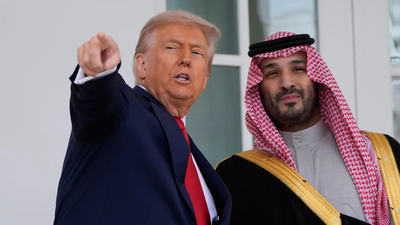
US President Donald Trump said on Monday he was “shocked” by Iran’s decision to attack US allies in the Gulf region, while US officials and intelligence sources indicated that such retaliation was expected before the conflict began, according to Reuters. The comments come as the US-Israeli war over Iran enters its third week, with hostilities expanding beyond the initial target to engulf major parts of the Middle East. Iranian drone and missile attacks have increasingly targeted US military bases and allied infrastructure across the Gulf, raising concerns of escalating broader regional tensions.

Trump declares ‘victory’ in Iran conflict as US military faces risky path to end war

“They (Iran) should not have gone after all these countries in the Middle East,” Trump said. “Nobody expected this. We were surprised.” He later repeated the claim, saying: “No one, no one, no, no, no. The biggest experts, no one thought they were going to be hit.” His comments come amid growing scrutiny over whether Washington adequately assessed the risks of retaliation before Israel launched the strikes on Iran on February 28. The growing scope of attacks, including civilian and energy infrastructure, has raised questions over the trajectory of the conflict and its global impacts.

voting

What is your biggest concern regarding the escalation of the conflict?

Intelligence had flagged the risk of widespread retaliation

However, a US official and multiple sources familiar with the intelligence assessment told Reuters that an Iranian response, including attacks on countries such as the United Arab Emirates, Qatar, Saudi Arabia, Bahrain and Kuwait, was considered a likely outcome.Pre-war assessments did not say retaliation was certain, but it was “on the list of possible outcomes”, one source said. Officials also said Trump was told that attacking Iran could trigger a broader regional conflict, especially if Tehran perceives Gulf states as supporting US operations.He further indicated that Washington had been warned that Iran might attempt to close the Strait of Hormuz. Rockets and at least five drones targeted the US embassy in Baghdad early Tuesday in what Iraqi sources described as the most intense attack since the war began. No injuries were reported by US officials.Iran also launched missile attacks on Israel overnight, while the Israeli military said it was targeting “Iranian regime infrastructure” in Tehran and Hezbollah-linked sites in Beirut.

disruption in the strait of hormuz impact on global markets

The conflict has severely disrupted shipping through the Strait of Hormuz, which carries about 20% of global oil and liquefied natural gas supplies. Iran has effectively blocked most traffic through the route using drones and naval mines. Oil prices rose more than 5% on Tuesday amid supply concerns, with the market reacting to prolonged disruptions and rising geopolitical risks. Analysts warned of potential inflationary pressures and slower global growth.

Debate on the propriety of war

The intelligence revelations have also raised questions about the propriety of US involvement in Israel’s military operation against Iran on February 28. Some Democratic lawmakers said the briefing provided no evidence of an imminent threat that would require immediate military action.The White House and the Office of the Director of National Intelligence did not immediately comment on the intelligence assessment, Reuters reported.

war toll grows

According to Iranian Foreign Minister Abbas Aragachi, at least 2,000 people have been killed across the region in the conflict, including more than 200 Iranian children.

Source link

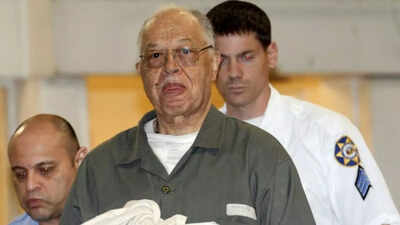
How to get away with murder: The writer who was caught poisoning her husband. world News

How to get away with murder: The writer who was caught poisoning her husband

If this sounds like a Netflix true-crime pitch, that’s because it almost writes itself. A husband dies suddenly. A grieving wife appears on TV. She writes a children’s book about loss, and tells children that dead people never really go away. America nodded. The story seems neat, sad, even a little inspirational.And then the ending changes.A Utah jury has now convicted Kauri Richins of murdering her husband, turning what seemed like a sad tale into something even darker, almost dramatic in its deceitfulness.

What happened

कोउरी रिचिन्स ने एक पेय में फेंटेनल मिलाया था<br />” msid=”129627731″ width=”” title=”” placeholdersrc=”https://static.toiimg.com/photo/83033472.cms” imgsize=”23456″ resizemode=”4″ offsetvertical=”0″ placeholdersmsid=”” type=”thumb” class=”” src=”https://static.toiimg.com/photo/imgsize-23456,msid-129627731/kouri-richins-had-spiked-a-drink-with-fentanylbr.jpg” data-api-prerender=”true”/></div>
</div>
<p> <span class=Eric Richins died in March 2022 after taking a fatal dose of fentanyl. At the time, it seemed sudden, unexplained, the kind of death that leaves behind questions but no immediate answers.Prosecutors later argued that those answers were not accidental. He said that Kauri Richins had spiked the drink with fentanyl and that this was not a one-time incident but was part of a scheme that had been tried before.The jury did not take long to decide. He was found guilty of aggravated murder along with several related charges, including attempted murder, insurance fraud and forgery. The punishment he has to face now may keep him behind bars for the rest of his life.

running news

Take away the headlines and it comes down to three things: money, message and style.Prosecutors painted a picture of a woman under financial pressure, taking out loans from real estate deals to pay for insurance payments and profit from her husband’s estate. That motive provided the engine for the story.Then the messages came. The texts and evidence show that while she wanted out of the marriage, she had already begun to imagine a life without him.And finally, the method. Investigators discovered how the fentanyl was obtained, how the searches were made, how a pattern began to form. The story became complicated piece by piece.The defense tried to loosen this by suggesting suspicions increased the likelihood of an accident. But without a strong counter-story, the prosecution’s version stood.

why it matters

दु:ख पर बनी सार्वजनिक छवि फैसले के तहत ढह जाती है।

” msid=”129627748″ width=”” title=”” placeholdersrc=”https://static.toiimg.com/photo/83033472.cms” imgsize=”23456″ resizemode=”4″ offsetvertical=”0″ placeholdersmsid=”” type=”thumb” class=”” src=”https://static.toiimg.com/photo/imgsize-23456,msid-129627748/a-public-image-built-on-grief-collapses-under-a-verdict-brbr.jpg” data-api-prerender=”true”/></div>
</div>
<p> <span class=Because it was never just one murder case. This was a story that was already sold.After her husband’s death, Richins wrote the children’s book Are You With Me? Wrote, which made the sorrow soft and digestible. It told children that loved ones never really leave, they are always there in small ways. It was marketed as an attempt by a mother to help her children cope.That description itself makes the case unrealistic. The same person accused of causing harm was narrating it, packaging it and explaining its meaning.This is the kind of twist that would seem very strange in the imagination.

big picture

This is where the matter moves away from crime and closer to theatre.For a while, the book was the story. The grieving widow, the healing words, the quiet dignity of loss. It played well. It seemed credible.The decision flips the script. Suddenly, the same lines start sounding different. What used to read as comfort now takes on an edge. What looked like sadness begins to look like a performance.There’s something almost Shakespearean about it. A character steps forward, gives a moving speech, reassures the audience, and only later is the truth of the plot revealed. Not just tragedy, but betrayal wrapped in tragedy.And yet, beneath the drama, the motif is almost depressingly common. Wealth. loan. Heritage. The oldest reasons in the book are hidden behind a new, more sophisticated narrative.This is what keeps the matter stuck. Not just the crime, but also the audacity of the story related to it. A children’s book about loss becomes part of a murder trial. The public image built on grief collapses under one judgment.The story that once consoled now unsettles.And this is the turn no one saw coming.

Source link

Saudi Arabia: Saudi News: 13,500-year-old settlement found in Nafud desert, 190 km trade link surprises archaeologists. world News

Saudi News: 13,500 year old settlement found in Nefud desert, 190 km trade relations surprised archaeologists
13,500-year-old ancient settlement found, advanced tools and trade networks revealed / Image: File

saudi arabiaThe Royal Commission for AlUla (RCU) has announced an unprecedented archaeological discovery that pushes back the timeline of human history in the Arabian Peninsula. Deep in the rugged landscapes of AlUla, researchers discovered evidence of human habitation dating back 13,500 years. The discovery proves that the region was not just a barren desert, but a thriving home to hunter-gatherer communities long before the rise of the world’s most famous ancient civilizations.

Exploration in the Arnan-al-Misma area revealed

What has really surprised archaeologists is not just the age of the site, but the level of organization it reveals. The find included finely crafted stone tools such as bladelets associated with structured hunting practices, indicating that this was not a temporary camp but part of a developing human system. The stability of tool-making techniques and the presence of multiple activity layers suggest a community that understood its environment and adapted to it over time. Rather than scattered nomads, the inhabitants represent an early form of desert society, capable of planning, resource management, and possibly seasonal settlement patterns, an important step toward organized civilization in Arabia.

13,500 to 8,700 years ago

The site’s timeline adds another layer of importance. The earliest phase dates back to about 13,500 years ago, but evidence suggests that humans either returned or remained in the area for thousands of years later, with the second major phase occurring between 10,300 and 8,700 years ago. This continuity suggests that northern Arabia was not habitable for short periods of time, but supported human life under changing climatic conditions. Over time, tool technology developed, and the density of artifacts increased, pointing to increasing populations and more stable settlement behavior. This long period of occupation strengthens the argument that Arabia played a continuing role in early human development.

190 km trade route

One of the most surprising findings is the discovery of obsidian and other materials originating from sources up to 190 kilometers away, possibly from volcanic areas such as Khyber. This suggests that early inhabitants either traveled vast distances or participated in primitive exchange networks. This type of movement challenges the idea of ​​isolated desert groups and instead presents a picture of interconnected communities. In this context, the Arabian Peninsula emerges as a major migration and connectivity region linking Africa, Asia and the Levant. This reinforces the theory that early humans did not avoid Arabia, but actively moved there and settled in it.

Ancient Natufian culture

Tools discovered at the site show similarities to tools associated with the Natufian culture, a prehistoric society known for an early sedentary lifestyle in the Levant region. This relationship suggests that northern Saudi Arabia was not culturally isolated but was part of a broader prehistoric network. The exchange of techniques and styles reflects interaction or shared knowledge across different regions, highlighting the Arab role in the larger story of human transition from nomadic hunting to more settled ways of life. This points to the early formation of cultural identities that extended beyond geographical boundaries.

Rewriting Saudi archeology

The discovery is now forcing archaeologists to massively rethink the way they understand Saudi Arabia’s history. For decades, much of the Arabian Peninsula was viewed as a marginal region in early human history, largely ignored due to its harsh climate. However, findings like these are changing that narrative. The evidence clearly shows that Arabia was not an empty desert, but a rich and dynamic landscape that supported human life, innovation, and movement for thousands of years. This positions Saudi Arabia as a central rather than peripheral piece of the human development puzzle.

Why does this finding matter?

Beyond regional significance, the site has global implications. It reshapes the timeline of human migration, challenges assumptions about the existence of early societies, and sheds light on human adaptability to extreme environments. As experts explore more sites in northern Saudi Arabia, they believe even older and more complex evidence may emerge. This discovery isn’t just about the past – it’s opening a new chapter in understanding how humans spread across continents and laid the foundation for civilization.

Source link

Mojtaba Khamenei: Where is Iran’s new supreme leader? How Mojtaba Khamenei survived the ‘Blue Sparrow’ attack that killed his father

Where is Iran's new supreme leader? How Mojtaba Khamenei survived the 'Blue Sparrow' attack that killed his father
Mojtaba Khamenei (ANI image)

Iran’s new supreme leader Mojtaba Khamenei survived a deadly airstrike that targeted his family and top members of the Islamic republic’s leadership. According to an audio obtained by The Telegraph, Mojtaba Khamenei was targeted in the same attack that killed his father and Iran’s late supreme leader Ayatollah Khamenei and other members of the Islamic Republic’s leadership.

‘Activate all fronts now’: Hamas’s secret letter to Mojtaba Khamenei calls for all-out war?

Mojtaba had gone out for a walk in the garden of his father’s compound just minutes before his residence was struck by Israeli Blue Sparrow ballistic missiles on 28 February. Due to his brief absence from the building, Mojtaba’s life was saved, with only a minor injury to his leg.

voting

Should foreign intervention be considered after such air strikes?

The audio was recorded on March 12 during an address delivered by Mazaher Hosseini, the protocol chief of Ali Khamenei’s office, to senior clerics and Islamic Revolutionary Guard Corps (IRGC) commanders.Click here for live updates of the war It provides the first detailed account of what happened inside the supreme leader’s compound during the strike. Hosseini revealed that Mojtaba’s wife, Zahra Haddad-Adel, and their son Bagher were killed in the attack. According to Hosseini, the body of Mohammad Shirazi, head of Khamenei’s military bureau, was “cut into pieces”. According to him, the aim of this attack was to wipe out the entire Khamenei family. Mojtaba lived in the same compound as his father, which also contained a religious hall where Ali Khamenei gave speeches and residences for other children. Hosseini said the missiles hit several locations simultaneously, some of which were aimed directly at the supreme leader’s residence.Hosseini was heard saying in the audio, “God willed that Mojtaba had to go out into the yard to do something and then come back. He was outside and going upstairs when they hit the building with a missile. His wife, Ms. Haddad, was martyred instantly.” His brother Mustafa Khamenei and his wife were in another residence nearby when it was also attacked; Dust and debris partially protected them, causing no harm.In addition to Ali Khamenei, the attack also killed senior officials including Mohammad Pakpour, the IRGC chief, and Iran’s Defense Minister Aziz Nasirzadeh, who had gathered for a meeting inside the compound. Hosseini said the attack on Mohammad Shirazi was aimed at disrupting succession planning, as Shirazi was a key link between Iran’s military command and the supreme leader. “The enemies knew that, while killing the supreme leader, kill him also because they knew that he would replace those killed, and when the new [commanders] If introduced, they could get a chance [influence] Rioters and infiltrators and do something. “He was dismembered – they didn’t find anything on him, and in the end they found a few kilos of meat and identified it as his body,” Hosseini said.The missiles also hit Mojtaba’s upper floor residence, Misbah’s house and the residence of Mustafa and his wife.The audio comes amid speculation over Mojtaba Khamenei’s injuries and ability to lead. Earlier, several media reports had claimed that Mojtaba was in a coma after being seriously injured in the air strike.An Iranian official told The Telegraph that military commanders had no information about their current situation. “Mojtaba was selected, but it is against the wishes of the Supreme Leader and perhaps even against his own wishes. We have not heard anything from him yet.” Mojtaba first came to public attention at the age of 17 when he disappeared for a week in March 1985 while serving on the front lines of the Iraq–Iran War.IRGC commanders initially considered him inexperienced, although he survived the conflict.None of Ali Khamenei’s other children have appeared in public since the attack and Mojtaba’s only communication has come through a written message read on state television.

Source link

Iran war impact: Sri Lanka reduces week to 4 days to conserve fuel

Iran war impact: Sri Lanka reduces week to 4 days to conserve fuel
Representative Image (AI-Generated)

Amid the ongoing crisis in the Middle East, Sri Lanka has declared every Wednesday a public holiday to conserve fuel as the island nation grapples with possible shortages following the US and Israel’s war with Iran.“We must prepare for the worst, but hope for the best,” President Anura Kumara Dissanayake said in an emergency meeting with senior officials on Monday. The announcement comes as part of a series of precautionary measures implemented by several Asian countries since the outbreak of the conflict.The war has disrupted the flow of oil through the Strait of Hormuz, a vital route that moves millions of barrels of oil from the Gulf to global markets. About 90% of that oil and gas was bound for Asia, the world’s largest oil-importing region.Other Asian countries have also initiated reciprocal measures to deal with the growing energy crisis. In Thailand, officials are urging citizens to swap formal suits for short-sleeved shirts to reduce reliance on air conditioning. Myanmar has restricted private vehicle use to alternate days based on license plate numbers, the BBC reports. Bangladesh has declared university holidays during Ramzan and implemented planned blackouts to save electricity. In the Philippines, some government offices require employees to work from home at least one day a week and President Ferdinand Marcos Jr. has banned non-essential public sector travel. Vietnam is encouraging citizens to stay home, use bicycles, carpool or rely on public transportation, while restricting unnecessary vehicle use.In Sri Lanka, the new public holiday impacts not only government offices but also schools and universities. Essential services, including health and immigration authorities, will remain operational. To prevent three consecutive days of closure in government offices, officials chose Wednesday as a holiday.Additionally, motorists are now required to register for the National Fuel Pass, which regulates fuel purchases. The quota allows 15 liters for private cars and five liters for motorcycles. The rationing system was first introduced in 2022 during Sri Lanka’s worst economic crisis, when the country ran out of foreign reserves and struggled to import essential goods, including fuel.Since the US and Israel launched attacks on Iran late last month, global oil prices have surged to nearly $100 a barrel. The war has raised fears of disruption to regional supplies, prompting countries across Asia to implement various measures to deal with the crisis.

Source link

Why might Trump have difficulty reopening the Strait of Hormuz?

Why might Trump have difficulty reopening the Strait of Hormuz?
A fuel tanker vehicle destroyed in US-Israeli strikes in Tehran

US President Donald Trump has sought help from allies to reopen the Strait of Hormuz. But even if it can form a large coalition, ending the Iran blockade may prove very difficult.Iran is located on one side of the narrow strait and has responded to the US-Israeli attack by using drones, missiles and mines to render the vital waterway unsafe.Why cut the strait now?The threat to the strait had been expressed many times before, when a commander of Iran’s Islamic Revolutionary Guard Corps (IRGC) warned in 2011 that cutting the strait would be “easier than drinking a glass of water”. Analysts have always considered closing the strait as a last resort because the move has the potential for retaliation against its own energy sector. The assassination of Iran’s supreme leader has changed that equation. Iranian officials describe the war as existential.

.

.

Why is it so difficult to secure?The Strait of Hormuz is a narrow passage of water between Iran and Oman. According to shipping broker SSY Global, shipping lanes are only two nautical miles wide and ships must turn in front of Iranian islands and a mountainous coast that provides cover to Iranian forces. Iran’s conventional navy has been largely destroyed, but the IRGC still has plenty of options, including fast-attack craft, mini-submarines, mines and even explosives-laden jet skis, said Tom Sharp, a retired Royal Navy commander. According to the Center for Information Resilience, a research group, Tehran has the capacity to produce about 10,000 drones per month.Sharp said it would be possible to escort three or four ships a day through the strait using seven or eight destroyers providing air cover, but doing so for months would require more resources. Adel Bakawan, director of the European Institute for Middle East and North African Studies, said even if Iran’s ability to deploy ballistic missiles, drones and floating mines was destroyed, ships would still face a threat from suicide missions.

.

.

What does Trump want?Trump said Sunday he expected many countries to send warships and demanded they do so, adding that his administration was in contact with seven countries for help. The move came a week after he ordered the US International Development Finance Corporation to provide insurance and guarantees for shipping companies.What are other chokepoints?Yemen’s Houthis, a group allied with Iran but with little military arsenal, have blocked most traffic passing through the Red Sea for more than two years despite US and EU naval efforts. Most shipping companies still use the much longer route via the southern tip of Africa. EU-led forces have been more successful in countering piracy off the coast of Somalia, but against far less well-equipped forces than the IRGC.Are there any alternatives?The United Arab Emirates and Saudi Arabia have tried to find ways to bypass the strait by building more oil pipelines. But they are not currently operational and the 2019 attack on an east-west Saudi pipeline by the Houthi militia showed that even those options were weak. (This is a Reuters story)

Source link

Pakistan air strike on Afghanistan: Kabul drug rehabilitation center attacked, 400 killed; Pakistan says military infrastructure was targeted – 10 things to know

Pakistan air strike on Afghanistan: Kabul drug rehabilitation center attacked, 400 killed; Pakistan says military infrastructure was targeted - 10 things to know

At least 400 people were killed and about 250 were injured after an air strike by Pakistan A drug rehabilitation hospital was attacked late Monday night in Kabul, the capital of Afghanistan.Officials in Kabul said the attack hit a large rehabilitation facility around 9 p.m. local time and destroyed significant parts of the 2,000-bed complex, causing a massive fire and forcing rescue workers to comb through debris searching for survivors.According to security sources, the attack was reportedly carried out under the code name Operation Ghazab Lil-Haq. Afghan officials have accused Pakistan of attacking the hospital. Islamabad insists that its forces carried out precision air strikes against terrorist infrastructure and military installations linked to groups it says are responsible for attacks inside Pakistan.Here are 10 things to know about the latest tensions between Pakistan and Afghanistan:

voting

What should be the priority of Afghanistan and Pakistan to reduce tension?

Afghanistan has accused Pakistan of attacking Kabul hospital

from afghanistan Taliban The airstrike hit a drug rehabilitation hospital in Kabul, killing hundreds of people, many of whom were patients being treated at the hospital, authorities said.Deputy government spokesman Hamdullah Fitrat said the attack caused widespread destruction throughout the complex and that the number of casualties was rising as rescue teams searched the debris. He said that the rescue work is currently going on. Videos broadcast on social media and local television showed plumes of smoke rising from the complex as rescue teams carried out the operation.Taliban spokesman Zabiullah Mujahid condemned the attack, calling it a violation of humanitarian principles and accused Pakistan of deliberately targeting civilian sites.Read this also Taliban claims, 400 people killed, 250 injured in Pakistani air strikes on Kabul hospital He said most of those killed and injured were hospital patients being treated and described the incident as a “crime against humanity”.“We strongly condemn this crime and consider such acts to be against all accepted principles and a crime against humanity,” he wrote in a post on Twitter.

Pakistan rejects allegations of civilian casualties

According to the Dawn newspaper, Pakistan has denied targeting any civilian facilities in Kabul and said the airstrikes were aimed at terrorist infrastructure used by groups carrying out cross-border attacks against Pakistani forces and civilians.Pakistan’s Information Minister Ataullah Tarar said the military carried out “precision air strikes” on technical support infrastructure and ammunition storage facilities located in Kabul and eastern Afghanistan.Read this also Watch: Flames, huge plume of smoke seen after Pakistan airstrike on Kabul hospital, in which 400 people died“All targets have been hit with pinpoint accuracy only on infrastructure that is being used by the Afghan Taliban regime to support its many terrorist proxies,” he wrote in a post on Twitter.According to Pakistani officials, the targeted sites were being used by terrorist networks allegedly supported by the Afghan Taliban to plan attacks against Pakistan.

.

.

Meanwhile, the Prime Minister’s spokesperson… Shahbaz SharifMosharraf Zaidi rejected the allegations as baseless and said that no hospital was targeted in Kabul.According to AFP, officials in Islamabad also stressed that the attacks were carefully planned to avoid civilian casualties and accused the Taliban administration of spreading misinformation to divert attention from its alleged support of terrorist groups operating near the border.

Operation Ghazab Lil-Haq behind latest attacks

Security sources in Pakistan said the attacks were carried out as part of Operation Ghazab Lil-Haq, which was launched in late February to end what Islamabad described as unprovoked firing by Afghan Taliban fighters from across the border.According to Pakistani officials, the operation included coordinated air strikes targeting logistics infrastructure, drone assembly workshops and weapons storage facilities associated with terrorist groups.

Views shared on X

During Monday night’s attacks, Pakistani forces reportedly targeted several sites in Kabul as well as Nangarhar province in eastern Afghanistan.According to Dawn, security sources said that several military installations and technical support facilities used by the terrorists were destroyed in the operation, while drone assembly workshops and weapons stores were also affected.

Cross-border conflict enters third week

The latest attack came hours after Afghan officials said the two countries exchanged fire along their shared border, killing at least four people in Afghanistan.The clashes are part of a broader conflict that began on February 26 and has steadily escalated over the past three weeks.The confrontation began after Afghanistan launched cross-border attacks in response to earlier Pakistani air strikes, which Kabul said had killed civilians inside Afghanistan. The clashes also disrupted a ceasefire brokered by Qatar last year after earlier fighting between the two sides.Since then, the two countries have exchanged artillery fire, airstrikes and drone attacks along the border, raising fears of a wider confrontation between the neighboring countries.

Conflicting claims on casualties and attacks

Pakistan and Afghanistan have released completely different casualty figures during the ongoing conflict.Pakistani officials say their forces have killed hundreds of Afghan Taliban fighters during recent operations. However, Afghan officials dispute those numbers and claim that Pakistani forces suffered heavy losses.Pakistan’s leadership has also accused the Taliban administration of allowing terrorist groups to operate from Afghan territory.Officials in Islamabad say these groups, particularly Tehreek-e-Taliban Pakistan, have carried out repeated attacks inside Pakistan targeting security forces and civilians.

Pakistan says Taliban has crossed ‘red line’

Pakistan President Asif Ali Zardari accused Afghanistan’s Taliban administration of crossing the ‘red line’ by deploying drones, which left several civilians injured inside Pakistan last week.Islamabad says the attacks prompted further military operations to target terrorist infrastructure across the border.Afghanistan’s Taliban government has repeatedly denied the allegations and said it does not allow any group to use Afghan territory to launch attacks against other countries.

Pakistan rejects Taliban claims as ‘misreporting of facts’

Pakistan’s Information Ministry also rejected claims that a drug rehabilitation hospital was targeted.“The claims of this discredited so-called spokesperson of the Taliban regime are yet another misreporting of facts aimed at misleading public opinion,” the ministry said in a post on Twitter.It said: “On the night of March 16, Pakistan targeted military installations and terrorist support infrastructure, including technical equipment storage and ammunition storage, of the Afghan Taliban and Fitnah al Khawarij in Kabul and Nangarhar, which were being used against innocent Pakistani civilians. The post-strike explosion of stored ammunition being used by the master terror proxy also completely refutes the fake claim.“The targeting of Pakistan has been done precisely and carefully to ensure that no collateral damage is caused. This misreporting of facts attempts to inflame emotions while covering up illegitimate support to cross-border terrorism. The statement is rejected as being false and misleading.”

Pakistan has refused to reject China’s mediation offer.

Pakistan’s Foreign Office also rejected reports that it had rejected China’s mediation efforts aimed at reducing tensions with Afghanistan.Foreign Office spokesman Tahir Andrabi said such claims were baseless.“Pakistan and China remain trusted partners and close friends, and both maintain regular and close communications on all issues of mutual concern and shared interest.“Therefore, any unnecessary speculation or fabrication of facts in this regard is unwarranted,” he said.China urged both sides to return to talksChina has called on both countries to avoid further tensions and resume talks.Chinese Foreign Ministry spokesperson Lin Jian said that preventing the conflict from escalating is the most important priority.“The most urgent task is to stop the expansion of the war and bring the two countries back to the negotiating table as soon as possible,” he said.“China is willing to continue efforts to achieve reconciliation and ease relations between Afghanistan and Pakistan,” he said.

Security concerns have increased across the region

The escalating conflict has raised international concern as the Afghanistan-Pakistan border region has historically been a hotbed of terrorist activity.The UN Security Council recently called on Taliban officials in Afghanistan to step up counter-terrorism efforts and condemned terrorist activity across the region.The council also extended the mandate of the United Nations Assistance Mission in Afghanistan by three months as tensions between the two countries continue to rise.The International Human Rights Foundation also condemned the strike. The organization called for an “independent investigation” into the incident in a statement. Meanwhile, in a separate incident, at least two people were abducted and later killed in Khyber Pakhtunkhwa’s Bannu district, according to Dawn.

Source link

‘Trying to create discrimination’: JD Vance backtracks on questions over differences with Trump on Iran

'Trying to create discrimination': JD Vance backtracks on questions over differences with Trump on Iran
President Donald Trump smiles during a speech by Vice President J.D. Vance in the Oval Office of the White House on Monday, March 16, 2026, in Washington. (AP Photo/Julia Demri Nikhinson)

US Vice President JD Vance on Monday (US local time) protested against attempts to “sow a feud” between himself and the President. donald trump On the war in the Middle East.He stressed that members of the Trump administration are in “complete harmony” on foreign policy.Vance’s relative silence during the ongoing conflict, as well as his previous comments opposing military action in the Middle East, had begun speculation that he and Trump were not on the same page.Read this also US-Israel war with Iran: Where is JD Vance? The strange case of the ‘missing’ Vice PresidentHe told reporters at the White House with Trump, “You are trying to create a rift between members of the administration, between me and the president. What the president has said consistently since 2015 — and I agree with him — is that Iran should not have nuclear weapons.”According to CNN, when asked if he had any reservations about US involvement in the war with Iran, Vance reiterated his support and said he had confidence in Trump “to get the job done.”Read this also Was JD Vance hesitant on Iran attack? Trump reveals VP’s stanceHe noted the difference between the current commander-in-chief and his predecessors, saying, “We have a smart president, whereas in the past we have had dumb presidents. I have confidence in President Trump to get the job done, do good for the American people and ensure that the mistakes of the past are not repeated.”Vance’s prior stance on US involvement in foreign conflictsBefore joining the administration he had expressed skepticism about America’s involvement in foreign conflicts. In a 2023 op-ed he wrote that Trump’s success was partly due to “avoiding wars”.In 2024, Vance also said that war with Iran would not serve American interests and would be “a huge diversion of resources.”The Marine Corps veteran previously warned about the risks of “escalation” in 2020 following the killing of Iranian commander Qassem Soleimani during Trump’s first term. He also privately expressed skepticism about US attacks on Yemen’s Houthi rebels, according to private messages revealed during “Signal-gate” last year.Meanwhile, CNN quoted US Central Command spokesperson Timothy Hawkins as saying that about 200 US soldiers have been injured in seven Gulf countries during the ongoing military operation against Iran.Most injuries were minor, with more than 180 service members already returning to duty.So far, 13 US service members have been killed in action, CNN reports.(With ANI inputs)

Source link

Morocco’s King Mohammed VI leads emotional Laylat al-Qadr prayers at the Royal Palace in Rabat

Morocco's King Mohammed VI leads emotional Laylat al-Qadr prayers at the Royal Palace in Rabat
Spiritual Laylat ul Qadr vigil led by King Mohammed VI held at Morocco’s Royal Palace

The holy night of Laylat al-Qadr, considered the holiest night in the Islamic calendar, was marked with deep spiritual devotion in Rabat as Morocco’s King Mohammed VI presided over a solemn religious vigil at the Royal Palace. The event brought together members of the royal family, senior religious scholars, government officials and diplomats to celebrate the Night of Power during the final days of the holy month of Ramadan.The vigil reflects Morocco’s long-standing tradition of celebrating Laylat al Qadr with royal participation. As the “Commander of the Faithful”, a title historically held by Moroccan monarchs, King Mohammed VI plays a central role in leading religious observances and promoting Islamic scholarship throughout the country.

Moroccan royal family attends holy vigil on Laylat ul Qadr

During the ceremony, the king was accompanied by several prominent members of the Moroccan royal family, including Moulay Hassan, Moulay Rachid and Prince Moulay Ahmed. Their presence highlighted the symbolic unity between the Moroccan monarchy and the country’s religious traditions.The vigil began after Isha and Taraweeh prayers and included recitation of holy scriptures and religious readings by leading Islamic scholars. One of the central moments of the ceremony was the formal conclusion of the recitation of the canonical hadith collection Sahih al-Bukhari, an important tradition in Moroccan religious celebrations marking the end of Ramadan. The recitation was led by respected Moroccan scholars, who also offered prayers seeking divine blessings for the Moroccan nation and its leadership.

recognition of Quran Scholars and students on Laylat ul Qadr

A major highlight of the Laylat Al Qadr vigil was the presentation of awards honoring outstanding contributors to Quranic scholarship and religious education.King Mohammed VI personally honored young Moroccan Quran memorizer Zaid Al Bakkali, a 10-year-old student from Sale who demonstrated extraordinary dedication in memorizing the Holy Quran. This recognition underscores Morocco’s efforts to encourage Islamic education among the younger generation and preserve traditional scholarship.Several prestigious national awards were also presented during the ceremony, including the Mohammed VI Award for Quranic Schools and the Mohammed VI Award for Ahl al-Qur’an and Ahl al-Hadith. Scholars and religious teachers from cities across Morocco were recognized for their contributions to Islamic education, mosque leadership, and Quran recitation. These awards reflect the Moroccan monarchy’s ongoing initiatives to support religious scholarship and maintain Morocco’s reputation as a center of liberal Islamic thought.

Laylat ul Qadr: The Most Holy Night islam

Laylat al-Qadr, often translated as “Night of Power” or “Night of Fate”, is widely believed by Muslims to commemorate the night when the first verses of the Quran were revealed to the Prophet Muhammad in the Cave of Hira near Mecca. The Quran describes the night as “better than a thousand months”, meaning that an act of worship performed during Laylat al-Qadr brings immense spiritual reward. Since the exact date of the night is not known with certainty, Muslims usually look for it during the odd-numbered nights of the last ten days of Ramadan.Across the Muslim world, millions of worshipers spend the night in prayer, reciting the Quran and praying in the hope of receiving forgiveness and blessings. In Morocco, the night also has deep cultural significance. Families often celebrate babies who complete their first fast during Ramadan by dressing them in traditional attire and marking the moment with special meals and family gatherings.

Morocco’s Unique Ramadan Traditions

The observance of Laylat al-Qadr in Morocco blends religious devotion with cultural celebration. Children often wear traditional clothes such as jellaba, while girls may have henna designs on their hands. Some families also hold symbolic ceremonies where children are dressed up like the bride or groom as part of the festivities.These traditions highlight the festive and communal spirit associated with the intense spiritual observance of Ramadan in Moroccan society. The royal vigil in Rabat therefore contains both religious and national symbolism, reinforcing Morocco’s identity as a country where the monarchy plays an active role in preserving Islamic traditions. A large gathering of dignitaries, including senior government ministers, parliamentary leaders, royal advisors, high-ranking military officers and members of the diplomatic corps representing several Islamic countries, took place at the Royal Palace under the watch of Lailat ul Qadr. Their participation reflected Morocco’s diplomatic and cultural relations with Muslim-majority countries and emphasized the importance of the ceremony as a national religious event. Prayers were also offered for the late Moroccan monarchs Mohammed V and Hassan II, acknowledging their historic role in shaping Morocco’s modern state and religious institutions.The Moroccan monarchy holds a unique religious position in the country’s political system. As commander of the faithful, the king is considered the protector of Islam and the guarantor of religious unity. Through initiatives such as Quran competitions, religious education programs, and the training of imams, the Moroccan state actively promotes moderate Islamic teachings aimed at countering extremism and strengthening religious literacy.The Laylat ul Qadr vigil therefore represents not only a spiritual gathering but also a demonstration of Morocco’s broader approach to religious leadership and cultural identity. As the ceremony concluded, worshipers gathered to pray for Morocco’s prosperity and stability and asked for divine guidance and protection for the nation.For Muslims around the world, Lailat ul Qadr is a deeply spiritual moment during Ramadan, a time of reflection, repentance, and renewed faith. In Morocco, the royal vigil led by King Mohammed VI is one of the most prominent national celebrations of this holy night. The event is a reminder of the enduring relationship between faith, culture and leadership in Moroccan society, where centuries-old traditions continue to shape modern expressions of Islamic devotion.

Source link