Why this pretense of independence in the appointment of CEC/EC, when it can be decided by the government? Center to SC
Supreme Court raised questions on CEC appointment process, expressed concern over 'independence'

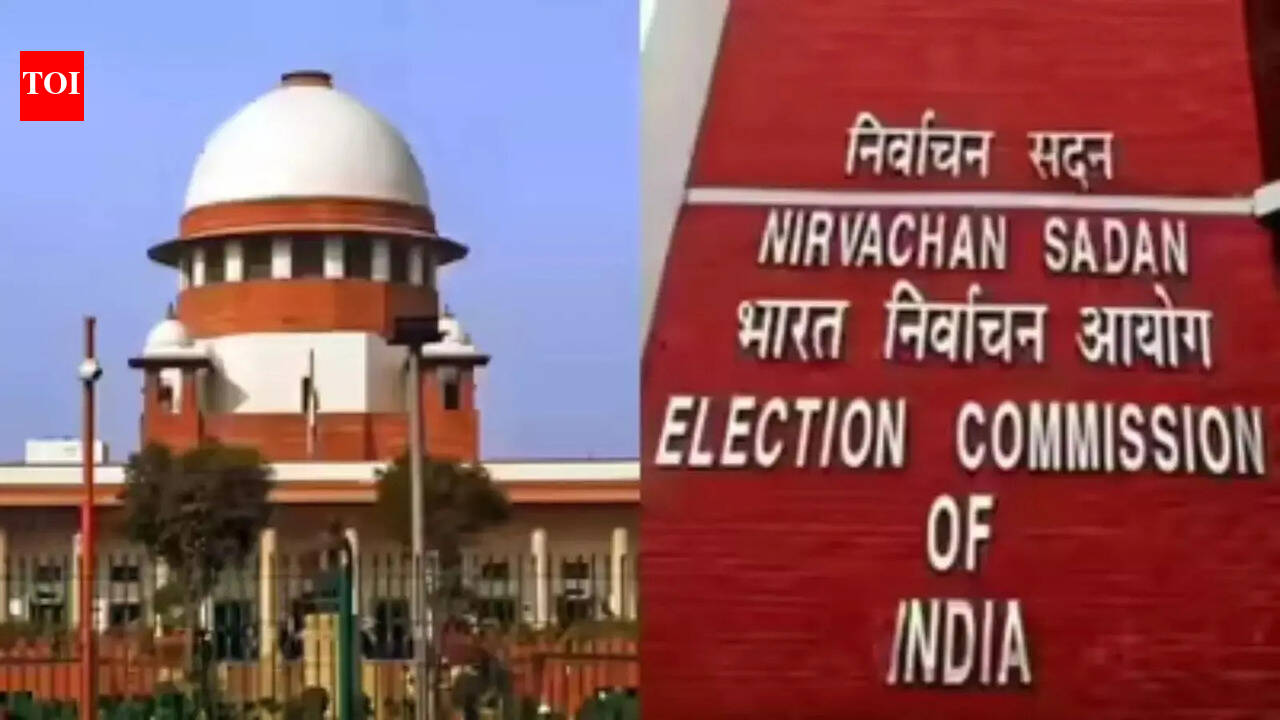
New Delhi: Raising questions over the appointment process of the Chief Election Commissioner/Election Commissioners, where a panel of the Prime Minister, a Cabinet Minister and the Leader of the Opposition selects the candidate. Supreme Court Thursday said the current system allows the government to appoint a person of its choice as long as two out of three members are in favor of it and asked the government why it is “pretending about independence” in the appointment process. It was said that instead of the minister, an independent person should be made a part of the panel.Citing the Supreme Court’s earlier direction that the panel should include the PM, CJI and the LOP, a bench of Justices Dipankar Gupta and Satish Chandra Sharma said it was not necessary that the CJI participate in the process, but an independent person would have to be a part of it or the presence of the LOP would become merely decorative. It said that when a CBI Director is appointed by an independent panel comprising the PM, CJI and LOP, why should not the same practice be followed for the CEC/EC, which is all the more important as the institution is involved in maintaining democracy and ensuring free and fair elections in the country.Although Attorney General K Venkataramani said that the neutrality and independence of the CEC/EC arises from their functioning after their appointment, the bench said that it started with the appointment process itself. The court said that the Election Commission should not only act neutrally but also appear neutral.“Why should a cabinet minister be a part of this? Let’s assume the ruling party has 300 MPs. The PM picks 25 of his best. Now you micromanage it again and bring in one of the 25. Why? Then why do you include the leader of the opposition in it? He is decorative. A minister will never go against the PM. It will always be decided by 2:1. Why this show of independence in the body?”The court is probing the validity of the law – the CEC and other Election Commissioners (Appointment, Conditions of Service and Term of Office) Act – which was enacted after the apex court passed orders that appointments would be made by a panel of the PM, CJI and the LOP to bring independence in the process. Several petitions were filed, including by MP Congress functionary Jaya Thakur, alleging that the new law amounts to abrogation of the Supreme Court order and paves the way for the government to appoint people from its “neighborhood” to this important post.Deliberations on the search, selection and appointment of Gyanesh Kumar (now CEC) and SS Sandhu as election commissioners in 2024 came under question, with the petitioner alleging it was done in haste just a day before a crucial apex court hearing, with the bench asking the Center to produce the original records before it. Kumar appointed election commissioner Election Commission of India on March 15, 2024, after his retirement on January 31.The court further explained that it is the executive government which is in a position of control in taking decisions on appointments to the election panel. It said the CJI is part of the panel to appoint the CBI director who also works to maintain law and order and maintain the rule of law. The court said that the role of the Election Commission is more important than that of the CBI as it is involved in maintaining democracy. “We do not say that the CJI should be there. But why not have an independent member? Why should it be from the ministry? Let us be very clear. Today the Prime Minister chooses a name. And LoP chooses the second one. There is disagreement. Then whose side will the third member take?” the bench said.Arguing that the court should refrain from venturing into legislative territory while deciding the validity of a law, the AG said there has never been any allegation on the CEC/EC of compromising and joining hands with the government. He said the country has never seen such a devastating or tragic experience when an Election Commissioner has failed to advance the rule of law and there is no reason to doubt the existing system.
Source link

Gaya airport opened at night; soldier airlifted

Gaya airport opened at night; soldier airlifted

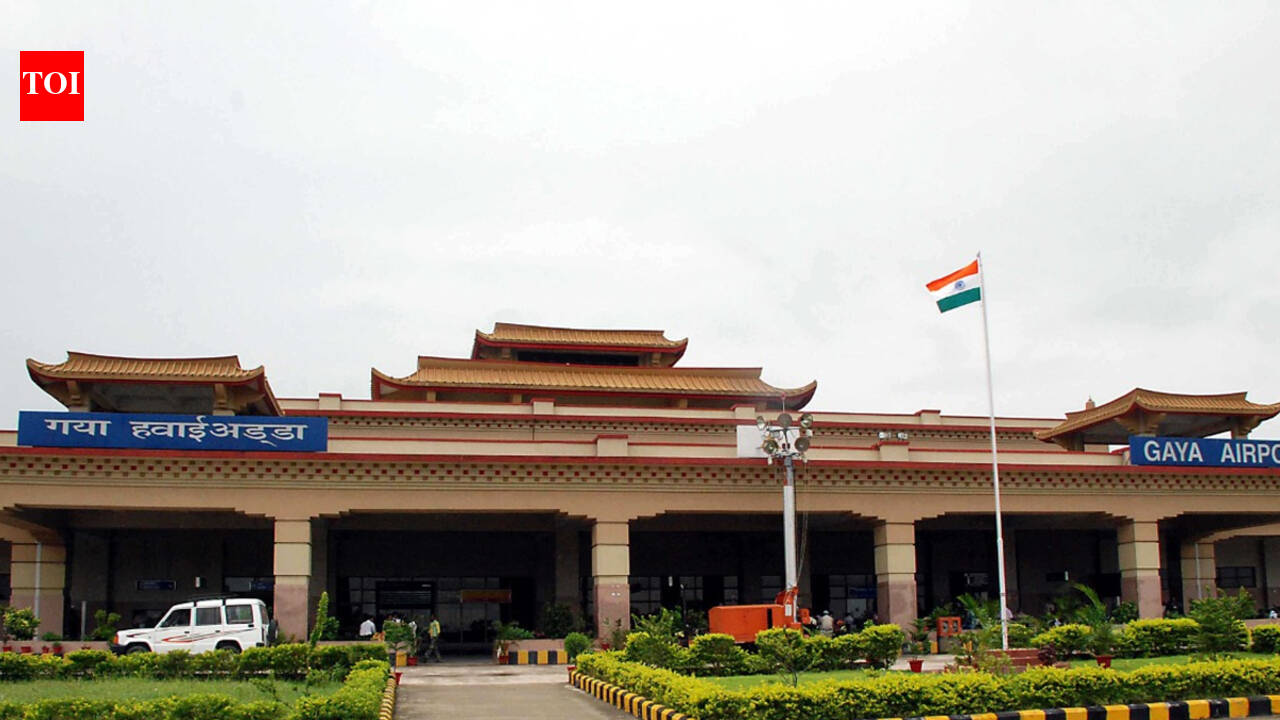
Went: Gaya airport was opened late on Wednesday night to facilitate emergency evacuation of a critically ill soldier from the Officers Training Academy (OTA) to Delhi. Indian Air Force Air ambulance.According to airport officials, Gaya airport director and air traffic control (ATC) in-charge Awadhesh Kumar received a call from Bihta Air Force Station late in the evening, demanding immediate activation of the airport for transfer of a patient requiring advanced treatment to Delhi.Since the airport’s ATC tower generally ceases operations after 5.30 pm, the request was initially rejected due to operational constraints. However, later the authorities approved it considering the seriousness of the medical emergency.Airport director Awadhesh Kumar said on Thursday, “Technicians and officers, who had already left after duty hours, were called back to resume operations and activate ATC services. At around 10 pm, an Indian Air Force air ambulance arrived from Lucknow and airlifted Selvan, a soldier posted at OTA, to Delhi for advanced treatment.”“As per information received from Army authorities, the soldier, who was suffering from liver failure, required immediate medical emergency care,” he said.Officials said emergency arrangements were made within a short time to ensure uninterrupted landing and take-off operations for the air ambulance. Airport staff reopened operational facilities and coordinated with Air Force authorities to complete the evacuation without any delay.The critically ill soldier was later airlifted to Delhi for specialized treatment.

Source link

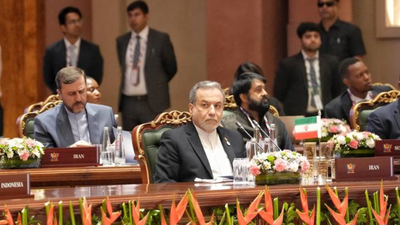
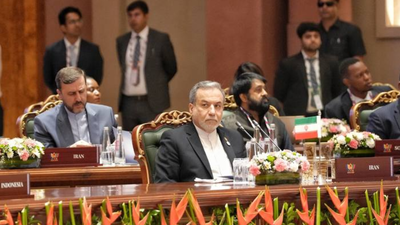
Iran asks UAE to ‘accept responsibility’ as tensions rise at BRICS meeting in New Delhi

'एक आक्रामक': नई दिल्ली में ब्रिक्स बैठक में तनाव बढ़ने पर ईरान ने यूएई से 'जिम्मेदारी स्वीकार करने' को कहाThe sharp increase came a day after the UAE refuted the Israeli Prime Minister’s claim benjamin netanyahu That he had visited the Gulf country during the Iran war. Iranian Foreign Minister Abbas Araghchi had earlier warned that “those who are trying to create division by colluding with Israel will be held accountable.” “I did not name the UAE in my (BRICS) statement for unity. But the truth is that the UAE was directly involved in aggression against my country,” Reuters quoted Iranian state media as saying. “When the attacks started they didn’t even condemn,” he said.“We must live together in peace and this requires peaceful relations and full understanding between the two countries,” Araghchi said.Additionally, Kazem Gharibabadi, Deputy Foreign Minister for Legal and International Affairs, later issued an even more forceful statement, accusing the UAE of helping facilitate attacks against Iran and stressing that Abu Dhabi “must accept responsibility for its actions.”“The UAE played a key role in supporting and facilitating military aggression against the Islamic Republic of Iran,” Gharibabadi said during the BRICS meeting. “Therefore, the party which itself has contributed to creating and escalating tensions has no legitimacy to make political allegations and claims against Iran,” he said, quoting the Iran Embassy in India.“The UAE is an aggressor, not just a participant in aggression,” he added, citing a 1974 UN General Assembly resolution.Gharibabadi claimed that Iran had warned Gulf countries, including the United Arab Emirates, before the conflict escalated that any assistance to US or Israeli operations would be met with retaliation. “We had no choice but to target all U.S. bases in the United Arab Emirates, or any facilities and installations in the United Arab Emirates in which the United States had a role or involvement,” he said, calling the attacks an act of “legitimate self-defense.”“You must accept responsibility for your actions,” he told the Emirati side directly, adding that Iran had presented more than 120 diplomatic notes and extensive documents to the UN Security Council, including alleged records of “every warplane that flew from the UAE.”Recalling their early efforts to reach out and warnings, he said, “Let me remind you that several days before the aggression began, because we had information about the possibility of attacks by the Israeli regime and the United States, we sent official messages to regional countries, including the United Arab Emirates. We warned them that if they assisted the aggressors and made their territories and facilities available to them, Iran would have exercised its legitimate right of self-defense by targeting those facilities in defense of its own country. There will be no option but to do it.The Iran War began with US and Israeli attacks on Iran on February 28, followed by Iranian missile and drone attacks on US bases and bases in the Gulf countries.The renewed war of words also threatens to complicate the consensus at the BRICS Foreign Ministers’ meeting in India. Iranian media cited Deputy Foreign Minister Gharibabadi as saying that there were already “problems and communications” in efforts to finalize the joint communiqué due to tensions with the United Arab Emirates.
Source link

PBKS bounce back from fifth consecutive loss to win; MI registered its fourth win

पीबीकेएस बनाम एमआई मैच के बाद अद्यतन आईपीएल 2026 अंक तालिका: लगातार पांचवीं हार से पीबीकेएस को जीत की स्थिति में छोड़ दिया गया है; एमआई ने दर्ज की चौथी जीत

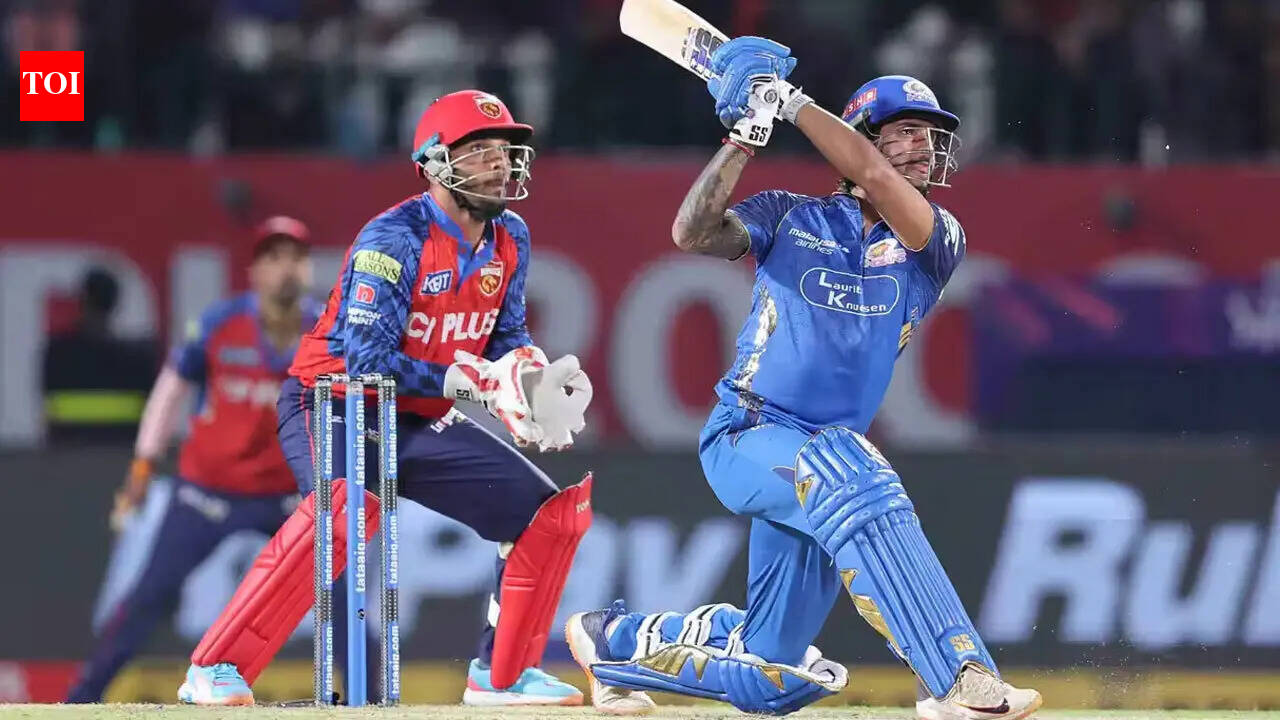
Tilak Verma helps MI beat PBKS by 6 wickets. (IPL photo)

New Delhi: Already removed Mumbai Indians The IPL 2026 points table was kept open with an impressive six-wicket win over Punjab Kings in Dharamshala on Thursday. Under Jasprit Bumrah for the first time in IPL history, MI recorded their fourth win of the season and reached their eight points tally, although they remained stranded in ninth place.This was Punjab’s fifth consecutive defeat and with every defeat their playoff chances are diminishing. PBKS, who led the points table for most of the first half of the league stage, are placed fourth with 13 points from 12 games but are now facing a must-win situation. Two wins from their remaining two matches will guarantee a playoff spot.Defending champions Royal Challengers Bangalore remain on top of the IPL 2026 points table after an impressive six-wicket win over Kolkata Knight Riders on Wednesday.At the business end of the league stage, RCB are on top with 16 points and an impressive net run rate of +1.053, leaving Gujarat Titans (16 points) behind on better NRR.The defeat left KKR stranded at eighth place, keeping its playoff hopes alive by a narrow margin. Their four-match winning streak ended against RCB.After RCB and GT, Sunrisers Hyderabad and PBKS occupy the remaining two playoff spots with 14 and 13 points respectively.The standings remain unchanged after Match 58 of the 70-match league stage.Chennai Super Kings Rajasthan are placed fifth with 12 points, ahead of Rajasthan Royals on better NRR, with both teams having three matches left.Below them, Delhi Capitals and KKR are still mathematically alive in the race for the playoffs. DC have 10 points from 12 matches, while KKR have nine points from 11.MI and Lucknow Super Giants are the only two teams to be eliminated so far this season.

IPL 2026 points table after PBKS vs MI match

Situation Team P w l N.R. score NRR
1 Royal Challengers Bangalore 12 8 4 0 16 +1.053
2 Gujarat Titans 12 8 4 0 16 +0.551
3 Sunrisers Hyderabad 12 7 5 0 14 +0.331
4 punjab kings 12 6 5 1 13 +0.355
5 Chennai Super Kings 11 6 5 0 12 +0.185
6 Rajasthan Royals 11 6 5 0 12 +0.082
7 Delhi Capitals 12 5 7 0 10 -0.993
8 Kolkata Knight Riders 11 4 6 1 9 -0.198
9 Mumbai Indians (E) 12 4 8 0 8 -0.504
10 Lucknow Super Giants (E) 11 3 8 0 6 -0.907

Source link

Caring, courage and clinical excellence take center stage

टीएफएम 2026 पुरस्कार: देखभाल, साहस और नैदानिक ​​उत्कृष्टता केंद्र स्तर पर हैं The four-member jury, each of whom had a different clinical lens to evaluate the nominees, shared how they chose the winners for the 2026 awards. The selection of award winners involved a two-stage process. The first stage involved selecting the top two contenders from the entries received in the respective categories, before extensive deliberations on choosing the winner, who was selected through secret ballot. Importantly, where a conflict of interest existed, jurors withdrew from both discussion and voting. Professor and Head of Department of Pediatrics at ABVIMS and Dr. RML Hospital. (Dr.) Dinesh Kumar Yadav underlined maternal care as a long-term investment for the country. “It’s not the safety of the birth process, it’s not the skilled manpower that is there, but the end result is that you have a healthy baby, who can grow up to be a good resource,” he said. With about 25 million annual births in India, Dr Yadav said the scope of assessment should be extended to adolescent health, nutrition and vaccination, which are the foundations laid long before a woman gets pregnant. For hospitals, Dr. Madhu Goyal, Director of Obstetrics & Gynecology at Fortis La Fame, analyzed the detailed checklist of NICU, blood bank, OT and LDR status, infection protocols, emergency response, rapid response teams, imaging facilities, fetal medicine specialists and more. However, she kept coming back to what the checklist couldn’t capture – women aren’t a percentage. “When an individual patient comes to you, they want everything to be perfect.” Dr. Goyal described a scenario that any physician would label a success – a premature baby, unexpected but ultimately healthy – that the mother had not experienced. Bridging that gap is about communication, he said. “The most important thing is communication.” Professor (Dr.) Manju Puri, Senior Professor of Obstetrics and Gynecology at SGT University, said that they evaluated the nominees through the lens of indicators while making a clear distinction between counting and measuring. For example, he said, the hemoglobin test is a process indicator, but whether the woman arrived at delivery without anemia is meaningful. “It’s not the numbers. There are numbers, big numbers in the public sector. “So those are the outcome indicators that we look at.” Dr Puri evaluated the nominees on maternal mortality rates, complication rates, perinatal outcomes, partogram maintenance, facility preparedness and response time and whether respectful care was provided. He explained that care costs nothing, while improving quality, in his framework, does not require large budgets or infrastructure changes. “This requires identifying what is broken, fixing the lowest hanging problems first, and sustaining improvement rather than treating it as a one-time exercise.” In Fertility and Fertility Care, Senior Director and Head of IVF and Reproductive Medicine at Max Group of Hospitals, Prof. (Dr.) Surveen Ghumman Sindhu evaluated the extent to which the centers provided care beyond clinical outcomes. “It’s not just the woman who is sad, the man is sad too. He’s in depression. So how many of us actually look at the husband and say, OK, I need to talk to you about things too.” Dr. Sindhu was equally vocal about language, for example, telling a patient that her IVF cycle failed was different from telling her that it wasn’t going to work this time. “Failed means she failed.” In their assessment, good fertility care begins three to six months before treatment, starting with pre-conception counseling, anemia correction, thyroid testing, and moving through how to communicate a negative result. The winners across the 13 categories of the Times Future of Maternity Awards 2026 were those who came closest to meeting this standard. In other words, it was not just about infrastructure and outcomes, but about the quality of care a patient experiences when things go according to plan and the quality of communication he or she receives when it doesn’t. Here is the complete list of winners in the gold, silver and bronze categories: 1.Comprehensive Maternity Hospital of the Year (regional)


  • Sagar Chandramma Hospital – silver
  • Cocoon Hospital – Bronze
  • Kamalnayan Bajaj Hospital – Bronze
  • Bhagirathi Neotia Women and Child Care Centre, Kolkata – Bronze

2.Nutritionist of the Year

  • Saloni Arora, Nutritionist and Founder, Femly – Gold

3.Reproductive and Reproductive Medicine Center of the Year

  • Ajanta Hospital and IVF Centre, Lucknow – Gold
  • Sagar Chandramma Hospitals & Fertility Center – Gold

4.High Risk Pregnancy and Maternal Critical Care Center of the Year

  • Aster Medcity, Kochi – Silver
  • MSD for Moms – Bronze

5.Baby Care Brand of the Year

  • R for rabbit – gold
  • Himalaya Wellness Company – Gold

6.Year of Neonatal Intensive Care Unit (NICU).

  • Neotia Bhagirathi Women & Child Care Centre, Newtown, Kolkata – Silver
  • Sagar Chandramma Hospital & Fertility Center – Silver

7.Best maternal and child hospitals in India for comprehensive care

  • Ankura Hospital – Sona

8.Maternal Health Policy, Advocacy and System Impact Award 9. Fetal Medicine Specialist of the Year

  • Dr. Vandana BansalSurya Hospital – Gold

10. Center of Excellence in Women’s Health 11.Fertility Specialist of the Year

  • Dr. Jayesh Amin – Bronze
  • Dr. Geeta Khanna, Ajanta Hospital and IVF Centre, Lucknow – Bronze

12.Transformational leader in maternal health care

  • Dr. V. Harshini, Raya Hospital – Silver
  • Dr. Sonal Jain Jaiswal – Bronze

13. Innovation in baby gear and baby safety

  • Grogether (Rimashi Lifestyle Pvt Ltd) – Gold

Source link

Local people of Nalbari foiled an attempt to rob the magistrate, 2 arrested. guwahati news

Nalbari local people foiled attempt to rob magistrate, 2 arrested

Guwahati: One person each from Jharkhand and Uttar Pradesh was arrested on Thursday for allegedly attempting to rob a trial court magistrate in Nalbari district on Wednesday night, police said. Three-four members of the gang are still absconding.The accused are Ritesh Kumar from Jharkhand and Mahesh Kumar from Uttar Pradesh.Nalbari SSP Bibekananda Das said, “It was a gang of five to six people who attempted to rob Nitish Kumar Sarma, first class judicial magistrate of the Nalbari district and sessions judges’ court. All of them are from other states. Their aim may have been to take away the magistrate’s vehicle.”The SSP said that similar cases are registered against the arrested people in Jharkhand also. “It was a big gang and they came here for the purpose of robbery. They operate all over the country.”The incident took place around 7.30 pm on Wednesday near Ghograpar police station in Nalbari district. However, the robbery attempt failed when local people reached the spot, forcing the robbers to flee.The magistrate’s driver said, “We were going towards Ghograpar. The robbers overtook and stopped our vehicle on the national highway. When we stopped our vehicle, three masked men came out of the vehicle and were coming towards us. By then, local people came forward and intervened to help us.”

Source link

Former Indian-origin CEO sentenced to 5 years in jail, asked to pay $125 million in $212 million fraud case in New Jersey

Former Indian-origin CEO sentenced to 5 years in jail, asked to pay $125 million in $212 million fraud case in New Jersey
Ultra-rich NRI Paul Parmar has been sentenced to five years in jail in a fraud case in New Jersey.

Paramjit Parmar, a 55-year-old Indian-origin man from New Jersey, has been sentenced to five years in prison, followed by three years of supervised release and payment of $125 million for his involvement in a large-scale conspiracy to defraud investors in connection with the purchase or sale of company securities. Parmar, also known as Paul Parmer, pleaded guilty in 2025.According to court documents, the fraud was committed between May 2015 and September 2017. Parmar and his conspirators, including Sotirios Zaharis alias, ‘Sam Zaharis’ and Ravi Chivukula, orchestrated an elaborate scheme to defraud a private investment firm and others of millions of dollars in connection with the financing of a transaction to take private a publicly traded healthcare company on the London Stock Exchange’s Alternative Investment Market.To fund the transaction, the private investment firm invested approximately $82.5 million and a consortium of financial institutions invested an additional $130 million, for a total of approximately $212.5 million. The co-conspirators used fraudulent means to greatly inflate the value of the Company and cause others to believe that it was worth much more than its true value.Parmar and the conspirators allegedly tried to raise millions of dollars from the public markets to finance the acquisition of various operating subsidiaries of the company. In reality, many of those entities either did not exist or had only a fraction of the operating income. Court documents state that the conspirators spent the proceeds of these secondary offerings through bank accounts they controlled and used the money for various purposes that had nothing to do with achieving the alleged goals. The conspirators made great efforts to make it appear that these funds were revenue, fabricating fake customers and altering bank statements to make it appear that the funds were coming from customers.The court said Parmar and his co-conspirators also manipulated and fabricated the bank records of subsidiaries to create a false picture of revenue streams and made misrepresentations and omissions to the private investment firm and others.Due to the actions of Parmar and his conspirators, the victims valued the company at more than $300 million for the purpose of financing a transaction to take the company private. The scheme was exposed in September 2017, when Parmar and his coconspirators resigned or were fired from their positions at the company. On March 16, 2018, the company and several of its affiliated entities filed for bankruptcy, attributing the company’s financial condition to a massive fraud scheme.

Source link

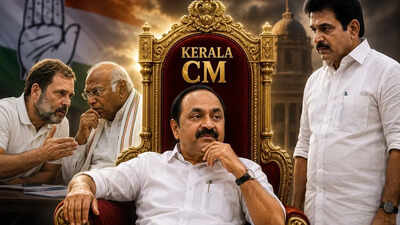
Why did Congress choose VD Satheesan instead of KC Venugopal?

10 days of 'brainstorming' for Kerala's 'Simhasanam': Why Congress chose VD Satheesan over KC Venugopal

New Delhi: After 10 days of intense deliberations, lobbying and internal brainstorming, Congress On Thursday, the suspense over the post of Chief Minister of Kerala finally ended with the election of VD Satheesan for the top post.Satheesan emerged victorious in a closely watched leadership battle against senior leader KC Venugopal And Ramesh Chennithala weighed the alliance equations, grassroots sentiments, public perception and electoral calculations by the Congress high command before arriving at the final decision.Although Venugopal was seen as a strong contender with the support of a large section of MLAs and the party leadership in Delhi, several political factors ultimately tilted the balance in Satheesan’s favour.Satheesan, being a vocal and visible critic of the Pinarayi Vijayan-led LDF government, also worked heavily in his favour. Although the Congress had never formally presented its chief ministerial face before the elections, Satheesan had gradually emerged as the public face of the opposition against the Left Democratic Front government over the past five years.Satheesan also had the direct support of grassroots Congress workers. In the days following the election results, party workers openly campaigned for him to be made Chief Minister, arguing that the leader who led the election battle should also lead the government.One of the most important reasons was the stance adopted by key allies of the Congress-led United Democratic Front (UDF), especially the Indian Union Muslim League. The IUML, which has 22 MLAs in the 102-member UDF alliance, strongly supported Satheesan and saw the alliance’s landslide victory as an vindication of his leadership over the past five years as opposition leader.The Kerala Congress (Joseph) and the Revolutionary Socialist Party also supported Satheesan, strengthening his position within the alliance.The Congress leadership knew that ignoring IUML’s stance could lead to complications for the new government. IUML has long served as one of the strongest grassroots allies of the Congress in Kerala and has played a major role in Rahul Gandhivictory from Wayanad in 2019 and 2024, and the subsequent by-election victory of Priyanka Gandhi Vadra from the constituency.Within a section of the party, there was uneasiness over Venugopal, considered close to Rahul Gandhi, joining the race for the top post even though he had already indicated during the campaign that he was not seeking the post. Many activists believed that ignoring Satheesan after the UDF’s sweeping mandate would amount to denying him political credit for the victory.The Congress’s recent struggle in assembly elections in several Hindi-speaking states during Venugopal’s tenure as AICC organizing secretary also became a topic of discussion among leaders and workers in Kerala.Internal pressure was also visible at the constituency level. Several newly elected Congress MLAs, identified as supporters of Venugopal, reportedly faced opposition from local party workers. Some MLAs had to cut short their tours after the elections amid criticism from activists and social media campaigns questioning Satheesan’s opposition.Youth Congress leaders like Shafi Parambil and Mathew Kuzhalandan were also criticized online by party workers, who portrayed them as leaders going against the people’s mandate.Another important factor behind the Congress’ decision was the possibility of multiple by-elections if Venugopal had been selected as the Chief Minister.As the sitting Lok Sabha MP from Alappuzha, Venugopal will have to resign from Parliament and contest assembly by-elections within six months to remain chief minister. His resignation from the Lok Sabha would also trigger another parliamentary by-election.Within the UDF, there were concerns about forcing voters to go to fresh elections so soon after the assembly elections, especially at a time when the alliance was trying to consolidate its political gains.Congress leaders were also conscious of the political risks involved in contesting the by-election for a sitting chief minister. Even though Venugopal would have likely contested from a reserved Congress seat, party leaders did not want to bring avoidable uncertainty into the new government.Public perception also worked heavily in Satheesan’s favor.He was one of Vijayan’s sharpest critics and often targeted the LDF government on issues related to governance and corruption. Satheesan also built his image as a strong supporter of secular politics in Kerala.At a time when many Congress leaders avoided directly confronting controversial comments made by influential Hindu community leaders, Satheesan repeatedly warned against efforts to polarize Kerala politics. Vellapalli Natesan and G. By openly challenging leaders like Sukumaran Nair, he gained support among sections who saw him as a leader willing to take political risks.During the campaign, Satheesan also made a high-profile political announcement, stating that he would end his political career if the UDF failed to cross 100 seats. The alliance eventually easily surpassed that figure, cementing his image as a confident campaign leader.Even though Venugopal reportedly had the support of most Congress MLAs and had close ties with the central leadership, the delay in announcing the chief ministerial face reflects the party’s attempt to strike a balance between organizational control and political realities at the ground level.Satheesan, a six-time MLA from Paravur in Ernakulam district, was ultimately seen as a candidate with wide public acceptability, strong coalition support and deep grassroots support.Soon after being elected, Satheesan attempted to convey a message of unity within the party and praised both Venugopal and Chennithala.Satheesan said after the announcement, “I don’t see this post as a personal achievement… It was Venugopal who coordinated all the activities (and) his support was huge. Chennithala is also my leader.”“I will take them all into my confidence,” he said, adding, “I want the support of people from every section of the society… Only collective effort can create a new Kerala. No one can do it alone…”Venugopal also publicly accepted the decision and supported the party line.“Satheesan has been appointed chief minister. I was saying that the decision of the high command will be accepted and it is my responsibility to ensure that the decision is respected and implemented,” he told reporters.Satheesan’s rise to the top post has also been marred by years of internal political fighting within the Kerala Congress. After missing out on a ministerial berth in the cabinet headed by Oommen Chandy in 2011 and later losing the race for the post of Kerala Pradesh Congress Committee chief in 2016, Satheesan once again found himself in a tough competition against senior leaders like KC Venugopal and Ramesh Chennithala.Despite leading the Congress-led UDF to a landslide victory in the assembly, Satheesan was reportedly not the party high command’s automatic choice for the post of chief minister. Party insiders pointed to familiar concerns that had surfaced during earlier leadership contests, including his strained relationship with influential community lobbies, limited support within sections of the national leadership, and his outspoken political style, which often irritated even his own party leaders.In 2011, when Satheesan was denied a ministerial berth in the Oommen Chandy government, his “attitude” was widely cited as a reason in party circles. Unlike many leaders who actively sought support from influential community organizations such as the Nair Service Society, Satheesan was seen as reluctant to engage in lobbying for positions, a quality that contributed to his image as an independent-minded but uncompromising leader.However, the real test for Congress in Kerala will begin after the celebrations. The past 10 days have exposed the depth of factional friction within the party, even amid its biggest victory in the state in a decade. For now, Satheesan has moved quickly to show unity and Venugopal has publicly accepted the high command’s decision. However, senior leader Chennithala has not been active since the CM’s announcement.In the coming days, as Satheesan forms the government, it will be worth watching whether all the frontrunners fall in line to ensure a stable UDF government for five years, or whether the Kerala Congress faces a Karnataka-style feud similar to the rivalry between Siddaramaiah and DK Shivakumar.

Source link

China hands Donald Trump a reality check about its rise

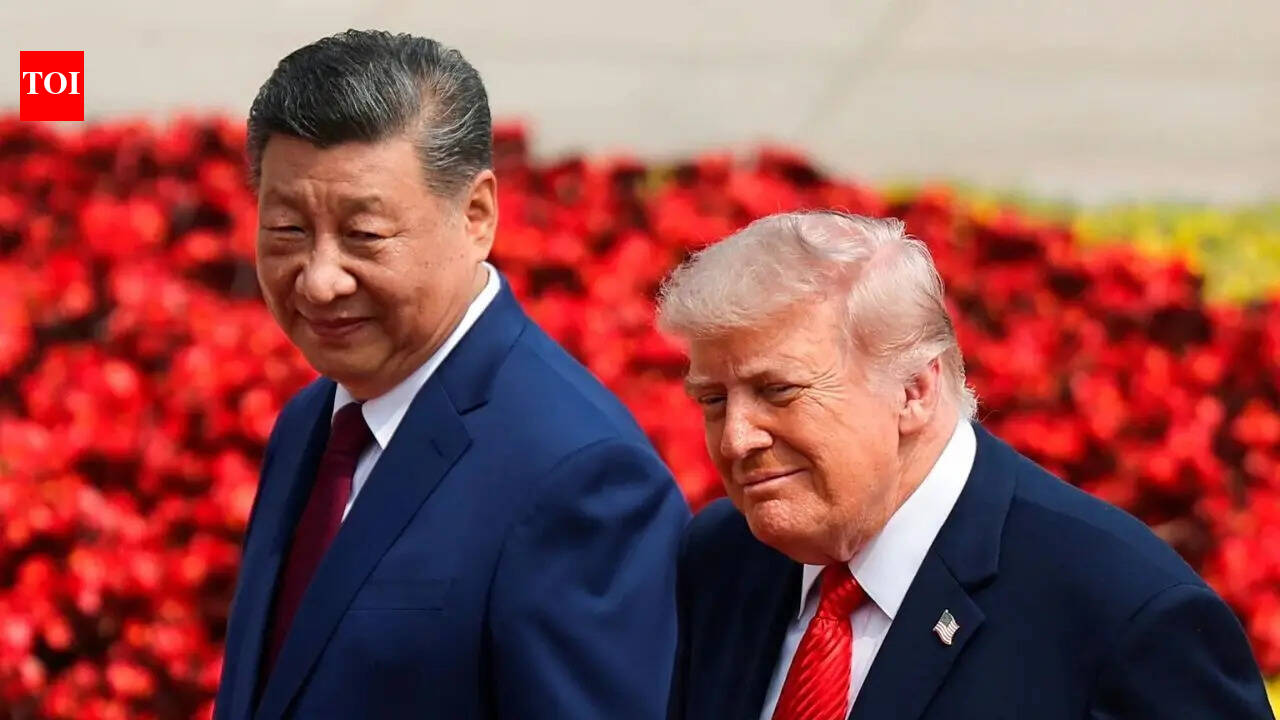
The art of taking a knee: China hands Donald Trump a reality check about his rise

TOI correspondent from Washington: If symbolism is the first language of diplomacy, then US President Donald Trump’s visit to Beijing this week was akin to the geopolitical translation of a changing world order: a confident, assertive China speaking as an equal – if not superior – power to an American president who is increasingly eager for accommodation rather than confrontation.Summit between US President and Chinese leader Xi Jinping On Thursday, it came across not as a meeting between an existing superpower and a challenger, but between a cautious petitioner and an overbearing host. In carefully choreographed remarks, Xi invoked the “Thucydides trap” — the theory that war often erupts when a rising power threatens to displace an established one — while cautioning Washington against mishandling Taiwan. In contrast, Trump lavished praise on Xi, praising future trade deals and emphasizing agricultural purchases, investment and trade access. The contrast was impressive not only in tone but also in substance. China’s official readout of the meeting prominently featured Xi warning that Taiwan remains “the most important issue in China-US relations” and that “Taiwan independence” and peace in the Taiwan Strait are “as incompatible as fire and water.” Beijing also stressed its opposition to the “militarization of the Strait” and cited tensions over Iran’s closure of the Strait of Hormuz due to the US-Israeli attack on Iran. However, the White House readout left out Taiwan entirely. Instead, the US account highlights economic cooperation, Chinese purchases of US agricultural products, market access for US companies, cooperation on fentanyl, and expanded trade relations. Trump declared that relations would be “better than ever” and spoke of a “great future”.The divergence underlined what many analysts see as a dramatic reversal in US-China relations.For years, Washington’s bipartisan foreign policy establishment positioned China as a revisionist challenger and the US as a status quo power to set the terms of engagement. But as Trump’s tariff offensive failed to sway Beijing and China weaponized its dominance over rare earths supply chains, the optics in Beijing suggested a different reality: China appears increasingly comfortable setting red lines while Washington seeks stability and economic relief.Xi gave special importance to the invocation of Thucydides’ trap. The phrase originates from the ancient Greek historian Thucydides, who described the Peloponnesian War and famously wrote that it was “the rise of Athens and the fear it inspired in Sparta” that made conflict inevitable. In recent years, political scientist Graham Allison popularized the concept in his 2017 book Destined for War, which argued that the structural rivalry between rising China and the established United States risked catastrophic conflict if not carefully managed.Xi has referenced the concept before, but his use of it in Trump’s presence carries unmistakeable symbolism. Xi declared, “Changes not seen in a century are accelerating.” “China and the United States need to overcome the Thucydides Trap and join hands to create a future.”The subtext was clear: Beijing is no longer talking as a junior player seeking accommodation under the US-led order. It is increasingly being talked about as a peer power and pushing Washington to adjust to the multipolar reality.Trump, meanwhile, seemed eager to do exactly the same. Rather than revive the strident rhetoric that once defined Republican China policy, Trump adopted the language of managed coexistence. Xi told him, “There are no winners in a trade war – Trump had not publicly opposed it.”This change has notably silenced many China supporters within the Republican Party. Figures who once warned of existential competition with Beijing have largely fallen silent as Trump moves toward what some analysts describe as a “commander in peace” pragmatism toward China, even while projecting military might against smaller adversaries elsewhere.“Donald Trump is a dove in chief,” former Pentagon official Dan Blumenthal recently said in Politico. “He wants stability. He is very influenced by Chinese power and he does not believe that we are in any position to win the strategic competition at this time.”That assessment is reinforced by a stream of recent intelligence and military analyzes that paint a troubling picture for Washington. The Joint Staff’s intelligence directorate warned its chairman, Gen. Dan Cain, that China was selling weapons to key Middle Eastern partners while US stockpiles meant to protect Gulf allies were depleted during the Iran conflict, according to a report revealed this week. The analysis reportedly worried Pentagon officials because Beijing was effectively arming countries that Washington itself was struggling to defend.China has expanded its role as an emergency energy supplier after Iran’s closure of the Strait of Hormuz disrupted global markets – despite tensions. Beijing has reportedly stepped up to provide energy assistance to all US treaty allies or strategic partner countries, including Australia, Thailand and the Philippines. The intelligence assessment concluded that China had “seized in the 39-day conflict to expand its military, economic and diplomatic influence around the world.This influence is increasingly visible not only in the Gulf region but across Africa, where Chinese infrastructure financing and security partnerships are outpacing US involvement. Washington’s decades-old alliances are showing strain amid Trump’s tariff threats, erratic diplomacy and transactional foreign policy style.Even the atmosphere at the Beijing summit reflected the changed balance. Trump, as usual, using his trademark hyperbole, told Xi that the US CEOs accompanying him – including Elon Musk and Tim Cook – had come to China to “pay respects”. Xi responded with cool composure.Where Trump was personal and flattering, Xi remained measured and institutional. While Trump praised the relationship, Xi spoke of “strategic stability,” “managed competition” and the need for both powers to work “in the same direction.”It was less the chemistry of two friends than the choreography of two powers accepting a changing hierarchy – with Beijing growing increasingly confident that history, economics and strategic momentum were leaning in its favor.

Source link

Court order to bring back 55-year-old Colombian woman, sent to DRC

Big blow to Trump's deportation to third country: Court order to bring back 55-year-old Colombian woman, sent to DRC
A judge ordered the US to bring back a Colombian woman who was deported to the DRC despite Congo refusing to accept the 55-year-old woman.

The Donald Trump administration’s third country deportations, a new policy he came up with where a migrant is sent to a third country where he has no ties, suffered a major setback after a federal judge on Wednesday ordered the administration to bring a Colombian woman back to the US. Adriana María Queiroz Zapata, 55, was deported to the Democratic Republic of Congo, although the DRC refused to accept her. US District Court Judge Richard J. Lyons for DC ordered the woman to be brought back as soon as possible and ordered the Trump administration to provide a status update by 5 pm Friday on steps taken to facilitate her return, The New York Times reported.Queiroz Zapata entered the United States in August 2024 after fleeing Colombia and his former partner, a man bound by the Colombian National Police. She received a court order not to send her back to Colombia because she might face abuse at home. The Trump administration sought a third country to deport Queiroz Zapata, but the DRC refused to formally admit him in April because the country could not adequately guarantee the necessary medical assistance, the document said. The woman has diabetes, hyperlipidemia and hypothyroidism.Two days after the DRC’s denial, Queiroz Zapata was placed on an expulsion flight from the US to the DRC on April 16, where he remains today.“The government deported him to the DRC anyway,” the judge wrote. He added, “Therefore, sending the plaintiff to the DRC was probably illegal.” The judge said Queiroz Zapata was “likely to succeed” in his argument that deporting him to the DRC was “likely to violate the Immigration and Nationality Act.”The judge wrote, “There is no question that Plaintiff meets the irreparable harm standard. She has been deported to a country that refused to accept her because they could not provide adequate medical care.” “As a result, he faces daily risk of medical complications, up to and including death.”

Source link