Today’s Quote by Canadian-American Psychologist Albert Bandura: “Where everyone is responsible, no one is really responsible” |
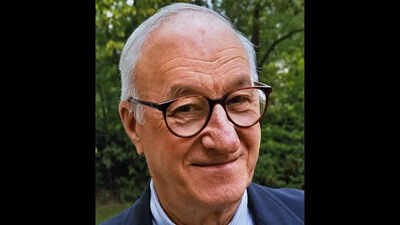
Today's quote from Canadian-American psychologist Albert Bandura:
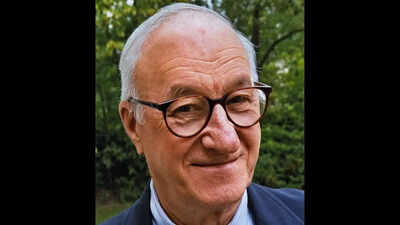
Albert Bandura (Image: Wikipedia)

Some quotes remain relevant because human nature rarely changes as much as people think. Societies develop. Technology changes rapidly. Entire industries disappear and new ones emerge. Yet human behavior often repeats the same patterns from generation to generation, especially when responsibility is shared among large groups of people. Perhaps that’s why this quote by Canadian-American psychologist Albert Bandura still sounds surprisingly modern.“Where everyone is responsible, no one is really responsible.”At first glance this sentence seems simple. Almost too simple. Yet the more one thinks about it, the more uncomfortable it becomes because most people have seen such exact situations many times in ordinary life.A problem arises.Everyone notices it.Everyone assumes someone else will handle it.Nothing happens.This pattern is present almost everywhere. Office. School. Governments. Friend group. online community. Even family sometimes. People tend to believe that shared responsibility automatically creates cooperation, although Bandura’s quote suggests that the opposite may also be true. When accountability becomes unclear or spread too widely, action often disappears as individuals cease to feel personally responsible.The result may be disappointing. Sometimes even dangerous.

today’s thought by albert bandura

“Where everyone is responsible, no one is really responsible”

Know the meaning behind Albert Bandura’s quote

At its core, the quote seems to describe how responsibility is diluted when too many people assume that someone else will step up first. Humans often behave differently in groups than they do individually. A person who usually acts quickly when alone may become completely hesitant when surrounded by others.Psychologists sometimes call this “diffusion of responsibility.” The larger the group becomes, the easier it becomes for individuals to mentally distance themselves from the action. People unconsciously assume that someone more competent, more confident, or more authoritative will eventually intervene.This belief often produces surprising paralysis.Imagine a workplace where a serious mistake is visible to everyone. Every employee notices it, although no one addresses it directly because everyone assumes another co-worker has already reported the problem. Eventually, the problem became larger as responsibility became shared rather than clearly defined.Bandura’s quote seems to warn against this kind of collective passivity.This line may seem crazy at first, however it reflects a very real pattern in human behavior.

Albert Bandura spent years studying human behavior

Albert Bandura became one of the most influential psychologists of the twentieth century because his work focused heavily on how people learn to behave socially. He is particularly known for developing social learning theory, which explored how observation, imitation, and environment shape human actions.Bandura believed that people are greatly influenced by what they see around them. Man does not learn only from direct experience. They also learn by observing how other people behave and seeing which behaviors are rewarded or ignored.That idea connects strongly to this quote.When individuals repeatedly observe situations where no one accepts responsibility, that behavior itself becomes normalized. Over time, people become increasingly passive because they unconsciously expect passivity from the group around them.Bandura was deeply interested in these subtle social dynamics as they affect almost every part of life, from education and workplaces to politics and relationships.

Modern workplaces often struggle with this problem

One reason this quote seems especially relevant now is that modern workplaces often operate through large teams, complex structures, and endless collaboration systems. In theory, teamwork sounds ideal. In fact, unclear accountability sometimes creates confusion rather than efficiency.Employees participate in meetings where everyone enthusiastically discusses problems, although no one has direct ownership over solving them. Emails keep getting copied to dozens of people simultaneously until the responsibility is completely reduced. Deadlines pass because everyone silently assumes that someone else is already handling the situation.Many employees probably recognize this immediately.The problem becomes worse inside larger organizations where communication already feels impersonal. When people feel emotionally detached from outcomes, accountability naturally weakens.Bandura’s quote captures that dynamic with uncomfortable accuracy.Sometimes, responsibility requires clarity more than quantity.

Social media created new versions of the same behavior

Interestingly, this quote seems highly relevant even in the age of social media. Now millions of people watch tragedies, controversies or crises simultaneously online. Information spreads instantly. Emotional reactions also spread. Yet actual action is often surprisingly limited.Part of the reason may include what Bandura described.When large numbers of people become aware of the same issue, individuals sometimes assume that collective awareness equals meaningful action. Sharing outrage publicly can create a feeling that the responsibility has already been met.In fact, nothing significant may actually change.That disconnect is often visible online. A topic trends for several days. Everyone discusses it in depth. Then the attention goes elsewhere before a meaningful solution can emerge. Collective visibility sometimes creates the illusion of responsibility while undermining individual action.In this sense Bandura’s observation seems remarkably ahead of its time.

This quote also says something uncomfortable about human nature

Another reason this quote remains memorable is that it forces people to confront an uncomfortable truth about themselves. Most individuals like to believe that they will act responsibly in difficult situations. Once group psychology comes into the picture the reality can become more complex.People often wait for permission from others without thinking.During a conflict one hesitates to speak first because silence has already become the norm of the group. Another person notices the inappropriate behavior, but avoids intervening because no one seems concerned enough to react publicly. Over time, passivity spreads socially.That process can happen silently.Almost invisibly.Bandura seems to be interested in exactly those moments where responsibility disappears, not because people are cruel, but because humans are strongly influenced by the behavior of others.This quote feels powerful because many readers recognize themselves somewhere inside it.

Why does accountability matter now more than ever?

Modern life is increasingly interconnected, although personal accountability still matters a lot. Organizations, governments, and communities function well only when individuals feel real ownership over actions and decisions.Without a sense of ownership, problems flow endlessly.Everyone talks about him.No one solves them.That’s why strong leaders often define responsibility very clearly. Effective teams generally work best when people understand what is theirs individually, rather than assuming that collective awareness alone will automatically lead to action.Bandura’s quote quietly reminds readers that responsibility must feel personal before it can be meaningful.Otherwise, it dissolves.

Life lessons hidden inside Albert Bandura’s quotes

The quote teaches that accountability is weakened when roles remain unclear. People are more likely to act when responsibility feels personal and direct rather than vague or collective. Another important lesson involves self-awareness. Humans naturally look to groups for behavioral cues, often without consciously noticing it.This saying also highlights the danger of passive observation. Problems rarely disappear because too many people notice them at once. Awareness matters, however action matters even more.Perhaps the greatest lesson hidden inside this quote is that responsibility requires courage. Making the first move can feel uncomfortable because it breaks social inhibitions. Yet many important actions throughout history occurred because one person refused to believe that someone else would eventually deal with the problem.

Other famous quotes from Albert Bandura

  • “People not only gain understanding through reflection, but they also evaluate and change their thinking.”
  • “To be successful, people need a sense of self-efficacy.”
  • “Learning would be extremely laborious if people had to rely only on the effects of their actions.”
  • “Moral justification is a powerful alienation mechanism.”
  • “People’s beliefs about their abilities have a profound effect on those abilities.”

final conclusion from the quote

Albert Bandura’s quote continues to resonate because it reflects the frustrating reality that people constantly face in ordinary life. Shared responsibility sounds positive in theory, although in practice, it sometimes weakens rather than strengthens accountability.People assume that someone else will speak first.Someone else will intervene.Eventually someone else will solve the problem.Bandura seems to challenge that instinct directly. His quote reminds readers that responsibility is only meaningful when individuals accept it personally rather than silently delegating it to a group around them.Maybe that’s why this line still seems so relevant. Modern life has become increasingly collective and interconnected, although meaningful change still usually starts with one person deciding not to wait for everyone else to do the same first.


Source link

Tribal people demand stop of tiger safari, eviction from forests of South India. india news

Tribals demand stop of tiger safari, eviction from forests of South India

TOI correspondent from London: Save the tiger. Sell ​​the forest. Destroy people. to stop. Tribal communities from Karnataka, Kerala and forests spread across the country Tamil Nadu There has been a pushback against wildlife tourism and tiger reserve expansion, accusing forest officials and conservation groups of turning ancestral homelands into a commercial safari “spectacle”, while indigenous families are evicted and forced into marginalization.More than 35 tribal villages under the Nagarhole Adivasi Jamma Pale Hakku Sthapana Samiti of Kodagu and Mysuru in the forest region of Karnataka, about 220 km southwest of Bengaluru, on Thursday issued a joint “Nagarhole Declaration” demanding an immediate stop to all transfers from the forests, saying none were voluntary.The announcement came after a marathon community dialogue held at Balekavu village inside the Nagarhole forests from May 5 to 7, where tribal activists from Wayanad in northern Kerala, the Muthanga Wildlife Area near the Kerala-Karnataka border, the Sathyamangalam tiger landscape in western Tamil Nadu and the Mudumalai Reserve in the Nilgiris gathered to form a common front in the Western Ghats tiger belt.Their charge was clear: forests once visited, hunted, worshiped and buried by indigenous communities are being fenced, branded and monetized through tiger safaris and conservation projects without the forest dwellers’ consent.The manifesto accused the forest department and the National Tiger Conservation Authority of usurping customary land and turning it into a “commercial spectacle”. It says, “What the forest bureaucracy calls core areas or critical tiger habitat is our ancestral land, our sacred space.”It says the Forest Rights Act of 2006, designed to address historical injustice against forest communities, has failed to protect them on the ground. Instead, “the injustice continues” through safari jeeps driving on lands where “our ancestors walked and are buried”, through conservation schemes imposed on villages and through generations trapped in bonded labor on tea and coffee plantations.“It is unconscionable that in states like Karnataka, Kerala and Tamil Nadu that proclaim themselves as champions of social justice, thousands of tribal families remain trapped in conditions that can only honestly be described as slavery,” the manifesto said.The document portrays the conservation fight in historical contexts, arguing that the violence unleashed under colonial forest laws never ended after independence, but only “put on a green uniform under the mask of conservation”.Tribal people alleged that notifications declaring national parks and tiger reserves were put forward without following legal procedures. He demanded that the ancestral areas be recognized as “Scheduled Areas” under the Constitution, giving stronger self-governance rights to tribal communities.The declaration claimed that forest and tourism departments in the three states have “no legitimate authority” to operate, license or commercialize wildlife safaris on traditional tribal lands without the informed consent of village councils. It demanded immediate suspension of all safari operations until such consent was obtained.The sharpest words were aimed at wildlife NGOs supporting a fortress-style conservation model. “Conservation that requires us, the indigenous people, to be evicted from the land is not conservation. This is colonization,” the declaration said.Activists said the fight over forests is no longer just about wildlife conservation. It is about whether ancient indigenous footprints will survive under the tire tracks of rapidly expanding safari tourism. Jenu Kuruba activist JK Thimma said, “We are the first people of this land. We are not encroachers.” “There is no conflict between us and the animals in the forest.”The declaration said that the rights guaranteed under the Forest Rights Act – which recognizes forest dwellers as custodians of forest resources – have allegedly been ignored, rendering many tribal communities “constitutionally invisible”.

Source link

Look at those snacks! Ultra-processed foods can increase your blood pressure. hyderabad news

Look at those snacks! Ultra-processed foods can increase your blood pressure
The study findings showed that 12.5% ​​of participants already had blood pressure at or above 140/90 mmHg, indicating emerging cardiovascular risk in young adults.

Hyderabad: According to a recent study conducted by the Hyderabad-based ICMR-National Institute of Nutrition, frequent consumption of ultra-processed foods (UPF) such as packaged snacks, sweet drinks, biscuits and instant foods can significantly increase the risk of hypertension in urban youth.The study, recently published in the journal ‘Nutrients’, examined the dietary patterns and blood pressure profiles of 311 undergraduate students aged 18 to 24 years from colleges in Hyderabad. Researchers found that students who consumed higher amounts of high-fat and high-salt ultra-processed foods were nearly three times more likely to have increased blood pressure than those who consumed less.The findings showed that 12.5% ​​of participants already had blood pressure levels of 140/90 mmHg or higher, indicating emerging cardiovascular risk in young adults. Ultra-processed foods commonly consumed among participants included biscuits, chocolate, packaged salty snacks, bread products, sugary drinks, and instant foods.Scientists identified taste. Convenience, affordability and easy availability are the major reasons for the increasing consumption of ultra-processed foods among urban youth. The study noted that the association between UPF intake and elevated blood pressure remained significant even after adjusting for factors such as age, gender, residence and family income.The researchers used a detailed food survey based on the NOVA classification system to study how often participants consumed 24 commonly eaten ultra-processed foods. Blood pressure levels were measured using standard medical procedures.Lead authors Dr Karthikeyan S and Dr Samarasimha Reddy said the increasing dependence on packaged and convenient foods among urban youth requires urgent public health attention. “Targeted interventions are needed in colleges and universities to encourage healthy dietary choices and increase awareness of the health risks associated with excessive ultra-processed food consumption,” she said.“India is witnessing rapid nutrition changes, especially among adolescents and young adults,” said Dr Bharati Kulkarni, NIN Director, and stressed the need to strengthen nutrition literacy and create healthy food environments.

Source link

‘Shut up ugly…’: Democrats insulted White House advisor Stephen Miller, Katie Miller responded

'Shut up ugly...': Democrats insulted White House advisor Stephen Miller, Katie Miller responded

Controversy has arisen after a Democratic National Committee (DNC) staffer insulted White House adviser Stephen Miller on the party’s official X account.The controversy began when the Democrats’ official account responded to a post from Miller with the words: “Shut up you ugly fuck.” Because the message came from a verified account of the National Party rather than a personal or campaign account, it went viral.Soon after, Paulina Mangubat, a senior digital strategist at the DNC, appeared to reference the exchange from her own X account. She wrote: “The team just rated Stephen Miller, who is ugly, evil, cruel, and bald.”According to his LinkedIn profile, 30-year-old Mangubat currently serves as the Deputy Chief Mobilization Officer at the DNC. She was previously the party’s digital content and creative director and has worked on quick-response messaging and social media strategy for the Democrats.She graduated from Barnard College in 2017 and also worked as the digital and creative director for the campaign of Boston Mayor Michelle Wu, where she handled online messaging and campaign communications.Online speculation links Mangubat directly to the Democrats’ The group has the freedom to respond online and shape the tone of the party on social media platforms.The exchange began after the Democrat’s account posted support for Texas Senate candidate James Tallarico. Miller responded by falsely claiming that Democrats had nominated a transgender Senate candidate.“Democrats have made history in Texas by nominating their first transgender Senate candidate, which many have interpreted as an attack on Talarico,” Miller wrote.In another post, Miller claimed that Tallarico was “transitioning”, despite there being no evidence that the candidate is transgender.The Democrats’ account responded with a now-viral insult, prompting a sharp reaction from conservatives.Mangubat was later publicly named by Stephen Miller’s wife Katie Miller, who criticized the post and identified Mangubat as one of the people behind the account.In a post on X, Katie Miller described Mangubat as “unmarried with no kids” and said she “should [her] Put a name on it.”Mangubat responded by posting a photo of herself wearing her wedding dress and wrote: “Okay, now seems like a good time to share that I’m getting married! We put a deposit down at the venue and bought my dress.”This controversy comes just a day after another controversy related to the Democrats’ X account. A Memorial Day post of 13 dead US service members criticizing Donald Trump was removed after bipartisan criticism.Democratic Senator Tammy Duckworth condemned the message, writing, “Using our heroic dead for a political attack on Memorial Day is incredibly distasteful. I am a Democrat and condemn this post from the DNC.”

Source link

Government’s warning to industrial consumers: The government has warned industrial consumers against purchasing from retail pumps. india news

Government has warned industrial consumers against purchasing from retail pumps

New Delhi: Issuing a stern warning to industrial consumers buying diesel from retail outlets due to differential pricing and creation of artificial shortage of fuel in some parts of the country, the government on Wednesday said there is “more than enough” supply of petrol and diesel to meet the demand.The government said industrial consumers are shifting their purchases to retail pumps, leading to local shortages at the expense of ordinary citizens, and urged industry associations to make them aware of the consequences of such violations. It also asked states and union territories to form special squads and take strict action against bulk consumers purchasing from retail shops, hoarders and black marketeers under relevant provisions of the Essential Commodities Act and control orders.According to the government, about 29% of the bulk diesel volume of public sector oil retailers shifted to retail outlets in the current month, while sales volumes at fuel stations run by private oil marketing companies declined by 38%.While the price of diesel for retail consumers in Delhi is Rs 95.2 per litre, bulk consumers like industries get it at Rs 134 per litre. Private oil retailers also sell diesel at more than Rs 130 per litre.Officials said there were continuous reports of shortage at retail outlets from different parts of the country, following which an assessment was conducted by both the petroleum ministry and oil marketing companies. The assessment found that wholesale consumers were purchasing from retail stores.While Petroleum Minister Hardeep Singh Puri was coordinating with public sector OMCs, states and industry bodies to ensure uninterrupted supply of petrol and diesel to all, Petroleum Secretary Neeraj Mittal also held a review meeting with Chief Secretaries of states and UTs, which was attended by industry bodies FICCI and CII.“The picture that emerges from the field is consistent. There is no shortage of any petroleum product. There is a pattern of arbitrage in pockets which is creating an appearance of disarray,” the petroleum ministry said in a statement.Amid the disruptions in West Asia, state-run OMCs have deliberately kept petrol and diesel prices low to protect retail customers – families, two-wheeler commuters and farmers at the pump – while incurring a loss of around Rs 550 crore per day on sales of petrol, diesel and domestic LPG. “This does not extend to industrial procurement, where pricing tracks international actual data as a matter of permanent policy,” the government said.

Source link

MCD is planning street food hubs on the lines of culinary parks in Indore and Surat Delhi News

MCD is planning street food hubs on the lines of culinary parks in Indore and Surat

New Delhi: Delhi Municipal Corporation (MCD) is planning to set up the capital’s first organized street food hub in several areas.Designed to blend Delhi’s vibrant street food culture and regional culinary heritage with modern civic amenities, the proposed hub will offer non-permanent vending spaces, clean infrastructure, adequate lighting, waste management facilities and evening dining areas on the lines of food parks in Indore and Surat.The proposed centers are being planned at locations with adequate public presence and operational feasibility. Six locations have been identified, including MCD Market near NDRF Camp in Vasant Vihar in the South Zone, Shanti Stupa on Ring Road in the Central Zone, the area behind Salimgarh Fort near the old iron railway bridge in the City-SP Zone and NSP Place near Keshavpuram TV Tower. Two additional sites have been identified in Rohini and West region.Senior MCD officials told times of India Two of these sites are controlled by other land-owning agencies, for which No Objection Certificate (NOC) will first be sought.The average development cost is estimated to be around Rs 50,000 per square metre, depending on the size and nature of each site.“The initiative is currently in the planning and approval stage, with all proposals submitted to the Union Ministry of Housing and Urban Affairs through the Delhi government,” an official said.Unlike permanent commercial establishments, hubs will allow only movable and non-permanent vending carts that are designed to meet prescribed sanitary and visual standards. Various categories have been proposed, including ready-made food carts, chaat and salad carts, beverage vending carts, and single-item vending carts.Each food hub is expected to accommodate approximately 50 to 100 vending units depending on the size of the space. Selection of vendors is proposed to be done through a transparent process which will involve a draw among the eligible registered street vendors under the respective Zone Vending Committees.The MCD is planning to introduce a regulated licensing system under which vendors will pay processing fees, registration fees and annual license fees, officials said, adding that the centers are expected to generate reasonable municipal revenue.The proposal includes development of civic and sanitation infrastructure, such as waste management systems, general dustbins, lighting systems, circulation spaces, weatherproof structures and other public amenity facilities. Provision of drinking water supply and toilet facilities will be considered.To ensure better management of public and regulation of activities, the Food Hub is proposed to operate mainly in the evening. The carts will have a standardized design and a common visual identity to create uniformity and better identification. Their functioning will be monitored through periodic inspections by municipal and public health authorities to ensure that they comply with sanitation, hygiene and food safety standards.Depending on the success and feasibility of the pilot, this initiative can later be expanded to more locations across the city.

Source link

A Buffalo Township man accused of damaging a family’s home with an excavator during a dispute

A Buffalo Township man accused of damaging a family's home with an excavator during a dispute
A Buffalo Township man accused of damaging a family’s home with an excavator during a dispute

A Buffalo Township man has been charged with multiple criminal offenses after allegations he used an excavator to destroy his own home while his wife and children were still home Tuesday morning. Eric Pierwsza, 48, was arrested by police after his family home was destroyed in the Martin Road area. Police say the argument began when Pierwsza’s wife told him their marriage was over because they had recently separated.According to reports from TribLive and details outlined in a criminal complaint, authorities say Pierwsza came home after a night of drinking. Police say that soon after Pierwsza arrived, he and his wife got into an argument. The criminal complaint outlines the sequence of events that occurred during the fight.Pierwsza’s wife says she told her husband their marriage was over during the argument. As stated in the criminal complaint, Pierwsza allegedly said, “If it’s over, I’ll tear the house down.”Pierwsza then climbed into a Kubota excavator and began demolishing the rear of the family home, while his wife and daughters were still inside. Police said the machine had caused extensive damage to the building in a short period of time. Officials later noted that the extent of the damage raised serious doubts about the safety of the structure.Pierwsza reportedly left the scene after the incident. Later, he was caught by the authorities. The charges against Pierwsza include causing mayhem, reckless endangerment and disorderly conduct.According to investigators, the damage posed an immediate threat to the family as large portions of the building were severely damaged during the incident. When police officers arrived at the property, they found extensive destruction to the rear of the building.Records showed Pierwsza was booked into the Butler County Jail after being unable to post $10,000 bail. Public records revealed a preliminary hearing will be held before District Judge Jack Dee. Ripper on 9 June.Court documents revealed there was no defense attorney listed for Pierwsza when the details were released.The case is gaining much attention locally due to the heavy machinery involved in the attack, which occurred while relatives were present in the home. Police are still investigating the cause of the clash and the destruction of property.

Source link

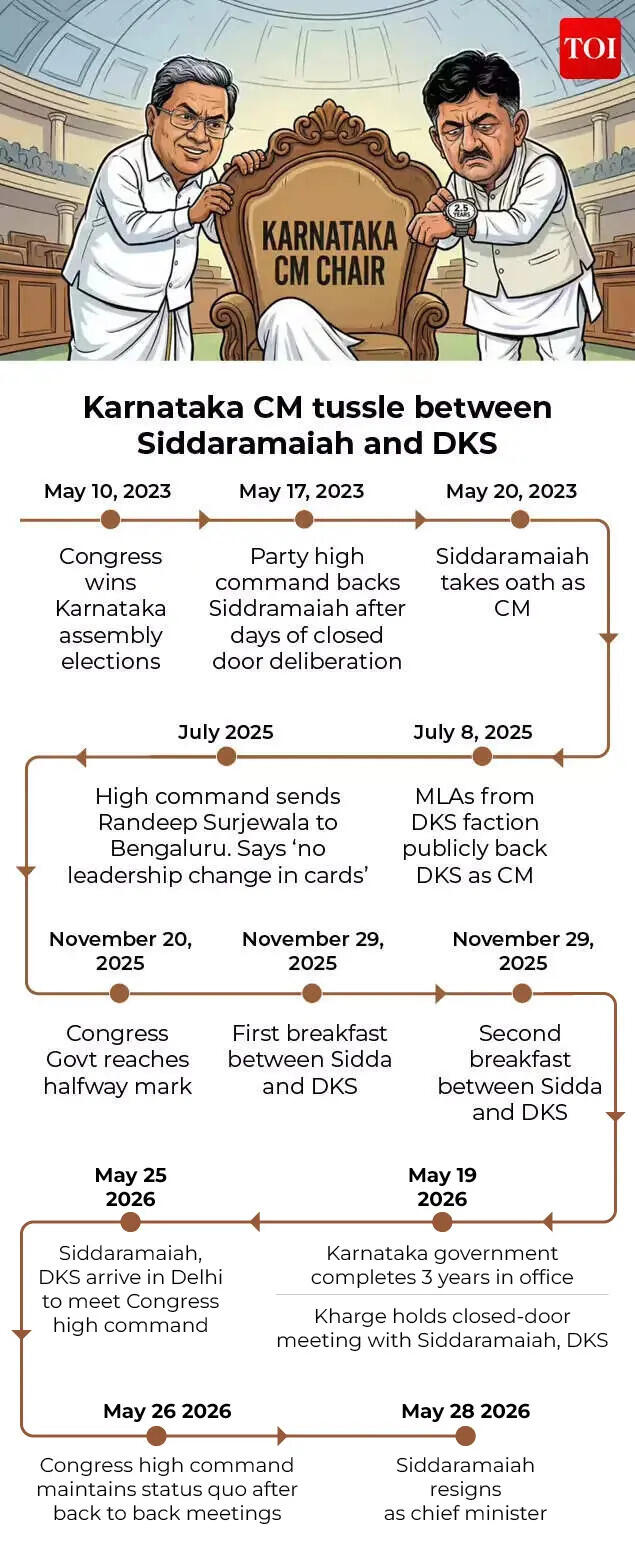
Siddaramaiah is out, but troubles may begin for Shivkumar and Rahul Gandhi. india news

Siddaramaiah is out, but trouble may begin for Shivkumar and Rahul Gandhi

New Delhi: Outgoing Chief Minister of Karnataka Siddaramaiah Looks like he left a ticking bomb as a farewell gift to his successor DK Shivakumar And Rahul Gandhi Before deciding to step down from his post on Thursday.A day before resigning as chief minister, Siddaramaiah on Wednesday accepted the long-delayed educational survey report of the Karnataka State Backward Classes Commission, known as the caste census.Read this also Siddaramaiah’s resignation, Shivakumar’s top post decided: Will Congress’ ‘drama’ end in Karnataka or will it continue as before?The report on Karnataka’s first caste survey has been prepared since 2017, during Siddaramaiah’s previous tenure as chief minister. After returning to power in 2023, Siddaramaiah ordered a fresh caste survey, the report of which was to be prepared in 2025.Siddaramaiah’s decision to accept the report just before leaving office is being seen as an important political message.Critics had alleged that successive governments refrained from acting on the first report due to fear of reaction from Lingayats and Vokkaligas, politically influential communities in the state.With the revised report now formally submitted, the focus turns to the next chief minister and cabinet, who will have to decide whether to implement its recommendations.why it mattersThe Karnataka government’s 2025 Caste Survey is one of the most comprehensive exercises conducted by the state to find out the socio-economic status of backward classes, other castes, scheduled castes and scheduled tribes.Read this also Siddaramaiah rejects Congress high command’s Rajya Sabha proposal: Pressure strategy or long-term strategy?However, the report is politically sensitive as it has the potential to disrupt Karnataka’s carefully balanced caste equations. Reports suggest that the number of backward communities may exceed that of Lingayats and Vokkaligas – the two dominant communities that have traditionally shaped the state’s politics for decades.Siddaramaiah’s Ahinda politics – an alliance of minorities, backward classes and Dalits – was designed to challenge that dominance by uniting numerically strong but politically fragmented groups. The caste census report is now being seen as an empirical validation of the social strength of the AHINDA block and could restart that political battle on a larger scale.

.

Due to this DK Shivkumar is in a difficult situation. Shivakumar is not only the most prominent Vokkaliga leader of the Congress in Karnataka, but is also credited with rebuilding the organizational structure of the party in the state.If the government led by him goes ahead with presenting or implementing the report, it risks a backlash from the influential Lingayat and Vokkaliga communities. On the other hand, delaying the report or shelving it could erode AHINDA’s support base that Siddaramaiah has carefully built up over the years to the Congress.In fact, Siddaramaiah has pushed DKS into a difficult position.Rahul Gandhi’s credibility at stake?Karnataka’s caste census also poses a political challenge at the national level for Rahul Gandhi, the leader of the opposition in the Lok Sabha.Rahul Gandhi has made caste census a central pillar of the national politics of the Congress Party. He has argued that accurate caste data is essential to ensure social justice, fair representation and targeted welfare policies for OBCs, Dalits and minorities.It was Rahul Gandhi who strongly pressured Congress-ruled states to conduct caste surveys to show the party was serious about implementing its politically supported social justice agenda.Under Revanth Reddy, Karnataka and Telangana emerged as the biggest testing grounds for that strategy.If the next government led by Shivakumar refrains from implementing or presenting the report, it could undermine Rahul Gandhi’s larger national narrative on social justice. This will give the BJP an opportunity to accuse the Congress of demanding a caste census at the national level, while being hesitant to act on it in states where it faces political resistance.

Source link

Governor removed VC of Baba Amte Divyang University and Skill University on appointment irregularities. jaipur news

Governor removes VC of Baba Amte Divyang University and Skill University over appointment irregularities

Jaipur: Governor Haribhau Bagde on Thursday ordered the immediate removal of Professor Dev Swaroop from the posts of Vice Chancellor of Baba Amte Divyang University and Acting Vice Chancellor of Vishwakarma Kaushal University over alleged irregularities in appointments during his tenure. Rajasthan University. Officials said the action was taken in consultation with the state government following complaints alleging fraudulent practices and arbitrary appointments during Swarup’s tenure as Rajasthan University vice-chancellor in 2011-12 and the selection process in 2013-14. According to a statement issued by the Governor’s office, complainant Prem Lata Singaria from Jaipur alleged that Swarup bypassed university rules and UGC provisions to benefit selected candidates instead of deserving applicants. The complaint was filed under the category “injustice against Scheduled Caste woman”. After the complaint, the Governor constituted a three-member high level inquiry committee under the chairmanship of Kota University Vice Chancellor Bhagwati Prasad Saraswat. “The report conclusively established that, during his tenure as VC, Dev Swarup violated established rules and UGC provisions; he arbitrarily convened selection-related meetings and recorded their minutes,” the governor’s office said in an official release. The report further said that during the syndicate meetings, Swarup “departed from standard procedural norms and prepared forged, fake and false documents, thereby fraudulently securing appointments for his preferred candidates.” The investigation report also found that despite being eligible, complainant Premlata Singaria was given less marks for academic records and research work. It further said that while the preferred candidates got 49 marks out of 50 in the interview and subject knowledge assessment, Singaria was given only 10 marks. The Governor has directed Rajuwas Vice Chancellor Professor Tribhuvan Sharma to take additional charge of Baba Amte Divyang University, while Professor NK Pandey of Haridev Joshi Journalism and Mass Communication University will take additional charge of Vishwakarma Skills University.

Source link