Gulf of doubt: Despite missiles flying, an agreement between America and Iran is said to be close.

Gulf of doubt: Despite missiles flying, an agreement between America and Iran is said to be close.

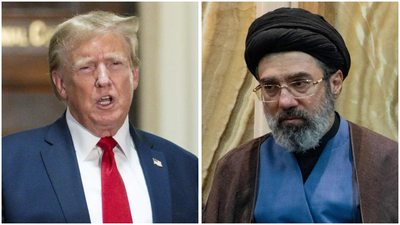
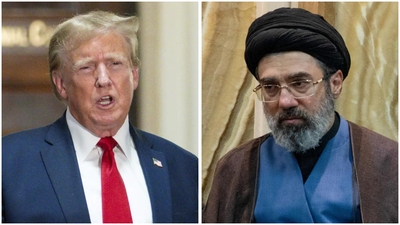
TOI correspondent from Washington: Just hours after verbal clashes and fresh attacks in and around the Strait of Hormuz between the US and Iran, both sides are reported to have once again reached a diplomatic breakthrough.According to Axios, US and Iranian negotiators have agreed to a draft memorandum of understanding to extend the fragile ceasefire and open a 60-day negotiating window focused primarily on Iran’s nuclear program in exchange for economic relief. But the proposed deal is still awaiting final approval from President Donald Trump. Trump wants “a few days” to consider it, according to officials cited in the report.The proposed arrangement would be the clearest signal yet that Washington and Tehran both recognize the limits of military escalation after months of naval warfare, sanctions, air strikes and economic disruption that have roiled global energy markets and exhausted countries near and far.Under the emerging framework, the ceasefire will remain in place formally while unrestricted commercial shipping through the Strait of Hormuz will resume. The US Navy will gradually lift its blockade operations, Iranian harassment of shipping will cease, and both sides will begin negotiations on sanctions relief, frozen Iranian funds, and humanitarian access to Iran.The nuclear issue – the central trigger for war – will remain at the forefront of the agenda during the 60-day negotiation period. Iran will reportedly commit to not developing nuclear weapons while discussions will continue on uranium enrichment, stockpiles and monitoring mechanisms. Iran has not confirmed any of these claims, Axios reports.The military escalation comes as President Trump again mixes threats with diplomacy in the way that has become characteristic of the conflict. During a Cabinet meeting, Trump threatened Oman – historically one of Washington’s most trusted mediators with Tehran – warning that Muscat would “behave” or face consequences, after reports emerged that Omani officials were exploring mechanisms to help manage commercial traffic through the Strait of Hormuz.At the same time, Trump publicly insisted that the strait would soon be fully reopened and repeatedly suggested that Iran now understood that the US would maintain heavy military pressure indefinitely if necessary.Contradictory messages – tension one hour, diplomacy the next – have become a defining feature of the war and a growing source of frustration for countries in Europe, Asia and across the Gulf. For countries like India, Japan and South Korea, the Hormuz disruption has become a strategic nightmare.Tanker insurance costs have soared, shipping schedules remain in disarray and governments are scrambling for alternative energy supplies, while privately urging Washington and Tehran to back off.The economic consequences are now reaching ordinary Americans as well. Gasoline prices across the US are at $4.50 a gallon (about Rs 1.15 a litre), adding to fresh political pressure ahead of the midterm elections in November, although Trump said he was not particularly worried about the elections.Republican strategists privately acknowledge voters’ growing fatigue with a conflict that was initially presented as a short campaign to force Iranian concessions but has instead evolved into a war of naval blockades, drone strikes and repeated confrontations at one of the world’s most important energy chokepoints.Yet Trump himself appears to be engaged in a display of patience rather than compromise, insisting that Iran is under severe military and economic stress and that “negotiations are on smoke.”Iran, for its part, is betting that Trump lacks the patience for a protracted conflict and rising domestic political costs. This may now be the decisive calculation of the war: not which side can win outright, but which side can endure the pain longer.Even the emerging MoU reflects that reality. It is less a peace treaty than a mutual truce — an acknowledgment that both powers may need a temporary respite from a confrontation that has disrupted global trade, destabilized energy markets and raised the ever-increasing threat of a broader regional war.

Source link

Government may use IAF aircraft to transport question papers for NEET re-exam: Report india news

Government may use Air Force aircraft to transport question papers for NEET re-exam: Report

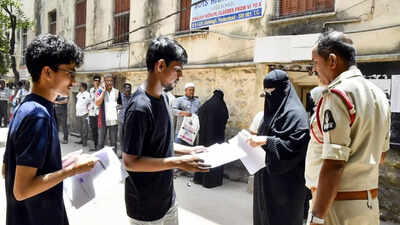
New Delhi: The Center is considering the possibility of using the Indian Air Force to transport the NEET-UG paper to ensure foolproof conduct of the re-exam on June 21, news agency PTI reported citing sources.This comes after a high-level meeting chaired by Defense Minister Rajnath Singh. Interestingly, Education Minister Dharmendra Pradhan and Communications Minister Jyotiraditya Scindia also attended the meeting.The meeting focused on the entire examination process, from setting and printing of question papers to transportation and security arrangements.“Ministers and senior officials discussed whether IAF aircraft could be used to transport NEET-UG exam papers,” sources told PTI.“However, no final decision has been taken yet and the option will be placed before Prime Minister Narendra Modi for final consideration,” he said.Meanwhile, Prime Minister Narendra Modi is also believed to be personally monitoring the preparations for the June 21 re-examination, and is being updated on every detail related to the exam process.The National Eligibility cum Entrance Test (Undergraduate), or NEET-UG, was conducted on May 3 across 551 Indian cities and 14 overseas centres. Around 23 lakh candidates had registered for the examination conducted by NTA.According to NTA, information about the alleged malpractice was received on the evening of May 7, four days after the examination was conducted.The NTA said the inputs were shared with central agencies the next morning for “independent verification and necessary action”.NTA had canceled NEET-UG on May 12 amid allegations of paper leak. The exam has been scheduled again on June 21.The CBI registered the case based on a written complaint by the Department of Higher Education under the Education Ministry.The Central Investigation Agency formed special teams to investigate the case, conducted searches across the country and made prompt arrests.So far, 13 accused have been arrested in the case from Delhi, Jaipur, Gurugram, Nashik, Pune, Latur and Ahilyanagar.The investigation conducted so far has revealed the real source of the question paper leak, the CBI had earlier said.

Source link

Aadhaar, voter and ration cards found in TMC’s Tangra office. kolkata news

Aadhaar, voter and ration cards found in TMC's Tangra office

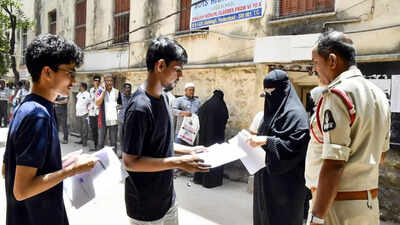
Kolkata: A pile of voter, Aadhaar and ration cards was recovered from the closed Trinamool Congress Party office on Thursday morning. Recently, the party office was locked after it was painted in saffron colour.The recovery at Tangra Lane No. 2 in East Kulia created intense tension in the neighbourhood, leading to the deployment of police in large numbers to control the protests by agitated locals.The party office, located within the Beleghata assembly constituency and earlier used by TMC councilor Jibankumar Saha of Ward 57, was closed after the assembly election results were declared on May 4.Local residents, reportedly with the support of BJP officials, broke the lock and entered the premises and found bundles of identity documents kept neatly inside a cabinet.As news of the discovery spread, a large crowd gathered outside the office, with many residents identifying their missing cards among the recovered items. The discovery has puzzled many, as some locals already had the original documents at home, raising the question of how parallel or duplicate copies were stored inside a political office.Some local residents have leveled serious allegations against the TMC and claimed that its leaders had earlier collected these identity cards on the pretext of facilitating various government welfare schemes but never returned them.Another resident alleged that the cards intercepted at the local post office level were deliberately withheld by party workers.Local BJP leaders have expressed suspicion that the documents collected may have been submitted to manipulate the voter list or create fake voter identities.The recovery of Tangra mirrors a similar incident that took place a few days ago in Ward 36 of Basanti Devi Colony area of ​​Bidhannagar, where a cache of voter and identity cards was found under similar circumstances. In that instance, locals alleged that political miscreants forcibly confiscated the cards to suppress voting percentage during the elections.Senior police said a comprehensive investigation was launched to determine how such a large quantity of sensitive identity documents issued by the government reached the party office.Police are attempting to contact each individual whose name appears on the seized cards to verify the circumstances under which they surrendered their documents.No TMC leader has yet come forward regarding the incident.

Source link

Down the rabbit hole: Bangladeshi buffalo pardoned by ‘Donald Trump’ – A brief history of animal sacrifice world News

Down the rabbit hole: Bangladeshi buffalo 'Donald Trump' pardoned - A brief history of animal sacrifice

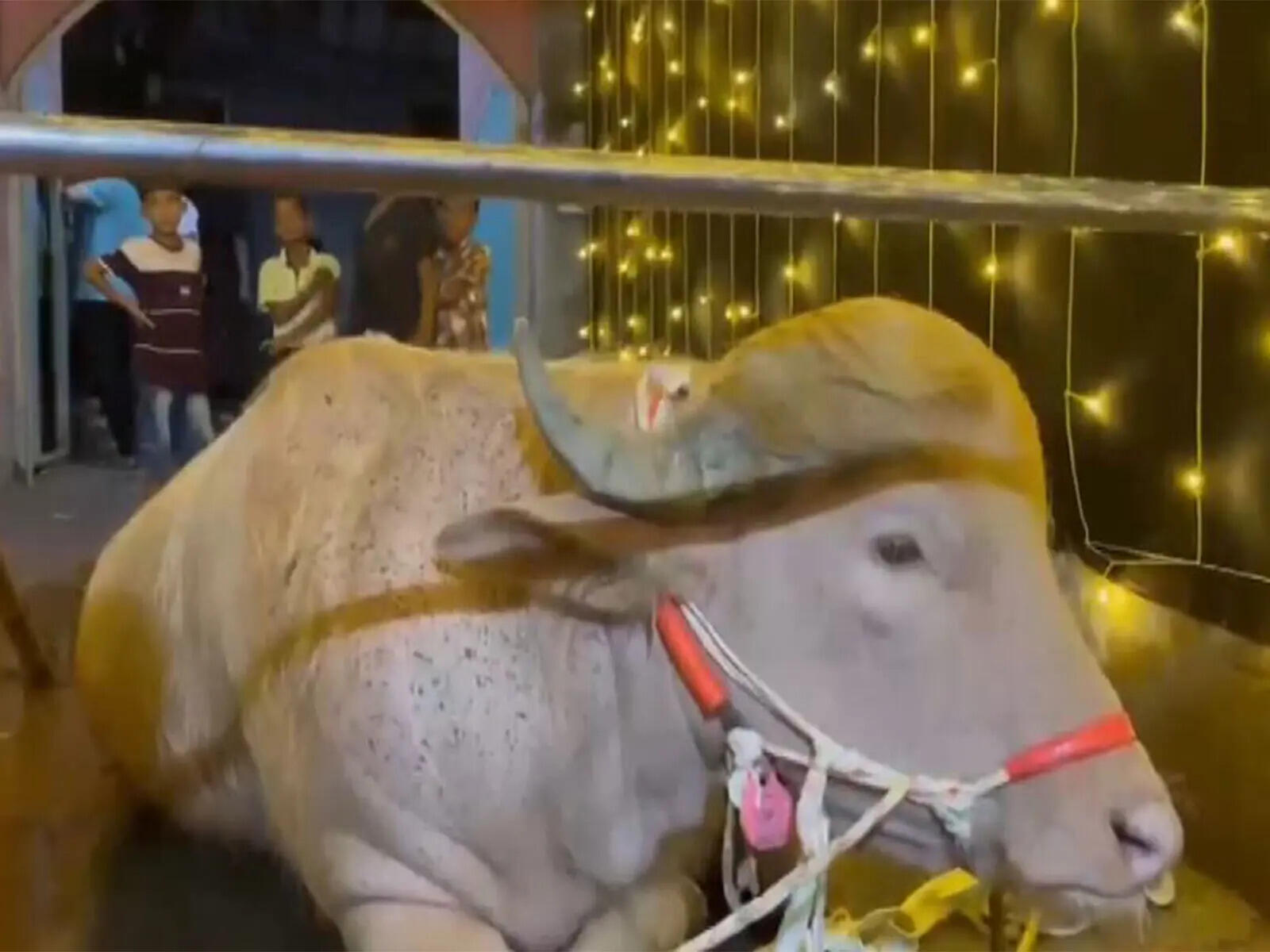
donald trump‘Became a viral sensation overnight. Crowds gathered from far and wide to be amazed by his darshan. They could hardly understand that someone like him walked the earth. They were amazed by her golden hair and fair skin. They were surprised by his weight. And when they learned that he might soon be sacrificed, they were in a state of shock. But destiny had other plans and when he survived, the whole world heaved a sigh of relief.Now, while this leadership may read as if one is describing the leader of the free world, one is simply describing Yudhishthira here: Donald Trumpo jeevati iti, neta va mahisho va.For those who have forgotten their Mahabharata or Sanskrit, Donald is not the US President, especially does not eat from the McDonald’s menu, and has never bombed Iran or damaged the global economy. He is a buffalo in Bangladesh who became an overnight sensation due to his resemblance to Trump and is seven times heavier than his namesake.What started as routine Eid shopping soon became a global viral sensation. Farm owner Ziauddin Mridha said the majestic animal caused him 1.5 million taka, or about $12,300, in damage, and now that he has been compensated, the Bangladesh government has decided to send Donald to Dhaka’s National Zoo instead of letting him end up on someone’s plate.We live in the age of viral animals, from Larry the Cat, who lives permanently in 10 Downing Street, to Moo Deng, the lovable pygmy hippo in Thailand, and Punch, the lonely monkey whose inability to make friends took the world by surprise. Donald Trump the buffoon may be the latest addition to this god band. But long before algorithms turned animals into celebrities, humans were already turning them into gods, omens, and pardoned prisoners.This is where the rabbit hole begins.

man, animal and god

To understand why the sudden killing of a buffalo going viral might be so meaningful, one has to go back to the beginning, when animals were not content but cosmological. Long before the advent of Twitter, animals helped us understand the world. We were the original monkey, see, do monkeys, although, to be fair to our simian cousins, they never did anything as awesome as inventing LinkedIn. The earliest cave paintings are not self-indulgent selfies or breakfast photos but sketches of animals: horses, bison, aurochs, deer, lions and wild boars.
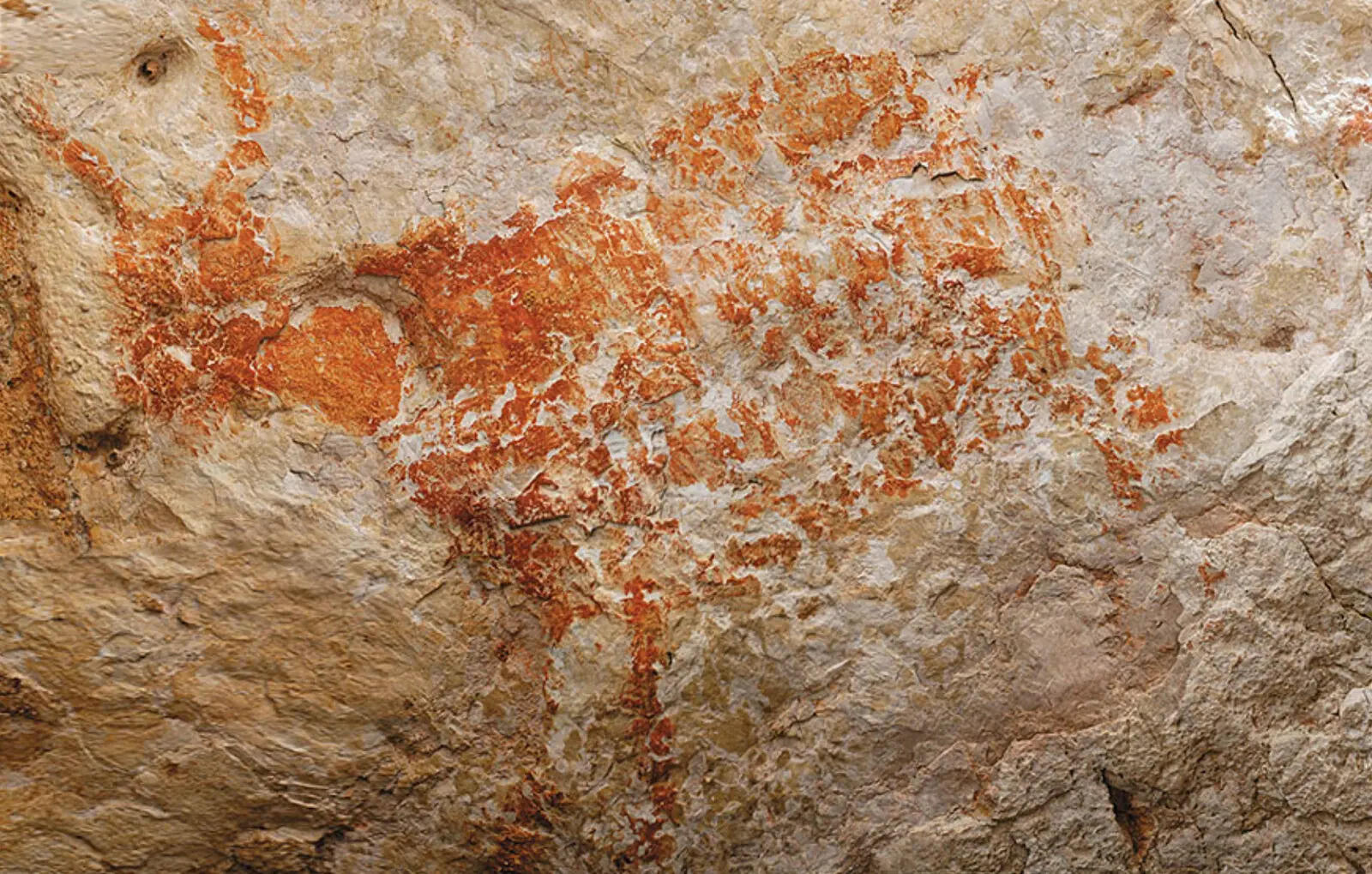
an unknown cow

One of the oldest known figurative paintings, depicting an unidentified bovine, was discovered in the Lubang Jeriji Saleh Cave and dated to be over 40,000 (perhaps as old as 52,000) years old.

Animals were our first guides and textbooks, teaching us how to hunt, when the weather was changing, and why communism wouldn’t work.Animals inspired us and, in turn, revealed our first gods. The lion can symbolize courage, the snake can symbolize danger, the bull can symbolize force, and the cow can symbolize abundance. Once animals became symbols, gods were never far behind.One of the most iconic images of the Indus Valley Civilization is the Pashupati seal, which many historians interpret as Shiva, the lord of animals. The horned, seated figure is surrounded by an elephant, tiger, rhinoceros, buffalo and other creatures, which suggests that one of our earliest ideas about divinity was one who could command a wild animal like Komaram Bheem in RRR.In the ancient world, gods rarely traveled alone. Sometimes animals were their vehicles, sometimes their symbols, sometimes their bodies, and sometimes a complete warning label attached to their power. In Hinduism, the entire divine vocabulary centers around animals: gods ride them as vehicles, possess their bodies as avatars, and often turn them into sacred symbols.This was hardly unique to ancient India. Egyptian gods often looked as if they were assembled in some divine costume department: Horus had the head of a falcon, Anubis had the head of a jackal, Bastet had that of a cat, Sobek had that of a crocodile, Hathor had the horns of a cow, Khnum had the head of a ram, Taweret had the body of a hippopotamus, and Apis had the body of a complete bull.The Greeks, as they are wont to do, made things more scandalous, and Zeus treated the animal kingdom like a divine disguise kit, becoming a bull, swan or eagle whenever the plot required moral degradation. Rome, being Rome, turns animals into monarchs. The eagle became the soul of the army, while the wolf that suckled Romulus and Remus gave the empire an origin story with milk, murder, and excellent branding.China, too, mapped the cosmic order through animals: the dragon stood for royal authority and rain, the phoenix for renewal, the tiger for martial courage, and the tortoise for endurance. The four symbols made the animals themselves guardians of direction, as clearly space also required wildlife management. And later, a fifth, a noodle-loving panda, was added to tarnish the Middle Kingdom’s image around the world.And in Norse mythology, Jörmungandr, the Midgard or World Serpent, encircles the Earth. In Ragnarok, Thor kills the serpent but dies from its venom, unlike the MCU Thor, who is condemned to appear in sequels until Chris Hemsworth shrugs off his mortal coil. And given that animals and gods were interconnected, it was only a matter of time before humans began sacrificing animals to the gods.

to give up and sorry

The English word sacrifice comes from the Latin sacer and facere, meaning “to make sacred,” which sounds much better than killing something and hoping the universe listens. The animal was the envelope and God was the addressee.Sacrifices were transactions of various kinds: food for the gods, blood for crime, life for favor, smoke for prayer. In Mesopotamia, offerings were made to gods such as Enlil, Enki, Inanna-Ishtar, Shamash, and Marduk, as gods were conceived not as distant abstractions but as forces to be honored, fed, satisfied, and largely kept aside.In Egypt, offerings to gods such as Amun-Ra, Osiris, Isis, Hathor, and Ptah were part of maintaining Maat, the cosmic order that kept the world from slipping back into chaos.In Greece, sacrifices were made to Zeus for power and protection, to Athena for wisdom and victory, to Artemis for hunting and childbirth, to Apollo for prophecy and healing, to Demeter for harvest, and to Dionysus for fertility, ecstasy, and whatever ancient civilization called a more respectable version of the long weekend.

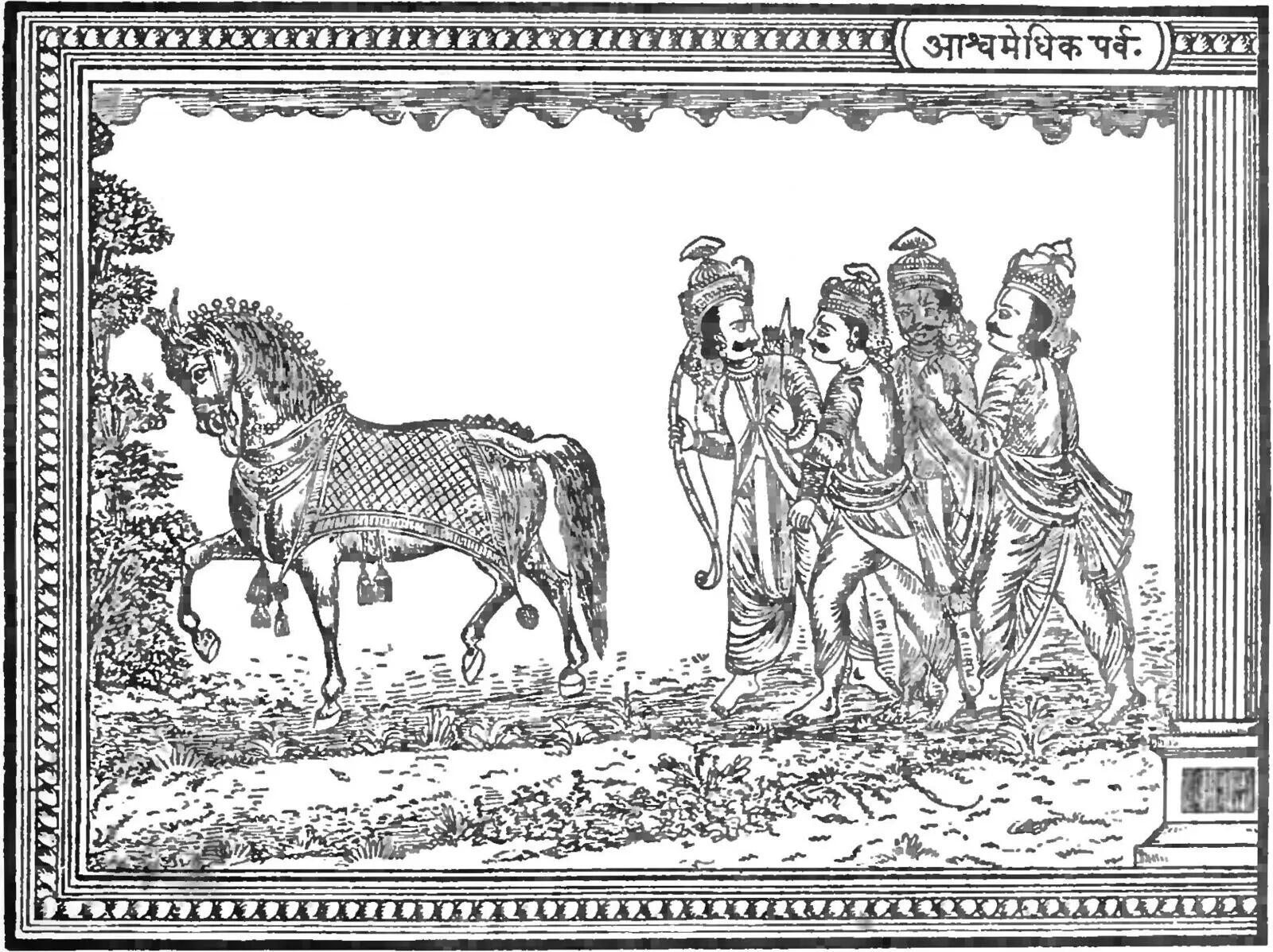
Illustration of Ashwamedha in the History of India (1906)

Ancient India also had its own rituals, like Ashvamedha, where a horse was allowed to roam around for a year under the protection of the king, and if the horse returned without being challenged, the king could claim universal sovereignty, which sounds a lot less messy than frequent UN Security Council meetings.As paganism evolved into Abrahamic beliefs, the ritual of sacrifice changed and did not change.In Judaism, animals were offered to Yahweh as burnt offerings, peace offerings, sin offerings, trespass offerings, and, according to one hypothesis, as offerings to renew Seinfeld. The most enduring image was the Yom Kippur scapegoat described in Leviticus: one goat was sacrificed, while the other was burdened with the community’s sins and sent into the wilderness. Long before modern politics discovered the utility of blaming immigrants, minorities, internees, previous governments, or algorithms, humanity had already put collective guilt on a goat and told it to leave town.One can imagine that the gods were happy as Seinfeld kept getting renewed, while the Jews were responsible for everything that came out of Western civilization. In fact, it was a Jewish gentleman who also promoted Christianity, although Christianity was a religious transformation of sacrifice.Jesus became the “Lamb of God”, the innocent victim whose death replaced the repeated blood transfusions on the old altar, the one who died for all sins, leading to the terrible joke that if no one sins, Jesus died for nothing.Instead the animals became metaphors, with the lamb as survival of innocence, the shepherd as divine care, and the sacrificial victim as salvation. Christianity moved sacrifice from ritual slaughter to theology, which is why the language of blood, redemption, and offering persisted long after most Christians stopped bringing livestock to the priests.Meanwhile, in the third Abrahamic faith, sacrifice remained necessary, which brings us Eid al-Adha. The festival commemorates Abraham’s desire to obey God, but an animal takes his place instead. The meat is traditionally shared among friends and family, making it an act of remembrance and obedience.In all three Abrahamic traditions, the animal either dies, becomes plagued with guilt, or becomes a memory of a sacrifice that has been postponed.But while sacrifice is understood, how did forgiveness become the norm?While there are many versions of it around the world, the modern version can be linked to the Thanksgiving pardoning of the turkey, although when one knows the entire history, one wonders if Thanksgiving is the right word to describe the event.
Thank you

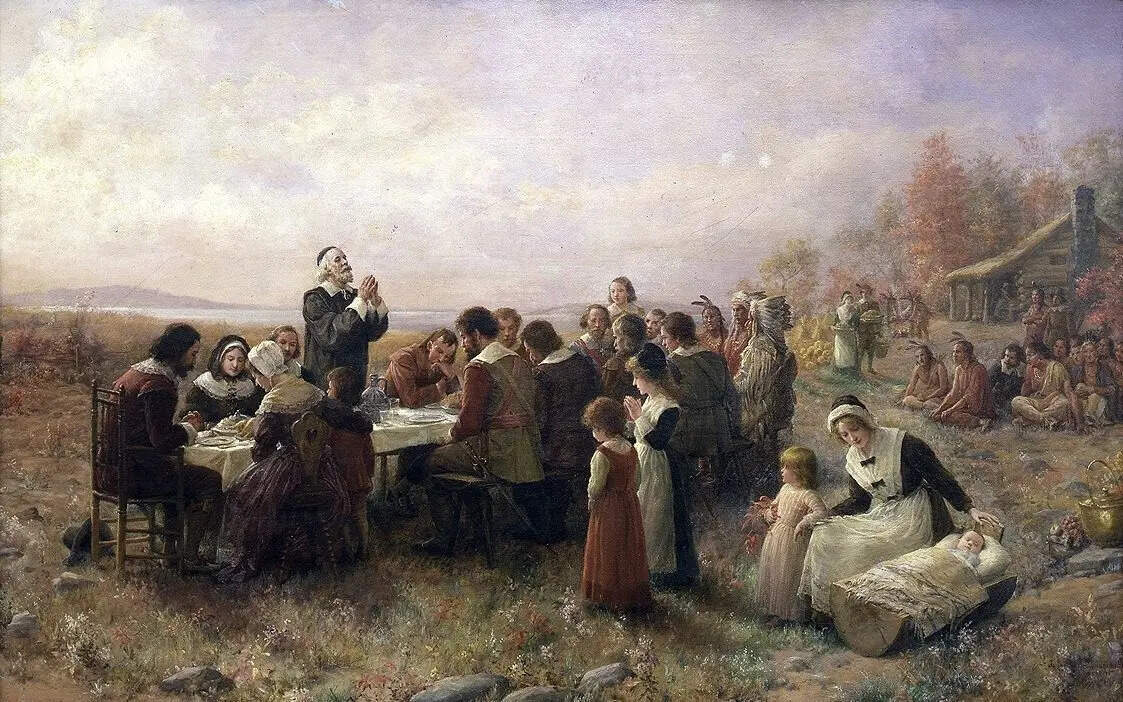
Jennie Augusta Brownscomb’s 1914 portrait, the first Thanksgiving in Plymouth, is now on display at Pilgrim Hall Museum in Plymouth, Massachusetts.

The story goes that in 1621, the English settlers in Plymouth were barely getting by – just as members of the Delhi Gymkhana were forced to attend the Press Club – when the Wampanoag tribe, led by Osemquin, decided to help them. The tribe was also weakened by disease and rivalry, and the first “Thanksgiving” was not a Norman Rockwell painting with gravy boats, but a strange political system, like the one we see in coalition governments over breakfast.While history suggests it was likely poultry, including turkeys, ducks or geese, and even deer, the turkey became the food mascot because it was native, large, practical and could feed several people at the same time.What began as a harvest meal turned into a national myth, especially in the 19th century, when Thanksgiving was promoted as a unifying American ritual. Abraham Lincoln proclaimed a national Thanksgiving in 1863 during the Civil War, and the familiar menu, including turkey, became part of the holiday’s emotional machinery.Legend has it that Abe’s son Tad pleaded to spare a Christmas turkey named Jack. JFK saw a man wearing a sign in 1963 that read, “Good food, Mr. President”, and decided it should see another birthday.
the buffalo survived

From viral sensation to zoo resident: Bangladesh’s ‘Trump’ buffalo saved from Eid sacrifice

Later, when reporters asked about those involved in the Iran-Contra scandal, Reagan scoffed at the pardon.George HW Bush formally announced the pardoning of the turkey in 1989, and it soon became part of the national skyline. And like most American things, like Ozempic and diabetes, Thanksgiving, turkey and forgiveness became part of the world’s spectacle.Thanks largely to the algorithm and the spectacle that followed, not unlike the chaotic sequence of events that saw its namesake become leader of the free world, it will live to see another day. But their survival shows us that humanity never outgrows its old ways: On some days, we sacrifice animals to appease the gods, and on other days, we sacrifice animals to feel a little more human.

Source link

Siddaramaiah’s resignation, Shivakumar’s top post decided: Will Congress’ ‘drama’ end in Karnataka or will it continue as before? | india news

Siddaramaiah resigns as Karnataka Chief Minister, DK Shivakumar likely to take charge

Siddaramaiah is out, Shivakumar’s time has come

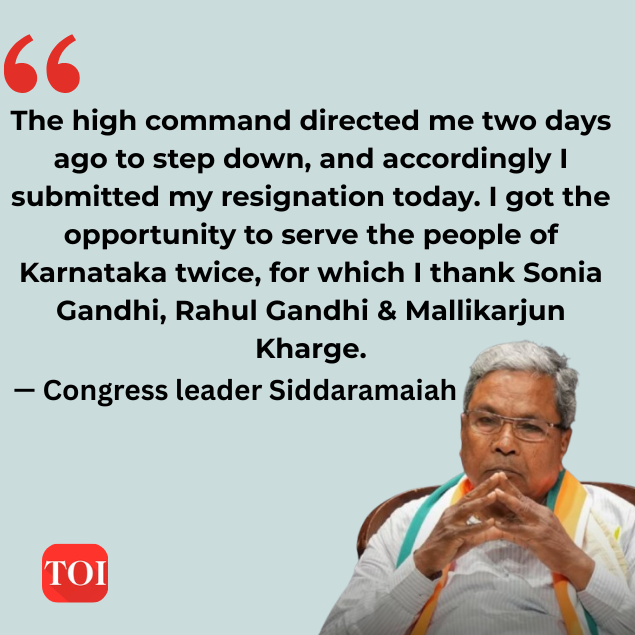
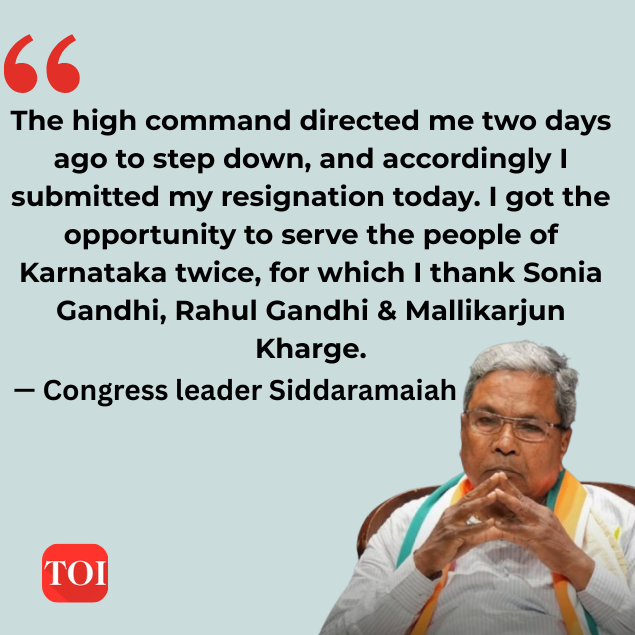
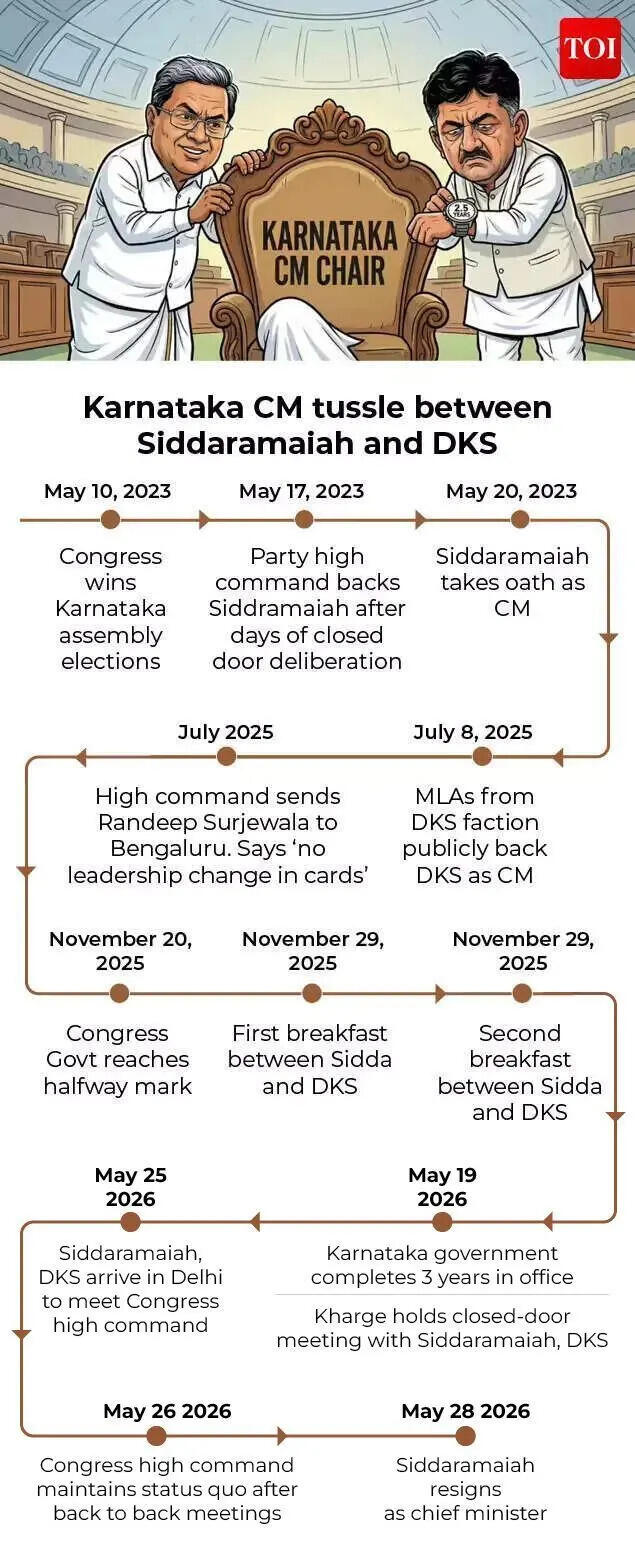
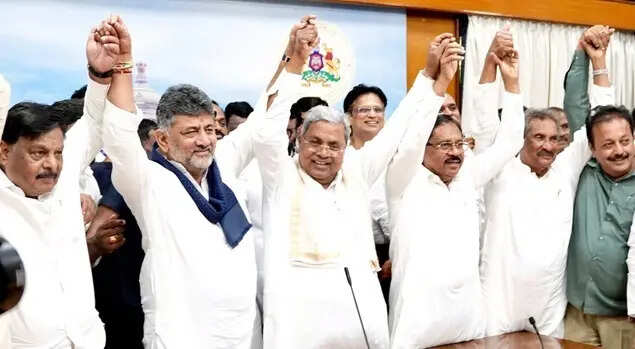
The process of change of power in Karnataka has finally started. Siddaramaiah has resigned from the post of Chief Minister, taking the first formal step towards the much-awaited change of power in the state.Standing shoulder to shoulder with DK shivkumar And Karnataka Home Minister G Parameshwara In a major show of unity, Siddaramaiah announced his resignation on Thursday, ending months of speculation over a change of leadership in the state. Announcing his resignation, Siddaramaiah said he was stepping down after the Congress high command directed him to do so two days ago.

Siddaramaiah (1)

What did Siddaramaiah say while announcing his resignation?

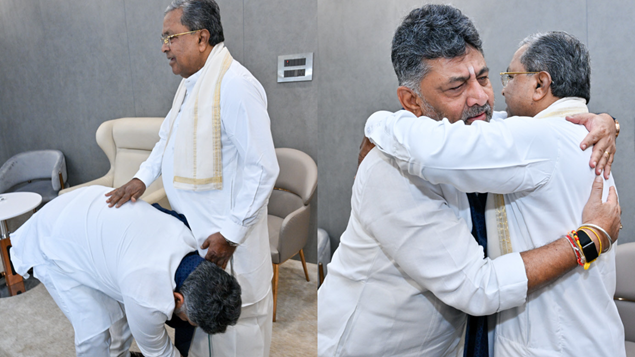
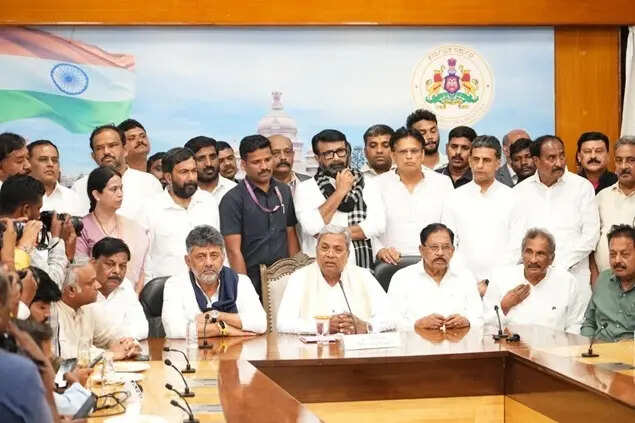
DK Shivakumar is set to get the top post eventually, unless Siddaramaiah and his supporters have a “last-minute surprise comeback plan”.In the breakfast meeting called by the Chief Minister before leaving the post, both the leaders gave a good display of cordiality by hugging each other. Shivakumar touched Siddaramaiah’s feet to seek the blessings of the senior leader. So far all is good.

Images (34)

Bonhomie at the breakfast meeting

But the big question is, has the Congress ‘drama’ finally ended in Karnataka? Or will the struggle for power continue in Karnataka? Rajasthan Where did Congress lose power to BJP in 2023 amid infighting between Ashok Gehlot and Sachin Pilot camps?

the bumpy road to armistice

The fact that the process of this ceasefire agreement has been full of ups and downs may cause considerable concern to the central leadership of the Congress. The power struggle between Siddaramaiah and Shivakumar hangs over the Congress government like the sword of Damocles, ever since the party’s landslide victory in the 2023 assembly elections.DK Shivakumar, who played a key role in the 2023 election victory as state Congress president, wanted the chief minister’s chair from the beginning. However, Siddaramaiah, armed with immense governance experience and having the support of a clear majority of newly elected MLAs, was in no mood to accept defeat. After an intense post-result standoff, during which Shivakumar aggressively remained in touch, a compromise was eventually reached. Shivkumar bowed down and accepted the post of Deputy CM.

1000082772.

Karnataka power struggle: timeline

This was armistice agreement number 1. Siddaramaiah got the throne and Shivakumar made a compromise.However, this initial ceasefire did absolutely nothing to end factional fighting. While Shivakumar’s supporters left no opportunity to claim that a strict 2.5-year rotational system was in place, Siddaramaiah’s supporters contested the claim with all their might. In fact, Siddaramaiah himself has repeatedly and publicly said on several occasions that he will complete his five-year term.All the while, the Congress high command looked the other way, choosing to allow these fundamental differences to fester until they inevitably reached a tipping point.And that turning point came when Siddaramaiah completed his two and a half year tenure as Chief Minister. The simmering tensions came to the fore again. Shivakumar made the idea of ​​rotational CM public for the first time and targeted Siddaramaiah for reneging on the deal. He did not take names directly but the message was loud and clear. After this, there was an open war of words between the two leaders, due to which the Congress leadership had to face embarrassment.Shivakumar started the duel on X with a cryptic message: “Word power is world power. The greatest power in the world is to keep your word. Be it a judge, the President or anyone else including me, everyone has to obey. The power of words is world power.”Siddaramaiah immediately reacted and used the same words to target his deputy. “A word is not power unless it makes the world better for the people. The mandate given by the people of Karnataka is not a moment, but a responsibility that lasts for five full years. The Congress Party, including me, is speaking for our people with compassion, consistency and courage. Siddaramaiah wrote on Twitter, ‘Our word for Karnataka is not a slogan, it means the world to us.Siddaramaiah then listed out the promises he had fulfilled in his two terms as chief minister, leading to an open social media “war of words” between the two top leaders of the state.And this brings us to compromise number 2. This time Shivakumar has benefited and Siddaramaiah has had to compromise. But even though the transition process has formally begun, there are signs that the outgoing chief minister has not completely given up the fight.Siddaramaiah had reportedly insisted on calling a Congress Legislature Party (CLP) meeting to formally choose his successor, which was widely seen within the party as an attempt to slow down Shivakumar’s rise.There was also talk in Congress circles that formal CLP elections could potentially project Karnataka Home Minister G Parameshwara as a compromise candidate, especially if a section of MLAs mobilizes behind the senior Dalit leader. Such a development will not only prevent Shivakumar’s rise, but will also give Siddaramaiah an opportunity to take credit from the Congress for facilitating Karnataka’s first Dalit Chief Minister.

HJZ0wvmaEAIXBdV

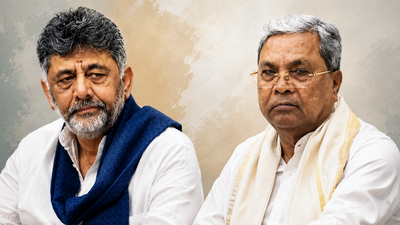
DK Shivakumar, Siddaramaiah and G Parameshwara

Central to the Siddaramaiah camp’s argument was the claim that the outgoing chief minister enjoyed overwhelming support within the legislature party. Congress leaders familiar with the discussions indicated that Siddaramaiah had submitted the list of 108 MLAs to underline his political strength within the party.Siddaramaiah may have agreed to step down, but he is too politically influential within the Karnataka Congress to be easily sidelined. Perhaps this remains the biggest challenge for the Congress high command.Sandeep Shastri, political commentator and vice-president of Nitte University, believes that the Congress delayed the change perhaps more than it should have.“I have been saying for the last six months that change in Karnataka is not a question of ‘if’ but a question of ‘when’,” Shastri said. He argued that if the Congress had worked only on the two-and-a-half-year target, it could have avoided the tension and uncertainty of the last few months.Shastri also suggested that despite stepping down, Siddaramaiah was unlikely to disappear completely from Karnataka politics. “He will remain an important power center in Karnataka and the new chief minister will have to deal with that,” he said.According to Shastri, Shivakumar finally got the post he was promised, but managing the internal dynamics of the Congress and balancing competing interests within the party will remain his biggest challenge going forward.

show of unity

In a huge show of unity, standing shoulder to shoulder with DK Shivakumar and Karnataka Home Minister G Parameshwara, Siddaramaiah announced his resignation.

However, political commentator Professor Harish Ramaswamy argued that the Congress high command would have acted at the right time to ensure a smooth transition.Ramaswamy said, “The current developments in Karnataka are a timely step taken by the Congress high command, which benefits from the generational change in the party.”He also rejected speculations that the change could weaken the Congress government or automatically benefit the BJP. “Although there may be some deviations, the transition is likely to be smooth,” he said. He said Shivakumar may emerge as a more “innovative” chief minister than many expected.

Rajasthan experience of Congress

The problem for the Congress is that Siddaramaiah is not only a mass leader with a strong support base in the state, but he is also the party’s biggest OBC face in Karnataka. If Siddaramaiah decides to be careless, it could harm Congress’s prospects in the 2028 assembly elections.The Congress will remain cautious over the election results in Rajasthan due to the prolonged leadership battle between its two state stalwarts ahead of the 2023 assembly elections. The crisis there was similar in many ways. Sachin Pilot, as the then Rajasthan Congress chief, had played a key role in the party’s victory in 2018 and was expected to be rewarded with the chief minister’s post. But Ashok Gehlot had both administrative experience and the support of a large section of MLAs. The Congress, as it did in Karnataka in 2023, supported the senior leader and Pilot was asked to wait.After a long wait, Pilot rebelled along with his supporters and a bitter public war broke out between the two camps as the Congress high command struggled to contain the crisis. Reports at the time revealed that Shivkumar and Priyanka Gandhi played a key role in ensuring that Pilot did not leave the party. Pilot then, like Shivakumar now, may have lacked numbers among the MLAs, but he was too important politically for the Congress to ignore.But unlike Pilot, Shivakumar eventually managed to garner the support of the Congress high command, in which Priyanka Gandhi reportedly played a key role. Eventually Congress lost power in Rajasthan and Pilot is still waiting for a bigger role in the state.The Congress high command will hope that the transition in Karnataka is smooth and that the ceasefire lasts till the next assembly elections in 2028.

Challenge ahead…

There were indications that Rahul Gandhi had long been reluctant to replace Siddaramaiah despite pressure from sections within the party who believed a change of leadership could benefit the Congress politically. According to reports, Siddaramaiah told Rahul Gandhi that he has no ambition to enter national politics. However, Rahul is understood to have stressed that he wants the experienced OBC leader to play a bigger role at the national level and strengthen the Congress at the national level.There is a possibility that Siddaramaiah may eventually be sent to the Rajya Sabha. Such a move could potentially bring changes at the national level as well, with many within the party seeing Siddaramaiah as a potential contender for Leader of the Opposition in the Rajya Sabha as the Congress looks to strengthen its OBC reach at the national level.Thus, the challenge for Congress is not just to change the Chief Minister. It is also about maintaining harmony between the two power centres, balancing caste equations and regional loyalties and ensuring that the roadmap for the 2028 election battle in Karnataka does not remain bumpy.

Source link

‘Ranji Trophy performance ignored by selectors’: Siddhesh Lad calls IPL ‘shortcut’ for Indian team. cricket news

'Ranji Trophy performance ignored by selectors': Siddhesh Lad calls IPL 'shortcut' for Indian team

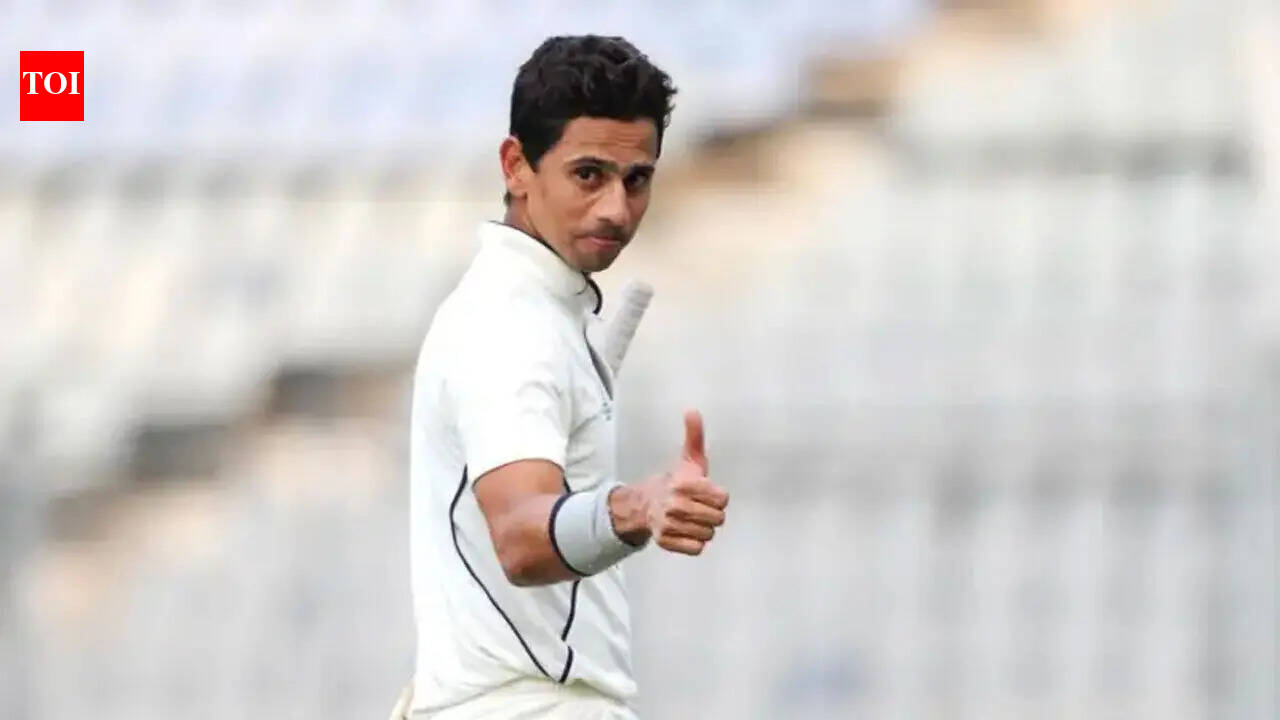
Mumbai: This is an indication of where things have reached in Indian cricket. Siddhesh Lad is an experienced first-class player. The 34-year-old Mumbai batsman, who has long been known as his team’s ‘crisis man’, made his first-class debut almost 12 years ago in November 2013, and has scored 5623 runs in 82 matches at 44.27@15 with 15 centuries and 30 fifties. Lad scored five centuries – he was the top run-scorer for Mumbai in the 2025–26 Ranji Trophy season with 77.40@774 runs in eight matches. However, the consistent domestic cricket batsman has now lost faith in the Ranji Trophy, from where the national selectors pick India’s potential players.Speaking to TOI on the sidelines of the jersey launch event of T20 Mumbai League defending champions Mumbai South Central Maratha Royals on Thursday, Lad said he firmly believes that it is the performance in the IPL that is considered the only criteria for selection. Season 4 of the T20 Mumbai League starts from Monday at the Wankhede Stadium.Citing the example of Jammu and Kashmir fast bowler Aaqib Nabi, who was the leading wicket-taker in the Ranji Trophy last season with 60 wickets at an average of 12.56 in 10 matches and who helped his team win its maiden title last season, was ignored for the one-off Test against Afghanistan, Lad told this paper, “I think you are 100% right when you say that doing well in the IPL will be a huge boost for the Indian team. The harsh reality is that domestic cricket performance is ignored by the national selectors. Ranji Trophy has been devalued. I will not deny it. I am not saying that I have performed well, so pick me in the Indian team, but I think someone like Auqib Nabi, if he has worked so hard and single-handedly won the Ranji Trophy for Jammu and Kashmir, which is not so easy, has performed exceptionally well in the Ranji Trophy, then he deserves to be selected in the India Test team.Explaining his point further, Lad said, “I mean, IPL players also know how difficult it is to play the entire (Ranji Trophy) season and maintain their fitness. However, nowadays, if you do not perform well in the IPL, or you do not have a good season in the IPL, then your chances of getting into the Indian Test team are less. If you do not play in the IPL, it is difficult for you to move forward (in your career).”Nabi took 44 wickets @ 13.27 in the 2024-25 Ranji Trophy season. Putting into words the bitter truth of Indian cricket, Lad said, “You are giving the wrong message to domestic cricketers that even if you perform well in the Ranji Trophy, it doesn’t make any difference to your cricket career, but if you perform well in a few matches in the IPL, you can make a place in India’s Test team. In the beginning, everyone says, ‘If you perform in the Ranji Trophy, you will play for India, if you don’t perform then you won’t. Will play. But in the end, when we actually see the selection, a lot of things go wrong.In that kind of scenario, would he advise the promising youngsters of the Maratha Royals team to focus on playing and performing well in the T20 Mumbai League and IPL instead of trying to make it to the Mumbai Ranji Trophy team?

Do you think IPL should be the main criteria for selection in the Indian cricket team?

“Definitely, I would say so. I wouldn’t deny that if you see that you can play for India after just one season of IPL, something you can’t possibly do after playing Ranji Trophy for a decade, then it means we can’t ask players to focus only on Ranji Trophy. If the player is playing well in the T20 Mumbai League, there is a shortcut for him to play in the IPL later and make a place in the Indian team,” Lad said, adding that it is matter of fact.Being associated with domestic cricket, Lad is hurt by the way things are shaping up in Indian cricket at present. “I have seen many players who have performed exceptionally well in the Ranji Trophy. However, just because they did not get that opportunity in the IPL, they did not get a chance to make the Indian Test team,” Lad lamented.Meanwhile, Lad and Maratha Royals head coach Amit Dani welcomed the availability of Mumbai and Rajasthan Royals fast bowler Tushar Deshpande for Maratha Royals this time, who did not play last season.

Source link

Odisha jails get breathing space with 66% occupancy: PSI report | bhubaneswar news

Odisha jails get breathing space with 66% occupancy: PSI report
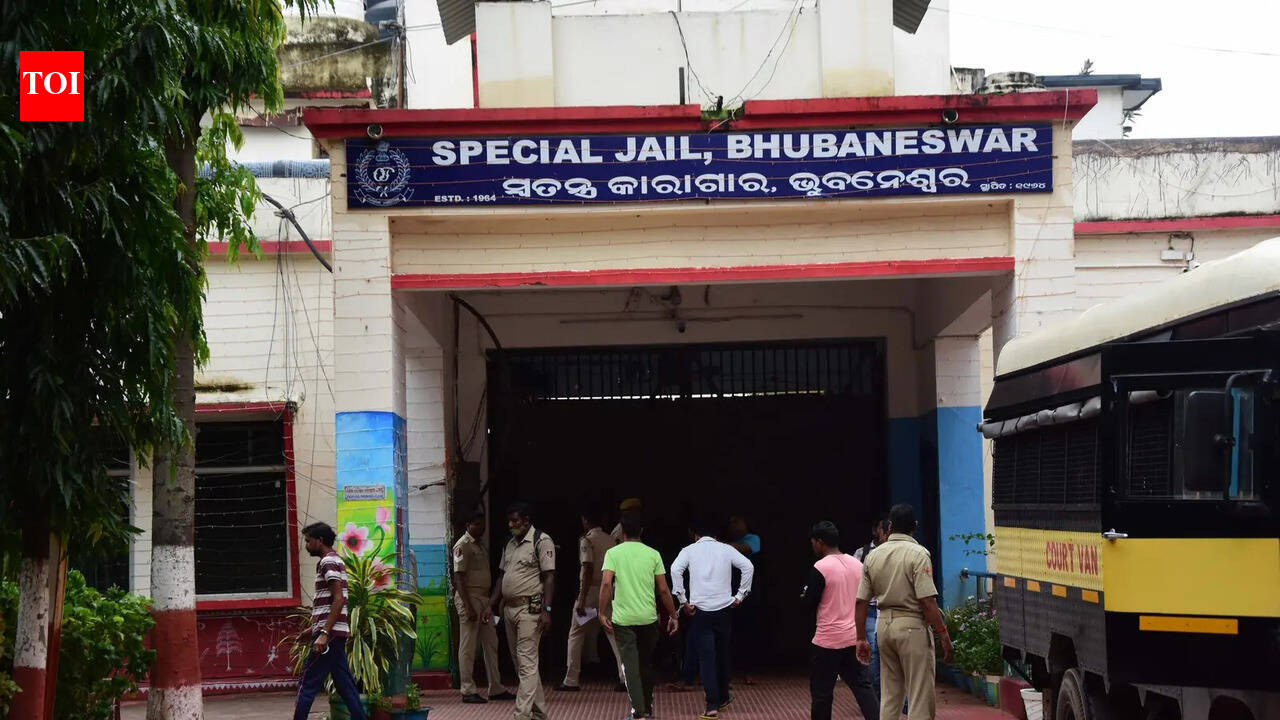
special jail in bhubaneswar

Filling of jails with water is a common sight in the country. But Odisha Prison Statistics India (PSI) has managed to buck this trend, recording an occupancy rate of 66%, according to the 2024 report. The state reduced its prison occupancy rate from 99.1% in 2021 to 66% in 2024. During the same period, it increased its capacity from 20,987 to 25,176, an increase of 19.9%. At present, there are 16,617 prisoners in Odisha jails.The main reason for high population in prisons in India is the high population of undertrial prisoners. While undertrials constitute 72.6% of the total prison population across the country, undertrials constitute 77.5% of the prison population in Odisha – that is, 12,879 out of 16,617 prisoners.The solution to high prison occupancy depends not only on infrastructure but also on mindset Supreme Court It has been repeatedly emphasized that bail is the ideal, not jail. Despite this, the India Justice Report (IJR) 2025 found that decadal data shows that the proportion of the undertrial population spending 1-3 years in almost all states and union territories has increased with an average increase of 4.14 percentage points at the national level.In Odisha, capacity expansion took place after the intervention of the Orissa High Court. In May 2021, a two-judge bench of Chief Justice S Muralidhar and Justice Savitri Ratho said, “There is an urgent need to decongest the prisons and accommodate the prisoners in excess of the capacity of the concerned prison in other secure premises in a phased manner, which can be done by upgrading other state buildings/facilities to meet the needs of the prisons.As a result, the state sanctioned Rs 39 crore for modernization during FY 2022-2023, which is 56% more than the amount sanctioned for FY 2021-2022, along with Rs 10 crore for repair works.This policy change is reflected in the IJR 2025, where Odisha has improved from 11th to 6th position. Valay Singh, head and co-founder of IJR, said, “Even at the national level, occupancy rates have declined. For Odisha, it was the national trend and the impact of HC intervention that helped in this huge improvement.”Beyond expansion, decentralization contributed to this change. Of its total 92 prisons, Odisha operates 60 sub-jails, the second largest in the country. According to PSI 2024, the occupancy rate in Odisha’s central jails (7) is 76.2%, while its district (17) and sub-jails (60) are 84.9% and 44.5% filled. The state also has one women’s prison with 29.1% occupancy rate, one special prison (6) with 74.7% occupancy rate and one open prison with 28.8% occupancy rate.Commenting on this setup, Singh said, “In the sub-jail infrastructure, prisoners are possibly closer to their place of residence. This helps in family meetings. In a large state like Odisha, it makes natural sense to have sub-jails.“Smaller prisons are more efficient. They can be managed better on a day-to-day basis,” said Krutika Swamy, a criminal justice teacher. Swamy said that decades ago states like Maharashtra had many sub-jails which had fallen into disuse, Odisha actively uses them. This runs counter to the broader national model.Adequate personnel are required to operate sub-jails, a metric where Odisha reports 996 vacant posts, or 31% of its sanctioned strength. However, IJR 2025 found, “In the five years between 2018 and 2022, it reduced officer vacancies from 46% to 14%, even as it increased its sanctioned strength.” “The total approved budget of the state has also increased by 41%,” the report said.Odisha also leads in mandatory prison inspection. “The PSI data currently shows the total number of visits made each year in each state without disaggregating district or jail. Even this presents a bleak picture. At the mandatory rate of one visit per quarter, India’s 775 districts would need a minimum of 3,100 visits per year. But only 899 visits were made. Odisha exceeded the minimum with only 138% visits, while 10 states/UTs reported no visits. Gave.” IJR told.

Source link

Canberra man accused of instigating wife to travel to India, canceling her Australian visa and leaving her stranded with their son

Canberra man accused of instigating wife to travel to India, canceling her Australian visa and leaving her stranded with their son

An Indian-origin man in Australia has been charged with trafficking after instigating his wife to come to India and then canceling her visa and leaving her stranded abroad, Australia Today reports.The 35-year-old Canberra man, who cannot be named for legal reasons, is the first person in the Australian Capital Territory to face charges under the country’s exit smuggling laws. This crime carries a maximum prison sentence of 12 years.The couple traveled from Australia to India in September 2024, ahead of the birth of their child. The man later told his wife he needed to return to Australia for work and promised he would return before their son was born. He never returned to India.In April 2025, the man fraudulently canceled his wife’s Australian visa application while she was still in India and subsequently blocked her phone number, leaving her stranded in India with their newborn child.The woman was eventually able to return to Australia in August 2025. However, the couple’s son remained in India. The woman later became concerned that her husband was planning to take her back to India and leave her again. He contacted the police in March 2026.The man was arrested on April 14 and is on bail.Under Australian law, exit trafficking occurs when a person uses coercion, deception or threats to arrange or facilitate someone’s leaving Australia for the purpose of exploitation or control. Perpetrators usually confiscate passports, cancel visas or isolate victims abroad as part of the abuse.The Australian Federal Police urged people experiencing migration-related abuse to seek help.“If you suspect that you, or someone else, is experiencing, or at risk of, modern slavery human traffickingCall 131 AFP,” police said.The Home Department said victims supported by the AFP could apply to return to Australia under the human trafficking visa framework while the investigation continues.

Source link

Cockroach Janata Party: A meme that’s trying to be serious – 4 mistakes keeping it in the shade india news

Cockroach Janata Party: A meme trying to be serious - 4 mistakes keeping it in the shade

Cockroach Janata Party on 16 May 2026 (CJP) was launched as a satirical political group on social media, sparked by widely misquoted remarks by Chief Justice of India Surya Kant.

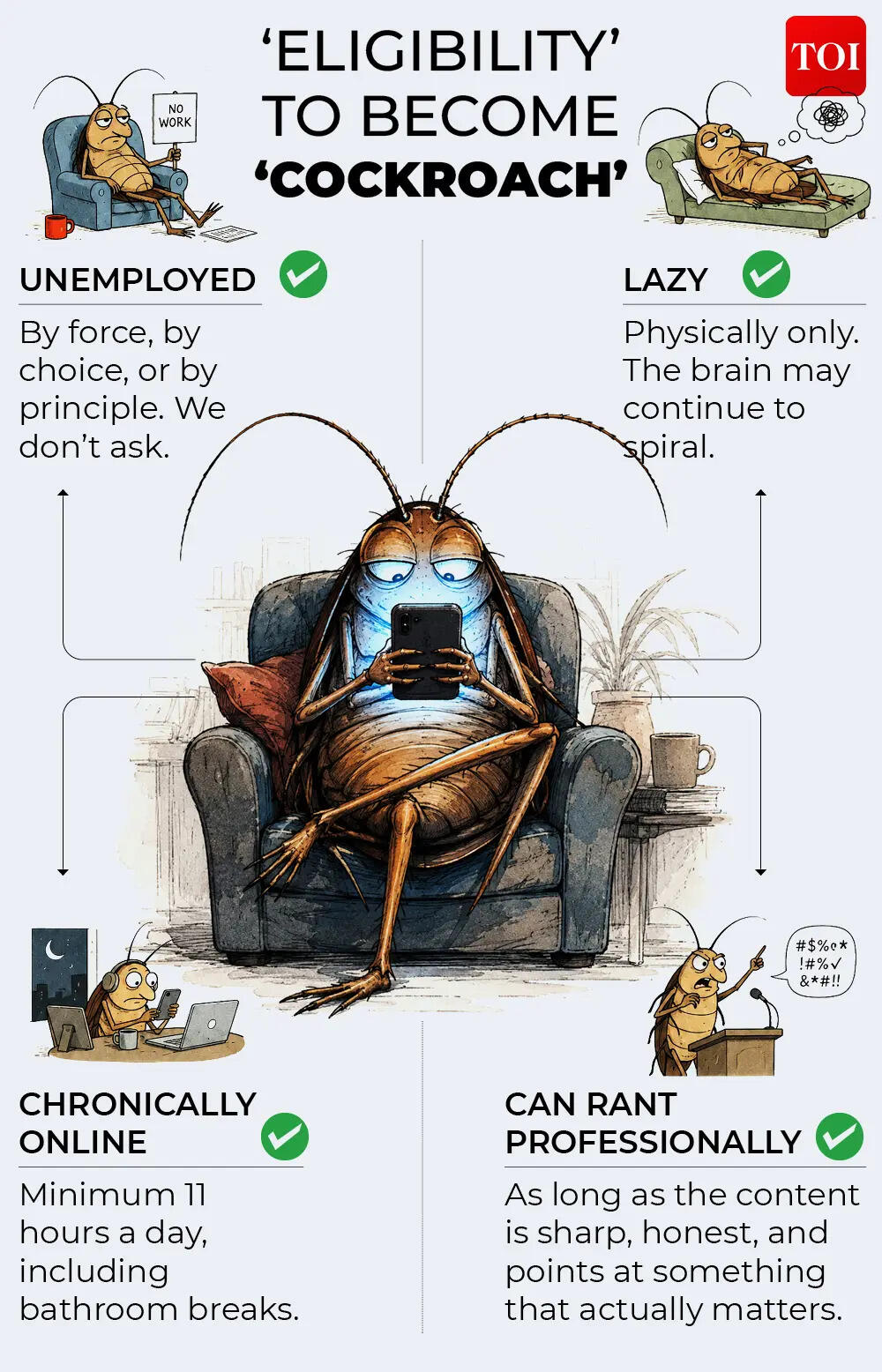
cockroach eligibility

His comments went viral out of context, morphing into a viral line about “unemployed youth being like cockroaches,” which quickly became a rallying cry for a generation already struggling with jobs, cost of living, and perceived elitism in power.

From meme to mass movement

CJP began life as a cheeky “party” with a cheeky online manifesto declaring it to be “the voice of the lazy and unemployed,” but its timing and aesthetic—rough-cut graphics, dark humor, and razor-sharp Gen-Z memes—struck a chord.Within five days of its launch, CJP’s Instagram account garnered over 21 million followers, far more than Congress’s 13 million followers and BJP’s 9 million followers.Its X account reached over 200,000 followers before it was blocked in India, while founder Abhijit Dupke’s personalInternational media outlets immediately presented the event as a digital-age protest movement, and described it as a “frustrated and disillusioned” expression of India’s youth, who are grappling with record-high unemployment, rising education-loan burdens and a feeling that traditional politics ignores their concerns.The CJP brands itself as an anti-establishment, “roach-squad” movement that mocks the self-seriousness of mainstream parties while channeling genuine discontent – ​​unemployment, credit inflation, and a sense that “the system is stacked against the average young person.”

How did BJP react?

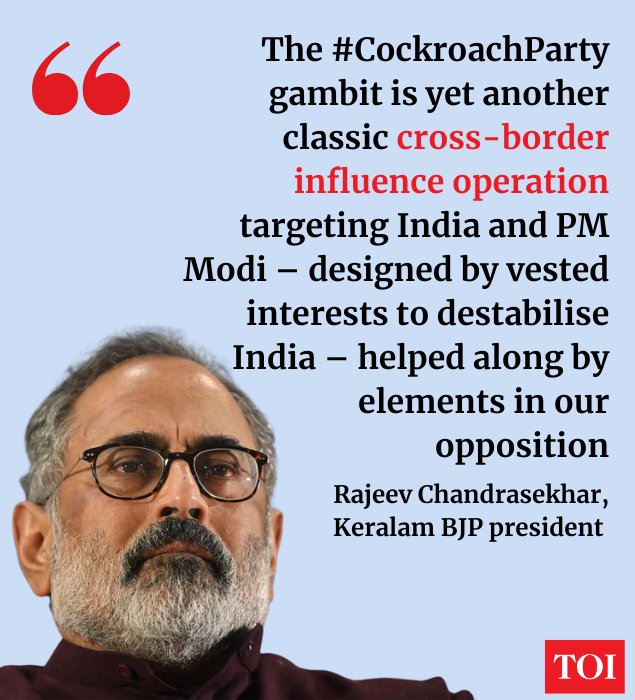
Domestically, the BJP responded with a hostile, conspiratorial narrative, labeling the CJP a “cross-border influence operation” aimed at destabilizing India’s institutions.Senior leaders, including several BJP MPs and Rajya Sabha members, floated the idea of ​​an official inquiry into the movement, accusing it of being linked to external actors and “shadow” networks.Kerala BJP president Rajiv Chandrasekhar argued that the party was being “helped by elements opposed to us” to target both the Modi government and India.

BJP's reaction

Meanwhile, Union Minister Sukant Majumdar alleged that almost half of the organisation’s social media support was from Pakistan and less than 10% from India.Speaking to reporters, Majumdar claimed, “49 percent of the followers of ‘Cockroach Janata Party’ on social media are from Pakistan.”Union Minister Kiren Rijiju also added to the controversy through a post on Instagram. In one post he wrote: “I pity those who look for followers on social media from Pakistan and the George Soros gang.”The digital pressure intensified when Ax blocked CJP’s official account in India.The platform’s actions triggered a separate reaction, with critics accusing the government of using legal tools to mute a satirical outlet that, while being inflammatory, largely operated within the bounds of online political parody.

Awkward dance of opposition

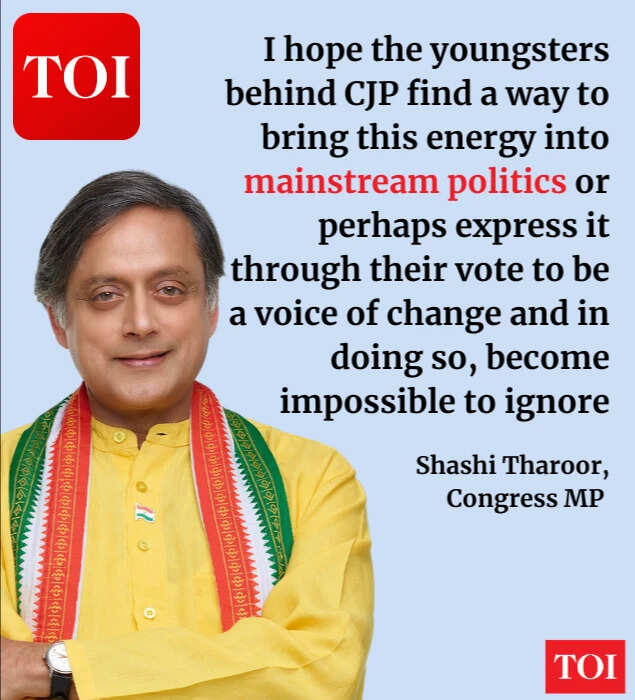
Opposition parties took a more subtle, damage-control-plus-opportunity approach.Prominent leaders of the Congress, Trinamool Congress (TMC) and Samajwadi Party (SP) publicly joined the CJP in mockery, posting memes and cheeky membership cards, while they used the moment to criticize the BJP’s job-creation record and youth-policy failures.Congress MP Shashi TharoorThe self-described “member” of the CJP praised the movement’s ability to tap into youth frustration, but also warned that the energy should be channeled into real-world politics.

Shashi Tharoor

In a widely shared thread, Tharoor wrote that he was “incredibly astonished by the rise of the #CockroachJantaParty”, noting that it reflects the real disillusionment among young Indians who feel “discounted, ridiculed and ignored” by the establishment. Yet he urged them to “bring this energy into mainstream politics or at least into their vote”, arguing that the only way to become “impossible to ignore” is through organized participation, not mere viral symbolism.Many opposition commentators have supported him, suggesting that if traditional parties fail to listen to the same grievances that the CJP raises, they risk losing another generation to apathy or to the next online movement.

How to turn ‘reel’ rebellion into real change?

At the grassroots level, the CJP remains entirely virtual – a meme-driven, Instagram-centric collective with no registered structure, no candidates, and no formal engagement with the electoral machinery.Its over 21 million Instagram following, thousands of memorable posts, and an ecosystem of fan-run Yet the question remains whether such a satirical “reel” movement can survive – or transfer its momentum into the real world.Political analyst Sajjan Kumar said, “An online viral movement requires a trustworthy face as the anchor, a set of concrete issues that cater to the frustrations and concerns of different sections of the people, and a willingness to take the initiative to set up a concrete organization to translate online solidarity into tangible political action.”As of now, the CJP has no manifesto beyond parody, no policy options, and no clear roadmap for electoral or civic participation; Its strength lies in criticism, not in governance.

4 sticking points

For a movement claiming to represent disillusioned youth waiting for change, the gap between meme culture and actual political change is dangerously wide.Lack of formal structure, no stability plan, weak response to allegations of foreign influence, vague political participation stance, and sensitivity to opposition tools – may prevent CJP from becoming anything more than a viral moment.“First and foremost, the CJP must clearly declare what it wants. Merely reactive mode in a jocular tone will not take them very far. Second, the leader must come out in the open and make clear that the party stands with everyone, irrespective of their ideological leanings, so as to avoid being dismissed as being partisan and working for anti-BJP organisations. Here, she must make clear her stand on the opposition parties in general and the Indian National Congress in particular. Should. Ultimately, transparency on the issue of funding and narrative arc is a prerequisite to gain popular legitimacy,” Kumar said.

  1. Lack of formal organizational structure: CJP remains an unregistered satire group rather than a legitimate political party. While this works for memes, it loses credibility when the movement tries to be serious. Without formal registration, legal status or a clear leadership hierarchy beyond Abhijit Dip, the movement cannot convert online support into real political power or policy influence.
  2. Overreliance on virility without sustainability plan: The movement gained 22 million Instagram followers in five days, but there is no clear roadmap for maintaining engagement beyond meme culture. Comments from political analysts suggest that CJP’s popularity reflects “the growing resentment of Generation Z”, but lacks mechanisms to convert frustration into organized action.
  3. Ambiguous stance on genuine political participation: CJP describes itself as “India’s most honest political party for lazy people” and is also planning a “virtual Gen-Z conference”. This dichotomy – being both proudly lazy and politically active – creates confusion about whether the movement seeks real political change or remains content as online protest theater.
  4. Underestimating the instrumentalization of the opposition: Shashi Tharoor’s call to “bring this energy to mainstream politics” shows how opposition parties view the CJP as a tool rather than a genuine movement. The quick “joining” of TMC, Congress and AAP politicians shows that the movement is running the risk of becoming a pawn of the anti-BJP strategies of the established parties rather than maintaining independent credibility.

For traditional parties, however, the CJP serves as both a warning and an invitation: a reminder that youth anger is no longer confined to occasional rallies or election-time sloganeering, but is now a 24/7 digital force that can siphon money from official accounts, mobilize millions, and, if mishandled, embarrass the state on the global stage.Some supporters have drawn comparisons to AAP, but Kumar points out: “The Anna Hazare-led anti-corruption movement may have a strong online component, but it began on the ground by uniting the middle class, civil society and professionals around the issue of widespread corruption that informs all established political parties.”“However, the CJP lacks all the elements: a credible anchor, a willingness to stay on the ground, a broad disconnect with all established political parties and putting forward an anchor issue that could bring unity to the people, especially Gen-Z, despite the existing political embeddedness.”

A call of caution for Gen Z

The explosive online popularity of the Cockroach Janata Party, coupled with its complete inability to translate digital virality into real-world political impact, serves as a warning to the ambitious, disaffected Gen Z.Giving likes on social media, turning your WhatsApp display picture into a cockroach meme, and using AI to create hilarious content that draws out deep despair is not enough.Boots on the ground are required.If CJP has any chance of becoming a real political force, its supporters will have to come out of their comfortable rooms and take to the streets. As Congress MP Shashi Tharoor said, youth must “bring this energy into mainstream politics” or express it through voting for it to become “impossible to ignore”.Protests, demonstrations and grassroots conversations with a population that is not online-savvy are absolutely necessary. India’s unemployed youth represent a huge demographic that cannot be reached through memes alone.Rural voters, older generations and working-class families who aren’t scrolling through Instagram won’t be swayed by viral hashtags alone.For Gen Z seeking real change, the lesson is clear: digital activism must be combined with physical presence.The future of the movement depends on whether supporters can evolve from virtual boasting to real-world organizing, from cozy rooms to crowded streets, from choice to legitimate political pressure.

Source link

Registry, mutation or possession? What exactly makes you a property owner?

Registry, mutation or possession? What exactly makes you a property owner?

Buying property is a time-consuming process and requires considerable financial investment. Apart from this, it also becomes necessary to prove ownership of your property. But what makes you a true boss? Is it the registry of the property, its mutation in government records, or its physical possession?

registry

Under the Indian Registration Act (1908), any sale of immovable property (such as land, house or building) worth more than Rs 100 must be registered. This is done at the office of the Sub-Registrar and involves payment of stamp duty and registration fees.You cannot legally own an unregistered property even after paying for it. In such case, you will remain only the “Owner” without any ownership rights. The seller, or their heirs, can legally reclaim the property. And since it is not in your name in the government records, the seller can sell the property to other buyers as well.

change in records

Mutation is the process of officially updating the name of the new property owner on government revenue records. Mutation refers to the change in ownership after the property is transferred through sale, inheritance, gift, partition or court order. The owner needs it to pay property taxes.Even if you have registered your property and not made any changes, the name of the previous owner will be shown in the revenue records.

physical possession of property

Without physical possession, your ownership exists only on paper. While registration and mutation are incredibly important, they do not automatically give you physical control over the land if a dispute arises. As per the Supreme Court judgment on S Santhana Lakshmi and Ors. Versus D. Rajammal, in October, 2025. If you do not physically possess the land, you will have to apply for ‘Declaration of Ownership’ and ‘Recovery of Possession’. As per the law you will need to fight legally to physically reclaim the land.

What makes you a true boss?

However registry is the only process that legally transfers ownership and creates ownership over the property, on a stand-alone basis. None of these can make you the true owner of the property. A secure secure title requires a complete process of registration, mutation and securing possession of the land.

Documents Required

For mutation:1. Application to the concerned Tehsildar (under whose jurisdiction you reside during 10:00 AM to 1:00 PM on any working day)2. Proof of residence3. Proof of ownership of land (sale deed, etc.)4. If the property is transferred due to the death of the owner, affidavits of all the surviving members.for registration:1. Proof of Ownership (Jamabandhi Fard/certified copy of original old sale deed/valuation/mutation of MC)2. Identification of the parties (Ration Card/Voter Card/Driving License/Aadhar Card/PAN Card/Identity Card and also ID proof of witness)3. Registration of the document through Power of Attorney (Verification of GPA where it is registered, if it is registered outside the state only.)4. NOC required (You apply for NOC at the local Town and Country Planning office in your jurisdiction or online through the official property registration portal of your state)5. 2 witnesses with valid ID proof6. Map plan and details of immovable property.7. Mutation Document (for identification of ancestral property)

Source link