Norway Chess: Carlsen’s crushing defeat, Gukesh, Praggnanandhaa made a winning start

World champion D Gukesh and compatriot R Praggnanandhaa started their campaigns with hard-fought wins at the Norway Chess, while world No. 1 Magnus Carlsen suffered an opening round defeat to Alireza Firozha in Stavanger.

Gukesh emerged victorious after being injuredThe thrilling marathon fight against Vincent Keymer lasted 144 moves and lasted almost five hours. The classical competition ultimately ended in a draw, with Keimer playing hard in the final game despite having only the pawn. The Indian world champion looked visibly upset in the closing stages and even sought clarification from the arbiter regarding the move count as the game headed towards an inevitable stalemate.

However, Gukesh regrouped impressively for the Armageddon tie-break and made quick work of it. The decisive 15.Bh6 proved too strong for Keymer, sealing the Indian teen’s victory and giving him 1.5 points, while the German had to settle for one point.

Praggnanandhaa also had to rely on tie-breaks to ensure victory. The Indian No. 2 played a balanced classical draw against Wesley So, before putting in a sharp attacking performance in the Armageddon to grab an extra half point and tie with Gukesh for second place.

Carlsen suffered a rare defeat

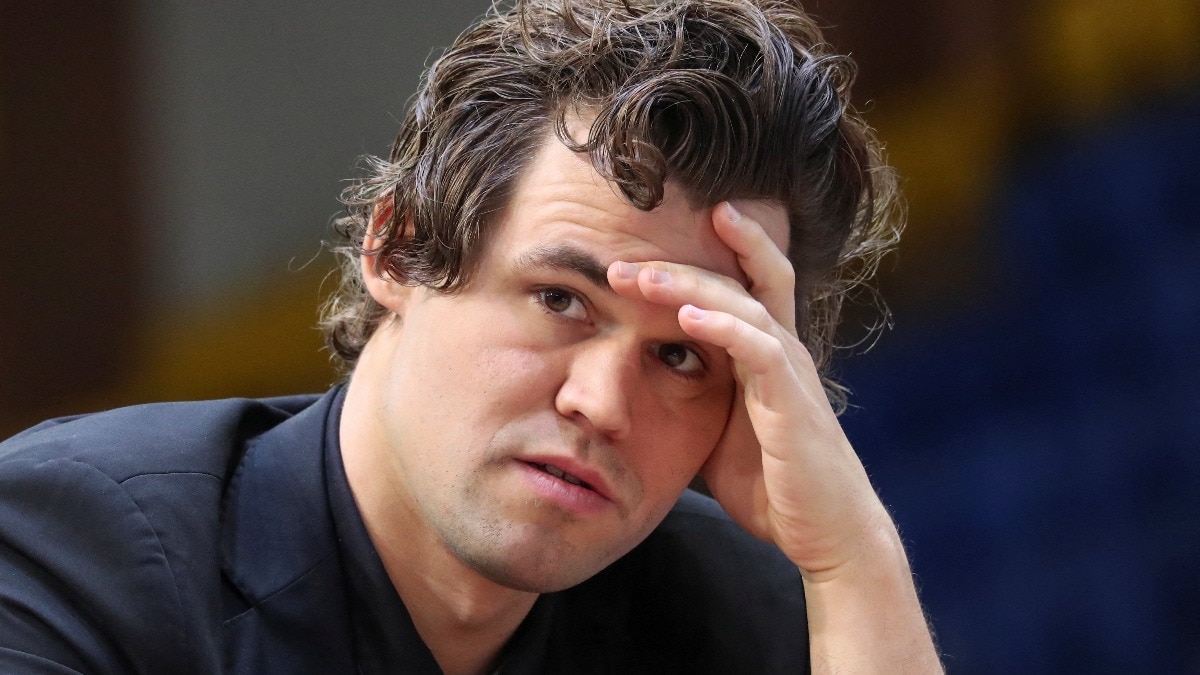
However, the biggest talking point of the early rounds was Carlsen’s defeat on home soil. The defending champions looked to be in control for large parts of their game against Turquoise, but serious timing trouble led to a costly mistake that decisively changed the momentum. Turquoise won all three points with clinical precision and handed Carlsen one of his rare defeats in classical chess.

Firouzja’s victory was made more remarkable by the fact that he played with his injured ankle strapped into a protective “moon shoe” after injuring himself during the Superbet Chess Classic Romania. The French Grandmaster showed composure throughout and moved to the top of the standings with three points.

Divya shined, Hampi faltered

In the women’s category, Bibisara Asoubaeva took an early lead with a stunning classical win over Indian No. 1 Koneru Humpy. Defending champion Anna Muzychuk drew her classical game with Zhu Jiner before winning in Armageddon. Reigning women’s world champion Xu Wenjun and Divya Deshmukh also divided the classical point, Divya won the tie-break.

After the preliminary round, Firoza led the open standings with three points, while Gukesh and Praggnanandhaa had 1.5 points each. Asoubaeva topped the women’s event, with Divya and Zhu joint second.

– ends
Published on:

May 26, 2026 16:49 IST


Source link

Preparation for comprehensive change in Maharashtra tourism with destination management model. mumbai news

Preparation for comprehensive change in Maharashtra tourism with destination management model
Workshop for setting up destination-level tourism governance bodies held at Trident Hotel, Nariman Point

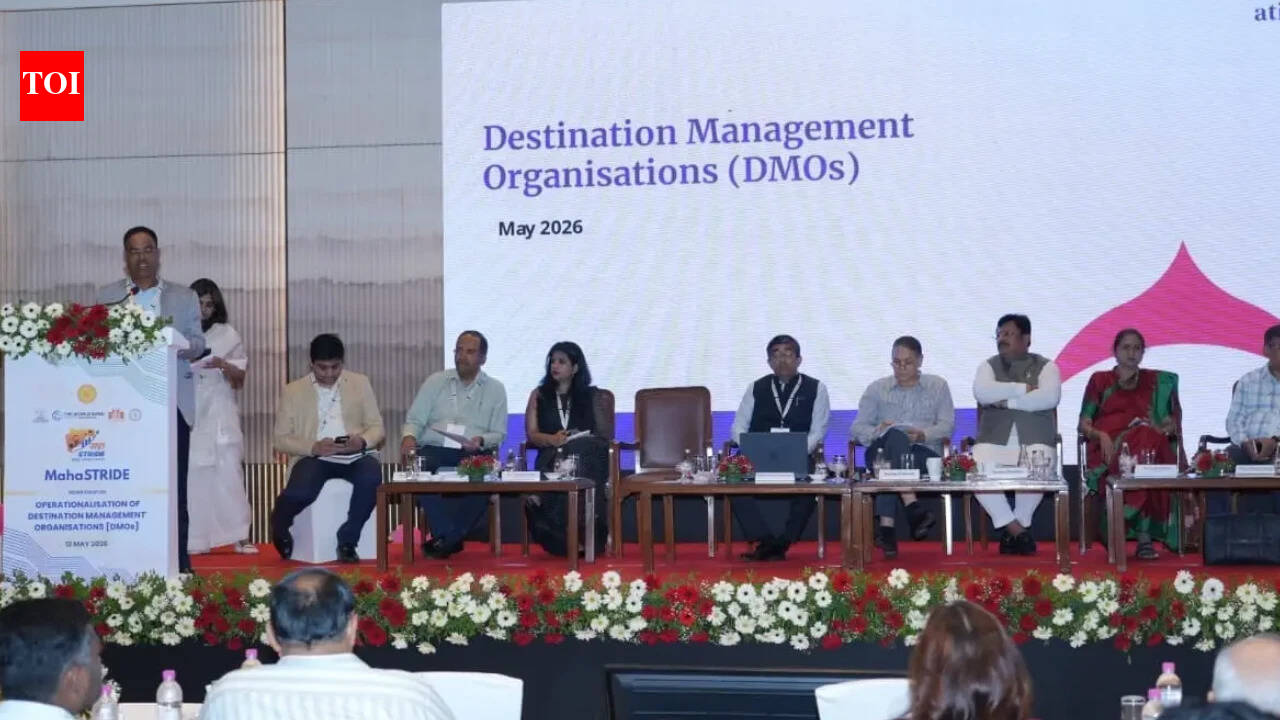
Mumbai: Maharashtra has started work on setting up destination-level tourism governance bodies as part of a broader effort to position the state as a globally competitive travel hub.At a high-level workshop held at the Trident Hotel in Nariman Point earlier this month, the state government discussed the operationalization of six Destination Management Organizations (DMOs) under the World Bank-funded MahaStride programme. The initiative is being implemented by Maharashtra Tourism, with Maharashtra Institution for Transformation (MITRA) acting as the program management unit.The workshop, attended by senior bureaucrats, tourism officials, hospitality stakeholders and policy experts, marked an important milestone under MahaStride’s Disbursement Linked Indicator (DLI)-3, which focuses on setting up and operationalizing six DMOs across Maharashtra.Speaking at the event, MITRA Vice President Dilip Walse Patil said Maharashtra’s tourism potential lies in its history, culture, spirituality, wildlife, beaches and heritage sites, and stressed the need for professional and sustainable tourism management.He said, “Maharashtra has immense tourism potential inherent in its rich history, culture, spirituality, wildlife, coastal landscapes and heritage sites. Through destination management organizations, the state aims to build a professionally managed and sustainable tourism ecosystem that enhances visitor experiences, strengthens stakeholder coordination and positions Maharashtra as a globally competitive tourism destination.”The proposed DMO is envisioned as an institutional mechanism to coordinate tourism development at the destination level, improve visitor experiences and generate sustainable economic opportunities for local communities.An important announcement during the workshop was the signing of an MoU between MITRA and Atithi Foundation to support knowledge-sharing, stakeholder engagement and implementation partnerships within the tourism ecosystem of Maharashtra.A panel discussion on “Role of DMOs and USPs of Maharashtra – You will find India here” was attended by senior officials and tourism industry representatives including MITRA CEO Praveen Pardeshi, Additional Chief Secretary (Tourism) Sanjay Khandare, Maharashtra Tourism Development Corporation Managing Director Nilesh Gatne, MahaSTRIDE Project Director Aman Mittal and private sector tourism experts.Pardeshi said Maharashtra will need to move beyond traditional tourism promotion to emerge as a global destination.“Destination management organizations can operate as dedicated institutions that integrate tourism services, local stakeholders, branding, infrastructure, logistics and visitor experiences into an integrated ecosystem,” he said.Khandare said the government’s approach aims to create an experience-driven and sustainable tourism ecosystem rather than just promoting destinations.“Our focus is not just on promoting destinations, but on creating sustainable, experience-driven tourism ecosystems that benefit local communities, create jobs and enhance visitor experiences,” he said.Gaitne said tourism development now requires the creation of infrastructure as well as coordinated management and strong destination branding.Officials and panelists highlighted Maharashtra’s diverse tourism offerings ranging from heritage and pilgrimage circuits to coastal, wildlife, wellness and adventure tourism and said the DMO framework can help strengthen destination branding, improve governance and support local employment.Tourism department officials from Konkan, Pune, Chhatrapati Sambhajinagar, Nashik and Nagpur divisions participated in the workshop.The Department of Tourism and Cultural Affairs, established in 2016, is tasked with integrating cultural preservation and tourism development to enhance the visibility of Maharashtra as a travel destination while contributing to regional economic development.

Source link

Joey Danger: Meet Joey Danger: 7-year-old boy sets world record by climbing 7,500-foot rock wall El Capitan in five days | world News

Meet Joey Danger: 7-year-old boy sets world record by climbing 7,500-foot rock wall El Capitan in five days

Most seven year olds celebrate birthdays with balloons, cakes and gifts. Joey Danger Evermore spent his birthday climbing one of the world’s most iconic granite walls. Hanging thousands of feet above the ground inside Yosemite National Park, Joey climbed El Capitan with his family, becoming the youngest known person to complete the climb. This feat stunned climbers around the world not only because of Joey’s age, but also because El Capitan is considered one of the most technically demanding and challenging big wall climbs in the world. However, to Joey, the intimidating granite face looked almost like a giant adventure playground hanging over Yosemite Valley.

How joy danger climbed el capitan

Joey began the climb at the age of six and completed the climb when he was seven, making the feat seem almost unreal even to experienced climbers following the story online.The climb reportedly lasted five days, during which Joey remained attached to ropes and aid-climbing systems while navigating nearly vertical granite wall sections. According to his father, Joe Evermore, the family faced harsh winds, exposure to the elements, exhaustion, and limited food and water supplies while spending nights high above Yosemite Valley.Unlike smaller recreational climbs, big wall climbs on El Capitan require climbers to remain on the mountain for several days straight. Climbers often sleep in hanging tents attached to the rock known as portaledges.Joe Evermore said that most climbs require Joey to manage ropes and movement techniques independently, while remaining safely connected to the system during the climb.

Why is El Capitan one of the greatest challenges to climb?

Although the summit of El Capitan is approximately 7,569 feet above sea level, the famous granite wall towers more than 3,000 feet above the Yosemite Valley floor, making it one of the most recognized big wall climbing destinations in the world.Its massive granite face remained open for decades because many early climbers believed the wall was impossible to climb. This changed in 1958 when climber Warren Harding and his team completed the first ascent after 45 days using ropes, pitons, and fixed climbing equipment.Since then, El Capitan has become a proving ground for elite climbers attempting difficult multi-day climbs, speed records, and free climbs using minimal artificial support.The mountain gained further worldwide prominence in 2017 when Alex Honnold completed the first rope-free free solo ascent of El Capitan, later documented in the Oscar-winning film Free Solo.Climbing in Yosemite National Park carries significant risks, with the National Park Service reporting more than 100 climbing accidents and between 15 and 25 climbing rescues annually throughout the park. Several reports over the years also state that more than 30 climbers are believed to have died on El Capitan since the early 1900s due to falls, rockfall accidents, and rock falls.

The Evermore Family’s Unusual Climbing Heritage

Joey’s accomplishment wasn’t the first historic foray inside the Evermore family.Before Joey, the youngest known climber to climb El Capitan was reportedly his older brother Sam Evermore, who completed the climb in 2022 at the age of eight.Before Sam’s climb, climber Sela Schneiter became internationally famous in 2019 after climbing El Capitan at the age of 10.Evermores, based in Colorado Springs, has built a reputation for adventurous outdoor living and involving its children on demanding wilderness expeditions from an early age.Joey completed the climb with his father, his brothers Sam and Sylvan Evermore, and a documentary crew that recorded the climb.

The video that took the internet by storm

Images and video of the climb spread quickly online due to the extraordinary contrast between Joey’s tiny frame and the massive granite wall surrounding him.In footage shared by the family, Joey is seen thousands of feet above Yosemite Valley wearing a bright blue jacket and a colorful climbing helmet decorated with a Mohawk-style crest.Instead of looking scared, the child often looked calm and playful as he gently bounced up the steep cliff attached to ropes.One particularly surreal moment reportedly showed Joey and his brothers playing chess on a narrow ledge during a break above the canyon floor.As Joey approached the summit, supporters gathered in Yosemite Valley below and reportedly sang “Happy Birthday” from the ground while he continued climbing.The combination of childhood innocence and extreme exposure helped turn the climb into a viral Internet story almost instantly.

Praise, Criticism and Parenting Debates

The development sparked fierce debate online about parenting, adventure sports and acceptable levels of risk for children.Many people described Joy’s achievement as inspiring and praised her confidence, discipline and courage.Others questioned whether children should be placed in such dangerous environments without any care for training or supervision.Critics argued that El Capitan is dangerous even for experienced adult climbers and accused parents of instilling too much risk in childhood.Joe Evermore defended climbing by arguing that children are often far more capable than adults when they are carefully trained, appropriately challenged and properly protected.Speaking about the experience he said:“Joey is achieving more than a record. He’s found a new identity. I can see his confidence growing.”The debate reflects broader cultural divides around parenting styles, external exposure and whether challenge or security benefits children more in the long term.

Joey’s last joke after the historic climb

After completing one of the world’s scariest climbs, Joey reportedly responded with humor rather than fear.According to his father, the young climber joked:“I reached the summit at six or seven o’clock.”The line refers to the fact that Joey started climbing at the age of six and completed the climb when he turned seven.For most children, turning seven involves birthday parties and gifts. For Joey Danger Evermore, this meant sleeping on a sheer cliff thousands of feet above the ground while climbing one of the world’s most famous granite walls with his family.

Watch all live updates on US-Iran conflict, Israel-Iran war, Donald Trump reactions and global oil market impact Here.

Source link

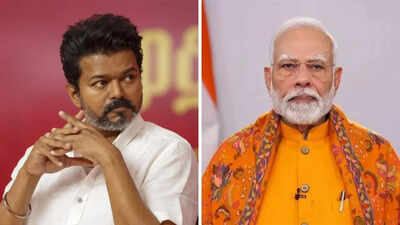
‘Clear violation’: In letter to PM Modi, Tamil Nadu CM Vijay urges to stop Karnataka’s Mekedatu Dam project. india news

'Clear violation': Tamil Nadu CM Vijay in letter to PM Modi urges to stop Karnataka's Mekedatu Dam project

New Delhi: Tamil Nadu Chief Minister Vijay on Tuesday wrote to Prime Minister Narendra Modi urging the Center not to allow the construction of Mekedatu Dam by the Karnataka government.This comes days after the Congress-led Karnataka government proposed to build the Mekedatu Dam project on the Cauvery river.In the letter, Vijay said the project proposed by Karnataka is a “clear violation” of the Supreme Court judgement. He also expressed concern over the remarks of Karnataka Deputy Chief Minister DK Shivakumar.Earlier on Monday, Vijay chaired a meeting to uphold “state rights” and protect the welfare of farmers.“Taking into account the details of the Supreme Court judgment and detailed legal advice, CM Vijay advised that immediate follow-up legal measures should be taken expeditiously,” a statement issued by the Tamil Nadu government said.The statement further said that since the proposed Mekedatu Dam is contrary to the Supreme Court judgment, the then Tamil Nadu government had filed petitions in the apex court on November 30, 2018 and June 7, 2022, opposing the project.It further said that during the hearing held on November 13, 2025, the Supreme Court had not given permission for the Mekedatu Dam and had observed that the project is in the initial stage. The court also said that only the expert body, the Central Water Commission, can determine whether the project falls within the scope of its earlier decision or not, and accordingly ordered closure of the cases.Vijay’s meeting came after Shivakumar said that the detailed project report (DPR) for Mekedatu would be submitted to the Center soon, adding that the foundation stone ceremony would be planned after getting the central government’s approval.Shivakumar told reporters, “The DPR for the Mekedatu project has been prepared, and a project office has been opened. We are identifying alternative land to compensate for the forest area that is going to be submerged. The DPR will be submitted to the Center soon. After getting the Centre’s approval, we will conduct the bhoomi puja for the project.”Tamil Nadu, Karnataka, Kerala and the Union Territory of Puducherry have long been in dispute over the waters of the Kaveri River, with the issue being particularly sensitive in Tamil Nadu and Karnataka and sometimes triggering violent protests.

Source link

Suriya’s ‘Karuppu’ title card turns into massive fan celebration; Designer Ambani revealed that the star loved the animated introduction.

Suriya's 'Karuppu' title card turns into massive fan celebration; Designer Ambani revealed the star liked the animated intro

Title cards have always been a special celebratory moment for fans of star actors. Over the years, these title cards have evolved from simple text designs to stylish animated scenes that create excitement inside theaters. In recent times, title card animation has been created specifically for suriya ‘Karuppu’ created a huge buzz among film lovers. This impressive presentation was welcomed with thunderous applause in the theatres, and even fans called it one of the best title cards ever made for Suriya. Following the overwhelming response, the film’s team officially released the title card online, where it quickly went viral on social media platforms.

designer Ambani Surya opens up about his reaction

The animated title card of ‘Karuppu’ was designed by Chennai-based producer Ambani, who has also worked on the title cards of films like ‘Retro’ and The Greatest of All Time. Speaking about the response in a conversation with Cinema Vikatan, he shared, “I designed Suriya sir’s title card for ‘Karuppu’. The reception has been incredible, and even the film team released it officially after seeing the fans’ response.” He further said that many people told him that this could also become Suriya’s signature title card style for future films. “Just hearing that makes me so happy,” he shared. Ambani also revealed that Surya personally liked the design, which made the moment even more special for him.

RJ Balaji’s idea became the attraction of ‘Karuppu’

Ambani explained that the idea behind the ‘Karuppu’ title card was to create something bigger and more impactful than what they had done earlier in ‘Retro’. He said that the concept was discussed with director RJ Balaji, who immediately liked the idea. He said, “RJ Balaji sir immediately liked the concept and that’s how we designed the title card, which people are celebrating now.” He also revealed that the title style “The One” used earlier was RJ Balaji’s suggestion for ‘Karuppu’. According to Ambani, title cards are no longer just introductions for the stars, but have become an emotional celebration for the fans inside the theatres.

Animation title cards have become a trend

Ambani also shared how his animated title card journey in Tamil cinema began. He experimented with this idea for the first time during ‘Thunivu’ using iconic moments from Ajith Kumar’s career. Later, his work for Vijay’s title card in ‘GOAT’ gained him massive recognition among fans and filmmakers. He revealed, “After ‘GOAT’ became a hit, many people started asking for animated title cards for other films as well.” Ambani said he always believed that title cards should look exciting rather than having plain text on the screen. Today, his designs have become a trend in Tamil cinema, turning star introductions into unforgettable theater celebration moments for fans.

Source link

The ‘secret ingredient’ that could give electric vehicles a range of 1,000 km on a single charge.

The 'secret ingredient' that could give electric vehicles a range of 1,000 km on a single charge

Range anxiety, the fear that your electric vehicle will run out of charge before reaching your destination, remains one of the biggest psychological barriers to EV adoption worldwide. current electric vehicle It can travel about 700 kilometers on a single charge, a number engineers and battery scientists have been trying to push for years. Now, a team of researchers at South Korea’s Pohang University of Science and Technology has identified what they’re calling a breakthrough: a gel-based solution that could allow EVs to drive up to 1,000 kilometers on a single charge, using materials that are cheaper and more practical than anything the industry has tried before.

Why has silicon always been the biggest promise and biggest problem of EV batteries?

Silicon has long been an attractive answer to the EV battery problem. Its storage capacity far exceeds that of the graphite anodes used in most lithium-ion batteries today, making it an obvious candidate for the next generation of battery designs. The problem is what happens when you actually use it. During charging, the silicon expands to more than three times its original size, then shrinks back during discharge. When done repeatedly, this mechanical stress causes the material to fracture, causing the battery to wear out faster and become unstable over time.The industry response has been to use nano-sized silicon particles, which are small enough that expansion causes less structural damage. This works to a certain extent. But nano-silicon production is technically complex and extremely expensive to scale, making it difficult to move from the laboratory to large-scale manufacturing without huge cost implications.

how a gel polymer electrolyte Silicone solves the expansion problem

The POSTECH team, led by Professor Soojin Park, PhD candidate Minjun Jae and Dr. Hye Bin Son, took a different approach. Instead of shrinking the silicon to the nanoscale, they placed it on microscopic particles a hundred times larger than those used in conventional nano-silicon anodes and combined them with a gel polymer electrolyte instead of the liquid electrolyte found in standard batteries.The gel acts as a stable medium. Because it is neither completely liquid nor completely solid, it can accommodate the expansion and contraction of large silicon particles during charging cycles without the structural fracturing that makes standard micro-silicon unstable. The result, published in the journal Advanced Science, was a battery that remained stable even with micro-silicon particles up to five micrometers in size, a scale that was previously thought to be too large to work reliably.

The numbers behind this breakthrough: 40% more energy density

The performance figures associated with the new system are important. The silicone-gel electrolyte combination provides ion conductivity equivalent to conventional batteries using liquid electrolytes, meaning it does not sacrifice the speed at which charge moves through the battery. Additionally, it achieved approximately 40% improvement in energy density compared to current battery designs. This improvement, applied to existing EV battery packs, keeps the 1,000 km range figure within reach.“We used a micro-silicon anode, yet we still have a stable battery,” Professor Park said. “This research brings us closer to a real high-energy-density lithium-ion battery system.”Crucially, the manufacturing process behind the new system does not require exotic or expensive equipment. The team was clear that the process is straightforward and ready for immediate application, a key gap in battery research, where breakthroughs unable to survive the transition to industrial manufacturing rarely reach consumers.

Why does this battery discovery matter beyond the lab?

POSTECH’s success comes at a time when the global EV battery race is rapidly intensifying. China’s CATL recently unveiled its Qilin compressed battery at the 2026 Beijing Motor Show, with a claimed range of up to 1,500 kilometers using semi-solid-state chemistry. Meanwhile, Geely, Toyota and a host of Western startups are pursuing solid-state battery technologies with similar long-range ambitions, though most are not expected to reach mass production before the late 2020s or early 2030s.What distinguishes the POSTECH gel approach is its relative simplicity. Solid-state batteries, despite all their promise, face serious manufacturing and durability challenges that have kept them from production vehicles for years. A gel polymer electrolyte system that works with existing lithium-ion manufacturing infrastructure and provides a 40% energy density gain without the expense of nano-silicon represents a more near-term path to meaningful range improvements.

What’s next for silicone gel EV batteries

The study was supported by the Independent Researcher Program of the National Research Foundation of Korea, and the team’s immediate next steps include refining the system for durability over long charging cycles, the real-world test that all battery chemistries must ultimately pass.For EV drivers, the importance is straightforward. A vehicle that can travel 1,000 kilometers on a single charge is no longer a car that requires careful route planning, deliberate charging stops or constant attention to the battery indicator. It’s just a car that runs on electricity. Getting there has always been a chemistry problem. A team in South Korea may have found a practical answer inside a jar of gel.

Source link

Aiadmk Crisis: AIADMK Political Crisis: Speaker accepts resignation of fourth MLA, latest shock; The strength of the party reduced to 43. india news

AIADMK political crisis: Speaker accepts resignation of fourth MLA; Party strength reduced to 43
AIADMK political crisis: Speaker accepts resignation of fourth MLA, latest blow

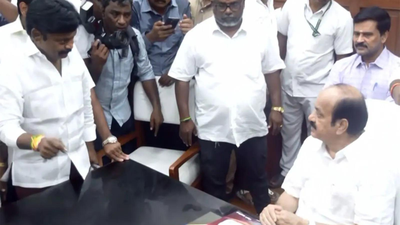
New Delhi: Tamil Nadu Assembly Speaker JCD Prabhakar on Tuesday accepted the resignation of Ambasamudram AIADMK MLA Esakki Subaya, further escalating the political turmoil within the opposition party.The Speaker had initially rejected Subaya’s resignation and asked him to submit a handwritten copy.According to news agency PTI, Subaya immediately withdrew the typed letter and submitted a hand-written resignation letter, which was later accepted by the Speaker.With Subaya’s exit, the total number of resignations from the AIADMK camp in two days has increased to four, reducing the party’s strength to 43 MLAs in the 234-member Tamil Nadu Assembly.

The crisis within AIADMK deepens

The latest resignation comes a day after AIADMK MLAs Maragatham Kumaravel, P Satyabhama and S Jayakumar resigned from the Assembly and later joined the ruling Tamilaga Vetri Kazhagam (TVK) led by Chief Minister C Joseph Vijay.According to news agency ANI, 27 AIADMK MLAs are currently supporting the party general secretary. Edappadi K PalaniswamiWhile 16 MLAs are associated with senior leaders SP Velumani and C Ve Shanmugam.Subaya also belongs to the rebel camp and voted in favor of the TVK government during the May 13 confidence motion.He is also expected to join the ruling party.

AIADMK urges Speaker to reject resignation

Earlier, senior AIADMK leaders met Speaker Prabhakar and filed a petition urging him not to accept the resignations of the rebel MLAs, arguing that anti-defection proceedings were already pending against them.AIADMK leader IS Inabadurai said the resignations violated the anti-defection law. “The speaker should not accept the resignation as it is against the anti-defection law,” he told reporters.The AIADMK had earlier sought disqualification of 25 rebel MLAs for allegedly disobeying Palaniswami’s instructions and supporting the TVK government during the floor test.AIADMK leader Thalavai N Sundaram warned that the party would move court if the Speaker failed to properly investigate the resignations. He said, “If no solution is found from the Speaker, we will go to court.”Responding to the criticism, Speaker Prabhakar said he was working strictly within the legal framework. “My job is to see if the letters are appropriate and to work within the legal framework to get it accepted,” he said.

The issue of ‘horse-trading’ has intensified

The resignations have led to allegations of “horse-trading” on both AIADMK and DMK.On Monday, DMK chief MK Stalin accused the ruling TVK of orchestrating the defections at “horse speed”, while Palaniswami termed the developments as a “pre-planned conspiracy”.Congress MP S Jothimani criticized the developments and said the Congress could not support “horse-trading” in Tamil Nadu while opposing it elsewhere.The number of vacant assembly constituencies in Tamil Nadu has now increased to five, including Tiruchirappalli East, which was earlier vacant after Vijay won by two seats. By-elections are expected to be held in all the vacant constituencies.

Source link

12 killed in Israeli attack on village in eastern Lebanon

12 killed in Israeli attack on village in eastern Lebanon

An Israeli airstrike on a village in eastern Lebanon killed 12 people, the country’s official National News Agency said Tuesday.The attack took place in Lebanon’s Bekaa Valley area late Monday night after the Israeli Prime Minister was attacked. benjamin netanyahu Said they have authorized more intensive attacks targeting Hezbollah Militant groups across Lebanon. The Israeli military did not comment on this particular attack, but said on Monday that it was targeting Hezbollah infrastructure in eastern Lebanon.Rescue workers say a dozen bodies were pulled from the debris following a sharp wave of attacks overnight targeting areas in southern and eastern Lebanon.The intensified attacks come three days before Lebanese and Israeli military delegations are to meet in Washington for direct talks.Hezbollah has been attacking Israeli troops in southern Lebanon and northern Israeli cities, and has vowed to continue fighting until Israel ends its daily airstrikes and withdraws its troops from the country.The Lebanese government hopes that direct talks with Israel, opposed by Hezbollah, will lead to a ceasefire.More than a million people have been displaced in Lebanon in the war, which was sparked by Hezbollah firing rockets into northern Israel on March 2 in a show of solidarity with Iran.

Watch all live updates on US-Iran conflict, Israel-Iran war, Donald Trump reactions and global oil market impact Here.

Source link

Rare Blue Moon 2026 to light up the sky on May 31: How to see May’s smallest full micromoon with Venus and Jupiter |

Rare Blue Moon 2026 to light up the sky on May 31: How to see May's smallest full micromoon with Venus and Jupiter

This week Akash does something he rarely does, without making too much of a fuss about it. The second full moon occurs within the same calendar month, a timing quirk that sounds far more dramatic than it actually is when first heard, but once you notice how well the lunar cycle refuses to match up with the human calendar, it becomes oddly satisfying. Around sunset, the moon begins its slow ascent, bright enough to wash out the soft stars, while still sitting low enough to retain the familiar orange hue. The nights in late May feel busy anyway, as the planets come into view and familiar constellations begin their seasonal return to the west.

blue moon 2026: When and how to see the shortest full moon of the year

The upcoming Blue Moon, which will occur on May 31, 2026 at 8:45 UTC, is not only a Blue Moon, but also the most distant full micromoon of the year. Despite the name, blue moons have no change in color.This phenomenon also qualifies as a micromoon, meaning the moon is near its peak; The farthest point in its orbit from Earth for the month. At this distance, the Moon appears slightly smaller in the sky, although the difference is too subtle for the human eye to easily notice.According to EarthSky, the May 30-31 full moon will be the smallest in 2026, located about 252,360 miles (406,134 km) from Earth, while the moon’s average distance is about 238,900 miles (384,472 km).

Blue Moon in May 2026: What skywatchers can expect in the final days of the month

May ends with what skywatchers commonly call a Blue Moon, although nothing changes about its appearance. This is the second full moon to occur in the same month, made possible by the mismatch between the 29.5-day lunar cycle and our set calendar. One full moon appears in early May, and a second full moon occurs as the month ends.The more interesting moment is not the exact moment of perfection, but the evenings on either side of it. On May 30, the Moon rises near sunset and appears slightly larger near the horizon, a trick of atmosphere and perspective that always seems more dramatic than expected. At first it has a warm orange color, gradually turning white as it climbs and clears the thick air close to the ground.By May 31, it is established in its official full stage. There is no visually dramatic change, although time completes the cycle that gives it the label that people love to repeat.

Blue Moon will rise on May 30 and Venus and Jupiter will start getting closer

The most observed part of the sequence is moonrise on May 30. That’s when the full moon rises into the glow of twilight, just as daylight is loosening its grip. Finding a clear view to the southeast that evening mattered more than anything else. Buildings, trees and even low hills may be disrupted as it appears.When it first clears the horizon, it often appears larger than expected, heavy and orange against the fading light. Its effect does not last long. Within an hour, it becomes the familiar bright white disk that most people recognize, but that brief initial phase sticks in the memory.Away from the Moon, the two planets quietly take over the western sky after sunset. Venus is a clear, bright and low planet, difficult to miss even when the sky is still covered with twilight. Jupiter sits above, less intense but still. Every evening the distance between them decreases a little. It’s so faint that you might miss it if you only look once, but it’s noticeable on some nights. By early June, the separation becomes so close that the pair almost looks like a deliberate arrangement rather than two independent planets moving on their own paths.On June 9, they reach their closest pair, sitting low in the west after sunset. The event is short-lived, but amazing in its simplicity. No special equipment is needed, just a clear view and a little patience until the sky gets dark.

Source link

Heat wave warning in many parts of India: Where red, orange and yellow warnings are in force. india news

Heat wave warning in many parts of India: Where red, orange and yellow warnings are in place

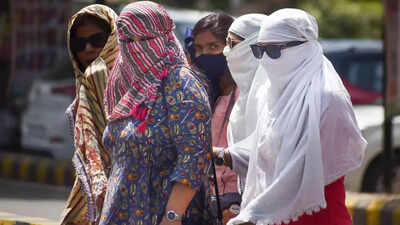
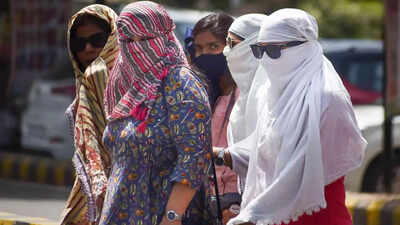
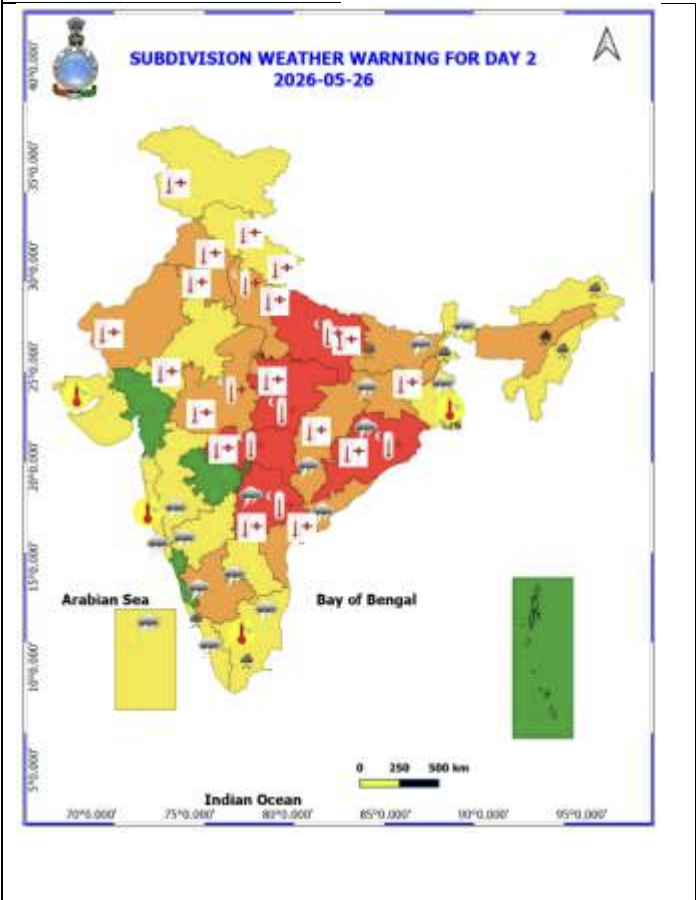
New Delhi: The India Meteorological Department (IMD) has warned that heatwave to severe heatwave conditions are likely to persist over large parts of central and northwest India during the next 4-5 days and over eastern and adjoining peninsular India during the next 3-4 days, although maximum temperatures are likely to decline gradually from May 29 over most areas except parts of Rajasthan.In its press release issued at 1450 hrs IST on May 25, the IMD placed several areas under red, orange and yellow heat alerts, indicating varying degrees of heat-related risk.

.

Source: IMD

red alert area

The IMD said there is a possibility of severe heat wave in Punjab, Haryana, Chandigarh and some areas of Delhi, Uttar Pradesh, West Rajasthan, East Madhya Pradesh and Vidarbha during this period.Under the red alert, the department warned of a very high probability of heat illness and heat stroke in all age groups, calling for extreme caution, especially for vulnerable populations.

Orange alert areas

Areas under orange alert include Rajasthan, Madhya Pradesh, Vidarbha, Chhattisgarh, Odisha, Jharkhand, Telangana and parts of coastal Andhra Pradesh and Yanam, where heat wave is expected.The IMD said the orange alert indicates high temperatures, increasing the likelihood of heat-related illness, especially for people exposed to heat for prolonged periods or engaged in heavy outdoor work. It advised people to avoid heat exposure, stay hydrated and take preventive measures.

yellow alert area

Yellow alerts have been issued for other areas where temperatures are expected to remain above normal, causing moderate health concerns, especially for infants, the elderly and people with chronic diseases. The IMD advised the public to remain vigilant, avoid unnecessary heat exposure and follow basic heat-safety precautions.

current temperature conditions

On May 24, the maximum temperature was recorded between 43°C and 47°C over northwest India, central India, adjoining Uttar Pradesh and parts of east and north Peninsular India, while most other areas except Northeast India, western Himalayan region and parts of west south Peninsular India remained between 40°C and 43°C.Brahmapuri in Vidarbha recorded the highest temperature of 47.2 degrees Celsius. Night temperatures were recorded well above normal in many areas, leading to warm nights in isolated areas of Uttar Pradesh, Vidarbha, Madhya Pradesh and Odisha.

Forecast and relief outlook

The IMD said no significant change in maximum temperatures is likely over many parts of northwest and central India till May 28, followed by a gradual decline of 6-8 degrees Celsius over northwest India and 2-4 degrees Celsius over central and eastern India between May 29 and May 31.However, heat wave conditions are expected to persist in some parts of Rajasthan, while temperatures will drop elsewhere.

Rain and severe weather warnings

The IMD has also predicted heavy to extremely heavy rainfall at isolated places over Northeast India during the next six to seven days, with extremely heavy rainfall at isolated places over Assam and Meghalaya on May 25.Heavy rain is also likely over Kerala and Mahe, Tamil Nadu, Puducherry and Karaikal during the next few days, along with thunderstorms, lightning and gusty winds reaching 40-60 kmph, with gusty winds reaching 70-80 kmph in some areas.Hail activity has been predicted at isolated places over Jammu and Kashmir, Himachal Pradesh, Punjab, Haryana, Chandigarh, Delhi, Uttarakhand, Uttar Pradesh and North Interior Karnataka.The IMD said conditions are favorable for further advance of Southwest Monsoon into remaining parts of southwest and southeast Arabian Sea, Comorin area, Bay of Bengal and Andaman Sea during the next two to three days.

According to you, what is the main reason for rising temperature?

Counseling

The department has advised people to avoid prolonged exposure to heat, wear light cotton clothes, stay hydrated and follow local advisories. It also issued agro-meteorological advisories, warning of potential stress on crops and livestock due to heat, heavy rainfall and strong winds.Fishermen have been advised not to venture into specified areas of the Arabian Sea and Bay of Bengal during the forecast period due to adverse sea conditions.The IMD said it would continue to monitor the situation and update warnings as necessary.

Source link