IPL 2026: What if RCB vs GT Qualifier 1 in Dharamshala gets canceled? | cricket news

IPL 2026: What if RCB vs GT Qualifier 1 in Dharamshala gets canceled?
RCB are looking to make it to their second consecutive IPL final after ending the league stage as table-toppers, while GT are hoping to reach the final for the third time in their history and first time since the 2023 season. (PTI Photo/Salman Ali)

New Delhi: Defending champions Royal Challengers Bangalore (RCB) will take on Gujarat Titans (GT) in IPL 2026 Qualifier 1 at the HPCA Stadium in Dharamshala on Tuesday.RCB are looking to make it to their second consecutive IPL final after ending the league stage as table-toppers, while GT are hoping to reach the final for the third time in their history and first time since the 2023 season.According to the weather forecast, there is little chance of rain during the match as the probability of rain is more than 50 percent one hour before the game.Yet, as the day progresses, the chances of rain disrupting play in Dharamshala on Tuesday evening diminish.However, if rain disrupts play and persists for a long period of time during play, the match may be abandoned as both teams will have to play at least five overs to get a result.What if RCB vs GT match gets canceled?In case the game is completely washed out, there are no reserve days for the Qualifiers and Eliminators of the IPL 2026 Playoffs.The winner of the game will be decided by the team’s position in the league stage. With today’s match being abandoned due to rain, RCB will get a chance to defend their title in the final as they finished the league stage as table-toppers.For GT, after a washout the Shubman Gill-led team will qualify for the second qualifier, where they will face the winner of the eliminator.It will be a bit unfortunate as the two-time finalists will miss the chance to get a straight final berth, as they finished second on the points table in the league stage.There are strong narratives building up to this high-stakes competition. RCB enter the playoffs with a settled top-order, boosted by the return of Englishman Phil Salt, who is understood to have regained fitness ahead of the clash. The bowling attack will be led by Purple Cap holder Bhuvneshwar Kumar.While GT largely relies on its opening pair of captain Gill and left-armer Sai Sudarshan, they also have a strong fast bowling line-up, which includes players like Kagiso Rabada and Jason Holder.

Source link

Chunky Pandey defends Ananya for cruel trolling on her ‘Bharatanatyam’ moves: ‘Understand the context before reacting’ – Exclusive | hindi movie news

Chunky Pandey defends Ananya for cruel trolling on her 'Bharatanatyam' moves: 'Understand the context before reacting' - Exclusive

Ananya Pandey And Lakshya starrer ‘Chand Mera Dil’ has been grabbing attention for the past few days, not for its story or box office performance, but because of a dance sequence of Ananya Panday. After her Bharatanatyam-inspired performance surfaced online, social media immediately turned the clip into a meme fest. The actress was brutally trolled, with many claiming that her dance moves were nowhere close to the classical art.

Ananya Panday brutally trolled for Bharatanatyam moves in ‘Chand Mera Dil’

Netizens compared her performance to that of Sridevi and veteran Bollywood actresses known for mastering classical dance forms. Not just social media users, a section of the media also sought opinion from trained Bharatanatyam experts and classical dancers on the sequence.

chunky pandey Supported daughter Ananya after receiving online feedback

Now Ananya’s father actor Chunky Pandey has come to her rescue. Speaking to ETimes, he clarified that the sequence was never intended to be pure Bharatnatyam.He said, “I think people completely misunderstood it. It was never meant to be pure Bharatanatyam. It was a fusion performance, the kind of experimental dance you often see college students doing at social or cultural events.”Chunky further said that people mistook this act for classical singing and evaluated it accordingly.“People assumed it was traditional Bharatnatyam and started judging it from that perspective. But pure Bharatnatyam requires years and years of rigorous training. About 20 years of discipline and precision. It is extremely technical and structured, almost robotic in its movements and expressions.”Calling it a creative experiment, he said, “It is a blend of futuristic, advanced dance forms with elements of traditional dance. It’s a creative mix, not any classical singing. I would request people to watch the film and understand the context before reacting.

about the moon my heart

Set in the backdrop of an engineering college, ‘Chand Mera Dil’ is the story of two students Aarav and Chandni, whose passionate romance takes an unexpected turn when adulthood and responsibilities come too early in their lives. What begins as a young love story gradually transforms into an emotionally intense journey about marriage, parenthood, sacrifice and self-discovery.Professionally, Chunky Pandey was last seen in ‘Rahu Ketu’ and now he will be seen in David Dhawan’s upcoming film ‘Hai Jawaani Toh Ishq Hona Hai’.

Source link

Thai police arrest drug dealer: Thai police dressed up as ‘hot girls’ and successfully carried out undercover raid to trap a drug dealer World News

Thai police dress up as 'hot girls' to trap drug dealer and successfully carry out undercover raid

The music was loud, the streets were crowded and a troupe of glamorous dancers in exotic costumes and heavy make-up were dancing in celebration. To most of the people in the crowd, he seemed to be a part of the entertainment. But hidden beneath the wigs, dresses and bright lipstick, undercover Thai police officers were waiting for the right moment to strike. What happened next seemed less like a traditional narcotics raid and more like a scene from an action-comedy movie. In one of the strangest police operations of the year, officers disguised themselves as “hot girls” during a local festival to ensnare an alleged methamphetamine dealer and the bizarre plan actually worked.

‘Hot girls’ disguises help Thai police trap suspect

The operation took place in Tha Luang district in Thailand’s Lop Buri province, where police were reportedly monitoring a suspect believed to be involved in methamphetamine distribution and illegal online gambling activities.Instead of conducting a standard raid, undercover officers disguised as female dancers joined the crowd at a local festival. Photos later released by Thai police showed the officers posing in sequined costumes, wigs and full makeup after the arrest, turning the operation into an instant internet sensation.Social media users immediately compared the scene to comedy films and undercover police dramas, with many joking that the suspect “never saw it coming”.According to local reports, the suspect, identified as Mecha Pha-Wap-Wap, was approached during a festival atmosphere where officers could move around without attracting attention.The disguises reportedly allowed police to remain close to the suspect without arousing suspicion in a busy environment filled with music, crowds, and demonstrations. When officers finally arrived there, the celebration suddenly turned into a full-fledged police operation.Authorities said they seized 53 methamphetamine pills, more than 200 small plastic bags allegedly designed for drug packaging and a mobile phone linked to suspected illegal gambling activity.The suspect was taken into custody and now reportedly faces charges related to possession of class one narcotics for sale and involvement in an unauthorized gambling operation.

The operation attracted a lot of attention

Drug raids take place every day around the world. What brought this case to light online was the sheer theatrics of the disguises.Officers did not just wear ordinary covert clothing. They were fully committed to the performance, joining the festival as dancers and entertainers.In photos shared online, some officers were seen smiling proudly next to seized evidence while still wearing bright outfits and make-up, creating an image that looked surreal even by Internet standards.For many viewers, the operation was somewhere between actual law enforcement and casual comedy.

History of Thailand’s unconventional covert tactics

As unusual as this case sounds, Thai police have used dramatic disguises before.Previous covert operations have reportedly included officers posing as lion dancers during Lunar New Year celebrations, construction workers during anti-drug raids and street vendors or festival performers during surveillance operations.The strategy is simple: If suspects fail to recognize arriving officers they are less likely to flee or destroy evidence.Large public festivals, in particular, provide ideal cover because the crowds, costumes, and loud celebrations naturally make unusual appearances less suspicious.

Thailand’s widespread methamphetamine problem

Behind the humor and viral photos lies a much more serious issue.Thailand has for years struggled with methamphetamine trafficking linked to the broader Southeast Asian drug network, particularly routes through Myanmar, Laos and the Golden Triangle region near Thailand.Authorities have repeatedly reported large-scale seizures involving millions of methamphetamine pills and crystal meth shipments passing through the region.Local police forces often rely on covert operations as dealers often operate through informal festival gatherings, nightlife venues and rapidly changing road networks.

Internet reaction: shock and amusement in equal measure

Online reactions ranged from disbelief to praise.Some users praised the officers for their creativity and willingness to fully embrace the disguise, while others joked that the operation deserved its own Netflix series.Some commentators also said that the undercover team looked “very confident”, turning the officers into unexpected internet celebrities for a day.These photos quickly spread across the international media because they contained two things the Internet rarely ignores: crime stories and bizarre scenes.

When secret work becomes performance art

Undercover policing always involves performance. To avoid detection by authorities, they adopt false identities, change appearances and enter unfamiliar environments.But operations like this blur the line between police work and spectacle in a way that feels distinctly modern and strangely cinematic.In one moment, officers in sequined dresses were dancing in a crowded celebration. Moments later, they were making arrests and seizing drugs.It is this paradox that is why the story attracted global attention.The Thai police operation may appear absurd from the outside, but it achieved its desired result. Disguising themselves as glamorous festival performers, undercover officers successfully approach a suspected drug dealer and arrest him without alerting him.The raid is also a reminder that modern policing sometimes depends as much on creativity and surprise as on force and authority.And somewhere in Thailand, an alleged drug dealer learned a lesson that almost seems too strange to be real: Sometimes the “hot girls” at the party are actually undercover cops.

Watch all live updates on US-Iran conflict, Israel-Iran war, Donald Trump reactions and global oil market impact Here.

Source link

Esakki Subbaiah’s resignation: After initial rejection, Tamil Nadu Speaker accepts Esakki Subbaiah’s resignation. india news

AIADMK has suffered a major setback due to the resignation of three MLAs of Shanmugam-Velumani faction in Tamil Nadu.

CHENNAI: Assembly Speaker JCD Prabhakar on Tuesday accepted the handwritten resignation letter of former minister and sitting Ambasamudram MLA Esakki Subbiah, after initially rejecting the typed version.Subbaiah is expected to join the ruling Tamilaga Vetri Kazhagam (TVK). This follows the resignation on Monday of three MLAs from the rebel camp led by former AIADMK ministers C Ve Shanmugam and SP Velumani – Madurantakam (Reserved) MLA Maragatham Kumaravel, Dharapuram (Reserved) MLA P Sathyabama, and Perundurai MLA S Jayakumar. Due to this, the number of MLAs in the rebel camp reduced from 25 to 16.After accepting Subbaiah’s resignation, Prabhakar told reporters that he would accept the resignation letters only if they were presented by the MLAs in person and in the proper format. Prabhakar said, “My decision on accepting the resignation letters of the MLAs is final. No time limit can be set for me to take a decision on this issue.” He said that he is working as per legal provisions.Earlier in the day, a delegation led by former ministers Agri SS Krishnamurthy and OS Manian submitted a representation on behalf of party general secretary Edappadi K Palaniswami, urging the Speaker not to accept resignations from the rebel camp. He also appealed to the Speaker to cancel the government order declaring Madurantakam (reserved), Dharapuram (reserved) and Perundurai constituencies vacant after the recent resignations.“Accepting these resignations is encouraging horse-trading by the ruling TVK,” Agri Krishnamurthy told reporters after meeting the speaker. “The TVK government is horse-trading at an alarming pace. Referring to the drama that took place at the secretariat on Monday, he said, “The MLAs who have resigned are included in the TVK and membership cards are issued within five minutes.”The delegation also argued that accepting resignations from MLAs facing anti-defection proceedings is a violation of the Constitution. AIADMK RS MP IS Imbadurai said, “When the representation of the party leader (EPS) is pending before the Speaker, the resignation of MLAs facing legal action should not be considered.”Meanwhile, former Speaker M Appavu expressed surprise at the need for the current Speaker to show so much promptness on the resignation letters of newly elected MLAs.

Source link

What does your birth date reveal about your angry personality?

What does your birth date reveal about your angry personality?

Anger is one of the most powerful human emotions but not everyone experiences it the same way. Numerology shows that a person’s birth date can indicate unique emotional patterns such as how they react when upset, hurt, or disappointed.Numerologists believe that the energy vibrations of the birth date influence personality traits, emotional behavior, and reactions under stress. Experts say you can narrow down your birth date to a single number between 1 and 9 and explore different “angry personalities.”Number 1: Quick temper and quick reactionIt is said that people born on 1st, 10th, 19th or 28th of any month are fiery and quick to react. They hate to be insulted, ignorant, or feel controlled. They get angry easily. Most of the time it is in summer but it also goes away just as quickly. Many people later regretted acting on impulse.Number 2: Silence and emotional angerPeople born on the 2nd, 11th, 20th or 29th are emotionally sensitive. They are not impulsive and react quickly to anything. “They absorb things and think about things a lot.” Their anger may be quiet, but it runs deep; They may harbor emotional wounds even after the argument is over. Number 3: Expressive and vocal angerPeople born on the 3rd, 12th, 21st and 30th of the month are believed to show their anger openly, with verbal and emotional outbursts. They can be quite intense when upset but once they have expressed their feelings they usually return to normal very quickly and do not hold grudges for long. Number 4: Frozen AngerIt is said that people born on 4th, 13th, 22nd or 31st are able to keep their emotions in check for a long time. Many times they suffer silently until the last straw leads to an emotional explosion. They appear calm and patient, so their explosive reactions can irritate those around them. Number 5: Mood-Based AngerIf your birthday is on the 5th, 14th or 23rd, you are associated with rapidly changing moods. They can change from complete despair to complete peace in a matter of moments. Even numerologists admit that they may have difficulty figuring out what causes their mood changes. Number 6: Emotionally Driven AngerThose born on the 6th, 15th or 24th are highly emotional and relationship-oriented. They are often angry because they feel neglected, disliked, or emotionally unappreciated, not because of an ego clash. They are more emotionally disturbed by arguments.7. distant anger Number 7: Dispassionate AngerPeople born on the 7th, 16th or 25th are considered to avoid conflict and drama. They withdraw, they cling and they emotionally isolate themselves from others rather than argue out loud. His silence is often taken as a sign of serious anger. Number 8: Controlled but intense angerThose born on the 8th, 17th, or 26th have deep and controlled emotional reactions. From outside they appear very calm but from inside they may feel cheated or humiliated for a long time. Anger that is calmed down is often more powerful than that which explodes. Number 9: Powerful Emotional ReactionsIt is said that the numbers 9, 18 and 27 are powerful and bring emotional energy to those born on these dates. They can be patient for a long time but injustice, dishonesty or betrayal can lead to an explosive reaction. However, their anger is not easily controlled when pushed too far.

Source link

Cow compass: How cows secretly use the Earth’s magnetic field while grazing.

Cow compass: How cows secretly use the Earth's magnetic field while grazing

A cool area may look completely normal until you notice the pattern. Many cows and deer appear to be resting or grazing with their bodies lined up roughly north-south. That strange detail first attracted serious scientific attention in 2008, when Sabine Begel, Hynek Barda, and their colleagues reported that cattle and deer in many places often follow the Earth’s magnetic axis. Their paper in PNAS suggested a possible form of magnetoreception, the ability to sense magnetic fields, and said the results “opened up horizons for the study of magnetoreception in general”. Since then, the idea has been tested, challenged, and debated, but it has never completely disappeared.

The science behind the cow compass phenomenon

Begel and his team studied thousands of cows using Google Earth satellite images along with ground observations of cattle and deer. In total, they observed more than 8,500 cows on hundreds of farms and about 3,000 deer at various locations. He noticed that many animals stood or rested facing north-south direction.Researchers found that animals are more closely associated with Earth’s magnetic north rather than normal geographic north. This suggests that the behavior was not random or simply caused by landscape features, but may show that cows and deer can somehow sense the Earth’s magnetic field almost like a natural internal compass.The study attracted attention because magnetism had already been observed in animals such as migratory birds, turtles and fish, but larger mammals had been considered a much more uncertain matter. If cattle do indeed respond to magnetic signals, the effects will be subtle rather than dramatic. Cows are not traveling across continents, but are instead using the Earth’s magnetic field as a weak environmental reference while standing or resting.

What exactly is magnetoreception?

Magnetoreception is the ability of organisms to detect magnetic fields. Scientists have long known that migratory birds use the Earth’s magnetic field during seasonal journeys. Sea turtles, salmon, and some insects also appear to be able to sense geomagnetic signals.Researchers still don’t fully understand how animals achieve this. One theory involves microscopic crystals of magnetite, a natural magnetic mineral found in some organisms. Another possibility is that certain chemical reactions inside the eyes react to magnetic alignment.However, no confirmed biological mechanism has yet been identified in cattle.

Why did power lines become part of the story?

In 2009, Burda, Begel, and their colleagues published a follow-up paper in PNAS reporting that extremely low-frequency electromagnetic fields generated by high-voltage power lines appear to disrupt the alignment of cattle and deer.The researchers wrote that the fields “disrupt the alignment” of animals with the geomagnetic field and observed that body orientation became more random on pastures located under or near power lines.The discovery raised the possibility that artificial electromagnetic interference could affect animal behavior in subtle ways. However, scientists caution that the evidence is limited and its effects have not been conclusively demonstrated in cattle.The animals themselves showed no obvious signs of distress. The proposed change was practical and statistical rather than obvious to casual observation.

Scientific debate begins

The cattle-alignment findings immediately attracted both fascination and skepticism.In 2011, a separate research group led by Jan Hirt published a paper titled No alignment of cattle along geomagnetic field lines was found. Their analysis argued that they could not reproduce the north-south pattern reported in the original research.Begel and his colleagues responded later that year in the Journal of Comparative Physiology A. They argued that many of the pastures included in the criticism were unsuitable for proper analysis due to sloping terrain, nearby settlements, poor image quality or the presence of power lines.Their reply stated that “approximately half of all pastures are not suitable for analysis”, and added that a significant north–south alignment was still visible when only suitable locations were examined.The disagreement highlighted how difficult it is to study animal behavior in uncontrolled natural environments. Weather conditions, flock density, terrain, and surrounding infrastructure can all influence orientation patterns.

A direct experiment challenged the theory

The strongest test of the cattle-alignment idea came in 2018.Researchers Debbie Weijers, Lia Hemmerich and Ignas Heitkonig conducted an experiment using strong neodymium magnets attached to the collars of cattle in Portugal. If cows indeed rely on magnetic information, it would be expected that magnets would disrupt their orientation behavior.But the study found no significant preference for north-south direction among the animals. The researchers also analyzed 659 resting cattle and reported that the cows’ orientation was more strongly linked with the position of the Sun than with the Earth’s magnetic field.The findings challenged the magnetic-alignment hypothesis and suggested that environmental factors such as sunlight and temperature could better explain the behavior observed in earlier studies.Despite conflicting studies, the idea of ​​a “cow compass” attracts scientific interest because it touches on a big question: How many hidden sensory abilities exist in animals that humans do not fully understand?Magnetoreception is well supported in many species, especially migratory birds, sea turtles, and some fishes. However, whether cattle have meaningful magnetic sense is still unproven.This debate has also contributed to a broader discussion about whether artificial electromagnetic fields can affect the behavior of wildlife in subtle ways, although evidence for such effects in larger mammals is still limited and actively debated.

more than just cows

Cattle are not the only mammals associated with magnetic alignment. Studies and reviews have discussed similar directional behavior in deer, foxes, and even dogs.One widely discussed study suggested that dogs prefer to orient themselves north-south when defecating in calm geomagnetic conditions, although that research has also faced debate.Collectively, these observations indicate that sensitivity to the Earth’s magnetic field may be more widespread in mammals than scientists thought, even if the mechanism remains uncertain.

A cool surprise hidden in an ordinary area

What makes the story interesting is how invisible this phenomenon appears in everyday life.An area where cows graze seems normal until someone points out a pattern. Then suddenly the scenario looks different. Animals are no longer scattered randomly across the pasture. Instead, they appear to be connected to an invisible environmental force that silently pervades the Earth.Whether or not the magnetic explanation ultimately proves correct, the research has already changed the way many scientists think about animal perception. It serves as a reminder that even the most familiar creatures may still have hidden behaviors waiting to be understood.In 2008, researchers reported that cattle and deer often align themselves roughly north-south when grazing or resting, suggesting a possible response to the Earth’s magnetic field. Later studies challenged this finding, and the strongest direct experimental test in 2018 failed to confirm consistent magnetic alignment in cattle.As a result, the “cow compass” remains an unresolved scientific question rather than an established fact. Scientists still don’t know whether cows actually sense Earth’s magnetic field or whether earlier observations were shaped by environmental conditions and statistical limitations.


Source link

“Very serious matter”, says CJI; Girls are forced to work in massage parlors: PIL india news

“Very serious matter”, says CJI; Girls are forced to work in massage parlors: PIL

New Delhi: The Supreme Court on Monday termed as “very serious” the forced recruitment of minor girls in orchestras mainly in Bihar and West Bengal and massage parlors in Delhi and Rajasthan and their subsequent sexual exploitation and trafficking and sought a comprehensive response from governments on steps for their safety.Senior advocate HS Phulka, appearing for NGO ‘Just Rights for Children Alliance’, told a bench of CJI Surya Kant, Justices Joymalya Bagchi and Vipul M Pancholi that girls aged 10-16 years are forcibly employed in orchestras, spas and massage parlors to repay the debts of their parents and subsequently under the Child and Adolescent Labor (Prohibition and Regulation) Act, They are sexually exploited and trafficked in clear violation of the 1986 Act, which bans their employment. Hazardous industries.To get around the law, Phulka said, many sectors – orchestras, dance bars, dance troupes, gimmick performances, massage parlours, spas and salons, which are not listed in the hazardous category – have evolved over the years to become organized industries of child trafficking, sexual exploitation and abuse. The bench also issued notice to NCPR and NHRC.The NGO said that in the March-December period last year, more than 200 minors were rescued from orchestras, dance troupes and nautanki groups from various places in Bihar and West Bengal, while more than a dozen were rescued from massage parlors and spas in Delhi and Rajasthan.“Children often aged between 10 and 16 are lured and recruited from poor, tribal and marginalized communities through deception and promises of employment, glamour, dance training, marriage or economic upliftment,” it said.“These children are trafficked across districts, states and international borders, confined in overcrowded and unsanitary conditions, deprived of education and freedom of movement, and forced into forced labour, explicit sexual performance and commercial sexual exploitation, in gross and flagrant violation of their constitutional and fundamental rights.”The NGO said orchestras and gimmick groups, which were originally conceived as indigenous cultural entertainment at weddings and social gatherings, now operate in an almost complete regulatory vacuum, enabling organized criminal networks to flourish with effective impunity.“Minor girls, mainly from poor, migrant, tribal and marginalized communities, are systematically deceived and lured through false promises of employment, glamour, artistic performance or marriage,” it said. In many cases, the families themselves are duped or financially forced to surrender their children in conditions of severe economic distress and insecurity.”“As a result, girls under the age of 12 are trafficked, bought for nominal sums, transported across district and state borders, and sold to orchestra conductors, generating substantial criminal profits for traffickers and conductors alike,” it said.Describing the plight of the trapped girls, the NGO said these minors are forced to perform in sexually provocative attire, are forced to dance to obscene music in front of an intoxicated audience, and face extreme violence including molestation, rape, threats and sometimes violence using weapons.

Source link

News of Ramakant Dayama’s death: Veteran actor Ramakant Dayama passes away; Fellow TV star Shubhangi Latkar confirmed his untimely demise

Veteran actor Ramakant Dayama passes away; Fellow TV star Shubhangi Latkar confirmed his untimely demise

Veteran actor Ramakant Dayama, who was a part of many popular TV shows and films, passed away earlier today (May 26). fellow actor shubhangi Latkar shared an old video of himself singing and dancing with other stars. While sharing the video clip, he expressed grief over his untimely demise. The actress also wrote a long, emotional note paying tribute to Ramakant.The post read, “Today, we truly lost a beautiful soul, and I am speechless. Ramakant Dayama was not just a dear friend and family friend to me, but someone I deeply admired and respected. Full of life, warmth and energy, he truly knew how to enjoy life despite every challenge. A smooth dancer, a soulful singer, a brilliant actor and for me, a wise advisor whose words always make sense. She added, “He may have looked small, but he was one of the strongest and most courageous people I know.Although we all knew that he was unwell for several months, somewhere in the heart one never gives up hope. We had a lot of unfinished plans. After years, I really wanted to work with him again. We had decided to do a beautiful Hindi play together.“When I requested him, he smiled and said, ‘Let me get well soon.’ We had also planned to present selected beautiful poems together on stage. That dream is also incomplete now…Some losses leave behind a silence that words are unable to express. Today feels like one of those days.Will miss you a lot Ramakant ji. Your warmth, your courage, your art and your beautiful spirit will live forever in our hearts. May your soul rest in peace,” Shubhangi shared. The reason for his demise is currently unknown. Fans and people close to the industry have paid tribute to him and shared their condolences with his family members.

Source link

Scientists have found a hidden highway to the moon, and it could make space travel a lot cheaper.

Scientists have found a hidden highway to the moon, and it could make space travel a lot cheaper

Going to the moon is expensive. Each kilogram of fuel carried by a spacecraft has to be picked up from Earth, burning more fuel. That’s why aerospace engineers and orbital mechanics researchers spend so much time looking for the smallest potential for how a spacecraft travels. A reduction of a few meters per second here and there could save millions of dollars per mission. Now, an international team of researchers says they have precisely found a more efficient route between Earth and the Moon, calculated using advanced computer modelling, and it was hidden in plain sight the whole time.

How gravity powers spacecraft through interplanetary transportation networks for free

To understand why this discovery matters, it helps to understand how spacecraft actually move. Engines burn only for a short period of time. For most of the journey, spacecraft rely on the gravitational pull of the planets, moons, and Sun to take them on natural routes through the solar system. These gravity-determined routes are often referred to as interplanetary transportation networks, and they run through the solar system like invisible highways. Using them is, in fact, free propulsion.So, finding a cheaper route to the Moon has a lot to do with gravity, specifically the gravitational pull of both the Earth and the Moon. Researchers studying these paths create what are called “variates”, natural trajectories that lead a spacecraft toward a desired orbit without the need for constant engine thrust. The question is always which part of diversity to enter and from which direction.

Counter-intuitive discovery that turns traditional lunar navigation upside down

This is where this new research took an unexpected turn. Conventional thinking held that the most logical approach was to enter lunar orbit at its closest point to Earth, which was the obvious, intuitive choice. But researchers found that it’s actually better to approach that diversity from the opposite direction. “Instead of assuming that it is easy to choose the part closest to Earth, we can use systematic analysis with fast methods to find non-trivial solutions,” said study co-author Vitor Martins de Oliveira, a postdoctoral researcher at the University of Sao Paulo in Brazil. In other words, turning around proves to be more efficient than going straight.

How 30 million simulations led researchers to a more fuel-efficient moon route

The method behind the discovery is rooted in the theory of functional connections, a mathematical framework that reduces the computational load required to run complex orbital simulations. Using this approach, the team simulated 30 million different routes to the Moon, with 280,000 simulations referenced in their published study. That scale of analysis would have been much more difficult to conduct using older methods, which is why this particular pathway had never been identified before. The newly reported route consumes 58.80 meters per second less fuel than the previous cheapest known route. It may not sound dramatic, but in orbital mechanics, delta-v, the measure of velocity change required from the spacecraft’s engines, is the currency of mission planning. Lower delta-v means less fuel, less mass at launch, and lower costs at every stage of the mission.

Why does this new lunar trajectory also eliminate communication blackouts in space?

Efficiency gains aren’t the only benefit. The orbit the researchers propose also maintains uninterrupted communication with Earth, which existing routes do not always guarantee. “For example, the Artemis 2 mission lost contact with Earth for a period of time because it was directly behind the Moon,” Oliveira said. The new trajectory avoids that problem entirely, keeping the spacecraft in constant contact with ground stations throughout the journey.

What the discovery of the lunar route means for the future of lunar space missions

The researchers are careful to present this as a start rather than a final answer. Their modeling took into account only the gravity of the Earth and the Moon. Future research could include additional variables such as the Sun’s gravitational influence, potentially leading to even more cost-effective trajectories.“The systematic analysis we applied in our work could be more widely adopted going forward,” said Alan Cardec de Almeida Jr., a researcher at the University of Coimbra in Portugal and lead author of the study.The study was published in the journal Astrodynamics in April. As agencies and private companies plan an ambitious slate of lunar missions in the coming decade, the value of the equipment that makes those trips cheaper and more reliable will only increase. It, it turns out, was always there just waiting to be found on the other side.

Source link

Thane hospital conducts robotic gallbladder telesurgery using indigenous Mizo Endo 4000 platform India News

Thane hospital conducts robotic gall bladder telesurgery using indigenous Mizo Endo 4000 platform

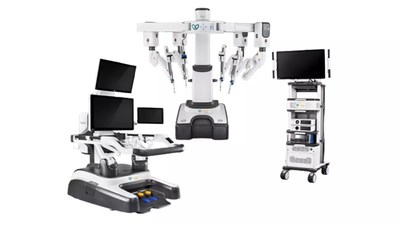
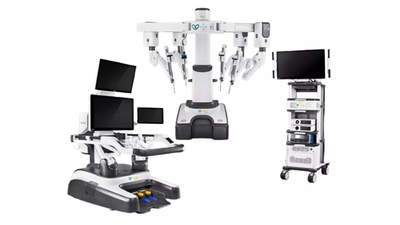
Thane: Taten Medicity Hospital successfully performed one of Thane’s first robotic telesurgery for gall bladder removal (Robotic Cholecystectomy) using the indigenously developed Mizo Endo 4000 robotic surgical system.The robotic procedure was performed through a secure 5G-enabled network with ultra-low latency of less than 10 milliseconds. The patient’s surgery was performed remotely by Dr. Pradeep Tripathi, Senior Consultant Dr. Umang Shandilya along with the multidisciplinary robotic surgery team. The patient, who was from Dombivali, was suffering from acute cholecystitis with symptomatic gallstones and severe abdominal pain.Talking about the surgery, Dr. Pradeep Tripathi, Senior Consultant – GI, Laparoscopic, Robotic and Bariatric Surgeon, Tetan Medicity Hospital, said, “This successful telesurgery demonstrates how robotic technology combined with high-speed connectivity can redefine surgical care delivery. The ability to remotely perform a complex robotic cholecystectomy with such precision reflects the future of minimally invasive surgery in India.”Dr. Umang Shandilya said, “The ultra-low latency achieved through 5G connectivity enabled smooth robotic control, while our bedside surgical and OT teams ensured seamless coordination and patient safety throughout the procedure.”Mizo Endo 4000 is a made-in-India robotic surgical platform equipped with AI-enabled capabilities integrated with advanced 5G technology. Designed for multiple specialties including GI surgery, urology, gynecology, thoracic surgery and oncology, the platform offers high-definition 3D visualization, precise instrument articulation, ergonomic controls, vibration filtration and tele-surgical capabilities for enhanced surgical precision and clinical outcomes.

Source link