Rythu discoms will impact major projects: Harish | hyderabad news

Rythu Discom will affect major projects: Harish

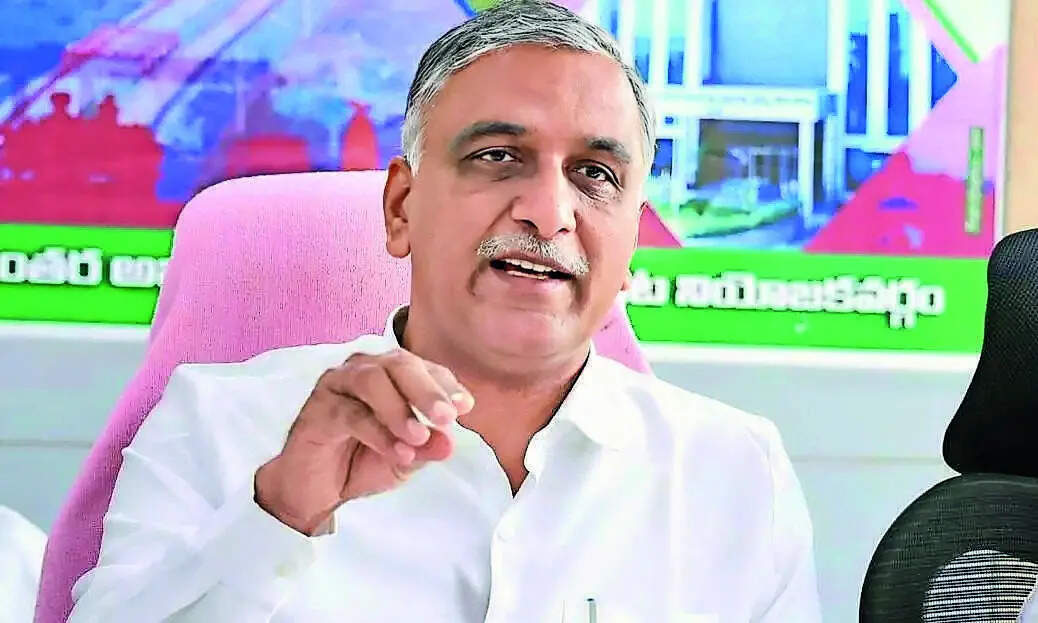
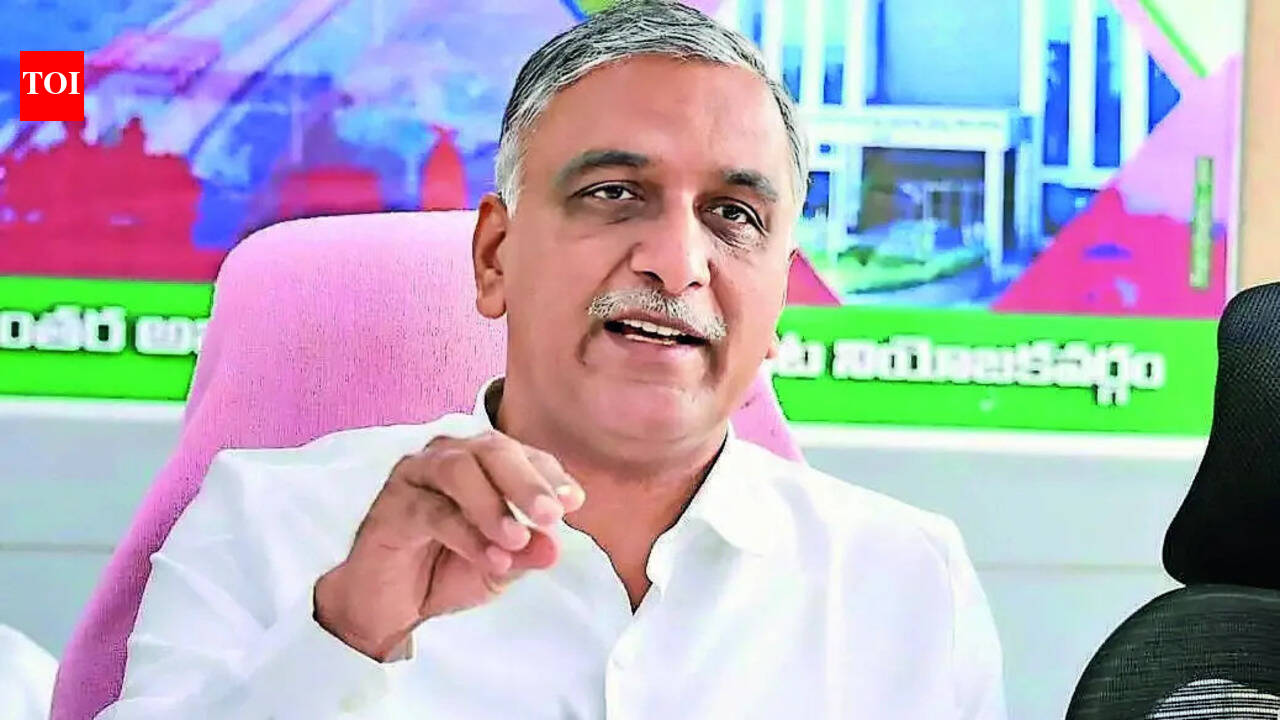
Hyderabad: Senior BRS leader T Harish Rao alleged that the proposed Telangana Rythu Power Distribution Corporation Limited (TGRPDCL) could weaken the state’s agricultural power supply system and adversely impact major irrigation projects. Addressing a press conference in Siddipet, Harish accused the Congress government of trying to weaken the 24-hour free power supply scheme launched for farmers during the previous BRS administration. He claimed that a separate power distribution company for the agriculture sector would ultimately lead to reduction in power supply to farmers.The former irrigation minister claimed that the government’s decision could have far-reaching consequences on major lift irrigation schemes, including Kaleshwaram, Kalvakurthy, Nettampadu, Bhima and Koilsagar projects, which are heavily dependent on uninterrupted power. He argued that any disruption in the availability of power could affect irrigation in vast tracts of agricultural land and water supply systems associated with these projects.

Harish Rao (9).jpg

BRS leader Harish Rao

He questioned the government’s claim that the new corporation would strengthen power distribution in the agricultural sector. Citing documents presented before the Electricity Regulatory Commission (ERC), he claimed that Congress-affiliated representatives had earlier argued that a few hours of power supply would be sufficient for agricultural operations.He alleged that farmers are already not getting the promised 24-hour power supply. Based on his visits to substations in different areas, Harish claimed that many agricultural feeders were getting significantly fewer hours of power than officially estimated. He also expressed concern over the proposed energy sourcing model for the corporation.Citing the provisions of a recent Government Order (GO), he said the corporation is expected to depend largely on renewable energy. Since solar and other renewable sources are available only during specific periods of the day, he raised the question of how farmers and irrigation projects can be guaranteed uninterrupted power supply.He argued that separating agricultural consumers into a dedicated distribution company, while continuing with other consumers under the existing discom, could create operational and infrastructure challenges. In areas where residential and agricultural consumers are located close to each other, multiple networks may have to work together, potentially increasing costs and complexity, he said.Harish further alleged that the move was part of a broader restructuring of the power sector that could eventually open the door to privatization. He claimed that similar models have emerged in other states and urged the Telangana government to clarify its long-term intentions.He also sought to respond to Chief Minister A Revanth Reddy’s criticism regarding borrowing by power utilities during the BRS regime. Harish said the previous government’s borrowings were spread over a decade, while he alleged that the current administration has accumulated comparable levels of debt in a much shorter period. Meanwhile, the Congress government has said that the proposed RPDCL aims to improve power management and ensure better service delivery in the agriculture sector.

Source link

More than 45 killed in deadly blast at explosives storage building in Myanmar world News

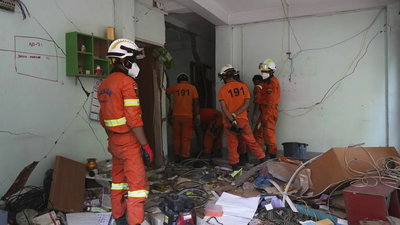
More than 45 killed, around 70 injured in explosion in explosive storage building in Myanmar

More than 45 people were killed and about 70 injured in a blast at a building allegedly storing mining explosives in northeastern Myanmar on Sunday, the AP reported, citing rescue workers and local media reports.The blast occurred around noon in Kaungtup village in Namhakam township, about 3 km south of the Chinese border. The area is controlled by the Ta’ang National Liberation Army (TNLA), an ethnic armed group fighting Myanmar’s military-led government.The cause of the explosion was not immediately known. However, it was reported that explosives used for mining activities were stored in the building.A rescue worker involved in the operation told the AP that by Sunday evening, 46 bodies, including six children, had been recovered and taken for cremation.The rescuer, who spoke on condition of anonymity due to security concerns, said 74 injured people had been taken to the township hospital and rescue efforts were ongoing.Another rescue worker in Namkham, who requested anonymity, said about 40 people were killed in the blast and more than 100 houses were damaged near the site.

Source link

Punjab celebrates historic No. 1 education ranking with Mega PTM across over 19,000 government schools india news

Punjab celebrates historic No. 1 education ranking with Mega PTM across over 19,000 government schools

The Punjab government, led by Chief Minister Bhagwant Singh Mann, on Saturday organized simultaneous mega parent-teacher meetings (PTMs) in over 19,000 government schools across the state to celebrate Punjab securing the top position in the NITI Aayog’s School Education Quality Report 2026.Sharing details of the event titled ‘Sikhiya Da Maha Jashn’, Punjab Education Minister S Harjot Singh Bains said Punjab achieved the No. 1 ranking in the national report, leaving Kerala behind on key foundational learning metrics.Describing the achievement as a milestone for the ‘Punjab Sikh Revolution’, S Harjot Singh Bains said, “This No. 1 rank does not belong to the government alone. It belongs to every parent who chose to believe, every student who worked hard, and every teacher who went beyond the textbook.” We changed government schools from the last option to the first choice. For decades people were told that quality education was not possible in government schools. Today Punjab has proved them wrong. This rank is a revolution created in our classrooms.”Highlighting the role of parents in maintaining this success, the Education Minister said that more than 20 lakh parents participated in the Mega PTM and Parent Workshop. The program focused on continuity of summer learning, vacation homework management, and creating positive routines to support children’s learning during summer vacation.As part of the ceremony, teachers and non-teaching staff were honored for their dedicated efforts, while outstanding students including board exam toppers, English Edge Program achievers and JEE qualifiers were awarded special recognition and certificates.To ensure smooth and effective implementation of the programme, all teachers and school heads were trained through a live YouTube session. Trained facilitators and active school management committees also supported parent activation, coordination and grassroots implementation of activities across the state.

Source link

IPL final toss decision: Does bowling first really work? What does history say after RCB’s big call? cricket news

IPL final toss decision: Does bowling first really work? What does history say after RCB's big call?
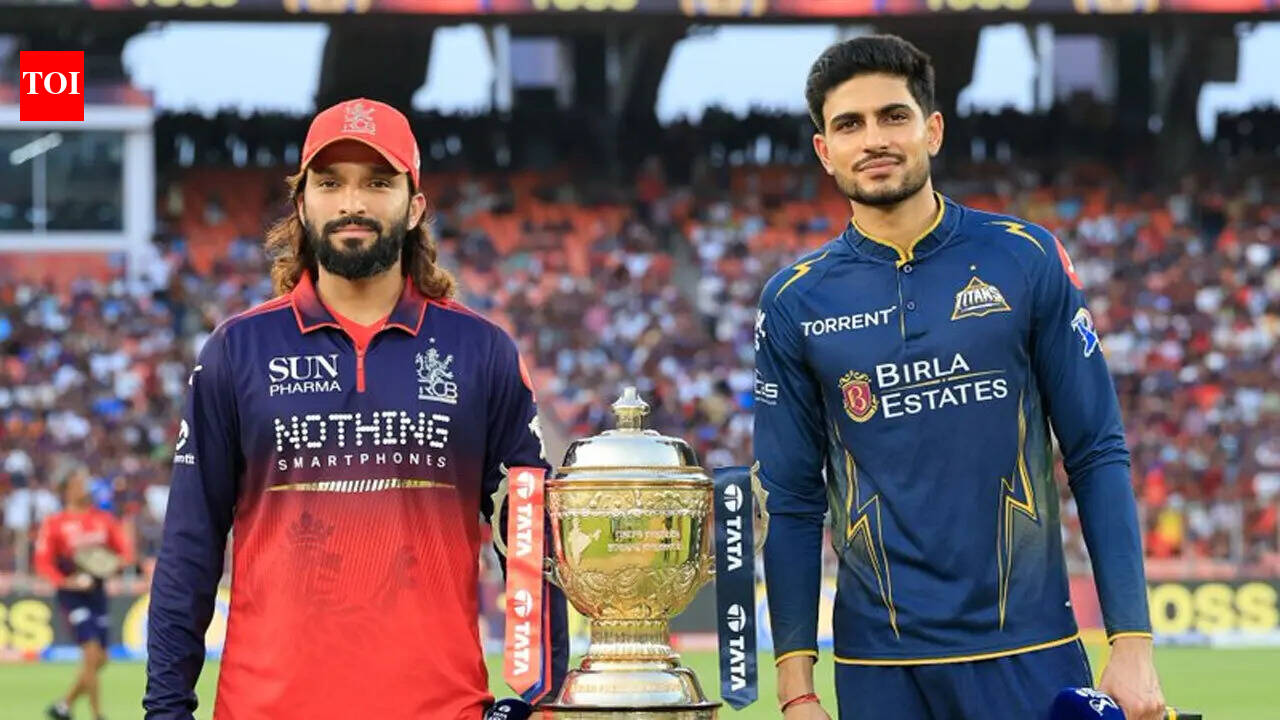
RCB captain Rajat Patidar and GT captain Shubman Gill (Picture Credit: IPL)

New Delhi: Royal Challengers Bangalore captain Rajat Patidar opted to bowl first after winning the toss against Gujarat Titans in the IPL 2026 final on Sunday, backing his bowlers to build an early lead on what he described as a good batting surface.The decision immediately gave rise to the familiar debate that accompanies every IPL final: does batting or bowling first offer a better path to the title?A look at the history of the IPL shows that there has not been a huge advantage either way, although teams setting targets have had a slight advantage in the biggest match of the tournament.Batting first maintains a narrow leadIn the 18 IPL finals played before Sunday’s title clash, teams batting first have won the trophy 10 times, while teams chasing have emerged victorious on eight occasions.The numbers show that scoreboard pressure often plays a crucial role in finals, where nervousness and high stakes can make chasing difficult even on batting-friendly surfaces.However, the toss decisions tell a more nuanced story.In the last seven IPL finals, captains have decided to field first. Of those seven occasions, only three have resulted in title-winning performances for the team that chose to chase.The first such success came in the inaugural final in 2008 when Rajasthan Royals defeated Chennai Super Kings after choosing to bowl. Kolkata Knight Riders repeated the feat against Punjab in 2014, while Chennai Super Kings successfully chased the target against Sunrisers Hyderabad in 2018.Mixed record of teams chasing the targetMany captains who opted to field first in the finals faced defeat. RCB themselves experienced that misery in 2009 when they decided to chase the target against Deccan Chargers and missed out.Recently, Kolkata lost to Chennai in the 2021 final after choosing to bowl, while Punjab Kings suffered a similar loss against RCB in the 2025 summit clash.However, the Patidars seemed unaffected by historical trends. The RCB skipper said the surface is unlikely to change significantly over the course of 40 overs and stressed the importance of focusing on the present rather than dwelling on past results.Gujarat Titans captain Shubman Gill revealed that his team would have preferred to bat first anyway, which he believed could help the fast bowlers in the early overs.With teams batting first having only a slight advantage in history, Sunday’s final is unlikely to be decided by the toss alone. Execution under pressure, rather than statistics, could ultimately determine who lifts the IPL 2026 trophy.

Source link

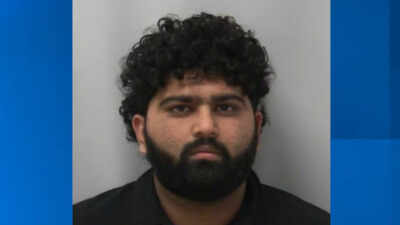
22-year-old Parth Patel was arrested in the US for duping an Illinois resident of $40,000 by posing as an FBI agent.

22-year-old Parth Patel was arrested in the US for duping an Illinois resident of $40,000 by posing as an FBI agent.

A 22-year-old Chicago man was arrested in a police sting operation in Illinois after he was found to be involved in a scam in which a resident of Paw Paw (village in Illinois) lost $40,000 last month. Parth C. Patel has been charged with theft by deception and attempted theft by deception following a Lee County Sheriff’s Office investigation into an alleged scam.The victim was first contacted by someone claiming that his Apple account had been “hacked.” The caller then transferred the victim to a man posing as an FBI agent, who said he needed money to help catch the alleged ‘hacker’.The Paw Paw resident agreed to hand over $40,000 in cash. The money was collected from an address in the village by an unknown person on April 17.The scam did not end here. The fake FBI agent later contacted the victim again and asked for another $28,500.The police came to know about the incident and started investigation. Detectives arranged a controlled cash pickup for Monday after asking the victim to provide additional funds. The operation resulted in Patel being arrested when he arrived to collect the cash. He was taken into custody and booked into the Lee County Jail.Patel is charged with theft by deception involving between $10,000 and $100,000, a Class 2 felony under Illinois law, as well as attempted theft by deception involving a similar amount, which is a Class 3 felony.Patel appeared before a judge and was released pending further court proceedings under Illinois’ pretrial release law. The case was to be heard on May 21.

Source link

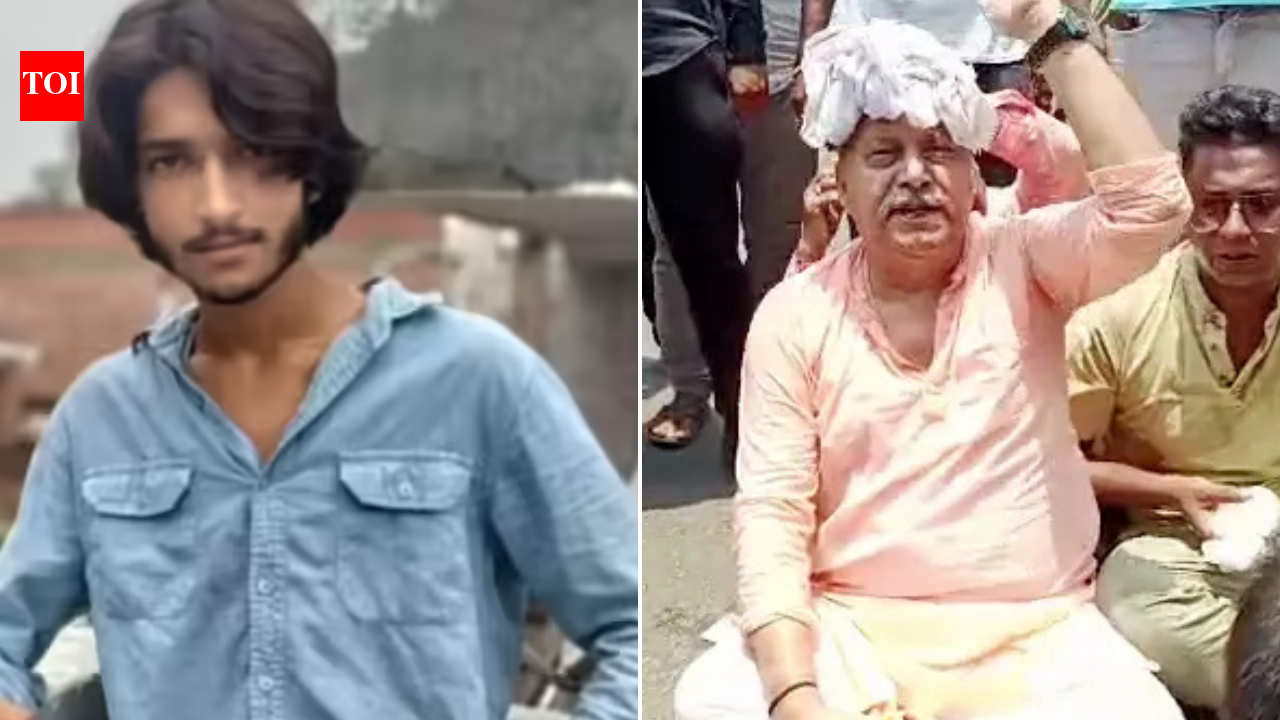
Evening News Wrap: Main accused in Ghaziabad teen murder case killed in encounter; TMC’s Kalyan Banerjee ‘attacked’ in Hooghly incident and more. india news

Kalyan Banerjee alleges attack near Chanditala police station, TMC-BJP clash intensifies in West Bengal

  • murder of ghaziabad teenager Accused Asad killed, constable injured in police encounter during arrest operation.
  • TMC MP Kalyan Banerjee alleges that he was attacked by BJP supporters near Chanditala police station in Hooghly.
  • Congress has started the search for a new KPCC chief as Shivakumar prepares to take oath as Karnataka Chief Minister on June 3.
  • India and the US resumed talks in Delhi on an interim trade agreement covering tariffs, investment and market access.
  • Rajat Patidar takes RCB from underdogs to champions, now one win away from a rare title defence.

Here are the top stories of the day:

Ghaziabad teen murder accused carrying reward of Rs 50,000 killed in police encounter

A 17-year-old murder accused carrying a reward of Rs 50,000 was killed in a police encounter in Khoda Colony, Ghaziabad. Asad, the prime accused in the stabbing death of a teenager earlier this week, opened fire while trying to evade arrest during a checking operation, police said. A constable sustained bullet injuries in the shootout, while another suspect managed to escape. Read the full story

Kalyan Banerjee accused of attack on BJP workers outside Bengal police station

Trinamool Congress MP Kalyan Banerjee alleged that he was attacked by BJP supporters near Chanditala police station in West Bengal’s Hooghly district. He said the attacks occurred while presenting a delegation on post-election violence. TMC called the incident an attack on democracy, while BJP rejected the allegations, saying that local residents were protesting against post-poll violence. Read the full story

Congress looks for next KPCC chief as Shivakumar prepares to take oath as Karnataka Chief Minister

As DK Shivakumar prepares to take oath as Karnataka Chief Minister on June 3, Congress President Mallikarjun Kharge said the party is in the process of identifying the next Karnataka Pradesh Congress Committee (KPCC) chief. He said the organization needed a leader who could work “quickly and collectively” to strengthen the party before the next assembly elections. Read the full story

India-US trade talks gain momentum as officials meet in Delhi to push interim deal

Trade talks between India and the US resumed as senior officials from both sides began a four-day meeting in New Delhi on Monday to finalize an interim trade agreement. The US delegation is led by chief negotiator Brendan Lynch, while India is represented by Darpan Jain. The discussions will focus on market access, tariffs, investment, customs facilities and economic security under the BTA framework.Read the full story

From ‘Ee Saala Cup Namde’ to ‘Kap Namdu’: Rajat Patidar writes the story of RCB’s unexpected rise

For almost two decades, Royal Challengers Bengaluru (RCB) has been living with the burden of unfulfilled promises, with “ee saala cup namde” being a frequent reminder of missed IPL glory. He eventually shifted under the leadership of an unlikely leader in the form of Rajat Patidar. From injury replacement to title-winning captain, Patidar’s rise has been remarkable, as he is now one win away from defending the IPL crown. Read the full story

Source link

Class 10 student from Puttur documents 21 wild flowers, plans monsoon sequel. mangaluru news

Class 10 student from Puttur documents 21 wild flowers, plans monsoon sequel
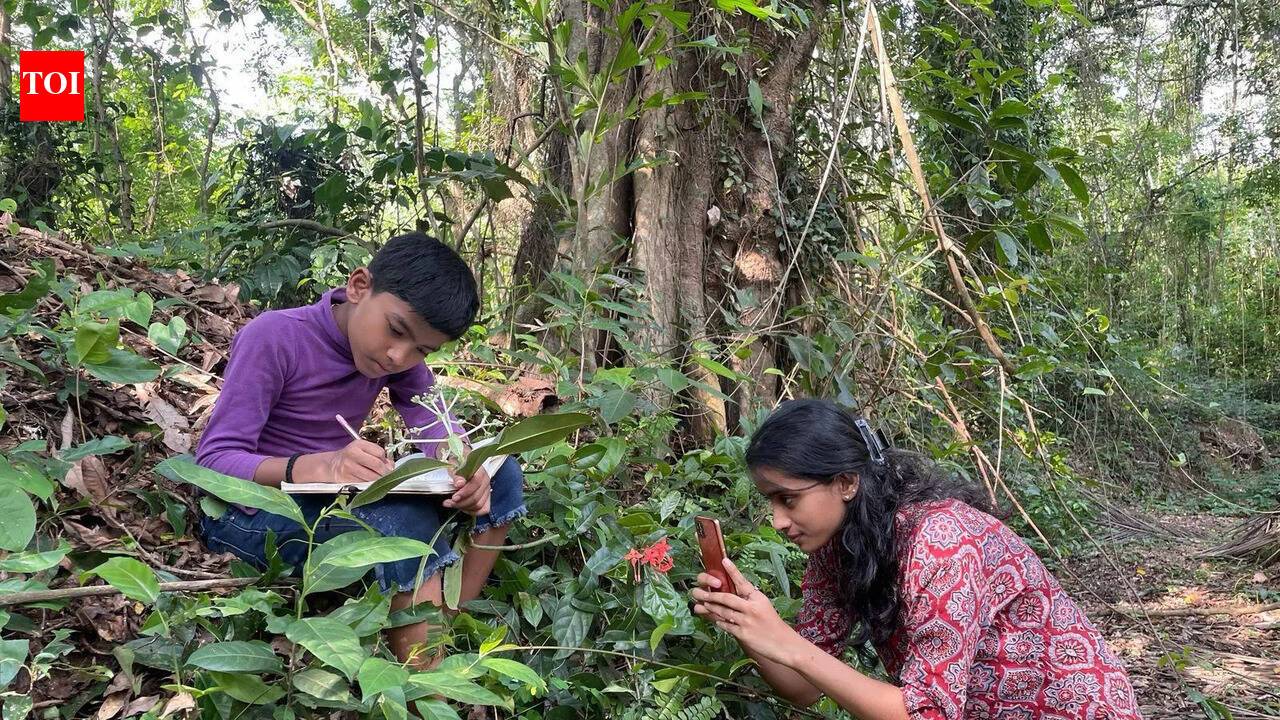
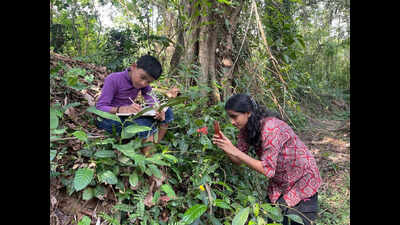
Blooming curiosity: Aaradhya Alva documents tiny wild flowers while watching her brother Ahaan, turning a quiet moment into a shared lesson on observing tiny flowers.

Mangaluru: : Mangaluru: Swapping mobile screens for fieldwork, a Class 10 student from Puttur documented 21 tiny wild flowers in and around her home during her summer vacations, and compiled them into a booklet titled ‘The Beauty of Tiny Wild Flowers’.The booklet, its first volume, documents 21 small wild flowers observed at Panchapaddi near Savanur in Kadaba taluk of Dakshina Kannada district.Encouraged by the experience, Aaradhya now aims to continue this project during the monsoon and bring out a second volume featuring the flowers that bloom during the rainy season.Aaradhya is the daughter of Vivek Alva, a graphic designer, and Smita V Alva, a lecturer in Botany at Philomena Degree College, Puttur. The family is a resident of Savanur, Kadaba. The couple, who previously organized summer camps for children, have followed a practice at home since Aaradhya was in Class 5 – ensuring that every vacation included a meaningful project for skill building.Vivek explains, “This project was designed to help my children understand the process of research. We initially considered a number of topics before deciding to document small wild flowers. The idea was to encourage observation, investigation and learning with nature.” times of India.Aaradhya’s younger brother, Ahaan, a Class 5 student, also contributed to the project. After basic training in photography and artificial intelligence tools, Aaradhya photographed flowers using an iPhone. He completed his fieldwork with information from the Internet, while his mother guided him in identifying and understanding botanical aspects.This is not Aaradhya’s first research-based project. Before this she worked on documenting the creatures found in forests. Vivek said, “As parents, we believe that children should understand the value of learning through hard work and experience. Projects like this help them become independent learners.”Aaradhya said, “The beauty of these tiny flowers is incredible. Most people pass by without noticing them, but I really enjoyed researching and learning about them. Now I am eagerly waiting for the rains so that I can discover and document even more flowers.”Since both parents have written books, the possibility of publishing a booklet is being explored. booklet will be released world environment day On 5th June.

Source link

Five patients recovered from Ebola in Congo, WHO opens new treatment center. world News

Five Ebola patients recover in Congo, WHO opens new treatment center

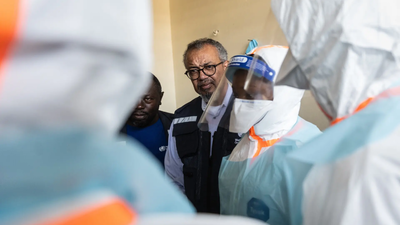
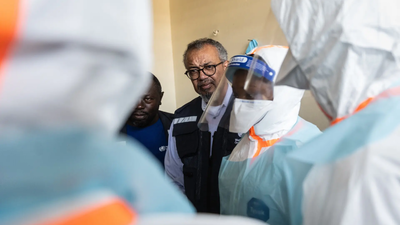
Five patients infected with a rare strain of Ebola in the Democratic Republic of Congo have recovered, WHO chief Tedros Adhanom Ghebreyesus said Sunday during the inauguration of a new treatment center in the eastern city of Bunia.Speaking at the facility in Ituri province, the center of the current outbreak, Tedros said four patients would be discharged on Sunday, while another had left the hospital two days earlier.“Four people will be discharged today and one was discharged the day before yesterday,” the AP quoted Tedros as saying.“Of course, we are still working on vaccines and treatments but that doesn’t mean people can’t recover from Ebola,” he said.WHO said on Friday that a patient has recovered from the Bundibugyo strain of the virus, which currently has no approved vaccine or treatment. The organization described this as the first documented recovery of a confirmed patient from Bundibugyo during the ongoing outbreak.According to the latest official figures cited by WHO, there have been 906 suspected cases and 223 suspected deaths. Meanwhile, Congo’s neighbor Uganda has confirmed nine cases and one death, according to the country’s health ministry.The announcement came as aid agencies warned that the outbreak was spreading faster than response efforts. Doctors Without Borders (MSF) on Saturday called for expanded testing, rapid deployment of aid workers and unhindered access to medical supplies.Health workers have also faced increasing resistance from some communities, angry over strict burial protocols for Ebola victims that have led to at least three attacks on health facilities.During the inauguration ceremony, Tedros urged residents to seek medical care at the first sign of symptoms.“If you come to health facilities when you have symptoms, you can get help and recover, so the key is to come forward as soon as possible and get the necessary help,” he said.Tedros said, “We can stop this Ebola and everyone who has it can recover. But the rules… this is everyone’s business and every citizen should be involved.”“The final message we would like to share with the Ituri community is hope,” said Pierre Aklimali, events manager at Congo’s National Institute of Public Health, during the inauguration of the new treatment centre.

Source link

Two rupees for cancer: India’s smokeless tobacco epidemic that no one is stopping. india news

Two rupees for cancer: The smokeless tobacco epidemic inside India that no one is stopping

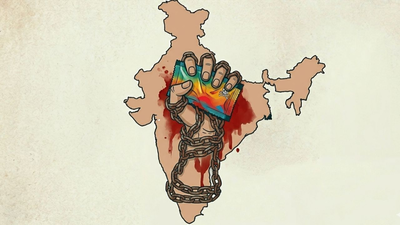
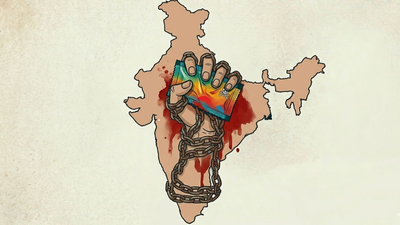
None of us is unaware of the fact that nicotine is bad. In India you cannot even go to a cinema without tobacco awareness advertisements playing. Your cigarette boxes and tobacco pouches have the most frightening graphics to discourage you from buying them. But you still do it.The cycle of addiction has never been something you should fear.Add to this how superficial these efforts are when you compare the buzzy commercial of a man coughing on his deathbed to the most stylish character in movies casually smoking a cigarette. You start the movie knowing that smoking causes deaths. You spend the next two hours seeing that it doesn’t kill – instead, seeing it makes someone look “hot” or “powerful.” The biggest names in our entertainment industry are quick to enhance their image by signing tobacco brand deals, almost equating it to a luxury lifestyle.A message plays before the film. This is the second film only.Asking people to quit tobacco in a country where more than 2 in 10 are dependent on it is an extreme virtue signaler. And another issue unique to the South Asian subcontinent is that of smokeless tobacco.About 20 crore Indians consume smokeless tobacco every day. Smokeless tobacco comes in small plastic pouches which are sold at every corner shop for a few rupees. Gutkha. Khaini. Jarda. It’s sitting quietly on the shelf next to the biscuits and candy. One of the most carcinogenic products ever available for retail sale can be purchased for Rs.2. “More than 28 types of carcinogens have been isolated from these products,” says Dr Madhurima Nandi, an academic research associate at the University of Edinburgh.India is home to more than 80% of the world’s smokeless tobacco users. This is not a global problem. This is our problem. And yet, while cigarettes have graphic warnings on packets and face higher taxes, smokeless tobacco remains cheap, widely available, and less-regulated.While the rest of the world is struggling with vapes creating a new market for young tobacco users, something India has covered, at least legally. The biggest concern for our country is that countless people are “painting it red” every day.
-

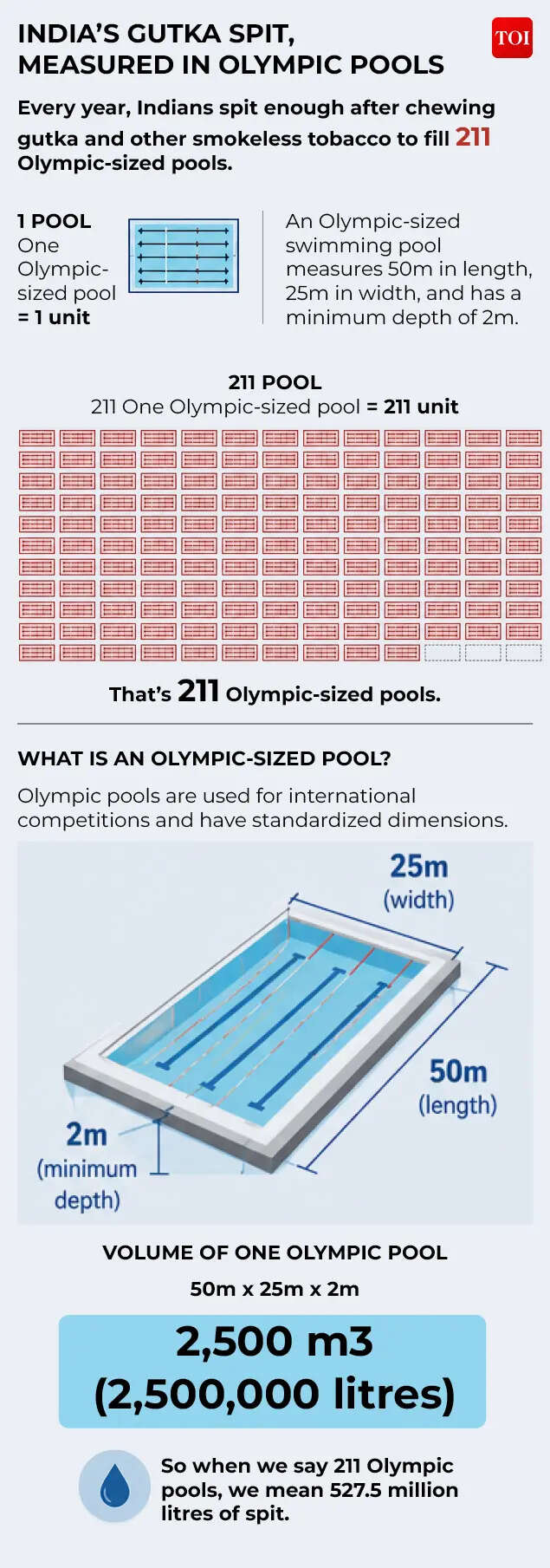
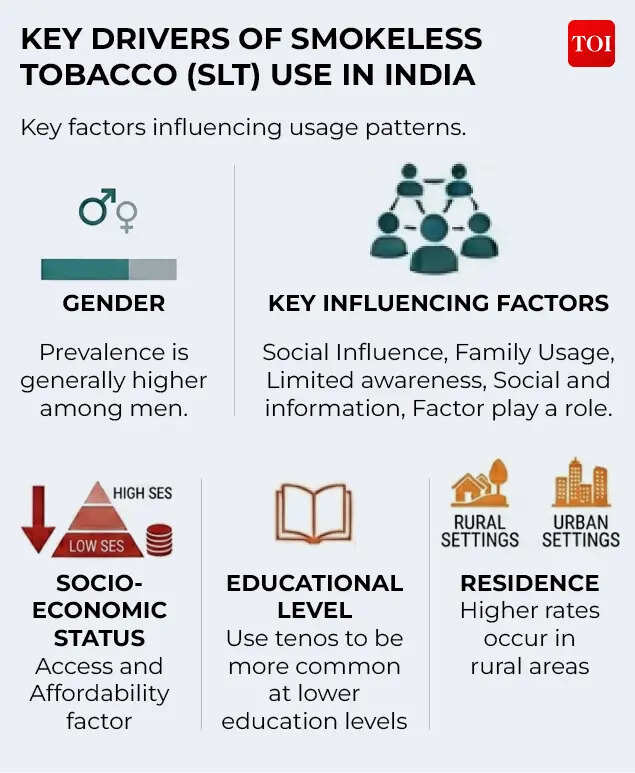
Enough to fill 211 Olympic-sized pools each year. Similarly, Indians spit after chewing gutkha and other smokeless tobacco. Indian Railways spends approximately ₹1,200 crore annually to clean these stains from trains and stations. Due to this, the pillars of Howrah Bridge have started rusting.But the problem did not start from yesterday.Tobacco cultivation began in India in 1605. The Portuguese introduced it in Kaira and Mehsana districts of Gujarat. What started as a colonial crop became a cultural fixture. Over the centuries, it has embedded itself in daily life, betel leaf after meals, tobacco distributed among laborers, a quiet addiction that demands little money and provides relief for a short period of time.Then came Gutka. A man named Mansukhbhai Kothari from Gujarat figured out how to make betel powder and sell it in small, cheap packets. Five rupees. Two rupees. Sometimes less. It was cheap in a way that cigarettes never were. And it became an instant hit. Gutka delivers nicotine into the bloodstream faster than cigarettes. It’s about three times more addictive. Even the process behind consumption is more instantaneous than smoking cessation.Which brings us to the sociological divide. Smoking and smokeless tobacco use are not the same problem in India. They do not affect the same people equally.Cigarette smoking in India is concentrated among the wealthier, urban population. A survey by the International Institute for Population Sciences found that daily smokers are wealthier and more educated than non-smokers. The poorest households have the lowest smoking rates. It’s no secret, cigarettes are expensive. Heavy taxes are imposed on them. The price of one packet is as much as a laborer can earn in a day.Smokeless tobacco is the opposite. It is cheap and easily available. According to Dr. Nandy, the main determinants of SLT use in India are clear: “gender (males more than females), educational level (illiterate more than literates), urban-rural residence (rural more than urban), socio-economic status (low than high), and low taxes on SLT products.” She adds that “peer pressure, parental use and limited knowledge about harmful effects” are also major factors.
-

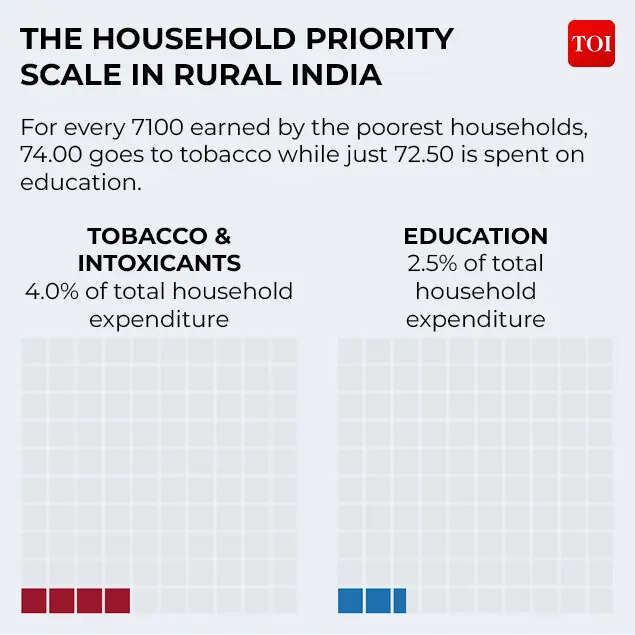
For a daily wage laborer tired after a hard day of physical labour, a ₹2 packet of gutkha is the most affordable option. When there is no money for food, it works to satisfy hunger. Nicotine releases dopamine and makes you feel full. This is the reason why even beggar children in India prefer to take small amounts of money instead of packets of biscuits. This small change allows them to eat Gutkha and keep themselves full and doped up for much longer than a single biscuit.said a poor child begging in the area next to Nehru Place metro station. “Biscuit doesn’t fill the stomach. Gutkha reduces hunger a bit. If you want to give money then give me this, don’t want the rest of the cheese.”The poorest households in rural India spend about 4% of their total expenditure on tobacco and drugs. They spend only 2.5% on education. Every year, an estimated 18.4 million Indians are pushed into extreme poverty due to tobacco-related disease and death. They not only lose their savings but also their main earner. The family remains poor.
-

The tobacco industry is not the cause of poverty in India, but the profits it makes.In relation to the smokeless tobacco epidemic, the level of Indian culture of ‘Jugaad’ has gone beyond what is necessary. Commenting on the misuse of these drugs by young children, an auto driver near Hauz Khas said, “You can make as many laws as you want. But there is always a jugaad (loophole).” He blamed not only the system but also the parents for the misuse of SLT. He said that drugs make you so happy that you forget the difficulties and that is why many children born in poverty are introduced to these drugs by their parents very early.While calling for a complete ban at this stage is impractical, we have seen how functional it has been with vapes. When you ban something you immediately create a profitable black market for it. The best way forward is to make the product less accessible, less attractive and less affordable.The 2011 gutkha ban was a good intention that became a case study in failure. Manufacturers did not stop selling their products. They simply divide the contents into two separate pouches – tobacco in one, flavorings in the other – sold side by side. The customer buys both and mixes them at home. Technically, no laws are violated because none of the bags alone contain a prohibited combination. This is Jugaad on an industrial scale and has made a mockery of the ban.Close this loophole. If a product is consumed as Gutkha, it should be regulated as Gutkha. Different sachets that are sold together and intended to be mixed should be considered a single product under the law.Then fix the packaging. When plastic ban was imposed in 2011 Supreme Court Banned plastic pouches for gutkha, tobacco and pan masala. Walk into any corner store today and you’ll still find them in plastic. Enforce restrictions. Impose fine on manufacturers. Seize the products. Make compliance visible. A law that is not enforced is not a law at all. This is just a suggestion.Next, look at the price. Gutka packet worth Rs 2 is not a product. This is a trap. Kids can afford it. Daily wage laborers buy this instead of food. Set a minimum pack size and make the cheapest legal pack price at least Rs 20 or Rs 30. Poor people will not stop using tobacco overnight, but few will. And many children will never start.Then control who can sell it. Today anyone can sell tobacco in India. No licensing is required, no training is mandatory, and there are no consequences for violations. Retail license required. Cancel it if it sells to minors or violates packaging laws. Himachal Pradesh has already done this. Punjab and Patna are moving in that direction. The rest of the country can follow suit.Increase the legal age. The current minimum age for purchasing tobacco in India is eighteen years, but this is not enforced. Increase it to 21. Sri Lanka has done so, and seven other countries have followed suit. Research shows that delaying the age of first use dramatically reduces the likelihood of lifetime addiction.Increase taxes. WHO recommends that taxes account for at least 75% of the retail price of tobacco products. India is nowhere near smokeless tobacco. Cigarettes are heavily taxed, but not smokeless tobacco. This is not an accident. This is a policy option that prioritizes revenue over public health. Higher prices reduce consumption, and a 10% price increase leads to an 11% decline in demand among low-income households. These are the people who need security the most.Dr. Nandy argues that “there is an urgent need to address these determinants with strict government policies on taxation and tobacco control. Mass media campaigns more directed at predefined populations and clear risk labeling of products can significantly help reduce use.”The child near Nehru Place metro station does not need any other awareness advertisement. He’s seen the graphic on the pouch and knows it’s bad for him. He buys it anyway because it is cheaper than two rupees worth of food. As long as the government does not make smokeless tobacco unobtainable, unavailable or distasteful, he will continue to buy it. The industry will keep selling it. Railways will keep getting it cleaned. And 18.4 million Indians will continue to fall into poverty every year.

Source link

Singapore Open 2026: Satwik-Chirag created history, first Indian pair to win the title

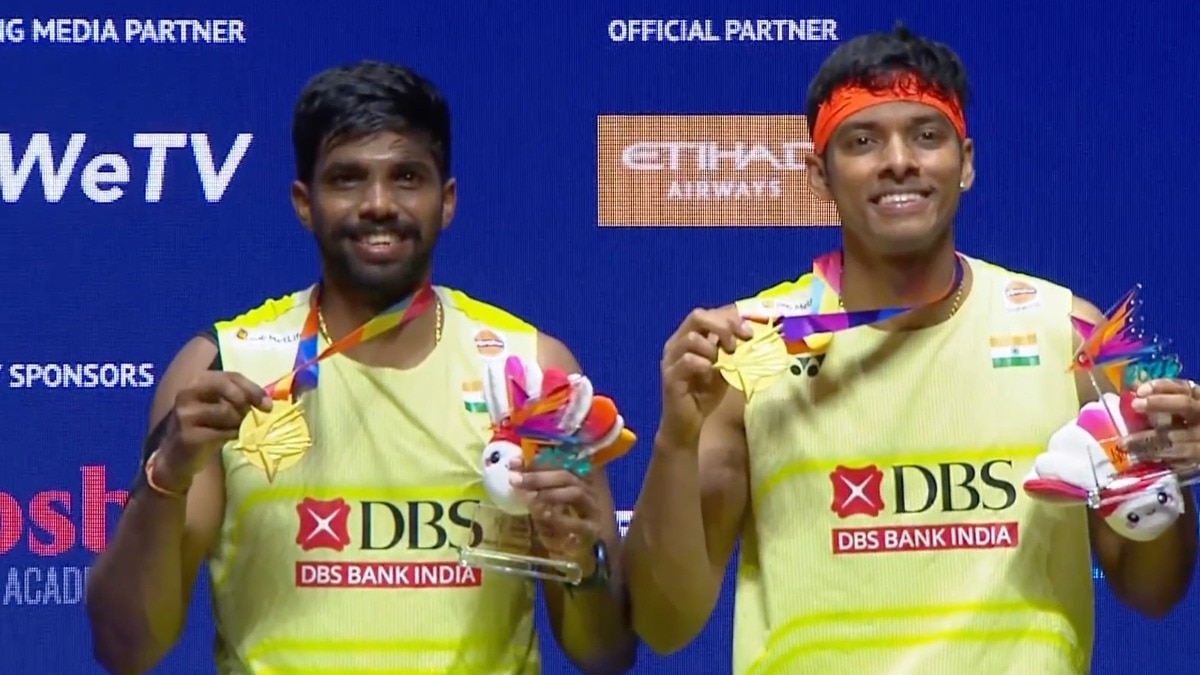
Satwiksairaj Rankireddy and Chirag Shetty ended their long wait for a title by defeating Indonesia’s Fajar Alfian and Muhammad Fikri 18-21, 21-17, 21-16 to win the Singapore Open men’s doubles title. The Indian pair held their nerve in a high-quality three-game battle to secure their first title in two years and complete a much-awaited return to the top step of the podium.

Singapore Open Final: highlight

The win comes after consecutive defeats for the world number four Indians, who had reached several finals since their last title in 2024. But were still unable to cross the finish line.

After the match, both said, “We’ve lost before, but I think this will be a special tournament for me. Thank you, the crowd. Thank you all so much. You guys are so passionate, no matter what happens, no matter who is playing. It’s been a packed stadium since the first round. I think it’s one of the best stadiums to play in. Thank you all.”

The Asian Games and Commonwealth Games champions added the ninth World Tour title and third Super 750 title of their career with the victory in one hour and 13 minutes, which proved to be an important milestone as they became the first Indian men’s doubles pair to win the Singapore Open title.

A long-awaited breakthrough for Sat-Chi

Satwik and Chirag last won the trophy at the Thailand Open in 2024 and have finished runners-up four times since then and have had disappointing performances. His path in Singapore was equally challenging, including semi-final wins over defending world champion Kim Won Ho and South Korea’s Seo Seung Jae.

After losing the opening game, the Indians responded strongly to dominate long rallies and shift the momentum.

Sat-chi celebrates after winning the title (screen grab from JioStar)

As soon as the winning point was scored, Satwik and Chirag fell on the court in celebration before giving any emotional reaction. Satwik then presented a playful baby-themed gesture dedicated to his brother and sister-in-law, who recently became parents, while Chirag heaved a sigh of relief. The two then danced on the court, celebrating their memorable and hard-earned victory.

The title marks a turning point for Satwik and Chirag after months of continuity without silverware, reaffirming their place among the world’s elite. Having regained confidence and clinched a major trophy, the Indian pair will now look to carry the momentum into the rest of the season.

– ends

Published on:

May 31, 2026 17:13 IST

Source link