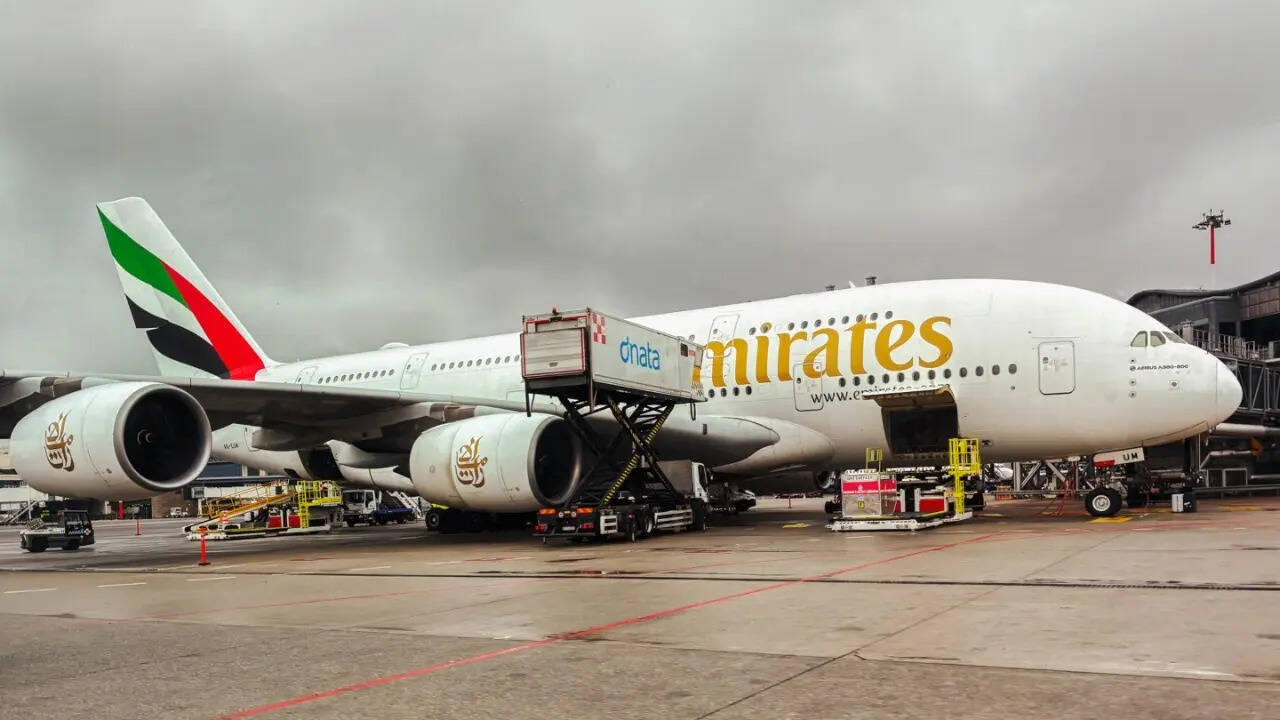
Bahrain: ‘Sirens sounded’: Bahrain urges residents to seek shelter as Iran vs US-Israel war escalates

'Sirens sounded': Bahrain urges residents to seek shelter as Iran vs US-Israel war escalates
Why are sirens sounding in Bahrain? Residents urged to seek shelter amid Iran vs US-Israel war

Panic and urgency spread across Bahrain as warning sirens echoed across the country, with authorities issuing urgent advisories urging residents to seek shelter. alertIssued by the Interior Ministry, it called on citizens and residents to remain calm and move to the nearest safe place without any delay, signaling another escalation in the rapidly escalating Iran vs. US-Israel war.The development marks a continuation of a worrying pattern across the Gulf, where emergency alerts, missile intercepts and air threats are rapidly increasing, turning once distant geopolitical tensions into an immediate, tangible reality for citizens.

What happened in Bahrain amid Iran vs US-Israel war?

According to official statements, Bahrain’s Ministry of Interior activated the national siren system, warning residents of potential danger and advising them to take precautionary measures. The warning was clear and urgent: remain calm, avoid open areas and move to a safe place immediately.“Sirens have been sounded. Citizens and residents are urged to remain calm and move to the nearest safe location,” Bahrain’s Ministry of Interior said on its official This was not an isolated incident. Reports indicate that sirens have been sounded several times in recent days, highlighting the frequency and severity of the situation as regional tensions continue to rise. In an already distressed area, the sound of the siren has become a powerful symbol signaling not only a warning but also the possibility of imminent danger.

Bahrain and other Gulf countries in danger amid Iran vs US-Israel war

Bahrain’s alert comes amid a widespread wave of military tensions across the country middle east. Since late February this year, the conflict between Iran, the United States and Israel has escalated dramatically, with missile and drone attacks spreading beyond traditional conflict areas. Tehran’s retaliatory strikes reportedly targeted multiple locations across the region, including areas containing strategic infrastructure and military assets.For Gulf countries like Bahrain, which is home to major installations and located close to major flashpoints, the risk is no longer theoretical. It is immediate. Activating sirens is one of the most serious steps the government can take in a civil context. Unlike mobile alerts or advisories, sirens signal immediate and real-time danger, are designed to reach people immediately regardless of connectivity and often signal incoming threats or nearby events.In Bahrain, the siren system follows a structured protocol:

  • Initial siren means warning to seek shelter
  • Follow-up signal means all-clear notification

The fact that such systems are being used repeatedly underlines the seriousness of the current situation. What makes this moment particularly important is how quickly alerts are turning into real-world consequences. Across the Gulf in recent days:

  • Missile threats trigger emergency phone alerts
  • Air defense systems intercepted incoming projectiles
  • Explosions and sonic booms have been reported in major cities

Bahrain’s sirens fit this pattern as the region is moving from heightened vigilance to proactive threat response.

Timeline of rising tensions between Iran vs. US-Israel war

To understand how fast things have progressed –

  • At the end of February: America-Israel attack on Iran
  • Beginning of March: Iran started retaliatory attacks
  • mid March: Gulf countries face frequent alerts and blockades
  • Now: Sirens sound in Bahrain, immediate shelter urged

Each step has brought the conflict closer to civilian life. The sound of sirens in Bahrain is a clear reminder that the Iran vs. US-Israel conflict is not far away; This is happening in real time, across borders and within civilian spaces.

A new normal in the Gulf amid Iran vs US-Israel war?

The frequent activation of sirens raises a serious question: Is this becoming the new normal? In a short period of time, Bahrain has raised the alarm several times, neighboring countries have issued emergency advisories and the civilian population is being trained to respond immediately. This marks a shift from sporadic incidents to a sustained period of instability, where preparation is no longer optional. The warnings are becoming more frequent, the threats are becoming more immediate and citizen preparedness is now critical. As sirens continue to wail across the Gulf, the region is clearly entering a phase where warning systems are no longer precautionary, but necessary.Authorities have issued clear guidelines to those in Bahrain to remain calm, move to the nearest safe or enclosed space, avoid open areas and only follow official updates. Emphasizing calmness is especially important because in a crisis situation, panic can be just as dangerous as danger. Bahrain’s sirens are not just about a warning, they are part of a bigger story unfolding across the Middle East. The region is currently facing military escalation (missiles, drones, counter-attacks), civilian risks (alerts, sirens, security advisories) and economic uncertainty (energy markets, infrastructure risks). Together, these elements point to a conflict that is expanding in both scope and impact.

Source link

No exam? CBSE announces new assessment rules for Gulf students amid Iran vs US-Israel war

No exam? CBSE announces new assessment rules for Gulf students amid Iran vs US-Israel war
CBSE announces new marking scheme for Class 10 students in the Middle East after exams were canceled amid Iran vs US-Israel war

In a major educational shift arising from the ongoing geopolitical tensions between Iran versus the US–Israel war, the Central Board of Secondary Education (CBSE)CBSE) has launched a revised assessment scheme for class 10 students middle eastThis is fundamentally changing how thousands of students will be assessed this year. The move comes after unprecedented cancellation of board exams in major Gulf countries, leaving students, parents and schools grappling with uncertainty, but now, with clarity emerging, the focus has shifted from exams to assessment and its implications are significant.

Why did CBSE change the rules for these? united arab emirates, saudi arabia, Queueoman, Kuwait, bahrain and iran

The revised plan follows the complete cancellation of the remaining Class 10 board exams in countries including the UAE, Saudi Arabia, Qatar, Oman, Kuwait, Bahrain and Iran due to the worsening regional security situation amid the US-Israel war. What started as a temporary postponement in early March soon turned into complete cancellation, as tensions related to the Iran versus US-Israel conflict made it unsafe to hold the exams.The decision has affected over 50,000 students from over 150 CBSE-affiliated schools in the region, making it one of the biggest disruptions in foreign CBSE examinations in recent history. Since exams are no longer an option, CBSE had to take immediate action to ensure that the academic future of students is not derailed.

How the new CBSE evaluation scheme works

The revised assessment model of CBSE is designed to fairly evaluate students on the basis of their actual performance in the examinations already conducted, rather than an average calculated for the missed papers.This is how it works:

  • Students who appeared in all the examinations – Their results will be completely based on their performance in those papers.
  • Students who appeared in the examination of 4 subjects – The marks for the remaining subjects will be calculated using the average of their best three subjects.
  • Students who appeared in the examination of 3 subjects – The remaining subjects will be marked on the basis of the average of their best two subjects.
  • Those students who appeared in the examination of only 2 subjects – Their remaining marks will be calculated from the average of those two papers.

The purpose of this structured formula is to maintain objectivity while adopting incomplete examination data. Apart from exam performance, internal assessment marks submitted by schools will play an important role in the final results. This includes periodic tests, pre-board examinations and projects and coursework. These components, which were often ignored in normal years, now hold immense importance and have effectively become important determinants of the final score.

Middle East exams cancelled: Here's how CBSE will calculate marks now

Middle East exams cancelled: Here’s how CBSE will calculate marks now

The most notable aspect of the new scheme is that no special re-examination will be conducted beyond the existing framework of CBSE. However, students will still have the opportunity to appear for a second board exam and improve their scores under the standard CBSE policy. This ensures that although the current results will be considered final, students will not be deprived of improving their performance.

CBSE results will be declared with global group

CBSE has confirmed that students from the Middle East will receive their results along with all other candidates globally, ensuring parity and avoiding delays in higher education applications. This is especially important for:

  • college admission in india
  • Applying for International Universities
  • Competitive Examinations and Admission Process

In a year full of disruption, maintaining consistency in deadlines is a great relief.

The Iran vs. US-Israel crisis that reshaped education in the Middle East

This policy change cannot be viewed in isolation. It is part of a wider crisis that has disrupted education across the Gulf. In recent weeks:

  • Exams postponed again and again
  • Schools shifted to distance learning
  • Entire exam cycles canceled

The rapid escalation of conflict in the region forced authorities to prioritize student safety over academic programs, a decision echoed across many education boards. What makes this situation unique is that it is not a pandemic or natural disaster but a geopolitical conflict that is directly affecting educational systems. For students, the sudden shift from exam halls to algorithm-based assessment has been emotionally complex. Many had prepared for months, had already given exams in some key subjects and were expecting the traditional marking system. Now, their results depend partly on averaging formulas and internal assessments, raising concerns about fairness and transparency.Additionally, there is relief from the stress of exams ahead, less pressure in an already stressful environment and greater focus on safety. This dual reality of relief mixed with uncertainty defines the student experience this year. The revised assessment scheme is more than just a temporary fix, it represents a structural shift in the way educational systems respond to crises. For decades, board exams were considered non-negotiable. This decision proves that they can be changed if needed. School-based assessment has moved from secondary to central importance. Education systems are being forced to adapt quickly to unexpected global events. The current scheme is similar to the COVID-19 assessment model, where CBSE relied on internal assessments and past performance to calculate results.

Iran vs US-Israel war impact: CBSE cancels exams, starts new assessment in Gulf

Impact of Iran vs US-Israel war: CBSE cancels exams, starts new assessment in Gulf

However, the context is very different because then, it was a global health crisis whereas now, it is a regional geopolitical conflict. This makes the current situation even more unpredictable, with safety concerns and not health driving decisions.

What should CBSE students in the Middle East do now

With clarity on assessment, students are being advised to stay in touch with their schools, ensure that internal assessment records are accurate, prepare for improvement examinations if necessary and focus on the next academic steps (admissions, entrance exams). Now instead of focusing on what was lost, the emphasis is on moving forward.CBSE’s revised assessment scheme for Class 10 students in the Middle East marks a watershed moment in modern education policy, with examinations canceled, assessments restructured and academic timelines preserved. In a region facing unprecedented volatility, the Board has attempted to strike a balance between fairness, flexibility and student welfare. However, the bigger point is that education systems are no longer running in isolation. They are deeply influenced by global events and must evolve as rapidly as the world around them.

Source link

US to require $15,000 bond from visa recipients from 12 more countries

अमेरिका को 12 और देशों के वीज़ा प्राप्तकर्ताओं से 15,000 डॉलर के बांड की आवश्यकता होगीThe expanded visa bond program, which requires those foreign nationals to pay $15,000 for a B1 or B2 visa for business and tourism, will go into effect April 2. The aim is to prevent visitors from overstaying their visas, the official said. The new nations included in the Visa Bond Program are Cambodia, Ethiopia, Georgia, Grenada, Lesotho, Mauritius, Mongolia, Mozambique, Nicaragua, Papua New Guinea, Seychelles and Tunisia.The official said the bonds will be refunded to visa recipients who return home, or do not travel for the first time, in compliance with the terms of the visa and bond. The State Department official said the program has cut down on the number of people who overstayed their visas. (This is a Reuters story)

Source link

Missile attack on Qatar gas hub, fire at key LNG facility: Ras Laffan attack jolts global energy markets amid Iran vs US-Israel war

Missile attack on Qatar gas hub, fire at key LNG facility: Ras Laffan attack jolts global energy markets amid Iran vs US-Israel war
Missile attack on Qatar gas facility amid Iran vs US-Israel war raises fears of global energy crisis

A missile attack on the Ras Laffan complex, one of Qatar’s most important gas facilities, has shocked the entire country. middle east And global energy markets are signaling a dangerous escalation in the ongoing Iran vs. US-Israel war. The incident follows Israel’s attack on Iran’s Pars gas field, after which Tehran warned Saudi Arabia, the United Arab Emirates and Qatar that its oil and gas facilities would be targeted in the coming hours.According to reports, Iran’s attack caused a fire and structural damage to a major gas installation in Qatar, raising fears that the war is no longer limited to military targets but now directly threatens the world’s most critical energy infrastructure. This development comes at a time when the region is already under threat, with frequent alerts, interceptions and counter-attacks becoming an almost daily reality.

What happened at Qatar’s Ras Laffan complex amid Iran vs US-Israel war?

Qatar confirmed that an Iranian missile attack hit a key gas facility, causing a fire and damage to parts of the site. While emergency systems prevented a catastrophic explosion at the Ras Laffan complex, the incident underlines how close the region is to a full-scale energy crisis.QatarEnergy confirmed on Wednesday that missile attacks on the Ras Laffan industrial city, one of the world’s most important LNG hubs, caused “extensive damage”. The company said all personnel had been located and no injuries were reported, although emergency teams worked quickly to control the situation. The attack came just hours after Iran issued a sweeping warning that it could target oil and gas facilities across the Gulf, naming key sites in Qatar, Saudi Arabia and the United Arab Emirates, including the Mesaieed Petrochemical Complex, Ras Laffan Refinery, Jubail Petrochemical Complex and Al Hosn Gas Field as potential targets amid rising tensions following Israeli attacks on Iran’s South Pars gas field. Qatar’s Foreign Ministry strongly condemned the attack, calling it a “brutal” act and a “gross violation” of the country’s sovereignty and national security, while warning that such an escalation threatens broader regional stability and international peace. The ministry stressed that Qatar has consistently called for restraint and protection of civil and energy infrastructure, but accused Iran of adopting an irresponsible approach that is pushing the region toward crisis. Meanwhile, civil protection teams confirmed that the fire at Ras Laffan had been brought under initial control, preventing a potentially catastrophic outcome at the facility vital to global energy supplies.The targeted facility is part of Qatar’s vast gas network that connects to the North Field, the world’s largest natural gas reserve, which is shared with Iran (where it is known as South Pars). This alone makes the attack particularly dangerous because it targets a shared global energy lifeline, risks disrupting supplies across multiple continents and raises the risk of retaliation across the Gulf. Officials confirmed that defense systems stopped parts of the attack, but not before damage was caused, which appeared to result in fires and disruption to operations.

Why is this attack on Qatar’s Ras Laffan Complex a big deal amid Iran vs US-Israel war?

This is not just another missile attack, it marks a strategic shift in the conflict. Until recently, most of the fighting focused on military installations, command centers and political targets. Now, the focus seems to be shifting towards economic warfare, with energy infrastructure becoming the primary target. Reports indicate that Iran had already warned that it could target oil and gas facilities across the Gulf in response to earlier attacks on its infrastructure. That threat has now materialized.

Timeline of escalation between Iran vs. US-Israel war

To understand the significance of this attack, it is important to look at the rapid increase in recent weeks –

  • At the end of February 2026: US-Israel strikes hit Iranian military and energy sites
  • Beginning of March: Iran responded Freelancer and missile attacks across the Gulf
  • 2 March: Qatar halts LNG production after previous attacks hit facilities
  • mid March: Israel attacks Iran’s South Pars gas field shared with Qatar
  • Now: Iran retaliates with missile attack on Qatar’s gas infrastructure

Each step has raised the stakes and broadened the impact of the war. The UAE Foreign Ministry has strongly condemned Israel’s attack on Iran’s South Pars gas field, calling it a “dangerous escalation” in the ongoing conflict. In a rare rebuke since the US-Israeli war over Iran began, the UAE warned that targeting energy infrastructure is a direct threat to global energy security as well as regional stability, urging all sides to exercise restraint. The ministry stressed that critical facilities should not be targeted under any circumstances and stressed the importance of adhering to international law to prevent further incidents.

Global energy markets are on edge amid Iran vs US-Israel war

The implications of this attack reach far beyond Qatar. Qatar is one of the world’s largest exporters of liquefied natural gas (LNG), supplying energy to Europe, Asia, India, Japan and South Korea. Even small disruptions can have a big impact. Already, earlier strikes and shutdowns have caused gas prices to rise sharply, increasing volatility in oil markets and raising fears of prolonged supply shortages. Analysts warn that continued attacks on energy infrastructure could destabilize global energy supply chains, especially if key routes such as the Strait of Hormuz are further disrupted. While the latest attack caused a fire, the consequences could have been much worse. Experts point out that gas facilities are highly sensitive environments, where even small disruptions can lead to massive explosions, long-term shutdowns and environmental disasters.In this case, emergency systems contained the fire and a catastrophic loss was avoided but the potential for operational disruption remains. Still, the message is clear that the sector is operating on a knife’s edge.

A new phase in the Iran vs. US-Israel war: targeting infrastructure

The strike signals that the conflict is entering a new and more dangerous phase. Energy infrastructure is difficult to fully protect, it is economically vital and globally interconnected. This makes it an attractive but extremely risky target. Reports suggest that Ras Laffan, home to the world’s largest LNG facilities, has already suffered damage in recent attacks, highlighting the vulnerability of even the most advanced systems.The incident has made global headlines, and for good reason. Energy disruptions in Qatar do not remain local, they affect global fuel prices and economies. The shift from military to economic goals is a major turning point. From emergency alerts to visible fires, the crisis is no longer abstract, creating fear of what will happen next. If gas facilities are unsafe, what happens next? Oil terminal? Shipping route? Complete energy corridor? The Gulf now faces a multi-layered crisis of military escalation, civilian security concerns, economic instability and energy insecurity. Countries across the region have already issued emergency alerts, increased air defense preparedness, tightened security around infrastructure, and yet the attacks continue.At its core, this incident is about much more than just an attack. This reflects a broader reality that the Iran versus US-Israel war is no longer over, economic systems are now directly in question and global consequences are no longer hypothetical; They are opening up. With oil prices rising and gas supplies at risk, the world is watching closely.The missile attack on Qatar’s gas facility marks a significant escalation point in the US-Israel war versus Iran. Fires have broken out, infrastructure has been damaged and global markets are reacting but perhaps most importantly, the war has entered a phase where energy itself has become a battlefield.

Source link

YouTube Direct Messaging Feature: YouTube adds direct messaging feature, expands to more than 30 countries in Europe

YouTube adds direct messaging feature, expands to more than 30 countries in Europe

YouTube has started testing a feature that enables people to send direct messages inside the app. This means people can now share videos as well as communicate with their friends without leaving the app. This feature has been enabled in more than 30 countries across Europe. Earlier people had to copy the link of the video and share it with their friends, which was a very time-consuming task. Now, everything is possible within the app, making the task much easier.This update shows that YouTube is slowly changing from a video-sharing platform to a social media platform that enables people to share and communicate with their friends at the same time. This is a nice update for those who are creators of videos on the platform. If they find a video they like, they can send it to their friend, helping the video reach a larger audience in a shorter period of time. However, this feature is not yet available in countries like India or the United States, and the release date is also not known.

YouTube’s new messaging feature could change the way we share videos

The new messaging feature allows users to send videos directly through YouTube’s built-in chat. To use it, users must be signed in to their account and be at least 18 years old. People can also unsend messages if they make a mistake. On the other hand, users can choose to accept or reject messages, giving them more control over who can contact them.YouTube previously had a similar feature, but it was removed. Now, the company is bringing it back with more improvements. The feature was first tested in countries like Poland and Ireland and is now being expanded to several other locations including France, Germany, Italy, and Spain.This rollout is significant as it removes the need for third-party apps like WhatsApp to share videos. Everything stays within YouTube, and this could potentially allow users to use the application for a longer period of time. It also introduces a new way of sharing videos, as users can share their videos with their friends in just a few taps.In conclusion, this basic feature has great potential to impact YouTube. This is beneficial for users and offers new possibilities for creators. If this test is successful for YouTube users in Europe, YouTube may soon introduce this feature to users around the world.

Source link

‘The Antichrist will…’: Inside Silicon Valley Peter Thiel’s secret Rome lectures are challenging the Pope world News

'The Antichrist will...': Inside Silicon Valley Peter Thiel's secret Rome lectures are challenging the Pope

The venue of the event was unknown. The guest list was sealed. No phones, no recording devices, no press. This week in Rome, Peter Thiel, PayPal co-founder, Palantir architect, and the man whose money helped propel Donald Trump and J.D. Vance to the White House, stood before a select audience of academics, technologists, and conservative Catholics and delivered a lecture on the Antichrist. Not as a historical curiosity. Not as a metaphor. As a live and present threat, he argued that it currently wears the respectable face of global governance, AI safety regulation, and environmental caution.“The Antichrist will not come as a tyrant. He will come as the most reasonable person in the room.”

peter thielantichrist theory

To understand why those lectures exploded inside the Catholic world, it helps to understand what the term ‘Antichrist’ has meant in two millennia of Christian theology and how Thiel has dramatically reshaped it.The word occurs in four places in the Bible, all in the letters of John written around AD 90. It is never used in the Book of Revelation, which is the text most people associate with apocalyptic imagery. In John’s original Greek, the Antichristos is doubly accused. It means being against Christ and in place of Christ, a deceiver rather than just an enemy.John’s concern was with teachers who rejected the incarnation. Importantly, he wrote in the plural and present tense. Not that “the antichrist is coming,” but “many antichrists have already come.”This concept evolved over centuries. Medieval Catholic theology was based on a singular figure who would appear near the end of history, a charismatic deceiver who would perform false miracles, install himself in the temple and demand universal worship.The Protestant Reformation further weaponized this idea. Martin Luther declared the Pope himself the Antichrist, a charge that helped permanently fracture Western Christendom.By the nineteenth century, American zeitgeist had embodied the modern pop culture version. That vision has a future world leader, a global government, and an economic symbol controlling the buying and selling. This is the Antichrist of Hollywood. This is also part of the raw material with which Thiel is working, although much of what he creates from it will be unfamiliar to earlier traditions.

Girard’s shadow: the philosopher behind the billionaire

To follow Thiel’s argument one more name is necessary: ​​René Girard.The French-American philosopher spent his career at Stanford developing the theory of mimetic desire, the idea that people want things not independently but through imitation, that is, they want what others want. Societies manage the violence that arises from this by using scapegoats. A community selects a victim, imposes collective guilt on them, and destroys them to restore peace.Girard argued that the Gospels uniquely highlight this mechanism. Christ becomes the innocent scapegoat whose resurrection exposes the lies of the crowd.Thiel deeply absorbed Girard’s thinking and expanded it into territory that Girard rarely explored: technology, geopolitics, and existential risk. If mimetic rivalry gives rise to conflict, and modern technology can actually destroy civilization through nuclear weapons, engineered pathogens, or misaligned AI, then humanity may live in a moment of apocalypse. For Thiel this is not a metaphor. This is literal.

rené girard

rené girard

The debate that shook Rome

Here lies Thiel’s central theological move, which many critics consider intellectually fundamental.The traditional Antichrist appears to be demonic. He is imagined as a tyrant, a blasphemer who attacks temples and demands worship. The loyalists will recognize him as the enemy.Thiel’s version looks very different.He reaches it not through conquest but through merit. He is not feared but is trusted. Power is not taken away but handed down because the problems facing the world are real and dire. It seems he has the solution.He is a bureaucrat with excellent planning. Technocrat with impeccable credentials. Politicians are talking quietly about responsibility and security. He becomes the adult in the room.In this framework, the rise of the Antichrist does not depend on violence. It depends on consensus. The world is facing existential threats, and the solution that has been offered is a global authority capable of managing them.“He won’t look like a villain. He’ll look like the most qualified person to ever hold power.”

machinery of a proper apocalypse

Thiel’s framework directly reflects many of the most important debates shaping modern politics.AI safety researcher who calls for an international body to regulate artificial intelligence. Climate scientists who argue that global warming requires a global enforcement mechanism. Biosecurity experts believe future pandemics demand a powerful international health authority.Each proposal may be reasonable and well-intentioned. In Thiel’s interpretation they also create architecture for global authority.This explains his controversial comment describing Greta Thunberg as the “commander of the antichrist”. In her frame she is not malicious but honest, an enthusiastic supporter of solutions that centralize power in response to global fears.The same argument extends to debates about nuclear non-proliferation treaties, international financial regulation, and the governance of digital platforms. Each includes a call for coordination among nations. Everyone, in Thiel’s theology, can contribute to a system capable of controlling the future.

Watch

Peter Thiel offers a controversial view on the concept of Antichrist

velocity theory

Thiel’s counter-strategy is acceleration.If the Antichrist emerges through consolidation of power, the response is decentralization. Technological development must occur so rapidly that no single authority can control it.This idea runs through Thiel’s investment and political worldview. Decentralized technologies like Bitcoin reduce reliance on central authorities. Defense technology start-ups distribute military capability among nation states. Space exploration opens up the possibility that humanity may one day exist on multiple planets.A civilization spread across many worlds cannot easily be ruled by a single power.The result is a philosophy that accepts a certain level of geopolitical chaos. A world of competing states may be unstable, but it also prevents the emergence of a unified global government.

The Overthrow That Destabilizes Rome

Thiel’s argument reverses many modern political trends. Cooperation, regulation, global coordination, and technological precaution have been recast as possible routes to authoritarian control.This argument does not deny the existence of global problems. It claims that institutional solutions to those problems may create somewhat worse conditions.Because in this view the Antichrist does not appear as a villain. That comes across as the most responsible option available.

The Pope who stands in his way

The location of the lectures further increased their importance.Pope Leo XIV has repeatedly called for stronger AI regulation, defended international institutions and emphasized the moral responsibilities that should guide technological development. Although, in Thiel’s framework, such calls for coordinated oversight may resemble structures of global authority, he warns that this could lead to the rise of the Antichrist.The Vatican-affiliated newspaper Avenir criticized Thiel’s views, describing it as a “superplutocracy”, a system in which a powerful technology elite could claim power over the future of humanity. In its analysis, the paper argued that in attempting to save humanity from the threat associated with the Antichrist, Thiel ultimately proposes technological solutions that risk limiting “what is most human in humanity”.Avenir also highlighted Thiel’s criticism of what he described as a “woke” cultural approach, particularly his rejection of political movements that prioritize the protection of vulnerable groups. According to the newspaper, this rhetoric reflects a worldview in which protecting the weak is dismissed as ideological weakness, while technological acceleration and the rights of powerful innovators are elevated above democratic oversight.Massimo Fagioli of Trinity College Dublin described the lectures as part of a broader effort to create an alternative American intellectual presence in Rome that challenges the Vatican’s ethical and political frameworks of technology, global governance, and social responsibility.Reports also suggest that Peter Thiel is privately concerned about J.D. Vance growing too close to the Pope, reflecting a deep debate over whose vision of Christian civilization should ultimately shape Western politics.

Pope Leo XIV

What happens when theology becomes geopolitics

The importance of Thiel’s lectures lies not only in their theology but also in their political ambition.He is attempting to provide an intellectual framework that connects technological acceleration, American geopolitical power, and a particular interpretation of Christianity. In that narrative, technological freedom becomes a form of resistance against tyranny.The Catholic Church has controlled competing political powers for two thousand years. It recognizes the emergence of rival centers of power.Thiel’s project suggests one such alternative vision. It depicts vigilantes as obstacles, technological disruptors as defenders of freedom, and the Antichrist may appear as a figure urging humanity to slow down.Whether one agrees with their conclusions or not, this argument is shaping influential debates about technology, power, and the future of global governance.

Source link

Iran kills Swedish citizen: Sweden FM

Iran kills Swedish citizen: Sweden FM
Sweden has executed a Swedish citizen, Sweden’s foreign minister said Wednesday, as Iranian officials announced the first execution of someone convicted of espionage since the start of the war against Israel and the United States. It was the first public announcement of such an execution since Israel and the United States launched attacks on Iran on February 28, killing its Supreme Leader Ayatollah Ali Khamenei and sparking a war that has spread across the Middle East.

STOCKHOLM: Iran has executed a Swedish citizen, Sweden’s foreign minister said on Wednesday, as Iranian authorities announced the first execution of a person convicted of espionage since the start of the war against Israel and the United States.Maria Malmer Stengaard told AFP she learned late Tuesday that the sentence was likely to be carried out.“Of course, we immediately contacted Tehran and I tried to arrange a meeting with my counterpart and asked him to immediately suspend the executions, but unfortunately, he was not available,” he told AFP.He did not identify the civilian who was hanged.Earlier, Iran’s judiciary news agency Mizan Online said a man named Kouroush Kivani was executed for spying for Israel, and he was arrested during Iran’s 12-day war with Israel in June last year.It listed details of alleged meetings with agents of Israel’s Mossad spy agency and said he had received training “in six European countries and in Tel Aviv”.It was the first public announcement of such an execution since Israel and the United States launched attacks on Iran on February 28, killing its Supreme Leader Ayatollah Ali Khamenei and sparking a war that has spread across the Middle East.The man acquired Swedish citizenship in 2019. When asked about the reasons for his visit to Iran, Stengaard declined to comment. Since his arrest, “We have done everything in our power to try to change this situation. We are in contact at various levels in both Stockholm and Tehran,” he said.– Access Denied –Sweden had made several requests for consular access. “But Iran does not consider this person a Swedish citizen and therefore did not grant him access,” Stenergaard said.“Obviously, this complicates our ability to get information,” he said.In a separate statement, he said he received the news that the executions had been carried out with “disappointment”.“It is clear to us that the legal process that led to the execution of the Swedish citizen was not conducted in accordance with the rule of law,” he said in that statement.According to the NGO Iran Human Rights (IHR), two more people were executed in 2026 after being convicted of espionage: Ali Ardestani on 7 January and Hamidreza Sabet Ismailpour on 28 January. NGOs documented at least 13 similar executions in 2025. A large number of people were arrested on charges of spying for Israel during last year’s 12-day war. Major questions remain regarding the fate of prisoners currently held in Iran.“Recent statements by the head of the judiciary raise concerns about the possible announcement and rapid implementation of the death penalty for espionage,” the IHR warned. Iran has arrested hundreds of people in recent days suspected of collaborating with Israel and the United States, according to local media reports. On Sunday, police chief Ahmad-Reza Radan spoke of the arrest of 500 people on suspicion of spying and “passing information to the enemy and anti-Iranian media.” Another Swedish-Iranian, Ahmadreza Jalali, has been imprisoned in Iran for almost 10 years. He was convicted of collaborating with the Mossad in 2017.

Source link

What is the Jones Act? Trump waives 100-year-old shipping law for 60 days amid Iran war to reduce fuel prices

What is the Jones Act? Trump waives 100-year-old shipping law for 60 days amid Iran war to reduce fuel prices

US President Donald Trump has announced a temporary 60-day waiver of the century-old Jones Act, aimed at reducing rising energy prices as global oil markets remain volatile due to rising tensions involving Iran.The decision allows foreign-flagged ships to transport fuel and other essential commodities between U.S. ports, a major change to long-standing domestic shipping rules.The White House said the waiver is intended to mitigate the economic impact of supply disruptions caused by the ongoing conflict in the Middle East. Press Secretary Carolyn Leavitt said the move would “minimize short-term disruptions to the oil market” and ensure critical resources like oil, natural gas, fertilizer and coal can move more freely through U.S. ports.The announcement comes as oil prices have risen sharply, disrupting supply chains due to the halt of shipping routes and instability at key global chokepoints.

What is the Jones Act?

The Jones Act, officially called the Merchant Marine Act of 1920, is a US federal law that regulates domestic maritime trade.Enacted after World War I, this law was designed to strengthen the American shipping industry after heavy losses from German submarine attacks.Under the Act, any goods transported between U.S. ports must be carried on ships that are:

  • Made in USA
  • Owned by US citizens
  • Registered under the American flag
  • Crewed primarily by Americans

The purpose of the law is to support national security and maintain a strong domestic shipping fleet. However, critics argue that it limits competition and increases transportation costs, especially for fuel and essential goods.

Why the discount now?

The temporary suspension comes as global energy supplies are disrupted due to geopolitical tensions in the Middle East, particularly the conflict involving Israel and Iran.A major flashpoint has been the Strait of Hormuz, through which a significant portion of the world’s oil supply passes. Disruptions in this sector have sharply increased crude oil prices, which has impacted global markets.In the US, petrol and diesel prices have risen sharply in recent weeks, increasing pressure on the administration to act quickly.By waiving the Jones Act, the government hopes to increase shipping flexibility, allowing foreign ships to carry fuel domestically and potentially reducing supply disruptions.The Jones Act waiver coincides with the US Treasury easing sanctions on Venezuelan state-owned oil company Petroleos de Venezuela SA (PDVSA), allowing US companies to resume business with the oil giant under some restrictions, as the Trump administration seeks to boost global crude supplies amid the Iran war.

Will it be less? fuel prices

Experts say the impact may be limited. While the waivers could improve logistics and ease transportation bottlenecks, fuel prices are influenced by the global crude market, refinery capacity and geopolitical risks. Any relief at the pump is likely to be temporary.Still, the move signals a broader effort by the Trump administration to stabilize energy markets as well as steps like easing oil-related sanctions and tapping strategic reserves.

Source link

‘Sack him’: Keir Starmer criticizes Nick Timothy over ‘act of supremacy’ comments on Muslims praying in Trafalgar Square

'Sack him': Keir Starmer criticizes Nick Timothy over 'act of supremacy' comments on Muslims praying in Trafalgar Square

British Prime Minister Keir Starmer criticized Conservative MP Nick Timothy over his comments on Muslims praying at an open Iftar gathering in Trafalgar Square. Speaking in parliament, Starmer accused the Conservatives of having a “problem with Muslims” and called on Tory leader Kemi Badenoch to sack Timothy from the shadow cabinet.

what did starmer say

Starmer said Timothy had suggested that “Muslims practicing their faith while publicly praying, including the Mayor of London, are not welcome.”He added, “He called it an act of domination. Straight from Islamist ideology. If he were on my team, he would have left. This is completely appalling. They should condemn his comments and fire him.”

Watch

‘Muslims are ruining Britain’: Anti-Islam protests turn into violent clashes across Manchester on cam

Reiterating his point, Starmer said: “When I see religious gatherings in Trafalgar Square, when I see Hindus celebrating Diwali, when I see Jews celebrating Hanukkah, when I see Christians demonstrating the Passion of Christ or Muslims praying, it shows the great strength of our diverse city and country.”He added, “I have never heard his party call for anything other than Muslim events. It only happens when Muslims are praying. The only conclusion is that the Tory Party has a problem with Muslims.”

Nick Timothy faced criticism

Timothy’s comments, in which he publicly called mass prayer an “act of domination”, were widely criticized politically. Independent MP Adnan Hussain called his comments “outrageous”, questioning whether similar objections to gatherings were raised by other religions.Deputy Prime Minister David Lammy accused them of “fanning the flames of division”, while Labor deputy leader Lucy Powell described the reaction as “extreme”.Although some Conservatives supported Timothy, party leaders defended his comments, saying they stood up for “British values”.

‘London is for everyone’: Sadiq Khan

London Mayor Sadiq Khan countered the criticism by highlighting the diversity of the city.Sharing photos of the gathering in Trafalgar Square and other multi-faith gatherings, Khan stressed unity across communities, saying London “will always be a place for everyone”.The controversy began when Timothy posted a video from an open iftar event organized by the Ramadan Tent Project, which hosts public gatherings during Ramadan. Sharing the video, he wrote, “Congregating prayers in public places is an act of dominance,” and said such incidents “should not happen again.”The event in Trafalgar Square was attended by people from many religions and backgrounds.

Source link

Joe Kent resignation: White House says Joe Kent was not involved in Iran operation talks, reaffirms Donald Trump’s confidence in Tulsi Gabbard

व्हाइट हाउस का कहना है कि जो केंट ईरान ऑपरेशन वार्ता में शामिल नहीं थे, तुलसी गबार्ड में डोनाल्ड ट्रम्प के विश्वास की पुष्टि की

White House says Joe Kent was not involved in Iran operation talks (Image credit: AP)

White House press secretary Carolyn Leavitt on Wednesday sought to contain the fallout from Joe Kent’s resignation over the Iran war. He said the former National Counterterrorism Center (NCTC) chief was not involved in any discussions related to the US operation in Iran and stressed that President Donald Trump has full confidence in the director of national intelligence. Tulsi Gabbard.

Leavitt removes Kent from Iran war decision-making

Leavitt told Fox News that Kent, the first senior Trump administration official to resign over the Iran conflict, “was not involved in any discussions on the Iran operation.”The comments appeared aimed at downplaying Kent’s public rupture with the administration, especially as his resignation raised questions about the intelligence basis for the war and whether there was internal dissent within the national security establishment.Leavitt used the interview to strongly endorse Tulsi Gabbard, saying that Trump has “complete confidence” in the director of national intelligence despite the political storm generated by Kent’s exit.

White House rejects Kent’s ‘no imminent threat’ claim

Kent resigned on Tuesday, saying he could not “in good conscience” support an ongoing war in Iran.In his resignation statement, Kent argued that “Iran poses no imminent threat to our country” and claimed that the war was launched because of “pressure from Israel and its powerful American lobby”, a charge the White House has repeatedly and strongly rejected.Levitt responded to Kent’s letter on Tuesday and called parts of it misleading.According to Fox News, Levitt said, “There are many false claims in this letter, but I want to mention one in particular: ‘Iran poses no imminent threat to our country.’“This is the same false claim that Democrats and some in the liberal media are repeating over and over again,” he said.Leavitt further said that Trump had “strong and compelling evidence” that Iran was preparing to attack the United States first.

‘Trump will never act in a vacuum’

Leavitt said the intelligence behind the president’s decision came from multiple sources.“This evidence was compiled from multiple sources and factors,” he said, according to Fox News, adding, “President Trump would never make a decision to deploy military assets against a foreign adversary in a vacuum.”He also defended the broader rationale for the attacks, describing Iran as “the world’s leading state sponsor of terrorism” and saying that the regime “proudly kills Americans” and openly threatened the US unless it launched a military campaign.According to Fox News, Levitt said Iran is aggressively expanding its short-range ballistic missile capabilities and intends to use those missiles as a shield while pursuing its “ultimate goal” of acquiring nuclear weapons.“The regime’s goal was to use those ballistic missiles as a shield to achieve its ultimate goal – nuclear weapons,” he said.He said Trump concluded that a joint attack with Israel would “significantly reduce the risk to American life”, which he described as an imminent threat to US national security interests.

Trump had already targeted Kent

Leavitt’s latest comments come a day after Trump publicly attacked Kent following his resignation.Shortly after Kent’s resignation, Trump said he had always viewed Kent as “weak on security” and described his departure as “a good thing.”“I always thought he was weak on security, very weak on security,” Trump said.He also said that after reading Kent’s statement, I realized that it is a good thing that he is out. Trump argued that if anyone in his administration believes Iran is not a threat, “we don’t want those people”.

Kent’s departure has increased the pressure on intelligence chiefs

Kent’s resignation has intensified scrutiny of the administration, just as top intelligence officials prepare to face Congress.Kent’s criticism is expected to figure prominently as lawmakers question intelligence leaders about assessments ahead of a US-Israeli war against Iran.A Senate Intelligence Committee hearing on Wednesday was scheduled to include testimony from Gabbard, CIA Director John Ratcliffe, FBI Director Kash Patel and senior officials at the National Security Agency and the Defense Intelligence Agency.Kent’s resignation letter, particularly his claim that Iran “does not pose an imminent threat to the United States,” is likely to become a focal point for Democrats to pressure the administration over whether the intelligence justified military action.According to the New York Times, Representative Jim Himes, the top Democrat on the House Intelligence Committee, said, “I have seen absolutely no evidence that there was an imminent threat of attack by Iran.”

Source link