


BJP claims new Kerala CM will be ‘remote controlled’ by IUML

VD Satheesan and Shehzad Poonawala (Image/PTI)
New Delhi: A few hours later Congress VD Satheesan declared the next Chief Minister of Kerala BJP Launching a scathing attack on the party, it alleged that the decision was influenced by the Indian Union Muslim League and accused the Congress of surrendering to its alliance partner.Soon after the announcement, BJP national spokesperson Shehzad Poonawalla shared a post targeting the Congress leadership and the new Kerala government.Poonawala wrote on Twitter, “The people’s mandate and the MLA’s election have gone in vain.”“The new Chief Minister of Kerala will be remotely controlled by the IUML. The high command is the Jamaat. The Jamaat and IUML put pressure on the Congress and he was selected as the Chief Minister,” he alleged.The Kerala unit of the BJP also stepped up its criticism, targeting both the Congress and the IUML leadership.In another post shared by BJP Kerala quoting senior leader MT Ramesh, the party claimed: “It has been proved once again that the lackeys of the Congress high command are the Muslim League and Ponnani. In deciding the Chief Minister, the Congress high command surrendered to the League leadership.”The Kerala unit of the BJP further alleged that the Congress leadership had no option but to bow before the IUML due to its political dependence in the state.BJP Kerala handle posted, “11 days after Keralam election results were declared on May 4, Congress has finally declared VD Satheesan as the next CM of Keralam.”“Rahul Gandhi and Priyanka Gandhi know that the Congress cannot survive in Keralam or protect Wayanad without the Indian Union Muslim League. Satheesan becoming CM is a clear sign that the Congress and the Gandhi family have finally bowed to the IUML,” the post said.The BJP also circulated several memes through its official social media pages. In one such picture, IUML state president Syed Sadiq Ali Shihab Thangal was shown sitting at the centre, while Rahul Gandhi and Kharge were shown bowing before him and Satheesan was shown fanning him.The post was widely circulated with the hashtag ‘CongressPoliticsofAppealation’.

Karan Kundrra and Tejasswi Prakash bring a glimpse of a Punjabi wedding in Laughter Chefs Unlimited Entertainment

Punjabi wedding atmosphere takes over at Laughter Chefs Unlimited Entertainment Karan Kundra And dazzling lightParody of a wedding, bringing playful displays, nonstop teasing and mischief to the kitchen. From indulging in a lively round of ‘Bari Barsi’ to pulling the couple’s leg from time to time, everyone gets completely engrossed in the wedding rituals.Amidst all the fun and laughter, the atmosphere takes an emotional turn as the contestants relive Karan and Tejasswi’s journey on the show through a special montage that brings back some of their cutest moments together, leaving everyone smiling and nostalgic.But just when everyone thinks that the wedding rituals are complete, the contestants realize that the ring ceremony is still to come. And in true Laughter Chefs Unlimited Entertainment style, he also comes up with a tasty challenge.Turning ‘Challa’ into the dish of the day, the contestants are tasked with making perfectly crispy golden rings with caramelised onion and mushroom filling, while Karan and Tejasswi continue to bicker around. But when it’s finally time for the grand ring ceremony, will the contestants be able to serve up rings fit for the big occasion?
Would you like to see more wedding-themed challenges on Laughter Chefs?
Earlier, in a conversation with Bombay Times, Tejasswi Prakash had talked about her wedding plans with Karan Kundrra and said, “It’s not happening anytime soon.” She further talked about working with Karan on Laughter Chefs 3 and shared, “Definitely, on a professional basis you explore a lot of things with each other. You understand how the other person likes to work. Especially for me, I get to learn a lot from Karan, he is my senior. For me, it has been a learning process.”

Chennai Super Kings sign Dianne Forrester as replacement for injured Jamie Overton

Dianne Forrester (Photo Credit: CSK)
New Delhi: Chennai Super Kings South African all-rounder Dianne Forrester has been brought in as a replacement for jamie overton For the remainder of IPL 2026, after the England international was ruled out due to a right thigh injury.CSK confirmed the move on Thursday, a day after announcing that Overton would return to the UK for further assessment and management. “Diane Forrester has joined the team in place of Jamie Overton,” the franchise posted on social media.
CSK’s injury problems have increased due to Overton’s exclusion.
Overton had emerged as one of the most influential foreign players for CSK this season. This all-rounder played an important role with the new ball and in the lower middle order, taking 14 wickets and scoring 136 runs in 10 matches.His departure is another blow to a team already struggling with injuries. CSK had earlier signed McNeil Noronha as a replacement for injured all-rounder Ramakrishna Ghosh, while several first-choice players have missed parts of the campaign.The five-time champions also had to play without Nathan Ellis and Spencer Johnson for a long time, while former captain MS Dhoni has not been able to play so far this season due to a calf problem.
Who is Dianne Forrester?
Forrester comes to South Africa with a strong domestic record and experience in five T20Is. A left-handed batsman and right-arm fast bowler, the 24-year-old has scored over 1,000 first-class runs at an average above 45 and an average of over 50 in List A cricket.In T20s, he has scored 681 runs at a strike rate of over 140, making him an all-round option for CSK as they strive for a playoff spot.CSK’s next challenge is against Lucknow Super Giants in Lucknow on May 15, with the franchise hoping Forrester will quickly plug the latest gap in their injury-ravaged team.

Final action dates for EB-1, EB-2 withdrawals in June 2026 Visa Bulletin

The June 2026 Visa Bulletin published by the State Department offered little or no hope for Indian green card candidates as the queues grew longer, increasing wait times. To break this, India’s final action date for the EB-1 category was pushed back by three and a half months to December 15, 2022. In the EB-2 category, India’s final action date has been pushed back by more than 10 months to September 1, 2013.
What are EB-1 and EB-2?
EB-1 and EB-2 are two employment-based green card categories in the US immigration system. These are the most commonly used pathways by H-1Bs to apply for a green card. EB-1 is for people, researchers, and managers with exceptional ability. EB-2 is for people with advanced degrees like software engineers, data scientists, doctors, and researchers. The waiting period for EB-1 is shorter than that of EB-2 and EB-3.
What is the last action date?
The last action date mentioned in the monthly visa bulletin is an important marker for the movement. This date determines who can actually get green card approval this month. So this month, those who have the priority date for EB-1 green card before December 15, 2022, will get their permanent residence. For EB-2, people with a priority date before September 1, 2013 will get a green card this month. The priority date is the date the employer filed the PERM labor certification or the US received the I-140 petition.
Other developments in June Visa Bulletin
- EB-1: China’s cutoff date remains April 1, 2023. For all other countries, this category is live, which means there is no waiting time.
- EB-2: China’s cutoff date is September 1, 2021. For other countries, it is current.
- EB-3: India’s cutoff date is extended to December 15, 2023, and China’s cutoff date is now August 1, 2021. For other countries. The EB-3 cutoff date is June 1, 2024.
- EB-5: The EB5 unreserved category for India remains at May 1, 2022, and China’s unreserved cutoff date remains at September 22, 2016. The EB5 category is operational for all other chargeable sectors and all three EB5 designated categories (rural, high unemployment and infrastructure) in all countries.
Why regression?
Retrogrades are dates that move back from previous dates when the quota is met. USCIS said: “High demand and use of the number by chargeable aliens to India in the EB-1 and EB-2 visa categories has made it necessary to push back the final action dates to keep the use of the number within the FY 2026 annual limit.” There have also been warnings of further retrogression, or the categories being made “unavailable” if India’s proportionate limits in the EB-1 or EB-2 categories are reached before the end of the fiscal year. The bulletin said that this situation will be continuously monitored and any necessary adjustments will be made accordingly.

Top maternal voices unite for integrated, equitable maternal care across India

Representative Image (AI-Generated)
With nearly 25 million births annually in the country, when it comes to maternal health, the discussion has moved from mere survival to creating healthy generations. The recent Times Future of Maternity 2026 summit held in New Delhi brought this change into sharp focus. Organized by Times Internet and Pregatips, the event brought together over 250 people, including policymakers, practitioners, public health experts and families, to examine how integrated, evidence-based and equitable care can shape the country’s demographic future.Setting the context for the show, former Minister of State for External Affairs and Culture Meenakshi Lekhi in her special address directly linked motherhood to national progress.“The future of motherhood is the future of a nation and it is also the future of humanity,” she said. Emphasizing that no country can call itself developed unless its women and children are taken care of, the former Minister of State argued that care should start from the mother.She also highlighted the cultural strength of India that provides continued support to experienced women even in poor homes, and cautioned against making pregnancy a source of fear through excessive medicalization.This broad approach flowed naturally into the first clinical discussions on “advancing evidence-driven maternal and newborn care.” Panelists examined why proven protocols often fail to deliver consistent results despite decades of global and national evidence.Professor (Dr) Aarti Maria, former Dean, ABVIMS and Dr Ram Manohar Lohia Hospital, emphasized that mother and newborn are inseparable and called for greater family awareness as well as zero separation after birth.Professor (Dr.) Jyotsna Suri, Consultant and Unit Head, Incharge Obstetric Critical Care, VMMC and Safdarjung Hospital highlighted the rapid decline in maternal mortality in India compared to the global decline, yet emphasized that postpartum haemorrhage, infection and hypertension are among the major preventable causes, hence the need for vigilant action at this crucial golden time.Dr Madhu Goyal, Director, Obstetrics & Gynaecology, Fortis La Fame, emphasized the fact that approximately 50 per cent of pregnancies in India are currently high risk, making early risk stratification and preventive strategies rather than purely medical responses as major game changers. Dr. Trupti Sharan, Director- Obstetrics and Gynecology; On the other hand, Head – High Risk Pregnancy, BLK Max Hospital emphasized that systematic screening, monitoring and early detection is the most effective intervention.score.The panel said that while the knowledge exists, the larger issue remains around standardizing practices and filling gaps in execution across multiple settings, from high-volume public hospitals to various private facilities.A standalone session on “Postpartum Nutrition and Recovery” by Saloni Arora, nutritionist and Founder of Femly, highlighted that recovery after delivery is not optional. According to Arora, eating the right diet helps regain strength and nutrient reserves, guided activity restores physical function, while mental health is known to aidFeelings of anxiety and fatigue. When addressed together, these elements enable mothers to provide more sustainable care for themselves and their babies. The panel on “How to strengthen antenatal, postnatal, breastfeeding and mental support systems” focused on the often neglected phase after delivery. Deepti Arora, Founder, Ever Bliss; Maternal; The FW leader described breastfeeding failures as system failures due to inadequate guidance rather than lack of knowledge.Dr Helai Gupta, Senior Consultant, Obstetrics and Gynaecology, Rosewalk Hospital, called postpartum care the most under-medicalized phase in a woman’s life, pointing to overlooked aspects such as hydration, mobility and sleep.Dr Juhi Rachel Baluja, consultant psychiatrist at St Stephen’s Hospital, said 15-20 per cent of mothers experience anxiety, and if left unchecked, the symptoms sometimes turn into depression. Dr. Rashmi Bawa, Founding Director of WellMom, focuses on structured prenatal education as a high-impact but low-cost intervention that prepares families and helps deal with anxiety. The conversations called for continuity of care, family involvement, and moving from child-centered to parent-centered support.A fiery conversation with Rahul Dutta, Group COO, Ankura Hospitals, highlights what true comprehensive care should include from pregnancy through paediatrics. This was followed by a “conversation” session on “India’s fertility transition: What it means for maternal care”, which examined declining fertility rates, delayed parenthood and rising fertility rates.Challenges of pregnancy and their impact on maternal health services. The speakers at the session were Dr. Rajni Mittal, senior gynecologist, Hindu Rao Hospital, and Dr. Urvashi Prasad, senior fellow, Pahal India Foundation and former director of NITI Aayog.The next session on “Affordable, Accessible, Accountable: Reimagining Maternal Care Finance” highlighted structural gaps in the ecosystem. Aviral Srivastava, Founder and CEO, MomKidCare, highlighted that government schemes cover delivery programs, but not the entire care journey. Dr. Vandana Prasad, Founding Secretary; Principal Technical Advisor, Public Health Resource Society (PHRS) discussed the realities like high teenage pregnancies in tribal areas and maternal deaths without proper audit.Professor (Dr) Indranil Mukhopadhyay, School of Government and Public Policy, OP Jindal Global University, highlighted stagnant National Health Mission funding and wide disparities in cesarean rates, primarily due to insurance incentives. Professor (Dr) Sunita Reddy, Center of Social Medicine and Community Health, JNU stressed the need to strengthen public systems that serve the majority. The panel described maternal care financing as a question of policy design as well as political will.After lunch, a masterclass on “Matrisense: The Missing Lens in Modern Maternity Care” by Natasha Uppal, Founder, Matrisense reframed motherhood as a profound developmental change rather than simply a medical event, urging both parents and providers to recognize its emotional and psychological dimensions.The first post-lunch panel, “Maternal Health Care Journeys: Stories of Strength and Hope,” brought grassroots perspectives. Dr. Monica Banerjee, Head- Monitoring, Evaluation, Accountability and Teaching, Mobile Creche; Pro. (Dr.) Nemthiangai Guite, Center for Social Medicine and Community Health, JNU; Richa S Sethi, a teacher and mother of a specially-abled child, and Stuti Srivastava, a mother of a one-year-old child and a legal professional, shared real-life experiences of challenges and community solutions, moderated by Dr. Urvashi Prasad.Following the session, a short talk by Gurpreet Kaur Sanyal, Founder of Momentum, discussed the hidden impact of grief on fertility, pregnancy and postpartum health.The final jury session on “Evaluation of Impact in Maternity Care” comprised Professor (Dr) Dinesh Kumar Yadav, Professor and Head, Department of Pediatrics, ABVIMS and Dr RML Hospital; Dr. Madhu Goyal, Director, Obstetrics and Gynecology, Fortis La Fame; Professor (Dr) Manju Puri, Senior Professor, Obstetrics and Gynecology, SGT University; and Professor (Dr) Surveen Ghuman Sindhu, Senior Director and Head, Center for IVF and Reproductive Medicine, Max Group of Hospitals.Jurors participated deeply in the extensive process involved in selecting winners for the awards, which included not only numbers, but also key aspects of respectful communication, family involvement, outcomes and the quality of care the patient received even when complications occurred. The Times Future of Maternity Awards 2026 recognized excellence in the maternity ecosystem with 22 winners across 13 categories.Ankura Hospitals received the Gold Medal for Best Mother and Child Hospital for comprehensive care. Other notable gold winners include Ajanta Hospital & IVF Center (Fertility and Reproductive Medicine), Femly’s Saloni Arora (Nutritionist of the Year), R for Rabbit and Himalaya Wellness (baby care brand), MSD for Mothers (Policy Impact), and Grogether (Innovation in Baby Gear).The summit was supported by nutrition partner Famly, supporting partners R for Rabbit and Ankura Hospitals, and exhibition partners Radcliffe Labs and GrowGather.
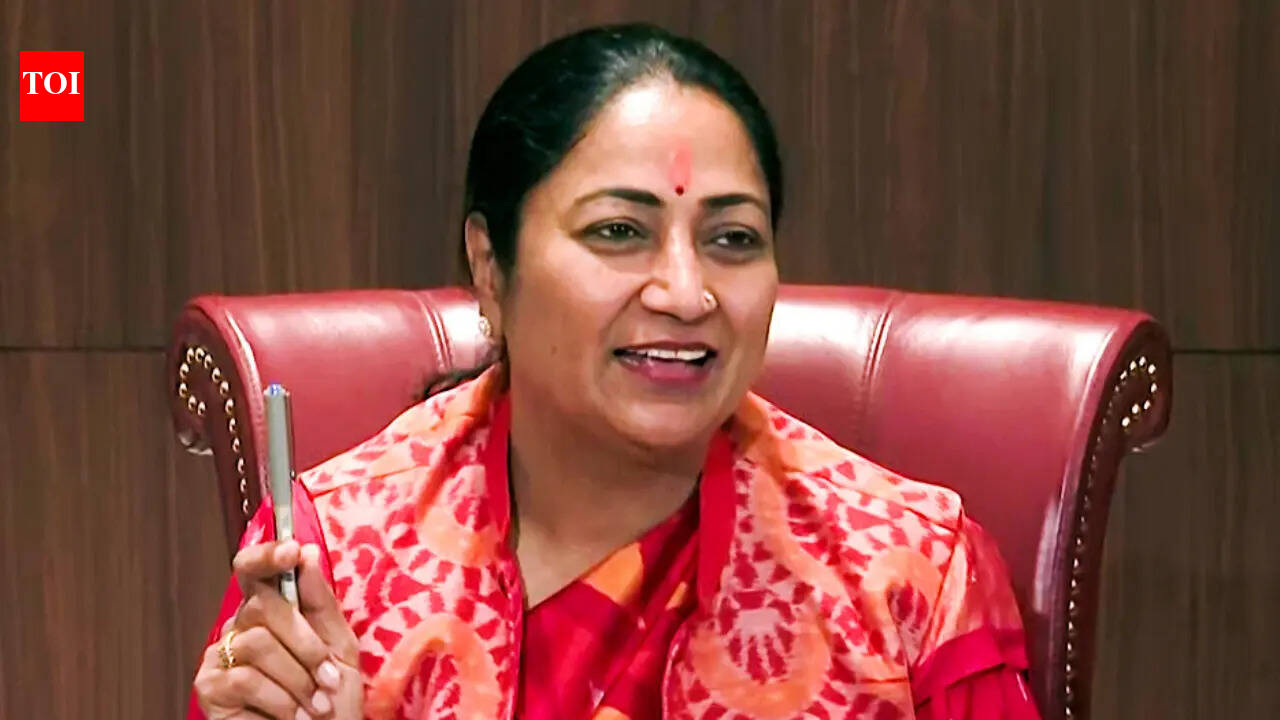
Delhi CM Rekha Gupta reveals fuel saving steps after PM Modi’s call
 As part of the measures, the Delhi government has reduced the official petrol and diesel quota for officials’ vehicles by 20 per cent, while ministers and officials have been directed to use the metro every Monday. The government will also voluntarily observe weekly ‘No Vehicle Day’.The Chief Minister further announced that the Delhi government will not purchase any new vehicles for the next six months. Government offices will also implement work-from-home arrangements for two days a week, wherever possible, while departments have been asked to ensure minimum use of official vehicles.Addressing a press conference, Gupta said, “Our departments have already cut fuel expenditure and only the minimum essential vehicles are being used, and public transport is being used wherever possible. The limit of 200-250 liters of petrol per month of officers has been reduced by 20%. Now it is 160 to 200 litres. Every Monday will be ‘Metro Monday’.” In a major symbolic move, as part of efforts to promote sustainable mobility, Rekha Gupta reduced her official convoy by almost 60 per cent, limiting it to just four vehicles, including two electric vehicles (EVs).These announcements come days after PM Modi made seven public appeals, urging citizens to reduce dependence on imported fuel and adopt environmentally responsible practices amid the ongoing conflict in West Asia.Addressing a gathering in Secunderabad earlier this week, PM Modi urged citizens to prioritize work from home, reduce petrol and diesel consumption, use public transport and carpooling, adopt electric vehicles and prioritize railways to transport goods.Reiterating the Prime Minister’s message, Rekha Gupta urged Delhi residents to use public transport and adopt carpooling wherever possible.In a post on X, Gupta said that the Delhi government, ministers, MLAs, officials and departments will use the minimum number of vehicles required and will give priority to public transport and shared mobility.He also said that the government is committed to making energy conservation a mass movement and appealed to citizens to actively participate in this effort.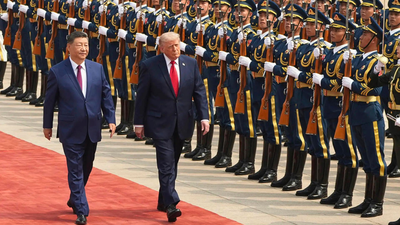
Why did we see a restrained Trump in China?
Chinese President Xi Jinping and US President Donald Trump (AP Photo)
“The military is in the clear.”US President’s comment donald trump He arrived almost casually and stood between his Chinese counterpart and the grand ceremony hosted by Xi Jinping in Beijing. Lines of Chinse soldiers stood in perfect formation. Red carpets were spread across the vast expanse of the Great Hall of the People. Children waved flags. Precision, discipline and power were on full display, not subtly, but deliberately, causing Trump to soften a bit from his usual approach.For a president who has often claimed that the US military is the “greatest and the best”, there was something different about Trump’s tone this time: praise mixed with recognition that the global military balance is no longer as lopsided as it used to be.For decades after the collapse of the Soviet Union in 1990, Washington stood alone at the pinnacle of global power. America’s military dominance became the defining characteristic of the post-Cold War world. But in Beijing on Thursday, China appeared eager to send a message to Trump and the world that the era may be changing.During the visit, Trump repeatedly praised Xi, calling him a “great leader.” Yet behind the warm words and diplomatic smiles there was a deeper undercurrent: this was not just a state visit. It was a display of China’s confidence, military, technological and geopolitical.And Beijing didn’t stop at symbolism.Even as Trump received military honors, China’s message on Taiwan became extremely clear. Chinese officials warned that US involvement in Taiwan-related matters “could lead to US-China conflict.”This warning comes as tensions around Taiwan continue to increase. The self-ruled island, which is claimed by Beijing but backed militarily and politically by Washington, has fast become the most dangerous fault line in US-China relations.Taiwan retaliated strongly.Taiwan’s Defense Ministry accused China of “military oppression” and gray-zone operations around the island, saying “Beijing officials are currently the only threat to regional peace and stability.” It added that “Beijing has no right to make any claims on behalf of Taiwan at the international level.”But beyond Taiwan, another conflict has quietly revealed how modern geopolitical battles are evolving, and how China’s influence is already spilling over into the future of war.Trump’s military strike against Tehran under “Operation Epic Fury” put the Iran conflict into global focus. War-related reports have repeatedly pointed out that Chinese technology is playing a behind-the-scenes role in strengthening Iran’s military capabilities.The battlefield of the 21st century is no longer determined solely by the size of fighter planes, aircraft carriers or defense budgets. Increasingly, power is being measured through drones, AI systems, cyber capabilities, satellite navigation and precision technology.And in many of those areas, Beijing is increasingly emerging as a serious challenger to Washington.One symbol of that change is the BeiDou Navigation Satellite System, China’s answer to America’s GPS network. Iran has reportedly been using the BeiDou system since 2021 to deploy decoy systems capable of improving drone accuracy and complicating enemy targeting.That description may sound technical. But strategically it is very big.
Trump calm in Xi’s stage show
Trump, in China and in the presence of Xi Jinping, appeared notably more restrained than his usual approach with other world leaders, where he is often more confrontational.From calling Shehbaz Sharif to the mic for praise, gratitude and even publicly criticizing Volodymyr Zelensky over his attire, Donald Trump has often turned diplomatic meetings into headline-grabbing moments marked by sharp exchanges. But with Xi Jinping, the tone has changed.
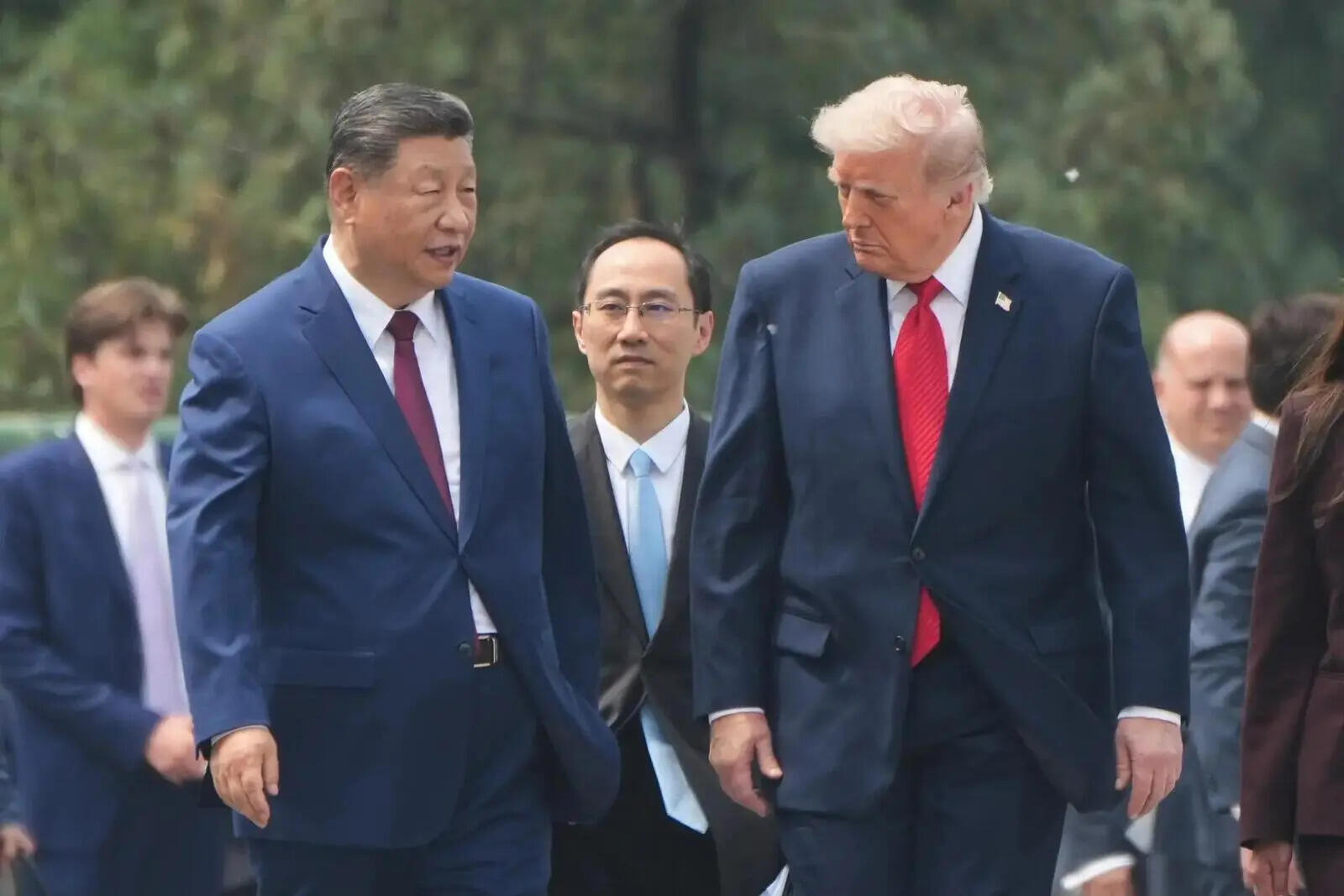
Xi and Trump
Trump has repeatedly praised Xi as a “great leader”, alternating sharp comments with warm language and diplomatic smiles. Yet in a cordial atmosphere, the visit doubled as a carefully choreographed display of China’s military might, technological ambition and growing geopolitical confidence.
China is reshaping conflicts beyond its borders
This shows that China is no longer making weapons only for itself. Its technology is beginning to shape conflicts beyond its borders, being indirectly tested against US military systems in real-world combat situations.The contradiction is amazing.The United States still spends more on defense than any other country in the world. Meanwhile, China holds the largest position in the world Army. But modern warfare is increasingly becoming less about size and more about systems, controlling the algorithms, satellites, drones, data and artificial intelligence behind the battlefield.This is the real competition taking place in Beijing under carefully choreographed handshakes.Not just a rivalry between two countries. But there is a struggle over who will define the next era of global power.
Empty missile compartment behind superpower image
The Iran War exposed both the extraordinary strengths and growing weaknesses of the American military apparatus.US forces fired thousands of missiles, drones, and interceptors with remarkable accuracy during attacks on Iranian bases, command centers, military bases, and weapons facilities. Advanced systems such as Tomahawk cruise missiles, JASSMs, Patriot interceptors and THAAD air defense systems performed effectively.But the scale of the operation raised alarm bells even in strategic circles.According to CSIS’s assessment, the US stockpile of long-range precision munitions was under pressure even before the Iran conflict began. The war only intensified the shortage.The concern is particularly grave because a modern war against China would depend on exactly the same weapons.Unlike conflicts in the Middle East, a Pacific war would involve huge distances, heavily defended airfields, and heavy missile exchanges. In such a scenario, long-range strike systems become the backbone of military operations.
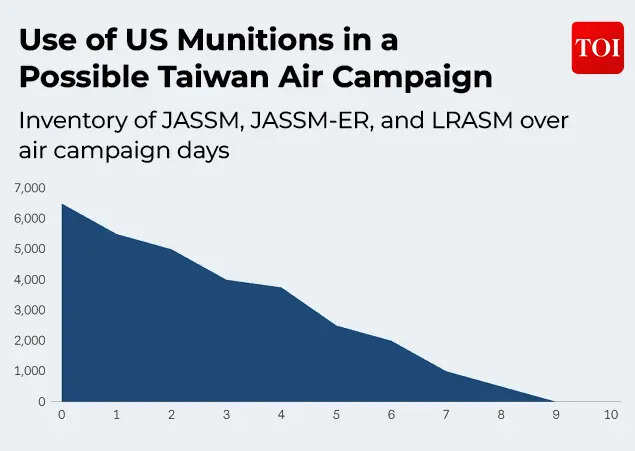
Problem? America may not have enough of these.The report said that the timeline for production of critical weapons is extremely slow. Some systems take three to four years to build. Replenishment of depleted arms and ammunition stocks is not a quick process.And while US officials publicly insist that the US still has overwhelming military power and is on top of defense spending, strategic analysts fear that a prolonged conflict could rapidly expose the shortfall.
China’s war machine is already on war footing
The speed at which China is expanding its military-industrial capabilities may further increase Washington’s concerns.According to the report, Beijing’s defense industry is already working with a wartime mentality. China is rapidly producing warships, submarines, missiles, aircraft, drones and cyber capabilities in almost every field of warfare.
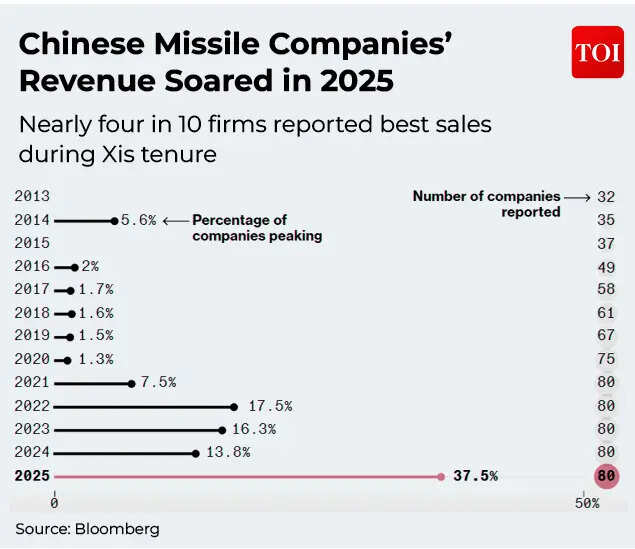
And unlike the United States, which still faces procurement delays and political obstacles, China’s centralized system allows military production to scale up rapidly.The concern is no longer just about the number of tanks or fighter planes.Modern warfare has shifted toward drones, AI-enabled targeting, cyber systems, electronic warfare, satellite navigation, and autonomous platforms. China is moving forward aggressively in many of these sectors.The Iran conflict became a glimpse of that future.Reports on Tehran’s drone and missile operations repeatedly point to Chinese-linked technology. Iran’s use of the BeiDou navigation satellite system improved the accuracy of drones and enabled more sophisticated battlefield deception systems.
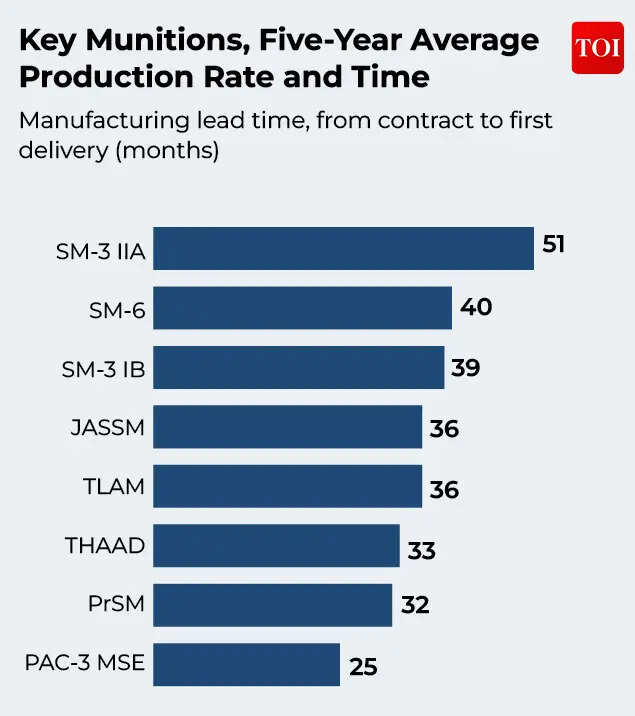
What once seemed futuristic is now becoming a working reality.Wars are being fought not only with bombs and bullets, but also with algorithms, autonomous systems and satellite networks.
Taiwan became the center of the storm
Taiwan is at the center of the US-China rivalry.During Trump’s visit to Beijing, China warned that mishandling the Taiwan issue “could lead to US-China conflict.” Meanwhile, Taiwan accused Beijing of being the “single threat to regional peace and stability”.
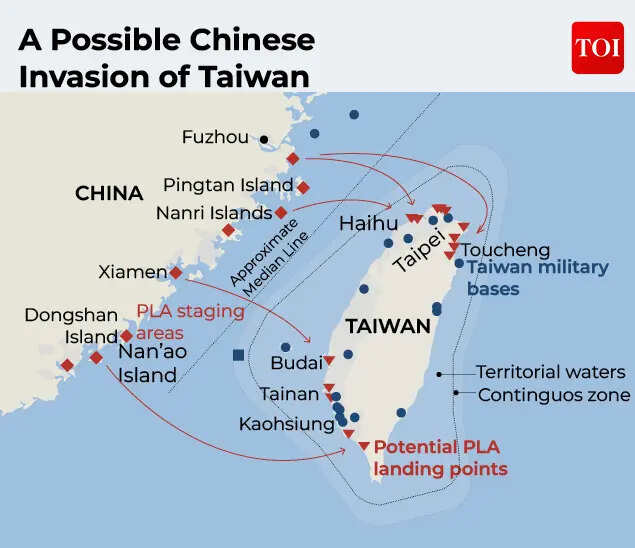
For military planners, Taiwan is no longer just a diplomatic flashpoint. This is the scenario around which the future Pacific war is increasingly being modeled.The CSIS report repeatedly highlights war-game simulations in which the US military eliminated a significant number of long-range missiles within the first week of the Taiwan conflict.Many simulations in Taiwan reportedly lost anti-ship missiles almost immediately.That discovery has strategists deeply concerned because China’s missile systems now threaten large parts of the Indo-Pacific, including US bases in Japan, Guam and the Philippines.U.S. aircraft carriers and destroyers, once symbols of unmatched American power, are now seen as increasingly vulnerable when within China’s missile range.
‘Hellscape’ era of war
The Pentagon’s answer to this growing challenge is an emerging concept known as “hellscape.”The idea is simple but dramatic: turn the Taiwan Strait into a vast maze of drones, underwater systems, unmanned attack vehicles (UAVs) and autonomous weapons that would make any Chinese invasion exceptionally costly.Rather than relying solely on expensive fighter planes or huge warships, the strategy focuses on “precision mass”, large numbers of cheap drones and unmanned systems working together.
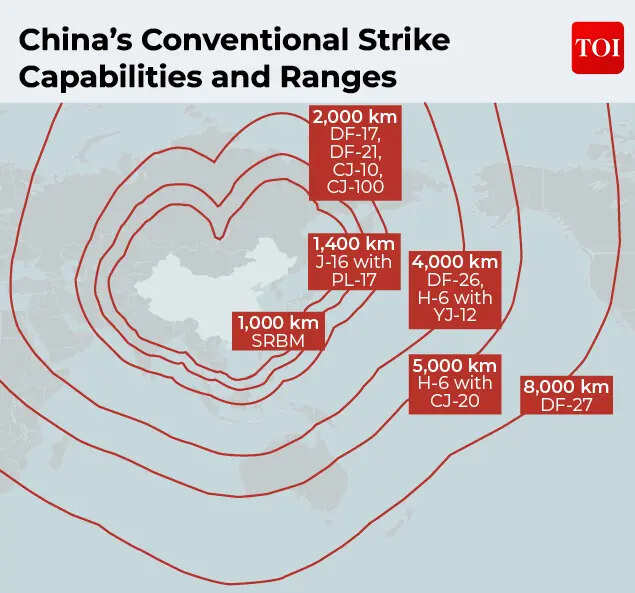
Military planners believe that future wars will not be won simply by the side with the largest navy or air force, but by the side able to produce and maintain the largest numbers of smart, expendable systems.And here again, China’s manufacturing strength becomes central.The report also warns that the United States and Taiwan may need hundreds of thousands of drones and unmanned systems in any long-lasting Indo-Pacific conflict.The scale was more like industrial warfare than conventional military operations.
America’s industrial wake-up call
Perhaps the most shocking finding of the CSIS report is not about missiles or submarines, but about factories.The report argued that wars between great powers are ultimately won by industrial capacity.It pointed to America’s historic mobilization during World War II and the Cold War, when presidents like Franklin D. Roosevelt and Dwight D. Eisenhower turned the country into a defense production giant.Today, the fear surrounding Uncle Sam remains just as significant because it no longer has the same momentum or industrial urgency.Aircraft maintenance problems, excessive naval deployments, weak Pacific bases and delays in weapons production all point to a stressed system.The report calls for a wartime effort to modernize industrial mobilization efforts, accelerate defense manufacturing, strengthen supply chains, and rapidly expand production of drones, missiles and air defense systems.Because under Beijing’s diplomatic maneuvers, strategic competition is no longer just about who has the stronger military today.It is about who can face the next war tomorrow.

Bar Council of India has sought information from West Bengal Bar Council about the practice status of the former CM.
 “MS. Mamata Banerjee Served as the Chief Minister of West Bengal from 2011 to 2026. “Having regard to the constitutional public office held by him during the said period, and without expressing any opinion on the permissibility or otherwise of such presence at this stage, the Bar Council of India requires the factual position of his enrolment, practice, suspension, if any, and resumption, to be verified from your records,” the BCI said in a statement.It listed 9 indicators to be submitted to the State Bar Council by May 16, 2016. The details sought were I. If he is enrolled with the West Bengal State Bar Council, his enrollment number. II. The date of his enrollment in the State Bar Council of West Bengal. iii. Whether his name currently continues in the State List of Advocates maintained by the West Bengal State Bar Council. iv. Whether he had given any notice of voluntary suspension/suspension of practice/ceasing of practice at any time during his tenure as Chief Minister of West Bengal. If any such notice was given, the date when it was received by the State Bar Council, along with a copy of the relevant application/notice and order/noting, if any. vi. Whether any application/information was subsequently submitted by him for resumption of practice. Seventh. If so, the date of such application/information for resumption of practice, and whether it was accepted/taken on record by the State Bar Council. viii. Whether any certificate of practice/relevant practice-status record in his/her favor is available with the State Bar Council, and whether he/she is presently valid, active, suspended or otherwise. nine. Whether any other record, information, communication, order or entry exists regarding his authority to practice during or after his tenure as Chief Minister.The Bar Council of India further directed that the information given should be based on “contemporaneous official records” maintained by the West Bengal State Bar Council, including enrollment registers, state roll records, practice certificate documents, inward registers, records relating to suspension or cessation of practice, resumption records and relevant file notings or orders. It also sought certified copies of all relevant documents duly certified by the Secretary of the State Bar Council as well as details regarding page references, entry dates, internal diary numbers and custody of original records. The BCI asked the State Bar Council to provide certified copies of all supporting documents, correspondence files, inward registers and any other relevant records available with it relating to enrollment, suspension, discontinuance or resumption of practice. Furthermore, the Secretary is directed to certify that the copies furnished are “true copies of the original records made in the ordinary course of official business” and that the original documents have been preserved for inspection, if necessary. Pending the filing of the reply, the BCI also ordered that all original records relating to the case be preserved “in their present form” and no “alteration, correction, overwriting, interpolation or reconstruction” shall be made except in accordance with law and under intimation to the Bar Council of India. The State Bar Council has been asked to give its reply within two days of receiving the letter.
Mamta in lawyer’s garb
Mamata Banerjee on Thursday appeared in the Calcutta High Court in full lawyer attire, wearing a black lawyer’s coat and a white band over her trademark white saree with a blue border, to argue a PIL related to alleged post-poll violence in the state following the recently concluded assembly elections.She appeared before a division bench of Chief Justice Sujoy Paul and Justice Partha Sarathi Sen and presented photographs and a list of those allegedly killed in the violence. During the hearing, he urged the court to “protect the people of Bengal” and accused the authorities of failing to act against the attacks, looting and alleged intimidation taking place in various parts of the state.Heavy sloganeering broke out inside the court premises amid heightened political tension following his appearance in the High Court. Trinamool CongressBJP got defeated in the assembly elections. This PIL was filed by lawyer Sirsanya Banerjee, son of senior Trinamool Congress leader and lawyer Kalyan Banerjee.

These 5 evergreen shrubs make front entry beds look great all year long.

While a backyard flower border serves a completely different purpose than a front entry bed, it should look neat from the street, be framed next to the front door, and be balanced even without flowering plants. This is why evergreen shrubs are important components of foundation plantings.Flower beds provide color for only one season, while evergreens add structures that allow garden beds to remain useful year-round. As various gardening experts have noted, evergreen shrubs serve as the “framework” of the garden as they provide shape and interest year-round.Landscapers often use evergreen shrubs to keep front garden plants from looking abandoned when all the flowers are gone for the season. The key here is to choose low-maintenance shrubs that complement the home and don’t expand their space.Importance of evergreen shrubs front entry bedThe front yard is constantly visited by passersby who view it daily, whether walking on the sidewalk or from a car, porch, or window. Improper planting will make the entire façade look incomplete after the flowers fade.Evergreen shrubs solve this problem because they will retain their form even in winter or during dormant periods. Penn State Extension advises that shrubs should add more than just flowers for more than one season.In particular, there is no better place to place them densely than around the entryway. Shrub beds along sidewalks or patios can become crowded if plants grow too tall or irregularly. Therefore, it is always advisable to choose dense or medium-sized evergreen shrubs for most entrances.Compact boxwood maintains the structure of the bedsThe use of boxwood for front entry doors is quite common due to its naturally neat shape. Dwarf types will be perfect for lining walkways and stairs. Homeowners often replant boxwood to maintain a formal effect without confusion. For those looking for low-maintenance options, boxwood lookalikes, like Japanese holly, are available. Various gardeners suggest compact evergreen shrubs for front entrance design all year round.

The easiest way to keep your entry garden looking neat and clean all year round. Image credit – Wikimedia
Colorful euonymus require no flowersCompact euonymus shrubs have become popular because of their color retention without any flowers. Euonymus are shrub species with golden or white edges and green leaves that add color to otherwise dull entry spaces.Flowers are present only during certain seasons. Euonymus shrubs, on the other hand, remain colorful most of the year. Various guides mention that euonymus shrubs can be easily shaped by pruning.These plants work well near porches, mailboxes and front sidewalks where homeowners want definition in their yards without creating large hedges.Inkberry Holly for Country YardsInkberry holly has recently grown in popularity in the United States because it forms an evergreen base but helps create a landscape that includes more natives.Unlike many traditional hollies, the Inkberry variety has less sharp leaves and a naturally round shape. according to University of Maryland ExtensionNative evergreen shrubs such as inkberry can be used in sustainable landscapes.The Inkberry variety of shrub can handle wet soils more efficiently than most other evergreen shrubs.Lavender adds softness and speedLavender is officially a small evergreen or semi-evergreen shrub in many warm USDA zones. One advantage it has is the softness and mobility that other dense bushes lack.This is how lavender makes a difference. A front garden created using only clipped bushes can look stiff and formal. Adding lavender will help its silvery foliage and seasonal blooms, along with its texture, last for many months.According to many gardening guidelines, mixing evergreen foliage with seasonal foliage creates layers rather than a rigid design.Osmanthus brings fragrance and densityCompact osmanthus shrubs are excellent for warmer regions of the US. These shrubs have dense evergreen leaves and fragrant flowers that appear almost cryptically.They are similar to classic hedging shrubs in their form but are easier to maintain and prune. Osmanthus is often used near entryways because its aroma is noticeable when someone passes by.The most common mistake made by homeownersThe most common problem with front garden beds is improper spacing between plants. When you buy bushes from a nursery they may look small but soon, they spread out quite a bit.According to various studies, plants grow by their maturity rather than the size of their pot. Plants crowded into a small space will eventually become too many leaves that will block windows and spill over paths. Proper technique should be to plant less bushes with repetition. This method results in a more polished and professional garden.Why is evergreen architecture always a winning concept?Even if a great entry garden includes flowers, they will die at some point. And this is why evergreen structure never fails.This provides form, consistency and stability to the design throughout the season. Even though flowers can be an attractive focal point for many weeks, it is the evergreen structure that makes your garden complete.

The deepest ocean trenches: The 5 deepest ocean trenches on Earth, ranked: Why a basin owns every single slot world News

As one considers the deepest parts of our planet, it appears that such depths should be randomly distributed around the Earth’s surface, with perhaps some of the deepest trenches located along the African coast, others near the coasts of Europe, and others along the American coast. Still it is not so.If you want to study the top five deepest regions on Earth, there is no point consulting just any world map. Focusing on just one ocean is enough. In fact, all of Earth’s deepest craters can be found in the Pacific Ocean, turning this vast body of water into a terrifying neighborhood of geological wounds. Such features are not just scratches on the sea floor. Rather, they are the product of a never-ending process of self-transformation occurring within the Earth.Tectonic Wonders of the PacificTo understand why all the deepest points belong to the Pacific Ocean, we must take a closer look at the processes occurring within the Earth. The planet’s outer layer, known as the Earth’s crust, is made up of large puzzle pieces or tectonic plates. These plates are involved in a fierce battle for supremacy in the Pacific region.When an oceanic plate collides with a lighter continental plate, it does not collide with it at all. It dives rapidly beneath it and falls straight into the Earth’s warm mantle. This process is known as subduction, and the exact point where the plate bends and dives gives rise to an oceanic trench.Because these intense collision zones surround the Pacific Basin, it has become the ultimate factory for the deep ocean depths. According to a historical overview by Woods Hole Oceanographic InstitutionThese trenches represent the most powerful plate interactions on Earth. They are surface manifestations of a planet swallowing its own crust.The following is a comparison of the five deepest trenches in the world, based on verified measurements of their depth.1. the Mariana TrenchLeading this group is the Mariana Trench, which can be found in the western Pacific Ocean. It is the heavyweight champion when it comes to deep sea trenches. At its deepest point, Challenger Deep, the height of the bottom reaches 11,034 meters. Even if we turned the majestic Mount Everest on its head and dropped it into this abyss, its summit would still be filled with thousands of meters of water.2. Tonga TrenchThe Tonga Trench, located in the southwestern part of the Pacific Ocean, is considered the second deepest trench on Earth, with a depth of more than 10,800 meters. The Tonga Trench is characterized by its rate of descent, which is very rapid. The reason for this is the high speed of collision between the tectonic plates here.

These trenches, such as the Mariana and Tonga, form where oceanic plates dive beneath continental plates, creating geological wounds. Image Credit: Google Gemini
3. philippine trenchAt a staggering depth of over 10,500 metres, the Philippine Trench is another deep trench found in the western Pacific Ocean, characterized by steep edges created by a complex system of intersecting tectonic plates. The geometry involved is extremely sharp, creating deep cuts in the ocean crust.4. Kuril-Kamchatka TrenchThis huge trench is included in the list of trenches whose depth exceeds 10,500 meters, making it almost equal to the Philippine Trench. Located in the northwestern region of the Pacific Ocean, the trench extends to the Kuril Islands and includes continuous subduction zones.5. Kermadec TrenchCompleting the list at number five is the Kermadec Trench, which plunges more than 10,000 meters deep into the southwestern Pacific Ocean. Working in conjunction with the Tonga Trench System, the Kermadec becomes the last buttress point for this southern chain of extreme underwater geology, showing us that when it comes to the Pacific’s claim on underwater geology, that claim cannot be disputed.How do these findings reshape our geographical thinking and what do they mean scientifically?This comprehensive study of the top five places reshapes our understanding of the meaning of geography. Extreme underwater environments are not a unique phenomenon in the world.But then, determining the direction of these alien scenarios is no easy task. From extensive research conducted by National Centers for Environmental Information at NOAAThis makes it clear that obtaining accurate results under extensive water depths is no easy task. Sound waves are sent out from the ocean floor through ships, but factors such as water pressure can cause inaccurate readings.Therefore, it should not be surprising that modern oceanographers do not use accurate readings for such second-place trenches.However, what is known about these trenches is that they are dynamic and are not simply dead zones. These trenches hold within them clues to how Earth sustains itself, recycles itself, and even how life might persist on other frozen moons. The answer lies in the depths, but until then it seems that all answers are safely locked away in the depths of the Pacific Ocean.