Social media is making children addicted like drugs: Nishikant Dubey. india news
Social media is making children addicted like drugs: Nishikant Dubey

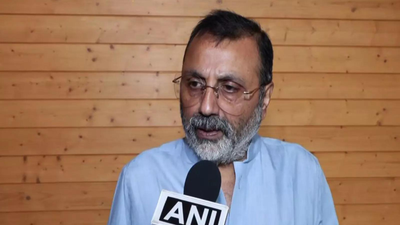
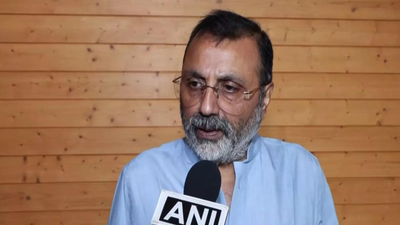
in conversation with TOI’s Manas Gohain BJP MP and Chairman of the Parliamentary Standing Committee on Communications and Information Technology, Nishikant Dubey Speaks on digital addiction, AI risks, fake news, cyber fraud, exam stress, online gaming, deepfakes and why India may need stronger digital guardrails for children and youth. Part:your committee has spoken KYC Verification, age restrictions and AI regulation. Why did the committee find these recommendations necessary?As we traveled across constituencies and talked to people, one thing became crystal clear – uncontrolled digital exposure is becoming dangerous, especially for children and teens. See online gaming. Children were secretly using parents’ bank accounts, losing large sums of money, and in some cases families were pushed to extreme distress and even suicidal situations. AI-generated advertising and manipulative digital content are making these platforms even more addictive and difficult to regulate. At the same time, Indian laws were made in a completely different era. When the Press Council Act or the cable TV laws were made, no one had imagined today’s digital ecosystem, where anyone can run a YouTube channel, Facebook channel or digital platform without any accountability. A newspaper faces restrictions in print, but the same content online often escapes institutional oversight. The committee felt that there should be a line somewhere. Countries around the world – including Australia, Singapore and parts of Europe – are already discussing or implementing age-based restrictions for children online. Another concern was how AI is beginning to blur the line between fact and fiction. I personally experienced a situation where fake content generated through digital platforms got mixed into a genuine discussion and the credibility of the entire conversation was compromised. Today, even the courts are facing concerns over AI-generated fake references and fabricated judgments. The Chief Justice of India himself has repeatedly warned about blind reliance on AI tools in legal work. Therefore, when it comes to children and students, the concern naturally becomes even greater. India’s biggest strength is its young population. If future generations turn away from reading, research and critical thinking, it will ultimately affect innovation, productivity and the long-term development ambitions of the country. You used a wonderful comparison – social media is like a drug. why do you say that?Because it works like an addiction. Social media provides a constant psychological “kick.” After some time, children lose interest in studies, books, research and even general human interaction. I’m not saying that kids should be completely cut off from technology. Phones are useful in libraries, online classes and learning. But social media is a different issue. Today, detox classes are being organized globally, in which people are being taught how to stay away from phones. This problem is no longer limited to children only – even adults and elderly people have become victims of its addiction. Just as countries impose age restrictions on alcohol or clubs, the world is beginning to realize that unrestricted social media exposure can also have serious consequences for minors. There is now growing concern around the world about screen dependence, decreasing attention span and digital fatigue. Is artificial intelligence making misinformation and fake news worse?Absolutely. AI is making fake content frighteningly credible. Recently, courts also faced situations where fake AI-generated legal references appeared in filings. Deepfakes can destroy reputations overnight. Fake screenshots, fake newspaper clippings and fake videos spread faster than the truth. The danger is not just political misinformation. It impacts students, women, financial systems and public trust. Our parliamentary committee had also recommended stronger safeguards, AI literacy and structured regulation as India cannot leave these issues wide open. The problem is that technology is advancing much faster than social awareness and legal safeguards. That gap is becoming dangerous. Are you worried that AI tools may undermine students’ learning habits?Yes. Earlier, students and researchers had to spend time reading books, verifying facts and studying subjects in depth. Many people now rely on AI tools for instant answers. The concern is not only about technology. The concern is whether future generations will stop developing critical thinking, research habits and patience. You cannot build a knowledge economy on shortcuts alone. Students still need curiosity, discipline, and the ability to analyze information independently. India’s demographic dividend can become India’s greatest strength, but only if you people remain productive, efficient and mentally focused. Students today are facing immense stress due to fake paper leaks and rumors Telegram And social media. How serious is it?Very serious. Many fake question papers are circulated several weeks before the examinations. Students panic, families owe money, stress levels rise – and often the papers are fake. It has become an organized ecosystem. Social media rumors can make millions of students psychologically destabilized in a matter of hours. We have seen how fake answer keys, manipulated screenshots and fabricated leaked claims spread rapidly during competitive exams. Even when papers are not leaked, rumors still create fear and anxiety among students. Therefore, PM Narendra Modi’s initiative to discuss the exam is important. Students should learn not to fall into the rumor trap or digital panic cycle. The bigger challenge is that fake information spreads much faster than official explanations. This creates emotional pressure on the students. Which class is most vulnerable to the dark side of social media?Women, children and economically vulnerable users are among the biggest victims. Fake videos, morphing, blackmail, pornography and cyber harassment can destroy lives. A fake clip that goes viral for a few hours can permanently damage one’s reputation and mental health. Children are also exposed to disturbing material very quickly. Without safety measures, the psychological impact can be severe. That’s why digital security can no longer be considered just a technical issue – it’s also a social and mental health issue. The most harmful effects of unregulated digital platforms are often seen among those who are least equipped to protect themselves. Your committee also laid emphasis on KYC verification. Is it related to cyber security?Yes. India is witnessing large-scale cyber fraud through mule accounts and fake digital identities. Misappropriation worth thousands of crores is taking place. Technology is advancing rapidly, but security measures are not keeping pace. Previously, opening a bank account involved community verification and accountability. Today, it has become extremely easy to remain anonymous online. We are not against technology. We’re asking: How can we make technology safer for society? If stronger verification systems are not introduced, cyber fraud, financial scams and identity misuse will continue to increase. Do existing laws adequately protect citizens online?There are serious flaws. Social media has evolved much faster than legal systems. Stronger legal accountability may ultimately be necessary in cases involving fake news, cyber fraud, child safety threats and national security concerns. Without prevention and fear of punishment, organized digital abuse will continue to grow. There is also debate on whether some legal provisions that have been weakened by court decisions need to be revisited in the context of new-age digital threats. The challenge is to maintain a balance between freedom of expression and safety of citizens. What should schools do immediately?Digital literacy and AI literacy must start much earlier. The parliamentary committee had recommended AI education from KG to PG. Children must learn:

  • How does fake news spread?
  • How algorithms gain attention,
  • Cyber ​​security,
  • Responsible AI use,
  • digital discipline, and
  • Mental health awareness is linked to screen addiction.

Technology is like nuclear energy. It can cure cancer or destroy cities. Social media and AI are similar – they can empower or harm society. The challenge is of balance. The focus should not just be on restricting technology, but also on teaching children to use it responsibly. Do you expect India to bring in stronger social media rules soon?Continuous discussions are taking place with ministries, states, forums and stakeholders. The government is actively investigating concerns over child safety, AI-induced harm and misinformation. But I don’t believe in mere restrictions or prohibitions. The real goal should be controlled, responsible and safe use of technology. The benefits of AI and social media are immense. But where the negative impact is greatest – on children, students, women and vulnerable groups – societies and governments must step up with safeguards. The objective should be to balance: encouraging innovation and digital growth while protecting society from addiction, manipulation, fraud and psychological harm.
Source link

White House shooting: 21-year-old Naseer Best, who claimed to be Jesus Christ, was shot dead

White House shooting: 21-year-old Naseer Best, who claimed to be Jesus Christ, was shot dead

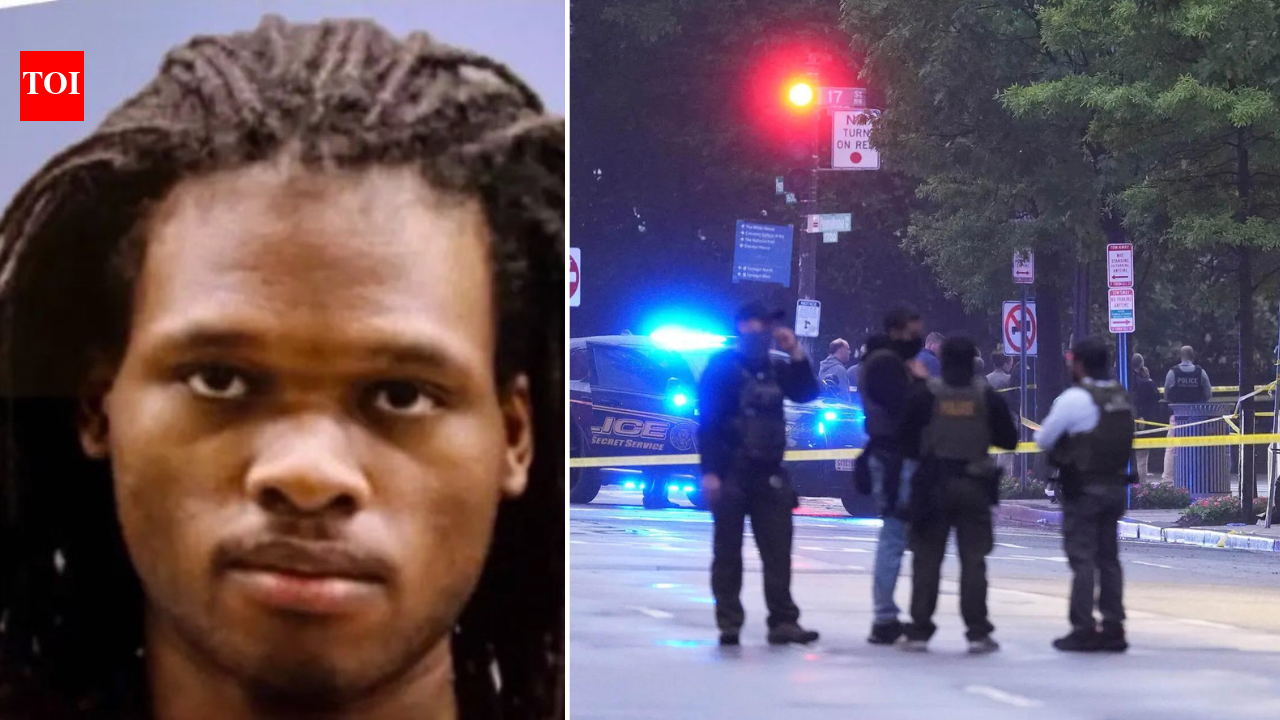
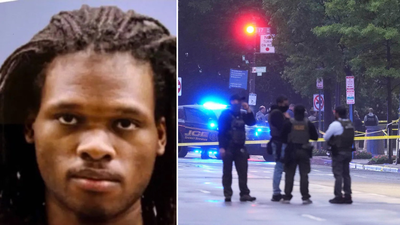
A gunman who reportedly believed he was Jesus Christ was identified as the suspect in the shooting outside the White House and was later killed by US Secret Service personnel during a shootout near the presidential compound on Saturday evening.Nasir Best, 21, reportedly opened fire at a security checkpoint outside the White House, sparking panic in the area and a massive federal security response. According to the New York Post, Best was seen walking suspiciously near 17th Street Northwest, after which he pulled out a revolver and fired several rounds at officers stationed near the checkpoint.Secret Service personnel immediately responded, killing the suspect at the scene. At least one spectator was seriously injured during the exchange, according to sources cited by The New York Post and CBS News. There are no reports of any Secret Service personnel being injured.The shooting occurred while US President Donald Trump was inside the White House amid ongoing diplomatic discussions related to a proposed peace framework involving Iran and several Middle Eastern countries.

Previous Encounters with the Secret Service

According to preliminary information, investigators believe Best was a mentally disturbed individual who had previous encounters with law enforcement and federal security agencies. Sources said he was already known to frequent Secret Service-restricted White House entry points and had allegedly violated an earlier court order directing him to stay away from the area.Read this also Firing reported near White House during Donald Trump’s Iran talksCourt records from the earlier incident reportedly revealed that Best had made strange statements while being detained by officers.“[Best] Claimed he was Jesus Christ and wanted to be arrested,” court records state.Best was previously involuntarily committed in June 2025 after obstructing vehicular traffic near 15th Street and E Street Northwest, authorities said. After claiming he was ‘God’, he was reportedly detained by the Secret Service and sent to a Washington psychiatric institution for mental evaluation, CNN reports. In July 2025, Best was arrested again after attempting to enter a White House complex driveway by bypassing a restricted pedestrian control point through an exit turnstile lane. After the incident, a judge reportedly ordered him to stay off the White House grounds.Investigators also reportedly found several disturbing social media posts related to Best during an earlier investigation. According to sources, he reportedly claimed online that he was the ‘real’ Osama bin Laden.However, law enforcement sources said officers had never seen Best behave violently or carry a weapon before Saturday’s shooting.

FBI started investigation

The FBI later confirmed that federal agencies had launched a joint investigation into the shooting.“The FBI is on scene and supporting the Secret Service in response to the shooting near the White House grounds – we will keep the public informed,” FBI Director Kash Patel posted on Twitter.

Panic and lockdown in the White House

The sound of gunshots created panic among the journalists stationed near the White House. ABC News correspondent Selina Wang said journalists were forced to run for cover after hearing ‘dozens of gunshots’.Wang wrote onMembers of the White House press corps were rushed into the briefing room as Secret Service agents yelled ‘get down’ and warned of ‘fire’. Reporters, photographers and producers were ordered to shelter in place, while armed Secret Service personnel guarded the north lawn area.The White House complex remained in lockdown for about 40 minutes before the restrictions were lifted shortly after 6:45 pm ET.

Trump was in the Oval Office during the shooting

The firing came less than two hours after President Donald Trump posted on Truth Social that he was inside the Oval Office working on a potential peace deal involving Iran, Israel and several Middle Eastern countries.In his post, Trump said that there have been discussions regarding a ‘memorandum of understanding related to peace’ with the leaders of Saudi Arabia, United Arab Emirates, Qatar, Pakistan, Turkey, Egypt, Jordan and Bahrain.Trump canceled a planned weekend trip to his golf club in New Jersey and remained in Washington during the talks.Saturday’s incident is the latest in a series of violent security concerns surrounding Trump and the White House in recent months.The shooting occurred less than a month after another armed suspect reportedly opened fire near the White House correspondents’ dinner, when Trump was in attendance.

Source link

Taiwan military activity: Taiwan detects Chinese military aircraft, naval ships near the island for the second consecutive day

Taiwan detects Chinese military aircraft, naval vessels near island for second consecutive day

Taiwan’s Ministry of National Defense said it detected four flights of Chinese military aircraft and six naval vessels around the island as of 6 a.m. local time on Sunday.The ministry said three of the four aircraft crossed the midline of the Taiwan Strait and entered Taiwan’s southwestern and southeastern air defense identification zone (ADIZ).In a post on Twitter, the ministry said, “4 flights of PLA aircraft and 6 PLAN ships operating around Taiwan were detected as of 6 a.m. (UTC+8) today. 3 of the 4 flights crossed the midline of the Taiwan Strait and entered the ADIZ in the southwestern and southeastern parts of Taiwan. The ROC Armed Forces have monitored the situation and responded.

Chinese military activity increased near Taiwan

The latest activity comes a day after Taiwan detected 16 Chinese military aircraft and eight naval ships flying around the island.Of the 16 planes detected Saturday, 13 crossed the center line of the Taiwan Strait and entered Taiwan’s northern, central, southwestern and eastern ADIZ zones.Taiwan’s Defense Ministry said its armed forces monitored the activities and responded accordingly.There have been repeated incursions amid rising tensions between China and Taiwan, with Beijing continuing military operations near the self-ruled island.

Taiwan remains a major flashpoint in US-China relations

Taiwan was a major issue during the recent talks between US President Donald Trump and Chinese President Xi Jinping.China considers Taiwan as part of its territory under the “One China Policy”, while Taiwan operates with its own government, military and democratic system.Taiwanese President Lai Ching-te recently said that US arms sales and security cooperation with Taiwan are vital to maintaining regional peace and stability.

Strategic importance of Taiwan

Taiwan remains strategically important due to its location in the Indo-Pacific region and dominance in semiconductor manufacturing.Taiwan is home to Taiwan Semiconductor Manufacturing Company, the world’s largest contract chip manufacturer, producing advanced chips used in smartphones, artificial intelligence systems, automobiles and military equipment.The United States maintains defense and trade relations with Taiwan under the Taiwan Relations Act, despite officially recognizing China diplomatically in 1979.Tensions around Taiwan have increased in recent years due to US arms sales, visits by US lawmakers and repeated Chinese military exercises near the island.

Source link

‘94% of viewers from India’: Cockroach Janata Party founder rejects BJP’s Pakistani-followers allegation. india news

'94% of viewers are from India': Cockroach Janata Party founder rejects BJP's allegation of Pakistani-followers

New Delhi: Cockroach Janata Party founder Abhijit Dubke on Saturday rejected BJP leaders’ claims that almost half of the party’s social media followers are from here. Pakistan. The internet-based movement, which recently went viral and gained popularity among young users, has now become the center of a political controversy.Cockroach Janata Party quickly emerged as one of the country’s latest online sensations, garnering attention through memes and comments around unemployment, education policy and alleged exam paper leaks.Refuting BJP’s allegations, Dupke shared a screenshot of audience analytics on X and wrote, “This is the screen recording of our audience demographic that we shared with the media before our account was hacked.”Claiming that most of the viewers were Indians, he said, “More than 94% of the viewers are from India.” After this he asked, “Why is there a Union Minister?” Kiran Rijiju Terming Indian youth as Pakistani?”Earlier, in a strongly worded post, Union Minister Kiren Rijiju had targeted the cockroach Janata Party and wrote, “I pity those people who look for their followers from Pakistan and George Soros gang on social media.”BJP leader and Union minister Sukanta Majumdar also alleged that there was significant Pakistani participation on the stage. Speaking to reporters, he claimed, “49 percent of the followers of ‘Cockroach Janata Party’ on social media are from Pakistan, while only 9 percent are from India.”BJP’s comment comes amid the growing controversy over the digital campaign, which went viral last week. Kerala BJP president Rajeev Chandrasekhar alleged that the CJP was part of a “classic cross-border influence operation” aimed at destabilizing India and targeting Prime Minister Narendra Modi and his government.“In the age of social media, bots, AI, and its weaponization, influence operations are dangerous, effective ways to destabilize by creating fake, seemingly organic narratives,” Chandrasekhar said in a post on X.He further alleged that some sections of the opposition were pushing the campaign and claimed that India’s rise under PM Modi has led to resentment among “foreign vested interests”.He said, “I have always said that India’s rise and modernization under the leadership of Prime Minister Narendra Modi will be anathema to many countries and will create many obstacles in our continued rise.”Chandrashekhar also defended the record of the Modi government during the global crisis. “No cockroach, no petty Indian opposition politician, no Modi-hating clown, no foreign vested interest can stop India’s resolve for a developed India,” he said.The trend of ‘Cockroach Janata Party’ came to light after the controversy over remarks allegedly made by Chief Justice of India Surya Kant during the hearing of a petition seeking senior designation for a lawyer. Abhijit Dubike has alleged that the movement has faced a coordinated crackdown on multiple social media platforms.

Source link

Actor Ram Charan apologizes to Jasprit Bumrah after onstage mistake: ‘It was a genuine human error’ cricket news

Actor Ram Charan apologizes to Jasprit Bumrah after onstage mistake: 'It was a genuine human error'
Ram Charan apologized to Jasprit Bumrah

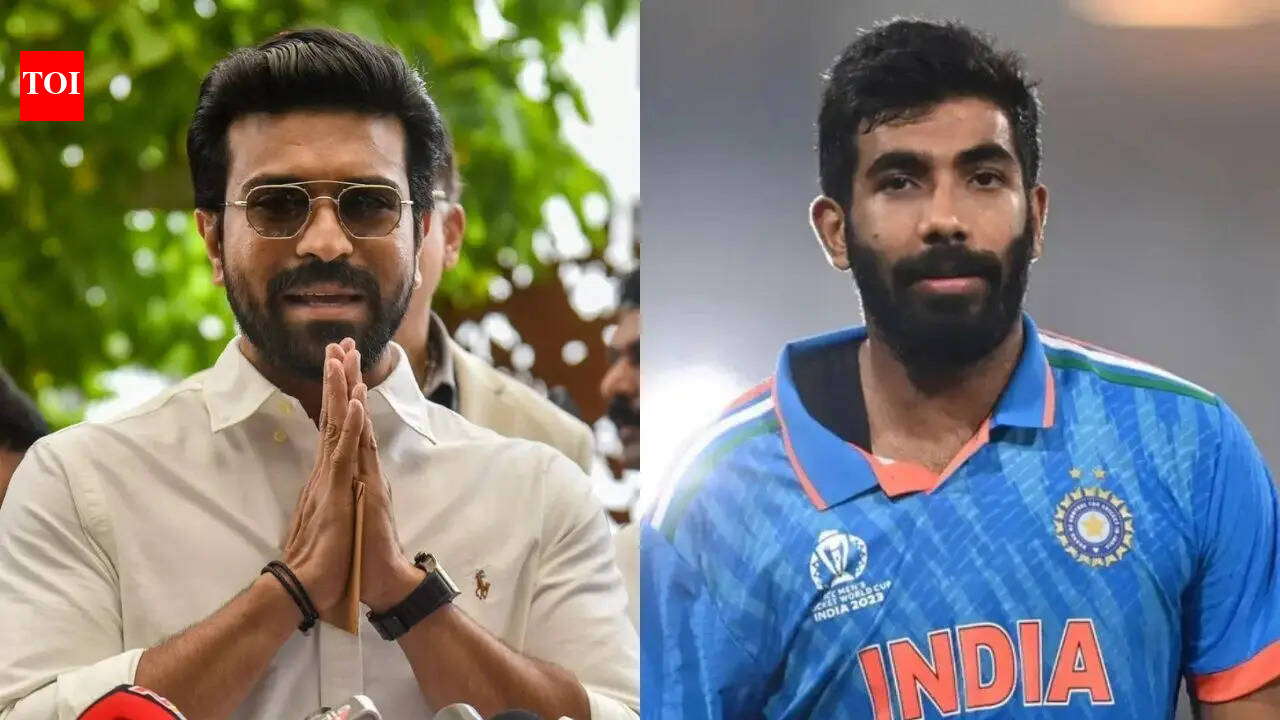
actor Ramcharan He attracted attention at the grand music launch of “Peddi” in Bhopal, where he appeared with AR Rahman, Janhvi Kapoor and the film’s team. During a light-hearted conversation, the actor was asked to describe Indian cricketers in a few words. he called Sachin TendulkarThe career of has been described as a “long legendary journey”. ms dhoni as “cool and calm”, and said that Rohit Sharma “is everybody’s man.” For Virat KohliHe simply said, “Fire.” talking about Jasprit BumrahRam Charan said he was his biggest fan but got entangled by mistake Cricket Praising him with the football. This clip quickly went viral online.Later Ram Charan apologized for the mistake on social media. He wrote, “Oops… I really forget names sometimes. Apologies to @Jaspritbumrah93 for this glitch – it was a genuine human error amidst all the excitement and crowd.” He said he deeply respects Bumrah and admires how the fast bowler makes Indians proud with his performances.While Bumrah is playing for now Mumbai Indians The season has not gone well for him in IPL 2026. MI head coach Mahela Jayawardene revealed that the fast bowler was suffering from a minor injury since the T20 World Cup. For this reason, the team gave him extra rest before the start of IPL.Jayawardene said that during the first few matches, Bumrah slowly regained his rhythm, which affected his pace and intensity. Even though he could take only four wickets in 13 matches, opposition teams played cautiously against him. The coach said that Bumrah worked hard on his fitness, no-balls and workload management throughout the tournament.Despite the tough season, Jayawardene believes Bumrah is now close to his best again. He said that this fast bowler has gained his pace, yorkers and confidence in the last few matches. Praising Bumrah’s attitude, the coach said that the bowler is always positive and focuses on improvement. Jayawardene concluded that there were no major concerns about Bumrah and expected him to “come back stronger”.

Source link

Twisha Sharma death case: Last conversation, blunt-force injuries, MTP History: CBI to probe ‘trigger point’ in Twisha Sharma’s death | bhopal news

Last conversation, blunt-force injuries, MTP history: CBI to probe 'trigger point' in Tvisha Sharma's death
The CBI investigation into Tvisha Sharma’s death will focus on a “trigger point” before her distress messages.

Bhopal: The moment before newlywed Tvisha Sharma allegedly expressed distress towards her family was a possible “trigger point” once the CBI formally takes over the investigation into her death, sources said, which is expected to become the central focus of the investigation.According to sources, investigators may reconstruct Tvisha’s final days before her death to determine if any specific events match alleged messages she sent her mother describing suffocation, emotional trauma and distress.The focus of the inquiry is expected to shift towards chronology – examining whether Twisha’s condition changed gradually or whether there was any notable change in circumstances shortly before she allegedly started telling her family about the crisis. Investigators are expected to pay special emphasis to the timing of those messages and cross-examine them with key forensic findings emerging from the autopsy. Possible aspects under investigation, apart from multiple external injuries, include a reference in the postmortem report to an “alleged history of undergoing MTP a week earlier”.CBI investigators are expected to independently examine both versions through hospital records, counseling documents, WhatsApp conversations and statements of witnesses to establish the exact circumstances surrounding the alleged MTP (medical termination of pregnancy) and whether it coincided with any change in Twisha’s emotional state. The last WhatsApp chat and phone call are also expected to become an important part of the investigation.

-

Police at Giribala Singh’s house in Bhopal

For investigators, the significance of these chats and calls may lie in the chronology – whether they mark a clear change in Twisha’s emotional state and whether any specific events preceded them.The numerous injuries recorded on Twisha’s body are expected to be another main focus.The postmortem reportedly noted multiple antemortem blunt-force injuries, described as simple in nature. However, investigators are expected to gain clarity on the approximate age of those injuries: whether they were inflicted near the time of death or at a later date.“For the CBI, once it formally takes over, the investigation is expected to move beyond individual allegations and focus on reconstructing the timeline: when Twisha’s crisis began, what happened before that, whether the alleged MTP changed the circumstances, how the injuries fit into the chronology, and what her last messages reveal about the hours before her death,” said a senior police officer on condition of anonymity.

Source link

SpaceX’s Starship flight hits most targets in pre-IPO testing

SpaceX's Starship flight hits most targets in pre-IPO testing

STARBASE: SpaceX on Friday completed a largely successful test flight of its next-generation Starship rocket, deployed a constellation of simulated satellites and executed a controlled splashdown in the Indian Ocean in a high-level debut of the new advanced vehicle as Elon Musk’s company prepares to go public.The latest uncrewed launch of Starship – which is designed to launch Starlink satellites more frequently and send future NASA missions to the Moon – achieved a significant milestone for the vehicle after months of testing delays. The result could also boost investor confidence ahead of SpaceX’s initial public offering next month, which is expected to be the largest in history.Starship, which SpaceX has spent more than $15 billion developing as a fully reusable spacecraft, is key to Musk’s goals of cutting launch costs, expanding his Starlink business and pursuing ambitions ranging from deep space exploration to orbital data centers — all factored into his targeted $1.75 trillion IPO valuation.Friday’s launch marked SpaceX’s 12th test flight of the Starship prototype since 2023 and the first flight of its V3 iteration, a major upgrade of both the cruise vessel and its Super Heavy booster, as well as the first blast-off from a specially designed launch pad for the new rocket.meaningful stepSpaceX was counting on a successful test flight to bolster its claim that the largest and most powerful rocket ever flown is close to commercial readiness after years of explosive setbacks and development delays. Friday’s test appears to have achieved most of its key objectives.The massive vehicle, which consists of an upper stage Starship spacecraft mounted atop a Super Heavy booster rocket, blasted off at about 5:30 a.m. CT (2230 GMT) from SpaceX facilities at Starbase, Texas, on the Gulf of Mexico near Brownsville.A few minutes later, the two stages apparently separated, allowing the Starship vehicle to ascend to its cruise stage despite the loss of one of its six engines, then eject its simulated satellite payload before surviving fiery atmospheric re-entry and splashdown. Its flight lasted more than an hour in total.This is a Reuters story

Source link

TOI shines with multiple honors at 57th ABBYY Awards india news

TOI shines with multiple honors at 57th ABBYY Awards

Panaji: The Times of India emerged with multiple honors at the 57th edition of the ABBY Awards held in Goa from May 20 to 22, reaffirming the power of print-based storytelling and purpose-driven campaigns in the rapidly evolving media landscape. The festival received over 4,000 entries from over 300 participating organizations spanning creative, media and publishing disciplines.times of India The campaign ‘Systemic Intelligence Plan’ won the Gold Medal in the Print: Corporate, Media, Entertainment and Other category. Keeping in mind the familiarity of SIPs or systematic investment plans among the young audience, the campaign positioned newspaper reading as a daily investment in sharp thinking and informed decision making. Through impactful print creatives and visual metaphors, the campaign addressed issues such as doomscrolling, fake news and echo chambers, while advocating conscious media consumption over endless scrolling.Publisher ABBYY category for best marketing of printed newspaper/edition, times of India ‘I am Kolkata, Amar Para’ won silver. The campaign celebrated Kolkata’s neighborhood culture by highlighting the city’s touchstones – hyperlocal communities that define its social and cultural identity. The evocative print storytelling initiative combined with digital engagement, grassroots activism and community engagement encouraged Kolkatans to reconnect with the stories and spirit of their neighbourhood.times of India Also won Bronze in the Sustainable Development Goals ABBYY category for Diversity, Equity and Inclusion with ‘Cancel Patriarchy’. In partnership with Khaitan & Company, the initiative provided women anonymous access to legal guidance on issues such as domestic violence, inheritance, child custody, workplace bullying and dowry harassment through a dedicated online platform.Another bronze came in Print: ‘Colors of India – Independence Day 2025’ for the FMCG – Personal Care, Home Care, Healthcare & Others category, where a times of India The jacket ad transformed the Asian Paints shade card into a tribute to the colors that unite India.

Source link

Can ‘Broken Heart Syndrome’ be cured? The woman who contracted the disease after her mother’s death took part in the trial of a new drug.

Can 'Broken Heart Syndrome' be cured? The woman who contracted the disease after her mother's death took part in the trial of a new drug.

People have always said that heartbreak really hurts. Poets like this idea. Movies depend on it. Doctors used to roll their eyes and call it rhetoric. But here’s the big deal: Heartbreak as learned by modern medicine can actually break your heart, at least for some people.This year, researchers in the UK began the first large drug trial for the bizarre and devastating “broken heart syndrome” (real medical name Takotsubo cardiomyopathy).

Woman suffering from ‘broken heart’ syndrome: What happened?

Brenda Young, a 57-year-old social worker from Aberdeenshire, Scotland, had her life changed last November when she felt an “intense, massive pain in the middle of my chest” just minutes after watching her mother die.“I just remember thinking, ‘This can’t be happening, not today,'” she told scientists at the University of Aberdeen, as reported by People. “I knew something was really wrong.”That terrible pain in the chest took him to the hospital. At first, doctors thought it was a classic heart attack. But his tests told a different story.She’s been diagnosed with Takotsubo cardiomyopathy, a rare condition where major emotional or physical stress basically causes your heart to stop. Instead of the artery being blocked, the heart muscle itself suddenly weakens. Brenda is now part of a long, complex study underway in several countries, which may eventually uncover a real treatment. For heart doctors, this is a big deal: After so many years, no one has understood why it happens or how to fix it.

What ‘broken heart syndrome‘?

If you want science: In the ’90s, Japanese doctors named it octopus tentacles (“takotsubo”) because of the strange way the heart changes shape during an attack. This phenomenon is usually caused by stress – losing a loved one, divorce, scary health news, accidents, money problems, even big surprises (good or bad). Sometimes, if pure joy triggers it, people call it “happy heart syndrome.”The theory is that your stress hormones (like adrenaline) flood your system, and the heart can’t handle the surge. It stops pumping properly — thinking fast, severe chest pain, trouble breathing, dizziness — symptoms that look exactly like a heart attack. Many people go to emergency care because, for all they know, it could actually be a heart attack.But with broken heart syndrome, the arteries are not blocked. The muscles simply wear out, usually bouncing back in a week or two. Still, doctors warn that it’s not as harmless as it seems. Complications can include heart failure, irregular heartbeat, blood clots, and, on rare occasions, it can be fatal.Strangely it is women who are most affected by this; About 90% of diagnosed cases occur in women over the age of 50. The thinking is that hormonal changes probably play a big role, but scientists are still trying to figure out why.Currently, there is no direct treatment for broken heart syndrome. Doctors do what they can: beta blockers, blood thinners, things you would use for any other type of heart problem, and just try to help people recover. But an actual, proven treatment? He is still missing.

Inside the unprecedented test

According to The Guardian and the BBC, this new study is looking to see if a targeted therapy can do what no one else has done so far: control inflammation, help the heart heal, and prevent people from contracting the syndrome again. Researchers say it was ignored for too long, because people usually recover quickly. But now, we know that in some patients the symptoms persist for months, even years: fatigue, anxiety, their heart is actually not working properly. Sometimes it also comes back.What is really being called attention to is the mind-body connection. Emotional Trauma and Your Heart: It is impossible to suddenly ignore the relationship. Chronic stress already increases the risk of heart disease, stroke and inflammation. Takotsubo is like the intense end of that: pure emotion that causes real, lasting change of heart in a matter of hours.In Brenda’s case, sudden grief triggered a chemical meltdown. For some people, losing someone causes a storm of stress hormones so intense that it can instantly disrupt heart function.But one of the hardest things is that most patients end up feeling discouraged. People still don’t fully believe that sadness alone can land you in the hospital. The symptoms seem to be “all in your mind” – except they’re not. Doctors can actually see the damage from scans and blood tests. The “broken heart” syndrome is no longer a poetic metaphor. This is a medical fact.

the way forward

This month, researchers at the university announced the start of a seven-year study funded by the National Institute for Health and Care Research (NIHR).Scientists will assess whether a class of drugs that relax blood vessels, called renin-angiotensin system (RAS) inhibitors, could be an effective long-term course of treatment for broken heart syndrome.Young is now set to become one of about 1,000 takotsubo patients from 40 hospitals taking part in the world’s first clinical trial for broken heart syndrome with the University of Aberdeen in Scotland.Meanwhile, Professor Dana Dawson, chair of cardiovascular medicine at the University of Aberdeen, is leading the study.Researchers now hope that testing the new drug may eventually help change understanding of the syndrome from an unusual medical curiosity to a treatable heart disorder.That’s why this trial is a big deal. Scientists want to take it from weird curiosity to a treatable, real thing — another way to remind us that what happens inside your head can change your body in ways we’re just beginning to understand.

Source link

may Day! SA scientists identify hantavirus outbreak in 24 hours

may Day! SA scientists identify hantavirus outbreak in 24 hours

JOHANNESBURG: When South African infectious disease expert Lucille Blumberg checked her email on the morning of May 1, as the country was celebrating the Labor Day holiday, an urgent message caught her attention.A UK-based affiliate, which monitors diseases in remote British overseas territories in the South Atlantic Ocean, wrote about a passenger on a cruise ship sailing thousands of miles across the Atlantic who was admitted to a Johannesburg hospital with suspected pneumonia. Other people on board the ship were also ill. Blumberg and other experts at South Africa’s National Institute for Communicable Diseases were suddenly thrown into a race to identify the cause of the outbreak on the Dutch cruise ship MV Hondius. Despite the holidays, “it got busy,” she says. Within 24 hours, they had determined that the man’s illness was caused by hantavirus, a rare rodent-borne virus. But first, Blumberg and his colleagues had to rule out several other possible infections before narrowing down the root cause. At first, they thought it might be Legionella, a bacterium that causes pneumonia, a severe form of bird flu. “Legionella has been well described in outbreaks in hotels and on cruise ships, and influenza certainly has.” The tests on all of them were negative. The experts also ran a comprehensive panel of tests for other respiratory diseases. Also, all negative.The team then began tracking bird watchers more closely and reportedly went to parts of South America where there were birds, but also rodents. This pushed South African disease experts toward another theory: a rare, rodent-borne hantavirus infection, which is found in parts of South America. “In Chile and Argentina this is a well-characterized virus, not common,” Blumberg said. Timely help also arrived – hantavirus experts from South America and the United States, assisted by WHO, the United Nations health agency, were a Zoom call away. “That was quite extraordinary,” she said.By then it was Saturday morning. Blumberg was said to head South Africa’s only laboratory that can test for hantavirus. “I said, we want to do hantavirus, and she said, ‘Yes, I’m coming.'” Tests conducted on blood samples from the sick man came back positive for hantavirus that afternoon. And the team conducted a second set of tests to confirm this.

Source link